Turpentine Blended Oil
CN → US| HS Code | Tariff Rate | Origin | Destination | Doc |
|---|---|---|---|---|
| 3805100000 | 40.0% | CN | US | Official Doc |
| 3824999397 | 40.0% | CN | US | Official Doc |
| 3805905000 | 38.7% | CN | US | Official Doc |
| 3824992900 | 41.5% | CN | US | Official Doc |
| 3824994900 | 41.5% | CN | US | Official Doc |
Product Images


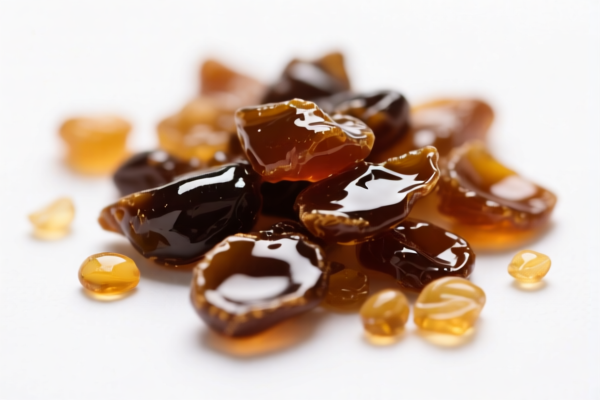
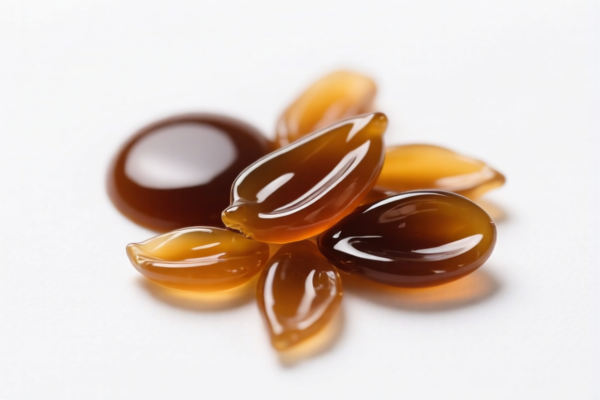
AI Analysis
🌲 Turpentine Blended Oil (Wood Turpentine & Terpene Extracts)
🌐 HS Code Classification & Customs Clearance Guide | 2026 Tariff Analysis | Professional Strategy
📌 I. Product Definition: What Exactly is "Turpentine Blended Oil"?
Turpentine Blended Oil is a volatile liquid obtained primarily from the distillation of resin (gums) from living pine trees (mechanical turpentine) or from wood residues/wood pulp (wood turpentine). It is often blended with other terpenes (like pine oil) or refined to achieve specific solvent properties.
In international trade, it is categorized based on its primary chemical nature: * Wood Turpentine: Derived from wood pulp/resin. * Distilled/Solvent Extracted: Chemically processed terpene mixtures. * Terpene Oils: The aromatic fraction (pinene, limonene).
⚠️ Critical Distinction Point: * If it is primarily Wood Turpentine (distilled from wood pulp/resin) → 3805.10.00.00 * If it is a Chemical Preparation/Mixture not specifically named elsewhere → 3824.99 series * If it is Other Tree Oils (Pine Oil/Terpenes) not covered under wood turpentine specific codes → 3805.90
📦 II. HS Code Classification Matrix (2026 Latest Customs Tariff)
| HS Code | Product Description | Application Scenario | Tax Rate Breakdown |
|---|---|---|---|
3805.10.00.00 |
Wood Turpentines | Primary distillation product of wood pulp/resin; standard solvent grade. | Base: 5%, Add: 25%, Sec 301: 10% = 40% |
3824.99.93.97 |
Other Chemical Products & Preparations | Chemical industry intermediates; processed mixtures not fitting specific oil codes. | Base: 5%, Add: 25%, Sec 301: 10% = 40% |
3805.90.50.00 |
Other Tree Oils & Resinoids | Pine oil, terpene fractions, and other solvent extracts not classified as wood turpentine. | Base: 3.7%, Add: 25%, Sec 301: 10% = 38.7% |
3824.99.29.00 |
Other Prepared Binders/Chemical Products | Natural product mixtures; organic chemical preparations. | Base: 6.5%, Add: 25%, Sec 301: 10% = 41.5% |
3824.99.49.00 |
Chemical Products from Hydrocarbons | Hydrocarbon-derived chemical preparations and mixtures. | Base: 6.5%, Add: 25%, Sec 301: 10% = 41.5% |
🔍 Key Insight: * 3805.10.00.00 is the most "standard" code for pure wood turpentine. * 3824.99 codes are used when the product is a mixture, preparation, or derivative that doesn't fit the pure "tree oil" definition. * 3805.90.50.00 is often the lowest tariff option (38.7%) if the product can be legally classified as "other tree oil" (e.g., distilled pine oil) rather than "wood turpentine" or a "chemical preparation."
💰 III. 2026 Tariff Rate Detailed Analysis (China Origin to US)
✅ Applicable Country: United States (US)
✅ Country of Origin: China (CN)
✅ Effective Date: November 10, 2025 (for subsequent imports)
🎯 1. 3805.10.00.00 —— Wood Turpentines
| Item | Detail |
|---|---|
| Base Duty | 5.0% (ad valorem) |
| Section 301 Additional Duty | +25.0% (USITC Footnote 9903.08.01) |
| IEEPA Additional Duty | +10.0% (Section 1222, effective Nov 10, 2025) |
| Total Effective Rate | 40.0% |
| Tax Calculation | CIF Value × 40% |
| De Minimis Exemption | ❌ Not Eligible (Highly taxable chemical product) |
| Legal Reference Path | IEEPA:9903.01.25 → IEEPA:9903.01.24 → USITC:3805.10.00.00 → FOOTNOTE:9903.08.01 |
📌 Explanation: * 5% Base: Standard MFN rate for turpentine. * 25% Section 301: Retaliatory tariff on Chinese chemical inputs. * 10% IEEPA 1222: New additional tariff on specific Chinese chemical goods. * Total 40%: This is a high-cost entry point. Misclassification here increases costs.
🎯 2. 3824.99.93.97 / 3824.99.29.00 / 3824.99.49.00 —— Chemical Preparations
| Item | Detail |
|---|---|
| Base Duty | 5.0% or 6.5% (varies by subheading) |
| Section 301 Additional Duty | +25.0% |
| IEEPA Additional Duty | +10.0% |
| Total Effective Rate | 40.0% (for 3824.99.93.97) or 41.5% (for 3824.99.29.00/49.00) |
| Tax Calculation | CIF Value × Total Rate |
| De Minimis Exemption | ❌ Not Eligible |
| Legal Reference Path | IEEPA:9903.01.25 → IEEPA:9903.01.24 → USITC:3824.99.xx.xx → FOOTNOTE:9903.08.01 |
📌 Explanation: * These codes are used for mixed or prepared turpentine products. * The base rate varies (5% vs 6.5%), leading to a difference in total tax (40% vs 41.5%). * Classification depends on whether the product is viewed as a "chemical preparation" (3824) vs. a "natural oil" (3805).
🎯 3. 3805.90.50.00 —— Other Tree Oils & Resinoids
| Item | Detail |
|---|---|
| Base Duty | 3.7% (ad valorem) |
| Section 301 Additional Duty | +25.0% |
| IEEPA Additional Duty | +10.0% |
| Total Effective Rate | 38.7% |
| Tax Calculation | CIF Value × 38.7% |
| De Minimis Exemption | ❌ Not Eligible |
| Legal Reference Path | IEEPA:9903.01.25 → IEEPA:9903.01.24 → USITC:3805.90.50.00 → FOOTNOTE:9903.08.01 |
📌 Explanation: * THIS IS THE OPTIMAL CODE if your product can be justified as "Other Tree Oils" (e.g., Pine Oil, Distilled Terpene Oil) rather than "Wood Turpentine." * Savings: 1.3% - 2.8% lower than other codes. On large volumes, this is significant. * Condition: Must prove the product is a natural tree oil extract, not a chemically processed "preparation" under Chapter 3824.
🛠️ IV. Customs Clearance Practical Advice (Avoiding Pitfalls)
✅ 1. Documentation Checklist (Mandatory)
| Document | Must Provide | Purpose |
|---|---|---|
| ✅ Certificate of Analysis (COA) | ✔️ | Shows chemical composition (e.g., Pinene content) to support classification as "Tree Oil" vs. "Chemical Mix." |
| ✅ Material Safety Data Sheet (MSDS) | ✔️ | Confirms hazard class, flash point, and chemical nature. |
| ✅ Product Specification Sheet | ✔️ | Details source (wood vs. mechanical), processing method (distillation vs. solvent extraction). |
| ✅ Commercial Invoice | ✔️ | Must clearly state "Turpentine Blended Oil" or specific chemical name. Avoid vague terms like "Solvent." |
| ✅ Packing List | ✔️ | Net/Gross weight for duty calculation. |
| ✅ FDA Form 2877 (if applicable) | ✔️ | If used in food-related applications or certain cosmetic uses. |
✅ 2. Declaration Tips (Crucial for Success)
🔥 "Know Your Source, Declare Your Process, Choose the Lowest Valid Rate!"
| Scenario | Recommended HS Code | Reason |
|---|---|---|
| Pure Wood Turpentine (Distilled from wood pulp) | 3805.10.00.00 |
Fits the legal definition of wood turpentine. |
| Pine Oil / Terpene Blend (From needles/leaves) | 3805.90.50.00 |
Classifies as "Other Tree Oil," lower base duty (3.7%). |
| Mixed Solvent (Contains synthetic additives) | 3824.99.29.00 or 3824.99.49.00 |
Considered a "chemical preparation" or "hydrocarbon mix." |
| Industrial Chemical Intermediate | 3824.99.93.97 |
Generic chemical product code for unlisted preparations. |
📌 Warning: * Do NOT declare as "Solvent" or "Flammable Liquid" without specifying the chemical identity. * If claiming
3805.90.50.00(38.7%), ensure the COA shows it is primarily a natural tree oil derivative. If it contains significant synthetic solvents, CBP may reclassify it to Chapter 3824 (40-41.5%).
✅ 3. Special Circumstances
| Situation | Handling Strategy |
|---|---|
| OEM/Custom Blend | Provide formulation details. If the blend is >50% natural pine oil, argue for 3805.90.50.00. |
| Used in Paints/Coatings | Ensure invoice matches end-use. No special duty relief for paint additives. |
| Transshipment via 3rd Country | Ensure no substantial transformation. Origin must remain China to apply Chinese tariffs. |
| Small Samples (< $800) | ❌ Not Eligible for De Minimis. High-value chemicals are excluded from Section 321. |
🌍 V. Global Market Comparison (2026)
| Country/Region | Recommended HS Code | Est. Total Duty (CN Origin) | Notes |
|---|---|---|---|
| 🇺🇸 USA | 3805.90.50.00 |
38.7% | Best option if classifiable as tree oil. |
| 🇨🇳 China | 3805.10.00.00 |
5-10% | Import duty varies by trade agreement. |
| 🇪🇺 EU | 3805.10.00 |
~0-2% | No major retaliatory tariffs like US. |
| 🇯🇵 Japan | 3805.10.00 |
~0-2% | Favorable for chemical inputs. |
📌 Conclusion: * The US market is the most expensive due to Section 301 + IEEPA tariffs. * Optimization: Always attempt to classify under
3805.90.50.00(38.7%) if the product composition allows, as it is the lowest available rate in the dataset.
📌 VI. Common Errors & Pitfalls (Lessons Learned)
❌ Error 1: Declaring all turpentine products as 3805.10.00.00 (40%) when they are actually "Pine Oils" (3805.90.50.00 - 38.7%).
👉 Result: Overpayment of 1.3% on every shipment.
👉 Fix: Check COA. If it's pine oil/terpenes, use 3805.90.50.00.
❌ Error 2: Declaring as 3824.99 (41.5%) when it's pure wood turpentine (40%).
👉 Result: Overpayment of 1.5%.
👉 Fix: Use 3805.10.00.00 for pure wood turpentine.
❌ Error 3: Failing to provide MSDS/COA.
👉 Result: CBP holds shipment for classification review. Delays + Storage Fees.
👉 Fix: Always attach COA and MSDS.
❌ Error 4: Assuming De Minimis applies.
👉 Result: Seizure of goods. Chemicals are excluded from $800 exemption.
👉 Fix: Prepare full entry documents for all shipments.
✅ Correct Declaration Example:
"Turpentine Blended Oil, Pine Oil Derivative, CAS No. 8000-41-7, Used as Solvent in Coatings, HS Code: 3805.90.50.00"
🎯 VII. Conclusion: Strategic Tariff Optimization
🎯 Key Takeaway:
🔹 "Not all Turpentine is Created Equal!"
🔹 Pure Wood Turpentine:3805.10.00.00→ 40%
🔹 Chemical Mixtures:3824.99.xx→ 40-41.5%
🔹 Other Tree Oils (Pine/Terpenes):3805.90.50.00→ 38.7% (BEST RATE)📌 Action Plan: 1. Analyze Chemical Composition: Is it pure wood turpentine, or a pine oil/terpene blend? 2. Attempt
3805.90.50.00: If your product is derived from pine needles/leaves or is a terpene fraction, this is your lowest cost option. 3. Fallback to3805.10.00.00: If it is strictly wood pulp distillate. 4. Avoid3824.99: Only use if it's a complex chemical preparation that doesn't fit tree oil definitions.
📣 Immediate Action:
📞 Contact Customs Broker: Provide COA to verify if
3805.90.50.00is applicable.
📄 Request Pre-Ruling: File an International Trade Commission (ITC) pre-ruling to lock in the 38.7% rate if possible.
🚀 Optimize Your Supply Chain: Even a 1.3% saving on high-volume chemical imports adds up to thousands in saved costs.
✨ Precision Classification Saves Money!
💼 Don't leave tax dollars on the table. Classify smart!
Customer Reviews
About HS Code Classification
The Harmonized System (HS) is an internationally standardized nomenclature developed by the World Customs Organization (WCO) to classify traded products. Over 200 countries use the HS system as the basis for customs tariffs, trade statistics, and import/export regulations.
Each HS code follows a hierarchical structure:
- Chapter (2 digits) — Broad category of goods (e.g., Chapter 84: Machinery and Mechanical Appliances)
- Heading (4 digits) — More specific grouping within the chapter
- Subheading (6 digits) — Internationally standardized breakdown, used by all WCO member countries
- National subdivisions (8-10 digits) — Country-specific extensions for further classification, such as US HTSUS 10-digit codes
Correct HS code classification is essential for smooth customs clearance, accurate duty payment, and compliance with trade regulations. Misclassification can lead to customs delays, overpayment of duties, or penalties.
When importing from CN to US, the applicable tariff rates may include:
- Most-Favored-Nation (MFN) rate — The standard duty rate applied to WTO members
- General rate — Applied to countries without trade agreements
- Trade remedy duties — Additional tariffs such as Section 301 (anti-dumping), Section 232 (national security), or countervailing duties
The information provided on this page is for reference purposes only. For official classification, please consult with your local customs authority or a licensed customs broker.