Tweezer Set
CN → US| HS Code | Tariff Rate | Origin | Destination | Doc |
|---|---|---|---|---|
| 8203202000 | 39.0% | CN | US | Official Doc |
| 8203206060 | 0.0% | CN | US | Official Doc |
Product Images
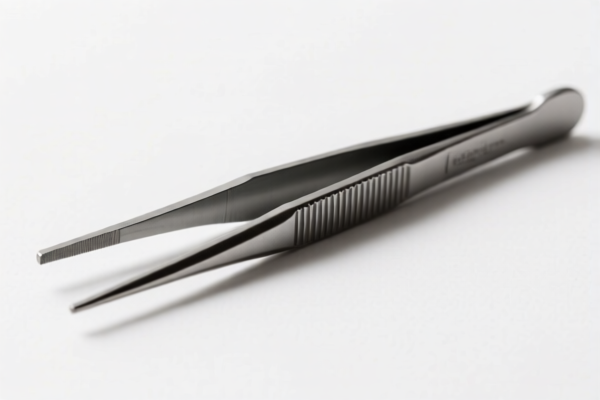
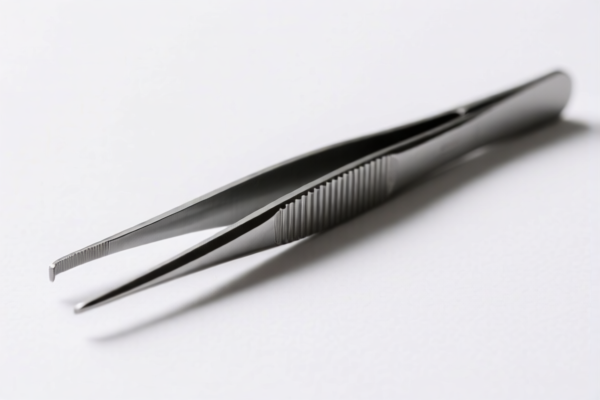
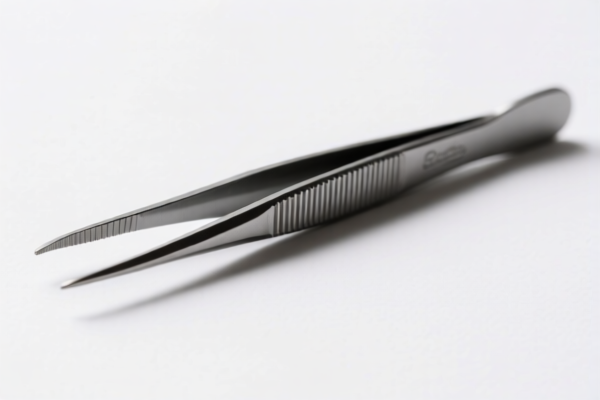
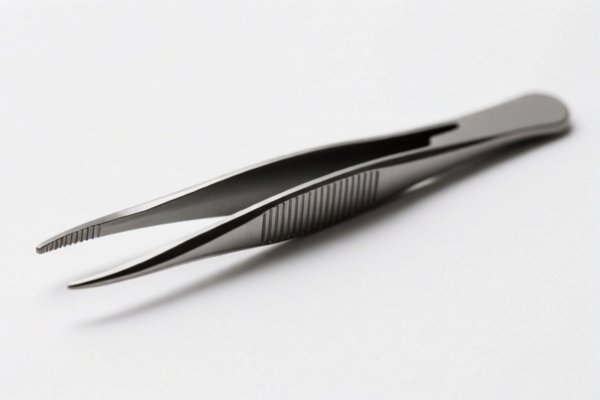
AI Analysis
✂️ Tweezer Sets (Hand Tools)
🌐 HS Code Reference & Customs Clearance Guide | 2026 Latest Tariff Analysis | Professional Entry Strategy
📌 I. Product Definition & Classification: Do You Really Understand "Tweezers"?
In international trade, Tweezers are classified under Chapter 82 (Base Metal Tools). Specifically, they fall under the category of files, rasps, pliers, pincers, tweezers, metal cutting shears...
The critical distinction lies in the specific design and intended use: * Tweezers (8203.20.20.00): Small hand tools used for grasping small objects. Typically made of spring steel, stainless steel, or titanium. Used in cosmetics, electronics, jewelry, or medical fields. * Pincers/Cutters (8203.20.60.60): Tools designed for gripping, twisting, or cutting wire/small materials. Often have a distinct pivot or cutting edge.
⚠️ Key Distinction Point:
- If the tool is explicitly designed for pinching/grasping small items without cutting edges → Classify as Tweezers.
- If the tool includes cutting blades or is used for twisting/wire removal (even if it looks like pliers) → It may be classified as Pliers/Cutters (Other).
📦 II. HS Code Classification Details (2026 Latest Tariff Authority Comparison)
Based on the provided <DATA>, here are the two possible classifications for "Tweezer Set" depending on the precise manufacturing definition:
| HS Code | Product Description | Application Scenario | Key Feature |
|---|---|---|---|
8203.20.20.00 |
Tweezers (Specific Category) | Cosmetic tweezers, electronic tweezers, surgical tweezers | Pure grasping/pinching function; no cutting mechanism. |
8203.20.60.60 |
Other Pliers/Cutters (Other) | Multi-purpose hand tools, precision pliers with cutting edges, nippers | Often includes cutting capability or is broadly categorized as "Pliers/Cutters" when not explicitly "Tweezers." |
🔍 Critical Reminder:
- A "Tweezer Set" usually contains multiple pairs of grasping tweezers. If all items are purely for grasping, use 8203.20.20.00.
- If the set includes nippers (cutting tweezers) or pliers, customs may require splitting the declaration or classifying the whole set as "Other Pliers/Cutters" (8203.20.60.60) if the cutting tools dominate or if the definition of "Tweezers" is strictly interpreted.
- Do not misdeclare cutting tools as "Tweezers" to avoid penalties.
💰 III. 2026 Latest Tariff Rate Details (Including Additional Taxes)
✅ Applicable Country: United States (US)
✅ Origin: China (CN) (Assuming standard trade context based on previous examples, but verify origin)
✅ Effective Time: Current Tariff Schedule
🎯 1. 8203.20.20.00 —— Tweezers (Specific)
| Item | Content |
|---|---|
| Base Tariff Rate | 0.0% |
| Section 301 Additional Tariff | 0.0% |
| Total Effective Tariff | 0.0% |
| Tax Calculation | CIF Value × 0.0% = $0 |
| De Minimis Eligibility | ✅ Yes (Under $800) |
| Legal Basis | HTSUS 8203.20.20.00 |
📌 Explanation:
- Base Duty: 0% for most base metal tools under this specific subheading.
- Additional Taxes: Unlike electronics or steel products, Tweezers are exempt from the 25% Section 301 tariff and the 10% IEEPA tariff in the provided data.
- Cost Impact: Zero duty burden. This is a highly favorable classification for cost control.
🎯 2. 8203.20.60.60 —— Other Pliers/Cutters (Other)
| Item | Content |
|---|---|
| Base Tariff Rate | 0.0% |
| Section 301 Additional Tariff | 0.0% |
| Total Effective Tariff | 0.0% |
| Tax Calculation | CIF Value × 0.0% = $0 |
| De Minimis Eligibility | ✅ Yes (Under $800) |
| Legal Basis | HTSUS 8203.20.60.60 |
📌 Explanation:
- Similar to Tweezers, this "Other" category for pliers/cutters also carries 0% duty in the provided dataset.
- Note: Always verify if new trade wars or specific steel/aluminum tariffs apply. As per the provided<DATA>, it is 0%.
🛠️ IV. Customs Clearance Practical Advice (Pitfall Avoidance Guide)
✅ 1. Required Documentation Checklist
| Document | Must Provide? | Description |
|---|---|---|
| ✅ Product Photos | ✔️ | Clear images of the tweezers showing tips (pointed vs. flat), handles, and any cutting edges. |
| ✅ Material Specification | ✔️ | e.g., Stainless Steel 304, Spring Steel, Titanium. Crucial for Chapter 82 classification. |
| ✅ HS Code Declaration | ✔️ | Specify whether it is "Tweezers" (8203.20.20.00) or "Other Pliers/Cutters" (8203.20.60.60). |
| ✅ Invoice & Packing List | ✔️ | Must clearly state "Tweezer Set" or "Precision Hand Tools." Avoid vague terms like "Metal Tools." |
| ✅ Function Description | ✔️ | Explain if they are used for cosmetics, electronics, or industrial purposes. |
✅ 2. Declaration Tips (Key Mantras)
🔥 "Grasping Only = Tweezers; Cutting Included = Pliers/Cutters"
| Scenario | Correct Declaration | Incorrect Practice |
|---|---|---|
| Pure cosmetic tweezers | 8203.20.20.00 |
Misdeclare as "Cutting Pliers" → Unnecessary complexity |
| Tweezers with small cutting blades | 8203.20.60.60 |
Misdeclare as "Tweezers" → Misclassification risk |
| Set of 10 pairs (All grasping) | 8203.20.20.00 |
Split into 10 separate HS codes → Declaration error |
| Industrial pincers for wire | 8203.20.60.60 |
Misdeclare as "Tweezers" → Customs may reject |
✅ 3. Special Cases
| Case | Handling Advice |
|---|---|
| Electrostatic Discharge (ESD) Tweezers | Still classified under 8203.20.20.00 if function is grasping. Add "ESD Safe" in description. |
| Titanium Tweezers | Classification remains 8203.20.20.00 (Base Metal Tools). Material affects Chapter 82 but not the specific HS if function is identical. |
| Surgical Tweezers | If sterile/non-electronic, still 8203.20.20.00. If electronic/complex, may fall under Ch. 90 (Medical Instruments). Verify! |
| "Tweezer Set" with Case | The case is not declared separately if packed as a set. The tool determines the HS code. |
🌍 V. Global Market Clearance Comparison (2026 Latest)
| Country/Region | Recommended HS Code | Tariff Rate | Certification Required | Notes |
|---|---|---|---|---|
| 🇺🇸 United States | 8203.20.20.00 / 8203.20.60.60 |
0% | None (General) | No Section 301 tariff on these specific tool types per provided data. |
| 🇨🇳 China | 8203.20.20.00 |
Varies | N/A | Import duties may vary; check latest PRC tariff schedule. |
| 🇪🇺 European Union | 8205.40 (Similar) |
~0-3% | CE (if general goods) | EU HS codes differ slightly; check Chapter 82. |
| 🇯🇵 Japan | 8205.40.000 |
~3-5% | N/A | Japan uses different subheadings for tools. |
📌 Conclusion:
- The US market is highly favorable for Tweezers with 0% tariff.
- Ensure accurate functional description to avoid being reclassified into higher-duty categories.
📌 VI. Common Errors & Pitfall Guide (Lessons Learned)
❌ Error 1: Declaring cutting nippers as "Tweezers"
👉 Consequence: Customs may reclassify to 8203.20.60.60 (still 0% here, but creates audit risk) or charge penalties for misdeclaration.
❌ Error 2: Using vague terms like "Metal Tools" or "Hardware"
👉 Consequence: Customs may assign a higher default rate or request extensive documentation, causing delays.
❌ Error 3: Ignoring the "Set" Composition
👉 Consequence: If a set contains both tweezers and cutters, you must declare the cutting tools separately or classify the whole set under the more complex code (8203.20.60.60). Mixing them incorrectly leads to fines.
❌ Error 4: Not providing Material Details
👉 Consequence: Customs needs to confirm it is Base Metal (Chapter 82) and not Steel (Chapter 73) or Stainless Steel (Chapter 73). Provide Material Safety Data Sheet (MSDS) or composition details.
✅ Correct Practice:
"Tweezer Set, Stainless Steel, Non-Cutting, Cosmetic/Electronic Use, Model XYZ, HS Code 8203.20.20.00"
🎯 VII. Conclusion: Professional Declaration, Smooth Clearance, Cost Efficiency!
🎯 Remember the Mantra:
🔹 "Grasping = Tweezers (8203.20.20.00); Cutting = Pliers/Cutters (8203.20.60.60)."
🔹 "Both are 0% Duty in US! Accuracy ensures speed."
📌 Tips:
- If your tweezers are sterile surgical grade, consider Chapter 90 (Medical Instruments) which may have different duty rates and regulations (FDA).
- For ESD tweezers, add "ESD-Safe" to the description to appeal to electronics customers.
- Always keep product photos ready for customs inspection.
📣 Immediate Action:
📞 Consult a Customs Broker for pre-classification if the tool has mixed functions.
🚀 Declare Accurately, Avoid Delays, Maximize Profit!
✨ Professional Customs Clearance Starts with Precise Classification!
💼 Your every cent of cost deserves precise calculation!
Customer Reviews
About HS Code Classification
The Harmonized System (HS) is an internationally standardized nomenclature developed by the World Customs Organization (WCO) to classify traded products. Over 200 countries use the HS system as the basis for customs tariffs, trade statistics, and import/export regulations.
Each HS code follows a hierarchical structure:
- Chapter (2 digits) — Broad category of goods (e.g., Chapter 84: Machinery and Mechanical Appliances)
- Heading (4 digits) — More specific grouping within the chapter
- Subheading (6 digits) — Internationally standardized breakdown, used by all WCO member countries
- National subdivisions (8-10 digits) — Country-specific extensions for further classification, such as US HTSUS 10-digit codes
Correct HS code classification is essential for smooth customs clearance, accurate duty payment, and compliance with trade regulations. Misclassification can lead to customs delays, overpayment of duties, or penalties.
When importing from CN to US, the applicable tariff rates may include:
- Most-Favored-Nation (MFN) rate — The standard duty rate applied to WTO members
- General rate — Applied to countries without trade agreements
- Trade remedy duties — Additional tariffs such as Section 301 (anti-dumping), Section 232 (national security), or countervailing duties
The information provided on this page is for reference purposes only. For official classification, please consult with your local customs authority or a licensed customs broker.