Twill Stage Costume
CN → US| HS Code | Tariff Rate | Origin | Destination | Doc |
|---|---|---|---|---|
| 9505105020 | 10.0% | CN | US | Official Doc |
| 6114303054 | 32.4% | CN | US | Official Doc |
| 6211339010 | 33.5% | CN | US | Official Doc |
| 6114303044 | 32.4% | CN | US | Official Doc |
| 6211430591 | 33.5% | CN | US | Official Doc |
Product Images
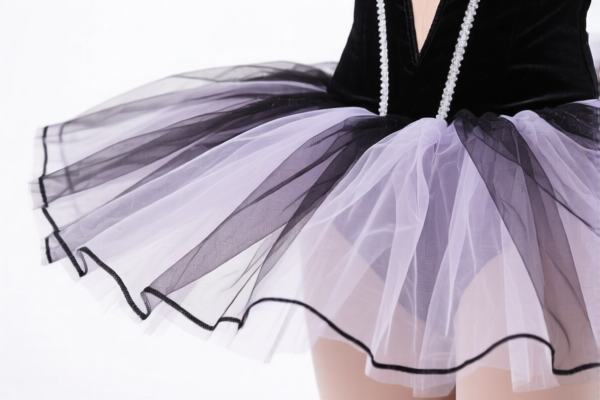
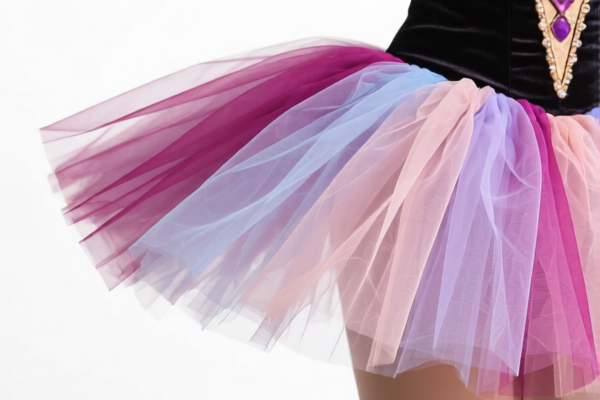
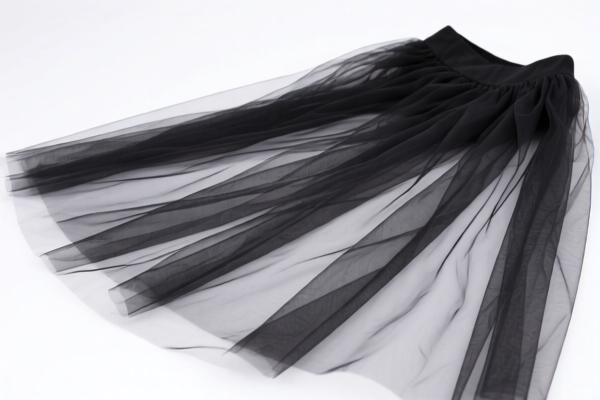
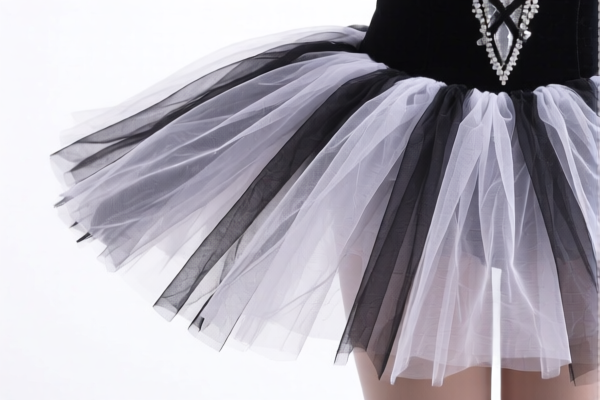
AI Analysis
👗 Twill Stage Costume (Performance Wear)
🌐 HS Code Reference & Customs Clearance Guide | 2026 Latest Tariff Analysis | Professional Clearance Strategy
📌 I. Product Definition & Classification: Do You Really Understand "Twill Stage Costume"?
A Twill Stage Costume refers to performance garments made from twill fabric, primarily used for theatrical productions, concerts, dance performances, and festive entertainment. In international trade, its classification is ambiguous because it can fall under either "Festive/Entertainment Articles" (Chapter 95) or "Apparel" (Chapter 61/62), depending on the specific design, material composition, and intended use declaration.
Key Classification Logic: 1. Festival/Entertainment Category (Chapter 95): If the garment is considered a "costume" for festive occasions (e.g., Christmas, Halloween, or general theatrical props) and not standard apparel, it may fall under 9505.10. 2. Apparel Category (Chapter 61/62): If the garment is structured like a jumpsuit, workwear, or outerwear made from synthetic fibers, it is classified as clothing. * Knitted (Chapter 61): Bodysuits, similar apparel (e.g., leotards, unitards). * Woven (Chapter 62): Outerwear, other sports/recreational garments (e.g., twill is a woven fabric).
⚠️ Critical Distinction Point:
- If declared as a "Costume" for festive/entertainment use → 9505.10.50.20 (Lowest Tax)
- If declared as "Bodysuit/Unitard" (Knitted) → 6114.30.30 (Higher Tax)
- If declared as "Outerwear/Sports Wear" (Woven/Twill) → 6211.33.90 or 6211.43.05 (Highest Tax)
📦 II. HS Code Classification Details (2026 Latest Tariff Authority Comparison)
| HS Code | Product Description | Applicable Scenario | Tax Rate |
|---|---|---|---|
9505.10.50.20 |
Festive/Entertainment Articles (Costumes), Other | Theatrical costumes, party outfits, festive wear | 10.0% |
6114.30.30.54 |
Knitted Bodysuits & Similar Apparel, Synthetic Fibers | Knitted performance wear, leotards | 32.4% |
6114.30.30.44 |
Knitted Bodysuits & Similar Apparel, Other Textiles | Knitted costumes not specified elsewhere | 32.4% |
6211.33.90.10 |
Woven Dance/Sports Garments, Synthetic Fibers | Twill dance costumes, athletic performance wear | 33.5% |
6211.43.05.91 |
Woven Outerwear (Other), Synthetic Fibers | Twill stage jackets, outerwear-style costumes | 33.5% |
🔍 Key Reminder:
- 9505.10.50.20 offers the lowest tariff (10%) but requires strict proof that the item is for "festive or entertainment purposes" and not everyday wear.
- 61xx/62xx codes classify the item as apparel, triggering higher base duties.
- Twill fabric is typically woven, which often pushes classification toward Chapter 62 unless specifically designed as a knitted bodysuit. However, customs may allow Chapter 95 if the primary purpose is "costume."
💰 III. 2026 Latest Tariff Rate Breakdown (Including Surtaxes, Policy Surcharges)
✅ Applicable Country: USA (US)
✅ Origin: China (CN)
✅ Effective Date: From 2025-11-10 (including subsequent imports)
🎯 1. 9505.10.50.20 —— Festive/Entertainment Articles (Costumes)
| Item | Content |
|---|---|
| Base Tariff | 0% (ad valorem) |
| Surtax (Section 301) | +0% |
| Section 122 Tariff | +10% (Specific surcharge for certain goods) |
| Total Tariff | 10.0% |
| Tax Calculation | CIF Value × 10% |
| De Minimis Eligibility | ❌ Not Eligible (Subject to Section 122 rules) |
| Legal Basis Path | Section 122 → USITC:9505.10.50.20 |
📌 Explanation:
- This code benefits from the lowest total tax (10%).
- The Section 122 tariff (10%) is a specific surcharge applied to certain festive/entertainment items from China.
- No Section 301 surcharge applies here, making it significantly cheaper than apparel classifications.
🎯 2. 6114.30.30.54 & 6114.30.30.44 —— Knitted Bodysuits & Similar Apparel
| Item | Content |
|---|---|
| Base Tariff | 14.9% |
| Surtax (Section 301) | +7.5% |
| Section 122 Tariff | +10% |
| Total Tariff | 32.4% |
| Tax Calculation | CIF Value × 32.4% |
| De Minimis Eligibility | ❌ Not Eligible |
| Legal Basis Path | Section 301 → Section 122 → USITC:6114.30.30.xx |
📌 Note:
- If customs classifies your twill costume as a knitted bodysuit (even if made of twill-like material, if knit), the base tariff is 14.9%.
- Adding 7.5% Section 301 and 10% Section 122 results in a 32.4% total tax.
- Risk: Twill is usually woven, so this classification may be challenged unless the garment is explicitly knitted.
🎯 3. 6211.33.90.10 & 6211.43.05.91 —— Woven Dance/Sports Garments & Outerwear
| Item | Content |
|---|---|
| Base Tariff | 16.0% |
| Surtax (Section 301) | +7.5% |
| Section 122 Tariff | +10% |
| Total Tariff | 33.5% |
| Tax Calculation | CIF Value × 33.5% |
| De Minimis Eligibility | ❌ Not Eligible |
| Legal Basis Path | Section 301 → Section 122 → USITC:6211.33.90.10 or 6211.43.05.91 |
📌 Critical Risk:
- Since twill is a woven fabric, customs may default to Chapter 62 (Woven Apparel).
- The base tariff for woven dance/outerwear is 16.0%.
- Adding 7.5% Section 301 and 10% Section 122 results in the highest total tax of 33.5%.
- Recommendation: Avoid this classification if possible by arguing for "Festival/Entertainment" status under Chapter 95.
🛠️ IV. Customs Clearance Practical Advice (Real-World Pitfall Guide)
✅ 1. Preparation Checklist (All Required)
| Document | Required | Description |
|---|---|---|
| ✅ Product Photos | ✔️ | Clear images showing the garment is a costume (e.g., stylized, non-everyday wear). |
| ✅ Fabric Composition Label | ✔️ | Must specify "Twill" and fiber content (e.g., 100% Polyester, Cotton, etc.). |
| ✅ Commercial Invoice | ✔️ | Clearly describe as "Twill Stage Costume" or "Theatrical Performance Wear", NOT "Twill Pants" or "Jacket". |
| ✅ Product Description | ✔️ | Highlight "For Stage Use," "Entertainment Purpose," or "Festive Costume." |
| ✅ Origin Certificate | ✔️ | To prove Chinese origin and apply specific surcharges. |
✅ 2. Declaration Tips (Key Mantra)
🔥 "Declare as Costume, Not Apparel! Avoid Woven Apparel Traps!"
| Scenario | Correct Declaration | Wrong Practice |
|---|---|---|
| Stage Costume | 9505.10.50.20 (Festive/Entertainment) |
Mislabeling as "Twill Jacket" → 33.5% |
| Knitted Bodysuit | 6114.30.30.xx |
Mislabeling as "Costume" → Risk of audit |
| Woven Outerwear | 6211.33.90.10 or 6211.43.05.91 |
If it’s clearly a costume, this is over-taxed |
📌 Strategy:
- Argue that the garment is not for everyday wear but for specific entertainment purposes.
- Provide evidence such as marketing materials, stage usage, or design sketches showing theatrical intent.
✅ 3. Special Cases Handling
| Situation | Handling Advice |
|---|---|
| Mixed Fabric | If the costume has knitted parts (e.g., elastic waistband) but twill body, still argue for 9505 if primary purpose is costume. |
| Custom Design | Provide original design files to prove it’s a unique costume, not mass-produced apparel. |
| Sample vs. Bulk | Samples may still be subject to Section 122 if they are costumes. |
| Re-export | If re-exported, ensure documentation shows final destination is non-China, but US import rules still apply. |
🌍 V. Global Main Market Clearance Comparison (2026 Latest)
| Country/Region | Recommended HS Code | Tariff | Certification | Notes |
|---|---|---|---|---|
| 🇺🇸 USA | 9505.10.50.20 |
10% | None | Avoid Chapter 61/62 to save 22-23.5% |
| 🇨🇳 China | 6211.43.05.91 |
5-7% | None | Domestic use, lower tariffs |
| 🇪🇺 EU | 6211.43.05.91 |
12% | CE (if applicable) | No Section 122/301 equivalent |
| 🇬🇧 UK | 6211.43.05.91 |
12% | UKCA | Post-Brexit rules apply |
| 🇦🇺 Australia | 6211.43.05.91 |
5-10% | RCM | No high surcharges |
📌 Conclusion:
- USA is the most challenging market due to Section 301 and Section 122 surcharges.
- Classifying under Chapter 95 (9505.10.50.20) is the ONLY way to reduce tax to 10%.
- China/EU/Australia have lower overall tariffs, so the risk is less critical but still important for cost control.
📌 VI. Common Mistakes & Pitfall Guide (Lessons from Tears)
❌ Mistake 1: Declaring as "Twill Jacket" or "Twill Pants"
👉 Consequence: Classified under 6211, leading to 33.5% tax instead of 10%.
❌ Mistake 2: Using generic terms like "Clothing" or "Apparel"
👉 Consequence: Customs defaults to Chapter 61/62, missing the Chapter 95 benefit.
❌ Mistake 3: Failing to provide product photos showing theatrical design
👉 Consequence: Customs cannot verify "costume" status, leading to reclassification.
❌ Mistake 4: Ignoring Section 122
👉 Consequence: Unexpected 10% surcharge even under Chapter 95.
✅ Correct Practice:
"Twill Stage Costume, Theatrical Performance Wear, Designed for Concert Use, Non-Everyday Apparel"
🎯 VII. Conclusion: Professional Declaration, Save Time, Reduce Costs!
🎯 Remember the Mantra:
🔹 "Costume, Not Apparel! 10% vs 33.5% is a 23.5% Difference!"
🔹 "HS Code Determines Tax, Wrong Code Means Heavy Fine!"
📌 Tips:
- If your costume is highly stylized (e.g., superhero, fantasy), emphasize Chapter 95.
- If it resembles standard workwear (e.g., twill overalls), you may be stuck with Chapter 62.
- Pre-classification Ruling is recommended for large shipments to avoid clearance delays.
📣 Immediate Action:
📞 Contact a professional customs broker + Provide product photos + Declare as "Stage Costume"
🚀 Ensure smooth clearance, efficient export, and maximum profit!
✨ Professional Clearance Starts with Accurate Classification!
💼 Every cent of your cost deserves precise calculation!
Customer Reviews
About HS Code Classification
The Harmonized System (HS) is an internationally standardized nomenclature developed by the World Customs Organization (WCO) to classify traded products. Over 200 countries use the HS system as the basis for customs tariffs, trade statistics, and import/export regulations.
Each HS code follows a hierarchical structure:
- Chapter (2 digits) — Broad category of goods (e.g., Chapter 84: Machinery and Mechanical Appliances)
- Heading (4 digits) — More specific grouping within the chapter
- Subheading (6 digits) — Internationally standardized breakdown, used by all WCO member countries
- National subdivisions (8-10 digits) — Country-specific extensions for further classification, such as US HTSUS 10-digit codes
Correct HS code classification is essential for smooth customs clearance, accurate duty payment, and compliance with trade regulations. Misclassification can lead to customs delays, overpayment of duties, or penalties.
When importing from CN to US, the applicable tariff rates may include:
- Most-Favored-Nation (MFN) rate — The standard duty rate applied to WTO members
- General rate — Applied to countries without trade agreements
- Trade remedy duties — Additional tariffs such as Section 301 (anti-dumping), Section 232 (national security), or countervailing duties
The information provided on this page is for reference purposes only. For official classification, please consult with your local customs authority or a licensed customs broker.