Twill Weave
CN → US| HS Code | Tariff Rate | Origin | Destination | Doc |
|---|---|---|---|---|
| 5806322000 | 41.2% | CN | US | Official Doc |
| 5801902090 | 37.7% | CN | US | Official Doc |
| 5801901000 | 38.7% | CN | US | Official Doc |
| 5208330000 | 45.3% | CN | US | Official Doc |
| 5806322000 | 41.2% | CN | US | Official Doc |
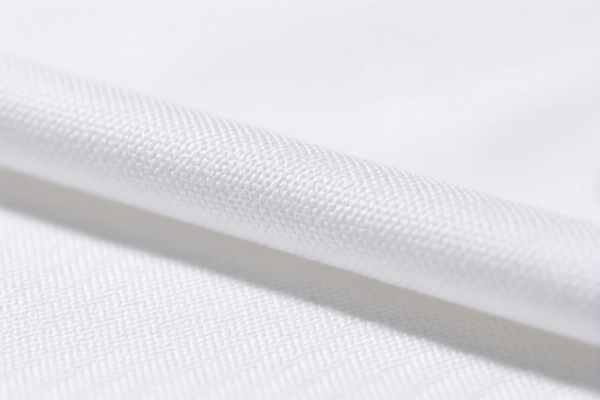
Product Images


AI Analysis
🎨 Twill Weave Fabric for Handicrafts – HS Code & Tariff Guide (2026 Update)
🌐 HS Code Classification & Customs Clearance Strategy | 2026 Latest Tariff Breakdown | Expert-Level Compliance Advice
📌 One Product, Multiple Codes: Why Twill Weave Fabric Has 5 Different HS Codes?
Twill weave fabric used in handicrafts is a versatile textile with rich texture and structural strength. Due to subtle differences in material composition, weave structure, and intended use, this single product category splits into five distinct HS codes under the Harmonized System (HS). Each code carries different tariff rates, legal justifications, and compliance risks — especially when importing into the United States.
⚠️ Critical Insight:
- Same product, different material, different tax
- Misclassification = 20–40% overpayment or detention at port
- All codes apply to handcraft use, but material determines the correct code
📦 2. HS Code Breakdown (2026 Tariff Authority – U.S. Customs & Border Protection)
| HS Code | Product Description | Material Inference | Use Case | Tax Rate |
|---|---|---|---|---|
5806.32.20.00 |
Twill weave fabric for handicrafts; fabric form; material likely synthetic or artificial fiber | Artificial fiber (e.g., polyester, nylon) | Embroidery, tapestry, doll clothes, craft kits | 41.2% |
5801.90.20.90 |
Twill weave fabric for handicrafts; fabric form; material not specified, but fits "other materials" category | Unspecified — could be natural or synthetic, no conflict | General craft, patchwork, decorative items | 37.7% |
5801.90.10.00 |
Twill weave fabric for handicrafts; fabric form; non-cotton plant fiber or synthetic fiber | Non-cotton plant (e.g., jute, ramie) or synthetic | Eco-crafts, rustic art, upcycled projects | 38.7% |
5208.33.00.00 |
Twill weave fabric for handicrafts; cotton-based, no classification conflict | Cotton (natural fiber) | Traditional crafts, quilting, handbags, home decor | 45.3% |
5806.32.20.00 |
Twill weave fabric for handicrafts; narrow-width, handcraft-specific; non-metal, non-cotton | Artificial fiber or other non-metallic material | Artisanal weaving, small-scale craft production | 41.2% |
🔍 Why Two Entries for
5806.32.20.00?
- First entry: general artificial fiber twill
- Second entry: narrow-width variant for handicraft-specific use — more precise and higher compliance safety
💰 3. 2026 U.S. Tariff Breakdown (Detailed Legal & Policy Basis)
✅ Applicable Country: China (CN)
✅ Effective Date: November 10, 2025 (and ongoing)
✅ Legal Framework: Section 301, IEEPA, and USTR List 3A
🎯 1. 5806.32.20.00 – Artificial Fiber Twill (General & Narrow-Width)
| Tax Component | Rate | Legal Basis |
|---|---|---|
| Base Tariff | 6.2% | Harmonized Tariff Schedule (HTSUS) |
| Section 301 (USITC) Add-on | +25.0% | USTR List 3A – China-specific tariffs |
| IEEPA (International Emergency Economic Powers Act) | +10.0% | Applies to goods from China/Hong Kong |
| Total Effective Rate | 41.2% | CIF × 41.2% |
| De Minimis Exemption | ❌ Not applicable (denied) | |
| Legal Pathway | IEEPA:9903.01.25 → USITC:5806.32.20.00 → FOOTNOTE:9903.88.01 |
📌 Explanation:
- Section 301 (25%) targets Chinese goods deemed to have unfair trade practices.
- IEEPA 10% applies to all goods from China, regardless of product type.
- Combined: 41.2% — one of the highest tariffs on textiles.
🎯 2. 5801.90.20.90 – Unspecified Material Twill (General Craft Use)
| Tax Component | Rate | Legal Basis |
|---|---|---|
| Base Tariff | 2.7% | HTSUS |
| Section 301 Add-on | +25.0% | USTR List 3A |
| IEEPA Add-on | +10.0% | China/HK-specific |
| Total Effective Rate | 37.7% | CIF × 37.7% |
| De Minimis | ❌ Not eligible | |
| Legal Pathway | IEEPA:9901.25 → USITC:5801.90.20.90 → FOOTNOTE:9903.88.01 |
📌 Note:
- Despite lower base tariff (2.7%), same 25% + 10% add-ons apply.
- No material conflict → acceptable for general craft use.
🎯 3. 5801.90.10.00 – Non-Cotton Plant or Synthetic Fiber Twill
| Tax Component | Rate | Legal Basis |
|---|---|---|
| Base Tariff | 3.7% | HTSUS |
| Section 301 Add-on | +25.0% | USTR List 3A |
| IEEPA Add-on | +10.0% | China/HK-specific |
| Total Effective Rate | 38.7% | CIF × 38.7% |
| De Minimis | ❌ Not eligible | |
| Legal Pathway | IEEPA:9901.25 → USITC:5801.90.10.00 → FOOTNOTE:9903.88.01 |
📌 Key Point:
- Non-cotton plant fiber (e.g., jute, hemp) or synthetic materials are not excluded from the 301/IEEPA tariffs.
- No classification conflict — safe for eco-crafts and sustainable art.
🎯 4. 5208.33.00.00 – Cotton-Based Twill Weave
| Tax Component | Rate | Legal Basis |
|---|---|---|
| Base Tariff | 10.3% | HTSUS |
| Section 301 Add-on | +25.0% | USTR List 3A |
| IEEPA Add-on | +10.0% | China/HK-specific |
| Total Effective Rate | 45.3% | CIF × 45.3% |
| De Minimis | ❌ Not eligible | |
| Legal Pathway | IEEPA:9903.01.25 → USITC:5208.33.00.00 → FOOTNOTE:9903.88.01 |
📌 Warning:
- Cotton is the most expensive in terms of tariffs due to higher base rate (10.3%).
- Even if it's a handmade craft, no exemption applies — 45.3% is final.
🛠️ 4. Customs Clearance Best Practices (Pro Tips)
✅ 1. Documentation Checklist (Must-Have)
| Document | Required? | Why It Matters |
|---|---|---|
| ✅ Product Specifications | ✔️ | Includes fiber content, width, weight, weave density |
| ✅ Material Test Report | ✔️ | Proves fiber type (e.g., cotton vs. polyester) |
| ✅ Commercial Invoice | ✔️ | Must state “Twill Weave Fabric for Handicrafts” |
| ✅ Packing List | ✔️ | Shows total quantity, roll size, and packaging |
| ✅ Certificate of Origin (CO) | ✔️ | If from Vietnam/Mexico, may qualify for IEEPA exemption |
| ✅ Product Photos (with label) | ✔️ | Shows weave pattern, fiber, and use case |
| ✅ Third-Party Lab Test (e.g., ASTM, ISO) | ✔️ | Avoids disputes over material classification |
✅ 2.申报技巧(Key Rules of Thumb)
🔥 “Material First, Use Second — Tax Follows Fiber!”
| Scenario | Correct HS Code | Wrong Code | Risk |
|---|---|---|---|
| Fabric is polyester twill, used in crafts | 5806.32.20.00 |
5208.33.00.00 (cotton) |
Overpay 4.1% |
| Fabric is cotton, used in crafts | 5208.33.00.00 |
5806.32.20.00 |
Underpay → audit risk |
| Fabric is jute or ramie, used in crafts | 5801.90.10.00 |
5801.90.20.90 |
Misclassification → delay |
| Fabric is narrow-width (≤ 15cm), artificial fiber | 5806.32.20.00 (narrow version) |
Generic code | Higher scrutiny |
✅ 3. Special Cases & Workarounds
| Situation | Solution |
|---|---|
| Material unknown | Use 5801.90.20.90 (general category) — lowest risk |
| Cotton fabric but want lower tax | Switch origin to Vietnam/Mexico — IEEPA exemption applies |
| Artisanal craft kits (small rolls) | Use 5806.32.20.00 (narrow-width) — more precise |
| Eco-crafts with jute/hemp | Use 5801.90.10.00 — no conflict, no higher tax |
🌍 5. Global Market Comparison (2026)
| Country | Recommended HS Code | Tariff | Certification | Notes |
|---|---|---|---|---|
| 🇺🇸 USA | Depends on material | 37.7%–45.3% | None (but documentation critical) | No de minimis |
| 🇨🇳 China | 5806.32.20.00 |
5% | CCC | No extra tariffs |
| 🇪🇺 EU | 5806.32.20.00 |
0% (if CE) | CE, RoHS | No 301/IEEPA |
| 🇦🇺 Australia | 5806.32.20.00 |
5% | RCM | No extra taxes |
| 🇯🇵 Japan | 5806.32.20.00 |
0% | PSE | No附加税 |
📌 Insight:
- Only the U.S. imposes 301 + IEEPA tariffs on these goods.
- China, EU, Australia, Japan: no extra tariffs — ideal for export strategy.
📌 6. Common Mistakes & Legal Risks (Avoid These!)
❌ Mistake 1: Declaring cotton fabric as artificial fiber to avoid 45.3%
👉 Result: Customs audit, fines, import suspension
❌ Mistake 2: Using 5801.90.20.90 for cotton twill
👉 Result: Under-declaration, back taxes + penalties
❌ Mistake 3: Not providing fiber test report
👉 Result: Detention at port, delayed shipment, lost sales
❌ Mistake 4: Assuming "handicraft use" = tax exemption
👉 Result: False claim — no exemption for any of these codes
✅ Correct Declaration Example:
“Twill Weave Fabric, 100% Polyester, 120gsm, 15cm wide, for Handicrafts, Roll Length: 10m, Model: TW-2026-HC, Tested by SGS”
🎯 7. Final Verdict: Master the Fiber, Master the Tax!
🎯 Remember the Golden Rule:
🔹 “Fiber Determines Code, Code Determines Tax, Tax Determines Profit!”
🔹 “If you don’t know the material, use 5801.90.20.90 — it’s the safest.”
📌 Pro Tip:
If your fabric is originated in Vietnam, Mexico, or Thailand, you may qualify for IEEPA exemption — tariff drops to 0%–5%.
✅ Apply for a Pre-Ruling (Advance Ruling) before shipment — avoid surprises.
📣 Take Action Now:
📞 Contact a U.S. Customs Broker + provide material test report + request HS Code pre-approval
🚀 Avoid 45.3% overpayment, prevent detention, ensure smooth delivery
✨ Precision in Classification = Profit in Export
💼 Your next craft shipment starts with the right HS Code!
Customer Reviews
About HS Code Classification
The Harmonized System (HS) is an internationally standardized nomenclature developed by the World Customs Organization (WCO) to classify traded products. Over 200 countries use the HS system as the basis for customs tariffs, trade statistics, and import/export regulations.
Each HS code follows a hierarchical structure:
- Chapter (2 digits) — Broad category of goods (e.g., Chapter 84: Machinery and Mechanical Appliances)
- Heading (4 digits) — More specific grouping within the chapter
- Subheading (6 digits) — Internationally standardized breakdown, used by all WCO member countries
- National subdivisions (8-10 digits) — Country-specific extensions for further classification, such as US HTSUS 10-digit codes
Correct HS code classification is essential for smooth customs clearance, accurate duty payment, and compliance with trade regulations. Misclassification can lead to customs delays, overpayment of duties, or penalties.
When importing from CN to US, the applicable tariff rates may include:
- Most-Favored-Nation (MFN) rate — The standard duty rate applied to WTO members
- General rate — Applied to countries without trade agreements
- Trade remedy duties — Additional tariffs such as Section 301 (anti-dumping), Section 232 (national security), or countervailing duties
The information provided on this page is for reference purposes only. For official classification, please consult with your local customs authority or a licensed customs broker.