Twine, Cordage, Rope and Cables
CN → US| HS Code | Tariff Rate | Origin | Destination | Doc |
|---|---|---|---|---|
| 5607491000 | 37.7% | CN | US | Official Doc |
| 5607210000 | 35.0% | CN | US | Official Doc |
Product Images
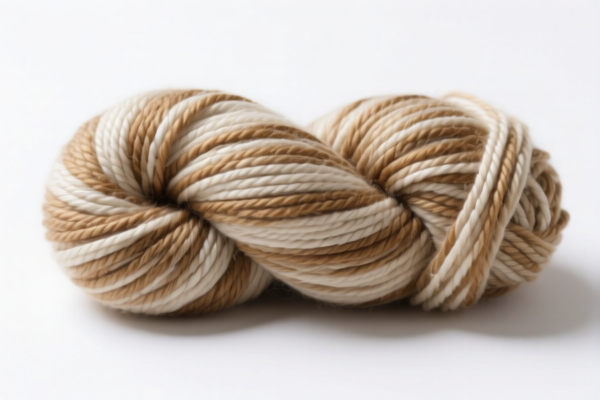
AI Analysis
🪢 Twine, Cordage, Ropes & Cables (Plastic & Sisal Variants)
🌐 HS Code Reference & Customs Clearance Guide | 2026 Updated Tariff Analysis | Professional Compliance Strategy
📌 I. Product Definition: What Are You Actually Shipping?
In international trade, "Twine, Cordage, Ropes, and Cables" is a broad category under Chapter 56 (Flock, felt and nonwovens; thread yarn and their articles). However, customs authorities are strict about distinguishing between the material composition and the specific application.
The two most common classifications for this query are: 1. Plastic-Based Products: Made from Polyethylene (PE) or Polypropylene (PP), often used for packaging, netting, or industrial bundling. 2. Natural Fiber Products: Specifically Sisal or other Agave genus fibers, traditionally used for agricultural baling or heavy-duty binding.
⚠️ Critical Distinction:
- If the product is non-fibrillated (wide flat strips woven into twine) and made of PE/PP → It falls under 5607.49.10.00.
- If the product is binder or baler twine made of Sisal → It falls under 5607.21.00.00.
- Do not mix materials. A plastic rope cannot be declared as Sisal, and vice versa.
📦 II. HS Code Classification Details (2026 Latest Tariff Schedule)
| HS Code | Product Description | Key Characteristics | Typical Use Case |
|---|---|---|---|
5607.49.10.00 |
Twine, cordage, ropes, cables: Of PE/PP: Other: Of wide nonfibrillated strip | Made of Polyethylene/Polypropylene. Non-fibrillated (flat strips woven together, not split fibers). May be coated/impregnated. | Packaging twine, netting backing, industrial bundling straps. |
5607.21.00.00 |
Twine, cordage, ropes, cables: Of Sisal or other Agave fibers: Binder or baler twine | Made from Sisal or similar Agave family plants. Specifically designed for tying bales of hay/crops. | Agricultural baling, traditional heavy-duty binding. |
🔍 Key Clarification:
- "Nonfibrillated strip" in5607.49.10.00refers to a specific manufacturing process where wide plastic strips are woven, rather than being split into thin fibrils (which would fall under different subheadings).
- "Binder/Baler Twine" in5607.21.00.00is strictly for agricultural fiber twine. If you use plastic for baling, you likely fall under the plastic category (5607.49...or similar), not the Sisal category.
💰 III. 2026 Tariff Rate Detailed Analysis
✅ Applicable Country: United States (US)
✅ Origin: China (CN) (Assumed based on common trade context; rates below reflect China-origin specific duties)
✅ Effective Date: Current 2026 Tariff Schedule
🎯 1. 5607.49.10.00 – Plastic Twine/Rope (PE/PP, Nonfibrillated Strip)
| Item | Detail |
|---|---|
| Base Tariff (MFN) | 0.0% |
| Section 301 / Add-on Tariff | 0.0% |
| Total Tax Rate | 0.0% |
| Tax Detail | Base Tariff: 0.0%, Additional Tariff: 0.0% |
| Exemption Eligibility | ✅ Yes (Generally not subject to high Section 301 surcharges compared to other plastic goods) |
| Legal Path | HTSUS: 5607.49.10.00 |
📌 Explanation:
- This specific plastic twine (wide nonfibrillated strip) enjoys a 0% total duty.
- Unlike some other plastics or textiles, this item is currently exempt from significant additional tariffs (such as the 25% or higher Section 301 duties that apply to many other plastic goods).
- Cost Advantage: This is a highly cost-effective classification for importers.
🎯 2. 5607.21.00.00 – Sisal/Baler Twine
| Item | Detail |
|---|---|
| Base Tariff (MFN) | 0.0% |
| Section 301 / Add-on Tariff | +25.0% |
| Total Tax Rate | 25.0% |
| Tax Detail | Base Tariff: 0.0%, Additional Tariff: 25.0% |
| Exemption Eligibility | ❌ No (Subject to 25% additional duty on China-origin goods) |
| Legal Path | HTSUS: 5607.21.00.00 → Section 301 Footnote |
📌 Explanation:
- While the base duty for natural fiber twine is 0%, it is subject to a 25% additional tariff if sourced from China.
- This is because natural fibers often fall under different trade remediation lists or simply do not qualify for the exemptions granted to certain plastic processing materials.
- Cost Impact: Significant increase. A $10,000 shipment incurs $2,500 in additional duties.
🛠️ IV. Customs Clearance Operational Advice
✅ 1. Documentation Checklist (Mandatory)
| Document | Required? | Notes |
|---|---|---|
| ✅ Commercial Invoice | ✔️ | Must clearly state: "Twine/Rope", Material (PE/PP OR Sisal), and HS Code. |
| ✅ Product Description | ✔️ | Specific terms: "Wide nonfibrillated strip" for plastic; "Binder/Baler twine" for Sisal. |
| ✅ Material Composition Statement | ✔️ | Crucial: Must specify "100% Polyethylene" or "100% Sisal Fiber". Mixed materials may require different classification. |
| ✅ Packaging List | ✔️ | Include net/gross weight. |
| ✅ Fiber Content Label | ✔️ | Required by FTC if sold in US retail. |
✅ 2. Classification Tips (Avoid Misclassification)
| Scenario | Correct HS Code | Risk of Wrong Code |
|---|---|---|
| Plastic Rope, Round, Fibrillated | Not 5607.49.10.00 |
⚠️ High Risk: May fall under 5607.50 or other plastic categories with different duties. Must specify "Nonfibrillated Strip". |
| Sisal Rope, Not for Baling | Not 5607.21.00.00 |
⚠️ Medium Risk: May fall under 5607.51 (Other sisal cordage) which might have different add-on duty statuses. |
| Mixed Material (e.g., Sisal core + Plastic wrap) | Depends on Essential Character | ⚠️ High Risk: Complex classification. Likely treated as Plastic (5607.49) due to coating/sheathing, but needs detailed analysis. |
✅ 3. Special Notes for Plastic Twine (5607.49.10.00)
- "Nonfibrillated" is Key: Ensure your product description explicitly mentions "wide nonfibrillated strip". If customs inspectors suspect the product is fibrillated (split film), they may reclassify it to a different subheading with higher duties.
- Coatings: If the plastic twine is coated with rubber or plastics, it still falls under
5607.49as long as it meets the "twine/cordage" definition. However, detailed labeling helps avoid delays.
🌍 V. Global Market Comparison (2026)
| Country/Region | Recommended HS Code | Tariff (China Origin) | Key Certification | Note |
|---|---|---|---|---|
| 🇺🇸 USA | 5607.49.10.00 |
0.0% | None specific | Best for plastic twine. Low duty advantage. |
| 🇺🇸 USA | 5607.21.00.00 |
25.0% | None specific | Sisal twine incurs 25% add-on. |
| 🇪🇺 EU | 5607.49 |
~5-6% | REACH (if coated) | Plastic twine generally moderate duty. |
| 🇨🇳 China | 5607.49 |
~5-6% | CCC (if applicable) | Import into China for re-export? Check zones. |
📌 Conclusion:
- For Plastic Twine (PE/PP), the US offers a 0% duty advantage.
- For Sisal Twine, expect a 25% surcharge from the US if originating from China.
- Strategy: If you are using Sisal for agricultural purposes but are exposed to 25% duty, consider if natural jute (different HS code) or synthetic alternatives (0% duty) might be viable substitutes depending on strength requirements.
📌 VI. Common Errors & Pitfalls
❌ Error 1: Declaring "Plastic Rope" generically without specifying "Nonfibrillated Strip".
👉 Consequence: Customs may misclassify under 5607.50 (Other plastic cordage) which could have different duty rates (possibly higher or lower, but unpredictable).
❌ Error 2: Using "Sisal" description for Plastic Twine to avoid Section 301.
👉 Consequence: Fraud Penalty. If physical inspection reveals plastic fibers, penalties include seizure, fines, and loss of import privileges.
❌ Error 3: Ignoring the "Binder/Baler" distinction for Sisal.
👉 Consequence: If the Sisal twine is for general use (not baling), it may fall under 5607.51 (Other sisal), which might have different duty rates. Ensure the use case matches the description.
✅ Correct Practice:
"Polypropylene Twine, Wide Nonfibrillated Strip, Impregnated with UV Stabilizer, for Agricultural Netting Support, Model XYZ, 100% PP"
🎯 VII. Conclusion: Professional Classification for Cost Savings
🎯 Key Takeaway:
🔹 Plastic (PE/PP) Twine: Aim for
5607.49.10.00→ 0% Duty.
🔹 Sisal Twine:5607.21.00.00→ 25% Duty (if China origin).
🔹 Description Matters: "Nonfibrillated" and "Binder/Baler" are critical keywords for accurate classification.
📌 Pro Tip:
If you are importing large volumes of plastic twine, the 0% duty rate makes it a highly competitive product in the US market. Ensure your supplier provides accurate manufacturing details to confirm the "nonfibrillated" status to lock in this favorable rate.
📣 Immediate Action:
📞 Verify material composition with supplier.
📄 Specify "Wide Nonfibrillated Strip" in commercial invoice for plastic goods.
🚀 Secure your 0% duty advantage for plastic cordage!
✨ Accurate Classification, Zero Surprises!
💼 Save 25% on duties by choosing the right HS Code!
Customer Reviews
About HS Code Classification
The Harmonized System (HS) is an internationally standardized nomenclature developed by the World Customs Organization (WCO) to classify traded products. Over 200 countries use the HS system as the basis for customs tariffs, trade statistics, and import/export regulations.
Each HS code follows a hierarchical structure:
- Chapter (2 digits) — Broad category of goods (e.g., Chapter 84: Machinery and Mechanical Appliances)
- Heading (4 digits) — More specific grouping within the chapter
- Subheading (6 digits) — Internationally standardized breakdown, used by all WCO member countries
- National subdivisions (8-10 digits) — Country-specific extensions for further classification, such as US HTSUS 10-digit codes
Correct HS code classification is essential for smooth customs clearance, accurate duty payment, and compliance with trade regulations. Misclassification can lead to customs delays, overpayment of duties, or penalties.
When importing from CN to US, the applicable tariff rates may include:
- Most-Favored-Nation (MFN) rate — The standard duty rate applied to WTO members
- General rate — Applied to countries without trade agreements
- Trade remedy duties — Additional tariffs such as Section 301 (anti-dumping), Section 232 (national security), or countervailing duties
The information provided on this page is for reference purposes only. For official classification, please consult with your local customs authority or a licensed customs broker.