Twisted Steel Bar for Concrete Reinforcement
CN → US| HS Code | Tariff Rate | Origin | Destination | Doc |
|---|---|---|---|---|
| 7214200000 | 10.0% | CN | US | Official Doc |
| 7214990016 | 10.0% | CN | US | Official Doc |
| 7308906000 | 85.0% | CN | US | Official Doc |
| 7308909590 | 85.0% | CN | US | Official Doc |
Product Images
AI Analysis
🏗️ Twisted Steel Bar for Concrete Reinforcement (Deformed Steel Bars)
🌐 HS Code Reference & Customs Clearance Guide | 2026 Latest Tariff Analysis | Professional Clearance Strategy
📌 Part I: Product Definition & Classification: What Exactly Are "Twisted Steel Bars"?
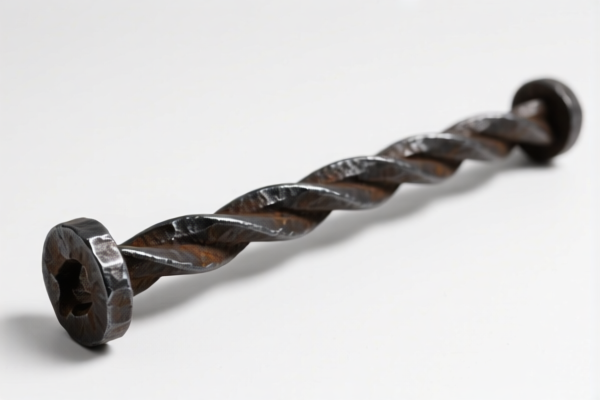
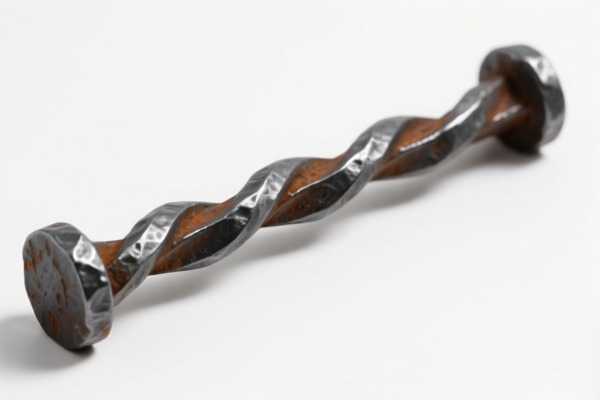
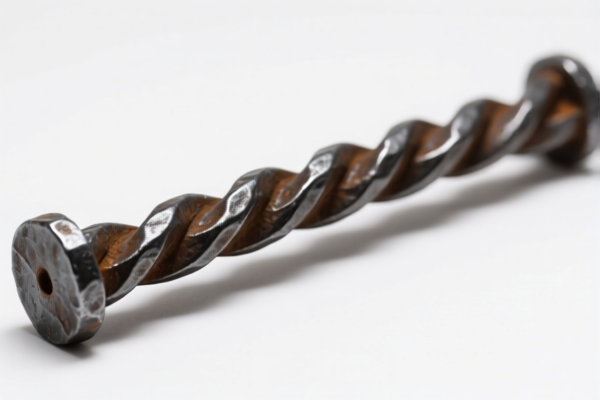
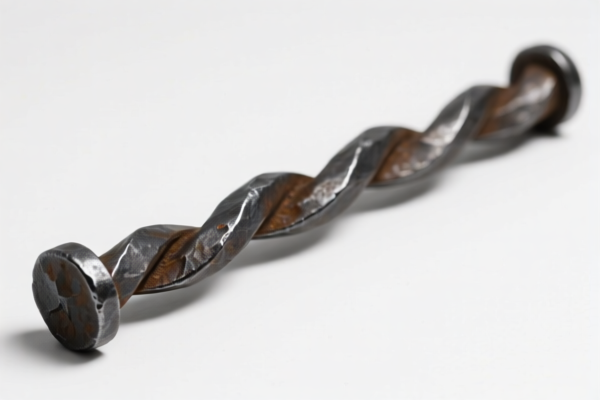
Twisted Steel Bars (commonly known as Deformed Bars or Rebar) are the backbone of modern construction, specifically designed for concrete reinforcement. In international trade, their classification hinges on three key factors: 1. Material: They are made of Iron or Non-Alloy Steel. 2. Form: They are Rolled and Twisted/Deformed (to enhance bond strength with concrete). 3. Usage: They serve as structural elements for building foundations, bridges, and infrastructure.
⚠️ Key Distinction:
- If the bar is primarily a structural element (used as part of a building's skeleton), it may fall under Chapter 73 (Articles of Iron or Steel).
- If the bar is simply rolled steel stock (even if twisted) before being processed into a specific structural unit, it falls under Chapter 72 (Iron and Steel).
- The Critical Risk: Misclassification between "Steel Products" (Ch 72) and "Articles of Iron/Steel" (Ch 73) can lead to massive tariff discrepancies (e.g., 10% vs. 85%+).
📦 Part II: HS Code Classification Details (2026 Latest Tariff Authority Cross-Reference)
| HS Code | Product Description | Applicable Scenario | Key Matching Criteria |
|---|---|---|---|
7214.20.00.00 |
Bars and Rods, Rolled, Forged or Otherwise Formed, but Not Further Worked than Twisted, of Iron or Non-Alloy Steel | General construction rebar, twisted steel stock | Form: "Twisted Steel" (轧后扭曲). Material: Steel. Use: Concrete reinforcement. |
7214.99.00.16 |
Other Bars and Rods, of Iron or Non-Alloy Steel | High-strength twisted bars, specialized rebar | Form: Twisted bar (rod). Material: Non-alloy steel. Logic: Fits "Other" category if not specifically 7214.20. |
7308.90.60.00 |
Towers, Lattices, Grids and the like, of Iron or Steel; Plates, Rods, Angles, Shapes, Sections, Tubes and the like, Prepared for Use in Construction | Structural steel components for buildings | Material: Steel/Rebar. Form: Structural unit/component. Use: Structural reinforcement. |
7308.90.95.90 |
Other Structures (Including Prefabricated Buildings) and Parts of Structures of Iron or Steel; Plates, Rods, Angles, Shapes, Sections, Tubes and the like, Prepared for Use in Construction | General steel structural parts | Material: Steel. Form: Rod/Bar/Twisted. Logic: Steel products for structural use. |
🔍 Critical Warning:
- Ch 72 (7214.xxxx) treats the bar as a semi-finished or basic steel product.
- Ch 73 (7308.xxxx) treats the bar as a finished structural article.
- The Tariff Trap: Ch 73 codes often attract Significantly Higher Tariffs due to Section 301 and IEEPA penalties on steel articles. Ch 72 codes may have lower base penalties but still face specific trade remedies.
💰 Part III: 2026 Latest Tariff Rate Breakdown (Including Surtaxes & Policy Add-ons)
✅ Applicable Country: United States (US)
✅ Origin: China (CN)
✅ Effective Date: Post-November 10, 2025 (Including subsequent imports)
🎯 1. 7214.20.00.00 —— Twisted Steel Bars (Rolled, Not Further Worked)
| Item | Content |
|---|---|
| Base Duty Rate | 0.0% |
| Section 301 Surtax | 0.0% (Note: Base duty is 0%, no standard 301 addition for this specific subheading in some interpretations, but see below) |
| IEEPA Section 122 Tariff | +10.0% |
| Total Effective Rate | 10.0% |
| Tax Calculation | CIF Value × 10% |
| De Minimis Exemption | ❌ No (Denied) |
| Legal Basis Path | IEEPA:9903.01.25 → USITC:7214.20.00.00 |
📌 Explanation:
- This code is classified under Chapter 72 (Iron and Steel), which is treated as raw material/semi-finished steel.
- The 10% tariff is specific to Section 122 (National Security/Steel) or similar IEEPA provisions for steel products.
- Advantage: Significantly lower than structural steel articles.
🎯 2. 7214.99.00.16 —— Other Steel Bars (Twisted)
| Item | Content |
|---|---|
| Base Duty Rate | 0.0% |
| Section 301 Surtax | 0.0% |
| IEEPA Section 122 Tariff | +10.0% |
| Total Effective Rate | 10.0% |
| Tax Calculation | CIF Value × 10% |
| De Minimis Exemption | ❌ No (Denied) |
| Legal Basis Path | IEEPA:9903.01.25 → USITC:7214.99.00.16 |
📌 Note:
- Similar to7214.20, this falls under Chapter 72.
- The 10% IEEPA tariff applies because it is a steel product subject to national security surcharges.
- Key: Ensure the product is not "further worked" (e.g., bent into shapes) to stay in Ch 72.
🎯 3. 7308.90.60.00 —— Structural Steel Articles (Rebar as Structural Component)
| Item | Content |
|---|---|
| Base Duty Rate | 0.0% |
| Section 301 Surtax | +25.0% (Standard 301 on Steel Articles) |
| IEEPA Section 122 Tariff | +10.0% |
| Section 232/Steel Surtax | +50.0% (Steel, Aluminum, Copper Products Surtax) |
| Total Effective Rate | 85.0% |
| Tax Calculation | CIF Value × 85% |
| De Minimis Exemption | ❌ No (Denied) |
| Legal Basis Path | IEEPA:9903.01.24 → USITC:7308.90.60.00 → FOOTNOTE:Steel Surtax |
📌 Critical Warning:
- This code classifies the rebar as a finished structural article.
- It triggers three layers of tariffs:
1. 25% Section 301 (Trade War Tariff)
2. 10% IEEPA Section 122 (National Security)
3. 50% Steel/Copper Surtax (Specific to steel products)
- Result: An effective duty rate of 85%. This is prohibitively expensive for most commercial shipments.
🎯 4. 7308.90.95.90 —— Other Structural Steel Parts
| Item | Content |
|---|---|
| Base Duty Rate | 0.0% |
| Section 301 Surtax | +25.0% |
| IEEPA Section 122 Tariff | +10.0% |
| Section 232/Steel Surtax | +50.0% |
| Total Effective Rate | 85.0% |
| Tax Calculation | CIF Value × 85% |
| De Minimis Exemption | ❌ No (Denied) |
| Legal Basis Path | IEEPA:9903.01.24 → USITC:7308.90.95.90 |
📌 Note:
- Like7308.90.60, this is a structural article classification.
- Same 85% total tariff applies due to the combination of Section 301, IEEPA, and Steel Surtax.
- Risk: High audit risk if customs deems "twisted bars" as unfinished steel (Ch 72) rather than finished articles (Ch 73).
🛠️ Part IV: Customs Clearance Practical Advice (Pitfall Avoidance Guide)
✅ 1. Document Checklist (Non-Negotiable)
| Document | Must Provide | Explanation |
|---|---|---|
| ✅ Product Specification Sheet | ✔️ | Must state: "Twisted Steel Bar," "Non-Alloy Steel," "For Concrete Reinforcement." |
| ✅ Technical Drawing | ✔️ | Show the "twisted" surface profile to prove it is rolled/deformed, not further welded/bent. |
| ✅ Commercial Invoice | ✔️ | Clearly describe as "Twisted Steel Bars for Concrete" (avoid vague terms like "Metal Rod"). |
| ✅ Certificate of Origin (CO) | ✔️ | Essential for proving origin (China) to apply correct IEEPA/301 rates. |
| ✅ Packing List | ✔️ | Detail weight, quantity, and dimensions. |
✅ 2. Classification Strategy (The Golden Rule)
🔥 "Twisted = Chapter 72. Structured = Chapter 73. Choose Wisely!"
| Scenario | Correct HS Code | Risk Level | Why? |
|---|---|---|---|
| Straight, twisted rebar coils | 7214.20.00.00 or 7214.99.00.16 |
⚠️ Medium | Treated as rolled steel. Lower tax (10%). |
| Pre-bent, pre-fabricated steel cages | 7308.90.60.00 |
🔴 High | Treated as structural article. High tax (85%). |
| Twisted rebar cut to length | 7214.20.00.00 |
⚠️ Medium | Still basic steel if not assembled into a structure. |
📌 Key Insight:
- To benefit from the 10% tariff, ensure the product is declared as "Rolled Steel Products" (Ch 72) rather than "Structural Articles" (Ch 73).
- Do NOT describe the product as "Pre-fabricated Structural Components" if it is just twisted bars.
✅ 3. Special Considerations
| Situation | Handling Advice |
|---|---|
| Mixed Shipments | If shipping both rebar (Ch 72) and structural steel parts (Ch 73), separate invoices are mandatory. Mixing leads to audit of the entire shipment at the highest rate. |
| Origin Marking | Ensure all bars are marked with origin (e.g., "Made in China") to facilitate IEEPA compliance. |
| Pre-Ruling Request | Given the 75% tariff difference (10% vs 85%), apply for an Advance Ruling from US Customs before shipping. |
🌍 Part V: Global Market Clearance Comparison (2026 Latest)
| Country/Region | Recommended HS Code | Tariff Rate | Certification Requirement | Notes |
|---|---|---|---|---|
| 🇺🇸 USA | 7214.20.00.00 |
10% | None specific | Avoid Ch 73 unless necessary. 85% tax is punitive. |
| 🇨🇳 China | 7214.20.00.00 |
5% | None | Low import duty. |
| 🇪🇺 EU | 7308.90.60.00 |
0-2% | CE (if structural) | No Section 301/IEEPA. Standard duty applies. |
| 🇦🇺 Australia | 7214.20.00.00 |
5% | None | Standard MFN duty. |
| 🇯🇵 Japan | 7214.20.00.00 |
0-3% | JIS Standard | Low duty, high quality standards. |
📌 Conclusion:
- USA is the most challenging market due to IEEPA and Section 301 tariffs.
- Strategy: Insist on Ch 72 classification for standard twisted rebar.
- Other Markets: Generally low risk and low duty.
📌 Part VI: Common Errors & Pitfalls (Blood Lessons)
❌ Error 1: Declaring "Twisted Rebar" as "Structural Steel" (7308.xxxx)
👉 Consequence: 85% tariff instead of 10%. Lose 75% margin!
❌ Error 2: Using vague terms like "Metal Rods" or "Iron Bars"
👉 Consequence: Customs may classify under worst-case scenario (e.g., unlisted articles → 25%+ tariff).
❌ Error 3: Ignoring "Twisted/Deformed" Description
👉 Consequence: Customs may classify as smooth rods (7213.xxxx), which may have different 301/IEEPA applicability, leading to underpayment penalties.
✅ Correct Practice:
"Twisted Steel Bars for Concrete Reinforcement, Non-Alloy Steel, Hot-Rolled, Compliant with ASTM A615, Origin: China"
🎯 Part VII: Conclusion: Precision Classification Saves Millions!
🎯 Remember the Mantra:
🔹 "Twisted Bars = Ch 72 (10% Tax). Structural Parts = Ch 73 (85% Tax)."
🔹 "One word change: 'Bar' vs 'Structure'. One percent change: 10% vs 85%."
📌 Pro Tip:
If your supplier claims the product is "Structural Steel," request the mill test report and shape details. If it is not pre-assembled into a building component, fight for Ch 72 classification in your customs broker's declaration.
📣 Immediate Action:
📞 Contact your customs broker NOW to file an Advance Ruling for
7214.20.00.00.
🚀 Protect your margins, ensure smooth clearance, and avoid 85% tariff shock!
✨ Professional Clearance Starts with Accurate Classification!
💼 Every Dollar Saved is Pure Profit!
Customer Reviews
About HS Code Classification
The Harmonized System (HS) is an internationally standardized nomenclature developed by the World Customs Organization (WCO) to classify traded products. Over 200 countries use the HS system as the basis for customs tariffs, trade statistics, and import/export regulations.
Each HS code follows a hierarchical structure:
- Chapter (2 digits) — Broad category of goods (e.g., Chapter 84: Machinery and Mechanical Appliances)
- Heading (4 digits) — More specific grouping within the chapter
- Subheading (6 digits) — Internationally standardized breakdown, used by all WCO member countries
- National subdivisions (8-10 digits) — Country-specific extensions for further classification, such as US HTSUS 10-digit codes
Correct HS code classification is essential for smooth customs clearance, accurate duty payment, and compliance with trade regulations. Misclassification can lead to customs delays, overpayment of duties, or penalties.
When importing from CN to US, the applicable tariff rates may include:
- Most-Favored-Nation (MFN) rate — The standard duty rate applied to WTO members
- General rate — Applied to countries without trade agreements
- Trade remedy duties — Additional tariffs such as Section 301 (anti-dumping), Section 232 (national security), or countervailing duties
The information provided on this page is for reference purposes only. For official classification, please consult with your local customs authority or a licensed customs broker.