Two Fruit Forks
CN → US| HS Code | Tariff Rate | Origin | Destination | Doc |
|---|---|---|---|---|
| 3924102000 | 24.0% | CN | US | Official Doc |
| 8215991500 | 0.0% | CN | US | Official Doc |
| 3924104000 | 13.4% | CN | US | Official Doc |
| 6911108010 | 38.3% | CN | US | Official Doc |
| 6911108090 | 38.3% | CN | US | Official Doc |
Product Images
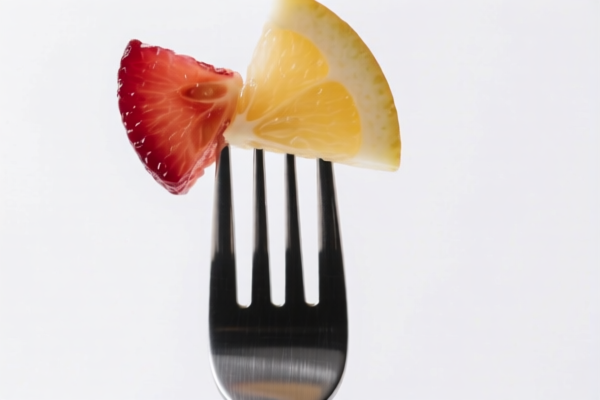
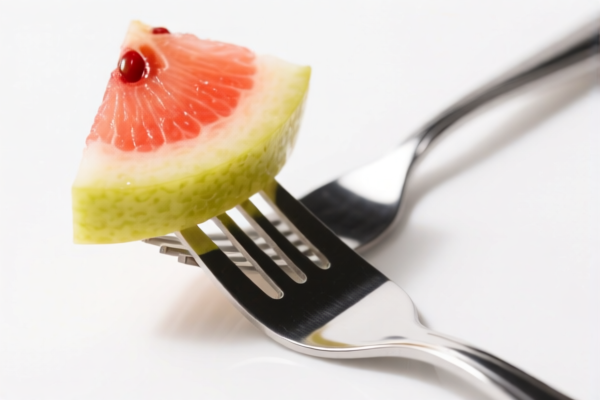


AI Analysis
🍴 Fruit Forks (Fruit Forks)
🌐 HS Code Reference & Clearance Guide | 2026 Latest Tariff Analysis | Professional Clearance Strategy
📌 Part I: Product Definition & Classification: Do You Really Understand "Fruit Forks"?
Fruit forks are small utensils primarily used for eating fruit, desserts, or appetizers. In international trade, their classification depends strictly on material and functional design. Misclassification can lead to drastic differences in tariff costs, especially under current US trade policies.
⚠️ Key Distinction Points:
- Plastic Material: Generally falls under Chapter 39 (Plastics). Lower base duty but subject to Section 301/IEEPA surcharges. - Metal/Stainless Steel Material: Generally falls under Chapter 82 (Tools, Cutlery) or Chapter 73 (Articles of Iron/Steel). Often has a per-unit duty + ad valorem rate. - Ceramic/Porcelain Material: Falls under Chapter 69 (Ceramic Products). Higher base duty. - Mixed Material (e.g., Metal Handle + Plastic Head): Classification can be complex; usually determined by the essential character of the item.
📦 Part II: HS Code Classification Details (2026 Latest Tariff Authority Comparison)
| HS Code | Product Description | Material Inference | Applicable Scenario |
|---|---|---|---|
3924.10.20.00 |
Tableware of plastics, plates, bowls, etc. | Plastic or Metal (Misidentified as Plastic) | Plastic fruit forks, mixed materials where plastic is essential |
8215.99.15.00 |
Cutlery of base metal, other (forks, knives, etc.) | Metal or Stainless Steel | Metal/Stainless steel fruit forks |
3924.10.40.00 |
Tableware of plastics, other | Plastic | Plastic fruit forks (specific sub-category) |
6911.10.80.10 |
Tableware of ceramic | Ceramic, Metal, or Plastic (Misidentified) | Ceramic fruit forks |
6911.10.80.90 |
Tableware of ceramic, other | Metal or Ceramic | Ceramic fruit forks (other ceramic variants) |
🔍 Key Reminder:
- Material is King: Customs will physically inspect or require detailed specs to determine if the fork is3924(Plastic),8215(Metal), or6911(Ceramic). - Packaging Does Not Change Classification: A plastic fork in a metal box is still3924. A metal fork in a plastic box is still8215. - Function: Even if used as "tableware," the material dictates the chapter, not the use.
💰 Part III: 2026 Latest Tariff Rate Details (Including Surcharge, Policy Surcharge)
✅ Applicable Country: United States (US)
✅ Origin: China (CN)
✅ Effective Time: 2025/2026 (Current Trade Policy)
🎯 1. 3924.10.20.00 —— Plastic Tableware (Fruit Fork)
| Item | Content |
|---|---|
| Base Duty | 6.5% |
| Section 301 Surcharge | 7.5% |
| IEEPA Surcharge (122 Clause) | 10% |
| Total Effective Rate | 24.0% |
| Calculation Method | CIF Value × 24% |
| De Minimis Exemption | ❌ Not Eligible (Section 301 goods are excluded) |
| Legal Basis Path | HTSUS:3924.10.20.00 → USITC:Section 301 → IEEPA:122 |
📌 Explanation:
- Base Duty 6.5%: Standard US tariff for plastic tableware. - Surcharge 7.5% + 10%: Combined trade remedy duties applicable to Chinese-origin plastics. - Total 24%: A significant cost increase. Must be factored into FOB pricing.
🎯 2. 8215.99.15.00 —— Metal Cutlery (Fruit Fork)
| Item | Content |
|---|---|
| Base Duty | $0.4¢ per piece + 4.8% |
| Section 301 Surcharge | 7.5% |
| IEEPA Surcharge (122 Clause) | 10% |
| Total Effective Rate | $0.4¢/ea + 22.3% (Ad Valorem + Fixed) |
| Calculation Method | (CIF Value × 22.3%) + ($0.004 × Quantity) |
| De Minimis Exemption | ❌ Not Eligible |
| Legal Basis Path | HTSUS:8215.99.15.00 → USITC:Section 301 → IEEPA:122 |
📌 Explanation:
- Complex Structure: This HS code has a compound duty: a fixed fee per item ($0.4 cents) PLUS an ad valorem percentage. - Ad Valorem Component: 4.8% (base) + 7.5% (301) + 10% (IEEPA) = 22.3% of CIF value. - Fixed Component: $0.004 per fork. For large volumes, this adds up. - Impact: For cheap plastic forks, the percentage matters more. For expensive silverware, the fixed fee is negligible, but the percentage is still high.
🎯 3. 3924.10.40.00 —— Other Plastic Tableware
| Item | Content |
|---|---|
| Base Duty | 3.4% |
| Section 301 Surcharge | 0.0% |
| IEEPA Surcharge (122 Clause) | 10% |
| Total Effective Rate | 13.4% |
| Calculation Method | CIF Value × 13.4% |
| De Minimis Exemption | ❌ Not Eligible |
| Legal Basis Path | HTSUS:3924.10.40.00 → IEEPA:122 |
📌 Explanation:
- Lower Rate: This sub-category has no Section 301 surcharge (0.0%), only the IEEPA 10% surcharge. - Why Lower?: Different classification under "Other" plastics may benefit from different trade policy exclusions or lower base rates. - Optimization Opportunity: If the product can be classified here instead of3924.10.20.00, savings are significant (13.4% vs 24.0%). Requires strict material specification compliance.
🎯 4 & 5. 6911.10.80.10 & 6911.10.80.90 —— Ceramic Tableware
| Item | Content |
|---|---|
| Base Duty | 20.8% |
| Section 301 Surcharge | 7.5% |
| IEEPA Surcharge (122 Clause) | 10% |
| Total Effective Rate | 38.3% |
| Calculation Method | CIF Value × 38.3% |
| De Minimis Exemption | ❌ Not Eligible |
| Legal Basis Path | HTSUS:6911.10.80.10/90 → USITC:Section 301 → IEEPA:122 |
📌 Explanation:
- Highest Duty: Ceramic tableware faces the highest total tariff burden. - Base Duty 20.8%: Ceramic items are taxed higher than plastic or metal in some categories. - Surcharges: Fully subject to both Section 301 (7.5%) and IEEPA (10%). - Recommendation: Avoid importing ceramic fruit forks from China to the US if cost sensitivity is high. Consider local sourcing or alternative materials.
🛠️ Part IV: Clearance Practical Advice (Pitfall Avoidance Guide)
✅ 1. Document Preparation Checklist (Non-Negotiable)
| Document | Required | Explanation |
|---|---|---|
| ✅ Product Specifications | ✔️ | Must clearly state material (e.g., "100% PP Plastic," "304 Stainless Steel"). |
| ✅ Product Photos | ✔️ | Clear images showing material texture, handle structure, and any mixed components. |
| ✅ Commercial Invoice | ✔️ | Must match HS Code description exactly (e.g., "Plastic Fruit Forks," not just "Fork"). |
| ✅ Packing List | ✔️ | Include quantity per carton to verify the $0.4¢/ea calculation for 8215.99.15.00. |
| ✅ Origin Certificate | ✔️ | Crucial for proving Chinese origin to apply/avoid surcharges correctly. |
✅ 2. Declaration Techniques (Key Mnemonics)
🔥 "Material First, Code Matches, Mix Up is Costly!"
| Situation | Correct Declaration | Error Consequence |
|---|---|---|
| Plastic Fork | 3924.10.20.00 or 3924.10.40.00 |
If declared as Metal → Duty mismatch → Penalty |
| Metal Fork | 8215.99.15.00 |
If declared as Plastic → Lower duty claimed, but Customs inspection reveals metal → Back taxes + Fine |
| Ceramic Fork | 6911.10.80.10 |
If declared as Plastic → 24% duty instead of 38.3% → Severe Penalty for Fraud |
| Mixed Material | Determine "Essential Character" | Misclassification → Delay in Clearance |
✅ 3. Special Considerations
| Situation | Handling Advice |
|---|---|
| Plastic + Metal Handle | If metal handle provides essential character → 8215. If plastic head dominates → 3924. Provide detailed specs. |
| Disposable Plastic Forks | Ensure they fall under 3924.10.20.00 or 3924.10.40.00. Avoid misclassifying as "Kitchenware" in wrong chapter. |
| Bulk vs. Retail | Duty calculation is on CIF value. For 8215, quantity matters for the fixed fee. |
| De Minimis (Section 321) | NOT AVAILABLE for these HS Codes due to Section 301 and IEEPA surcharges on Chinese goods. |
🌍 Part V: Global Market Comparison (2026 Latest)
| Country/Region | Recommended HS Code | Total Duty (CN Origin) | Certification | Notes |
|---|---|---|---|---|
| 🇺🇸 USA | 3924.10.20.00 / 8215.99.15.00 |
24.0% / 22.3%+ | FDA (if food contact) | High Surcharge: 17.5% total surcharge (301+IEEPA) |
| 🇨🇳 China | 3924.10.20.00 / 8215.99.15.00 |
Varies (MFN) | CCC (if applicable) | Lower base duty, no Section 301 |
| 🇪🇺 EU | 3924.10.20.00 / 8215.99.15.00 |
Varies (0-6.5%) | LFGB (Food Contact) | No US-style surcharges, but high VAT |
| 🇬🇧 UK | 3924.10.20.00 / 8215.99.15.00 |
Varies (0-6.5%) | UKCA | Post-Brexit rules apply |
📌 Conclusion:
- USA is the most expensive market for Chinese fruit forks due to Section 301 + IEEPA surcharges. - Plastic (3924.10.40.00) offers the lowest total duty (13.4%) if correctly classified. - Metal (8215.99.15.00) has a compound duty, making it costly for low-value items. - Ceramic (6911.10.80.90) is the most expensive (38.3%).
📌 Part VI: Common Mistakes & Pitfall Guide (Blood & Tears Lessons)
❌ Mistake 1: Declaring Metal Forks as Plastic to Avoid $0.4¢ Fee
👉 Consequence: Customs inspection reveals metal → Back taxes + 25% Penalty for misdeclaration.
❌ Mistake 2: Ignoring the IEEPA 10% Surcharge
👉 Consequence: Underpaying duties → Seizure of goods or forced return.
❌ Mistake 3: Using Vague Descriptions like "Fork"
👉 Consequence: Customs cannot determine material → Holds for Inspection → Delay in clearance.
✅ Correct Practice:
"Plastic Fruit Forks, 100% Polypropylene, Disposable, 7.5 inches, FDA Approved, HS Code: 3924.10.20.00"
🎯 Part VII: Conclusion: Professional Declaration, Save Time, Reduce Cost!
🎯 Remember Mnemonics:
🔹 "Plastic Check Chapter 39, Metal Check Chapter 82, Ceramic is Chapter 69!"
🔹 "Surcharge is 17.5%, Total Duty High, De Minimis is Gone!"
🔹 "If you can classify as 3924.10.40.00, Save 10% instantly!"
📌 Pro Tip:
If your product is not originally from China (e.g., Vietnam, Thailand), you may avoid IEEPA surcharges, reducing total duty significantly.
Recommendation: Apply for Advance Ruling or consult a customs broker to confirm the exact HS Code based on material composition.
📣 Immediate Action:
📞 Contact a licensed customs broker + Provide Material Specs + Confirm HS Code
🚀 Let your fruit forks, clear smoothly, maximize profit, and expand globally!
✨ Professional Clearance Starts with Accurate Classification!
💼 Every Cent of Cost Deserves Precise Calculation!
Customer Reviews
About HS Code Classification
The Harmonized System (HS) is an internationally standardized nomenclature developed by the World Customs Organization (WCO) to classify traded products. Over 200 countries use the HS system as the basis for customs tariffs, trade statistics, and import/export regulations.
Each HS code follows a hierarchical structure:
- Chapter (2 digits) — Broad category of goods (e.g., Chapter 84: Machinery and Mechanical Appliances)
- Heading (4 digits) — More specific grouping within the chapter
- Subheading (6 digits) — Internationally standardized breakdown, used by all WCO member countries
- National subdivisions (8-10 digits) — Country-specific extensions for further classification, such as US HTSUS 10-digit codes
Correct HS code classification is essential for smooth customs clearance, accurate duty payment, and compliance with trade regulations. Misclassification can lead to customs delays, overpayment of duties, or penalties.
When importing from CN to US, the applicable tariff rates may include:
- Most-Favored-Nation (MFN) rate — The standard duty rate applied to WTO members
- General rate — Applied to countries without trade agreements
- Trade remedy duties — Additional tariffs such as Section 301 (anti-dumping), Section 232 (national security), or countervailing duties
The information provided on this page is for reference purposes only. For official classification, please consult with your local customs authority or a licensed customs broker.