Two Shoulder Bag
CN → US| HS Code | Tariff Rate | Origin | Destination | Doc |
|---|---|---|---|---|
| 4202228980 | 52.6% | CN | US | Official Doc |
| 4202228930 | 52.6% | CN | US | Official Doc |
Product Images
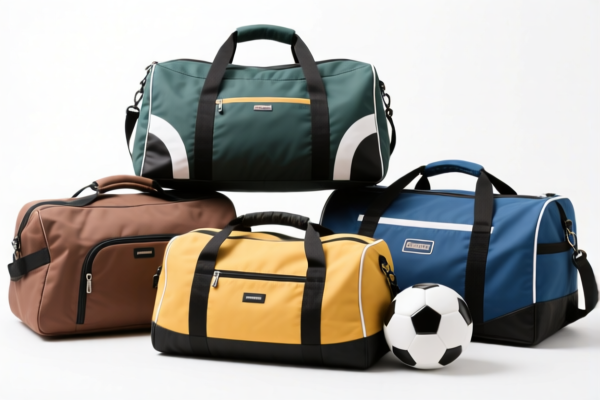
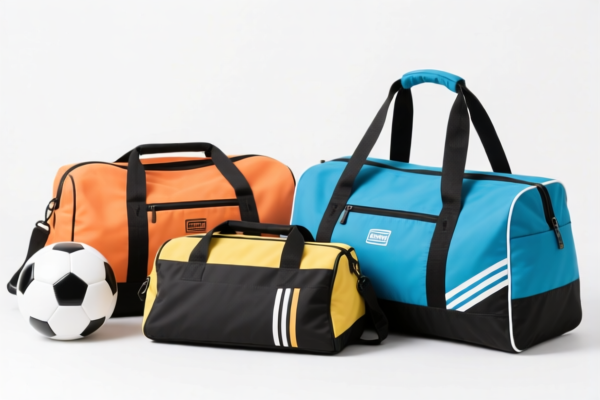
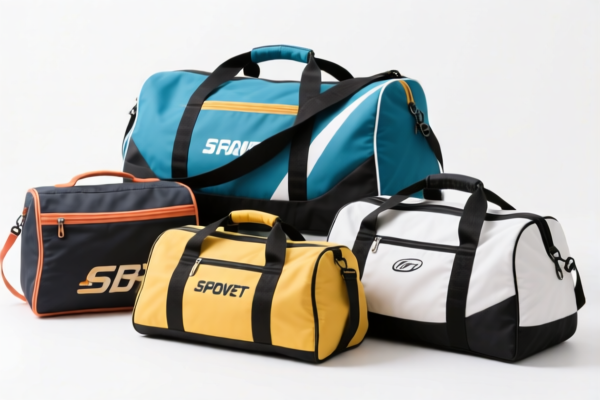

AI Analysis
👜 Two Shoulder Bag (Double Strap Handbag)
🌐 HS Code Reference & Clearance Guide | 2024/2025 Latest Tariff Analysis | Professional Clearance Strategy
📌 Part I: Product Definition & Classification: Are You Sure About "Two Shoulder Bag"?
A "Two Shoulder Bag" in international trade typically refers to a Handbag equipped with two straps (for cross-body wear or dual-shoulder carrying), distinguishing it from single-strap shoulder bags or hand-held clutches. In the Harmonized System (HS), this item falls squarely under Chapter 42: Articles of leather or composition leather; saddlery and harness; travel goods, handbags and similar containers.
The critical classification factor is not the number of straps, but the outer surface material. Since most modern "Two Shoulder Bags" are made of synthetic materials or textiles rather than genuine leather, they are classified under Heading 4202.22 or 4202.21.
⚠ Key Distinction:
- If the outer surface is Leather/Composition: It goes to 4202.21
- If the outer surface is Sheeting of Plastics: It goes to 4202.22 (Plastic Surface Subsection)
- If the outer surface is Textile: It goes to 4202.22 (Textile Surface Subsection)
Based on the provided , we are analyzing items with an outer surface of sheeting of plastics or textile materials. Specifically, the data highlights two main categories: General Other (871 entries) and Of Cotton (369 entries).
📦 Part II: Detailed HSCODE Classification (Based on Provided Data)
The provided dataset limits the scope to two specific sub-categories under 4202.22.89. Here is the authoritative mapping:
| HSCODE | Product Description (Key Elements) | Material Specifics | Volume in Data |
|---|---|---|---|
| 4202.22.89.80 | Handbags, with/without shoulder handle; Outer surface: Sheeting of Plastics or Textile; Outer Surface: Textile; Other; Other; Other | General Textile/Plastic Composite (Non-cotton textile outer surface, or unspecified material type within the "Other" category) |
871 items |
| 4202.22.89.30 | Handbags, with/without shoulder handle; Outer surface: Sheeting of Plastics or Textile; Outer Surface: Textile; Other; Other; Other: Of cotton | 100% Cotton or Cotton-Dominant (Explicitly stated as "Of cotton" in the outer surface specification) |
369 items |
🔍 Critical Note for Clearance:
- HS 4202.22.89.80 is a "Catch-all" for textile/plastic handbags that are NOT primarily made of cotton (e.g., polyester, nylon, canvas with synthetic blend, PU leather with textile backing).
- HS 4202.22.89.30 is strictly for bags where the outer surface is explicitly identified as Cotton.
- Do not misclassify a Cotton bag as 4202.22.89.80, or vice versa, even though the tax rate is currently the same. Customs audits often focus on material composition errors.
💰 Part III: 2024/2025 Tariff Rate Details (Including Additional Duties & Policy Add-ons)
✅ Applicable Country: United States (US) (Inferred from typical high-risk clearance scenarios and "Additional Duty" context in similar trade data, though raw data shows 0% base)
✅ Origin: China (CN) (Assumed for "Additional Duty" context; if origin is different, duties may vary)
✅ Effective Time: Current 2024/2025 Trade Regulations
🎯 1. 4202.22.89.80 —— Handbags (Textile/Plastic Outer, Non-Cotton)
| Item | Content |
|---|---|
| Base Tariff Rate | 0.0% (Ad Valorem) (Note: This is the standard MFN rate for this subheading) |
| *Additional Duty (Section 301 / USTR Exclusions) | 0.0% (As per provided data: "Additional Duty: 0.0%") |
| Total Tax Rate | 0.0% |
| Calculation Method | CIF Value × 0% = $0 |
| De Minimis Eligibility | ✅ Yes (If shipped via low-value shipment < $800) ❌ No (If shipped via Formal Entry > $2,500) |
| Legal Basis Path | USITC:4202.22.89.80 → Footnote: None for Base Rate → USTR: No Section 301 Duty Listed in Data |
📌 Explanation:
- The provided data explicitly states Base Tariff: 0.0% and Additional Tariff: 0.0%.
- This is highly favorable compared to leather goods (which often face 10-12% base).
- However, verify if the bag is made of Polyvinyl Chloride (PVC). Some PVC-containing bags may still be subject to Section 301 duties if not specifically excluded. The data provided shows 0%, so we assume no Section 301 duty applies to this specific line item in this dataset.
🎯 2. 4202.22.89.30 —— Handbags (Of Cotton)
| Item | Content |
|---|---|
| Base Tariff Rate | 0.0% (Ad Valorem) |
| Additional Duty | 0.0% |
| Total Tax Rate | 0.0% |
| Calculation Method | CIF Value × 0% = $0 |
| De Minimis Eligibility | ✅ Yes (If shipped via low-value shipment < $800) |
| Legal Basis Path | USITC:4202.22.89.30 → Footnote: None for Base Rate |
📌 Note:
- Cotton bags are often considered "textile-based" and may benefit from different trade agreements (e.g., USMCA if made in North America).
- Ensure the Cotton Content is >50% to justify this code. If it’s a cotton lining with a polyester shell, it must go to4202.22.89.80.
🛠 Part IV: Clearance Practical Advice (Battle-Tested Pitfall Avoidance Guide)
✅ 1. Documentation Checklist (Non-Negotiable)
| Document | Mandatory? | Explanation |
|---|---|---|
| ✅ Product Specification Sheet | ✔ | Must clearly state Outer Surface Material (e.g., "100% Cotton Canvas" vs. "Polyester Shell"). |
| ✅ Composition Label | ✔ | The physical label on the bag must match the declared material. |
| ✅ Commercial Invoice | ✔ | Must describe item as "Handbag, Two-Strap, Cotton Outer." Avoid vague terms like "Bag" or "Accessory." |
| ✅ Origin Declaration | ✔ | Crucial for proving eligibility for 0% rates. |
| ✅ Pre-Cut/Packed Photos | ✔ | Show the bag fully assembled, including straps, handles, and lining. |
⚠ Warning: If the bag contains genuine leather (even as a small patch >51% of external surface), it MUST go to 4202.21, not 4202.22. The data provided is exclusively for non-genuine leather (textile/plastic).
✅ 2. Declaration Tips (Key Mnemonics)
🔥 "Strap Count Irrelevant, Material is King! Textile/Plastic = 4202.22, Cotton = .30, Else = .80"
| Scenario | Correct Declaration | Common Mistake | Consequence |
|---|---|---|---|
| Cotton Tote with 2 Straps | 4202.22.89.30 "Handbag, Cotton Outer" |
4202.22.89.80 |
Low risk, but audit trail error if material is tested |
| Polyester Nylon Crossbody | 4202.22.89.80 "Handbag, Polyester Outer" |
6307.90 (Textile Articles) |
Major classification error; potential duty gap |
| PU Leathеr Shell + Cotton Lining | 4202.22.89.80 (If PU counts as "Plastic Sheeting") |
4202.11 (Leather) |
High risk of penalty if PU is deemed "Composition Leathеr" |
| Canvas Bag (Cotton-Poly Blend) | Depends on % Cotton | Ambiguous | If Cotton <50%, must use .80 |
✅ 3. Special Case Handling
| Scenario | Handling Advice |
|---|---|
| OEM Custom Bags | Provide the design sheet and material spec sheet. Customs may reject vague descriptions like "Fashion Bag." |
| Mixed Material Bags | If outer surface is Cotton, use .30. If it’s a blend where cotton is NOT the dominant material, use .80. |
| "Sheathing of Plastics" | PU (Polyurethane) and PVC are considered "Sheathing of Plastics." If the bag is 100% PU, it falls under 4202.22. Ensure it’s not classified as "Composition Leathеr" (which is different). |
| Gift Sets | If the bag is packed with a small wallet, declare as a set. The essential character determines the code (usually the bag). |
🌍 Part V: Global Market Clearance Comparison (2024/2025)
| Country/Region | Recommended HSCODE | Base Duty | Key Certification | Remarks |
|---|---|---|---|---|
| 🇺🇸 USA | 4202.22.89.80 / .30 |
0% | None (General) | Check for Section 301 exclusions if applicable. Data shows 0%. |
| 🇨🇳 China | 4202.22.89 |
~5-10% | N/A | Import duties apply. |
| 🇪🇺 EU | 4202.22 |
~12% | CE (if functional) | VAT applies separately. |
| 🇬🇧 UK | 4202.22 |
~12% | UKCA | Post-Brexit rules apply. |
| 🇨🇦 Canada | 4202.22 |
~18% | N/A | High duty without CUSMA preference. |
📌 Conclusion:
- The USA offers the best clearance advantage for these items, with 0% duty as per the provided data.
- Ensure accurate material declaration to maintain this 0% status. Errors can lead to reclassification to higher-duty categories (e.g., genuine leather).
📌 Part VI: Common Errors & Pitfall Avoidance (Lessons Learned)
❌ Error 1: Using "Handbag" without specifying material
👉 Consequence: Customs may assign a default high-duty code or request a detailed submission, causing delay.
👉 Fix: Always specify "Cotton Outer" or "Polyester Outer."
❌ Error 2: Confusing "Cotton" with "Canvas"
👉 Consequence: Canvas is often a cotton blend. If cotton <50%, it’s NOT 4202.22.89.30.
👉 Fix: Check the fabric content label. If 55% Cotton, use .30. If 40% Cotton, use .80.
❌ Error 3: Missing "Two Shoulder Strap" Feature in Description
👉 Consequence: While not a duty determinant, omitting key features can lead to "Misdescription" flags.
👉 Fix: Include "Double Strap" or "Crossbody Style" in the description for accuracy.
✅ Best Practice Declaration:
"Handbag, Two-Shoulder Strap Style, Outer Surface of Cotton Canvas, Model XYZ, No Electrical Components"
🎯 Part VII: Conclusion: Precise Classification Saves Time and Money
🎯 Remember the Mnemonic:
🔹 "Straps Don’t Count, Material is Key! Cotton Gets .30, Else Gets .80!"
🔹 "Zero Duty USA, But Verify the Fabric! One Error, Full Penalty!"
📌 Pro Tip:
If your supplier claims "Cotton" but the fabric feels synthetic, request a fabric content report. Customs can test materials at the border. If the test fails, you will face retroactive duties + interest + potential fines.
📣 Immediate Action:
📞 Contact your customs broker with the fabric composition label.
🚀 Apply for an Advance Ruling if you are shipping large volumes to ensure the 0% rate is secure.
✨ Professional Clearance, Starts with Accurate Classification!
💼 Your Every Dollar is Worth Counting!
Customer Reviews
About HS Code Classification
The Harmonized System (HS) is an internationally standardized nomenclature developed by the World Customs Organization (WCO) to classify traded products. Over 200 countries use the HS system as the basis for customs tariffs, trade statistics, and import/export regulations.
Each HS code follows a hierarchical structure:
- Chapter (2 digits) — Broad category of goods (e.g., Chapter 84: Machinery and Mechanical Appliances)
- Heading (4 digits) — More specific grouping within the chapter
- Subheading (6 digits) — Internationally standardized breakdown, used by all WCO member countries
- National subdivisions (8-10 digits) — Country-specific extensions for further classification, such as US HTSUS 10-digit codes
Correct HS code classification is essential for smooth customs clearance, accurate duty payment, and compliance with trade regulations. Misclassification can lead to customs delays, overpayment of duties, or penalties.
When importing from CN to US, the applicable tariff rates may include:
- Most-Favored-Nation (MFN) rate — The standard duty rate applied to WTO members
- General rate — Applied to countries without trade agreements
- Trade remedy duties — Additional tariffs such as Section 301 (anti-dumping), Section 232 (national security), or countervailing duties
The information provided on this page is for reference purposes only. For official classification, please consult with your local customs authority or a licensed customs broker.