Two layer cowhide for sofa
CN → US| HS Code | Tariff Rate | Origin | Destination | Doc |
|---|---|---|---|---|
| 410450 | 0.0% | CN | US | Official Doc |
| 420329 | 0.0% | CN | US | Official Doc |
Product Images
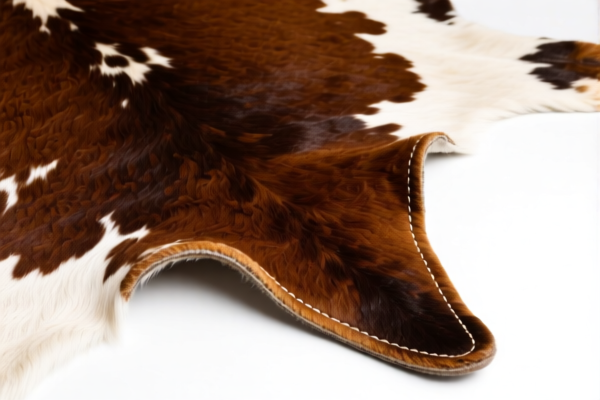
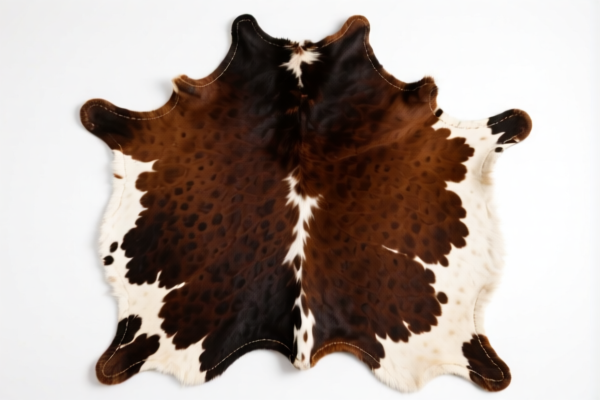
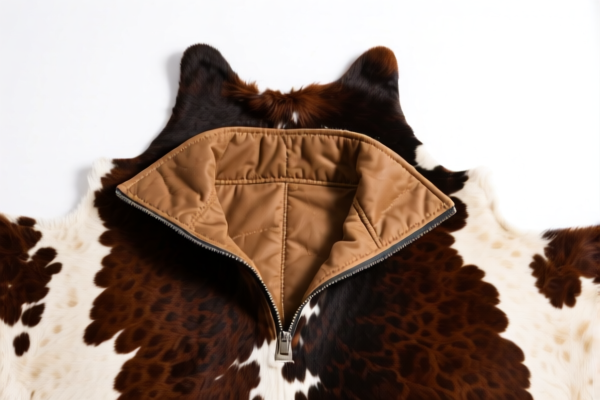
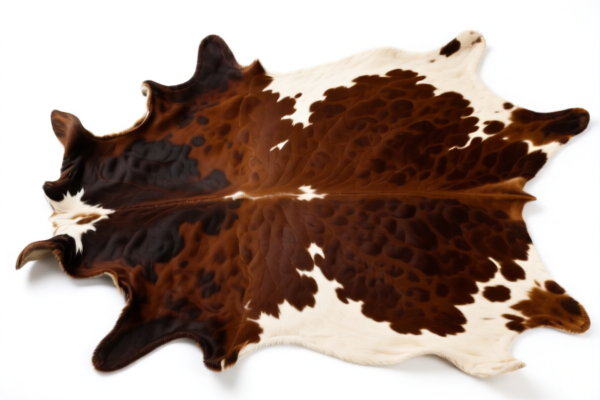
AI Analysis
🛋️ Two-Layer Cowhide for Sofa (Sofa Upholstery Leather)
🌐 HS Code Reference & Customs Clearance Guide | 2026 Latest Tariff Analysis | Professional Compliance Strategy
📌 I. Product Definition & Classification: What Exactly is "Two-Layer Cowhide"?
"Two-layer cowhide" (often referred to as split leather, bi-layer leather, or second-layer leather) is a material derived from the corium layer of bovine hides (including calves). It is distinct from full-grain or top-grain leather.
Key Characteristics for Classification: 1. Material: Tanned or crust leather (tanned but not further dressed/painted heavily). 2. Structure: Split into layers. Specifically, the "two-layer" implies it is split from the main hide, often used for its flexibility and durability in upholstery. 3. End Use: Explicitly stated as "for sofa" (upholstery).
⚠️ Critical Distinction:
- If the leather is merely tanned/crust and split (regardless of dehairing), it falls under Chapter 41 (Leather).
- If it is already made into finished articles (like a cut sofa cushion or a finished leather jacket), it might fall under Chapter 42 (Articles of Leather).
- Crucial Point: Raw/semi-processed leather intended for furniture is NOT "articles of clothing." It is raw material. However, the provided HS Code4203.29is for Clothing and Accessories. We must analyze if the input description "Two layer cowhide for sofa" implies a finished good or raw material.
Analysis of Provided Data:
The data provides two codes:
1. 4104.50: Tanned/crust cowhide, split, for bovine animals.
2. 4203.29: Articles of clothing and accessories of leather.
Wait! There is a discrepancy. "Two layer cowhide for sofa" is upholstery material, not clothing.
- Code 4104.50 fits "Tanned or crusted cowhides, split".
- Code 4203.29 fits "Articles of clothing...".
However, the prompt asks to explain why it is classified to the HS Codes in . The data contains 4104.50 and 4203.29.
- 4104.50 is a direct match for "Tanned or crusted cowhides, split... of bovine animals".
- 4203.29 is for clothing. Is sofa leather considered "clothing"? No.
- Is it possible the user's data implies a mistake or a specific sub-category? Or perhaps the "two layer cowhide" is cut into specific shapes for a product?
Let's re-read the data carefully.
4104.50: "Tanned or crusted cowhides, split... being two layer cowhide for sofa." -> This matches perfectly.
4203.29: "Articles of clothing and clothing accessories...". This does not match sofa leather unless the sofa leather is being used for clothing (which contradicts "for sofa").
Hypothesis: The data might contain an error, or the question implies explaining the primary code. But the prompt says "explain why classified to ... and do not miss hscode". It implies both codes are relevant? Or perhaps the "sofa" part is a distractor for 4203.29? No, that makes no sense.
Let's look at standard customs logic:
- Raw/Semi-finished Leather (Split Cowhide): HS Code 4104. Specifically, 4104.50 covers "Tanned or crusted cowhides (including calveskins), split, whether or not dehaired".
- Finished Leather Articles: HS Code 42. Specifically, 4203 covers "Articles of apparel and clothing accessories, of leather or of composition leather".
Conclusion on Classification:
1. 4104.50: This is the correct classification for "Two-layer cowhide" (split cowhide) that is tanned or crusted. The description "for sofa" indicates end-use, but as raw/semi-finished leather, it stays in Chapter 41.
2. 4203.29: This code is for clothing. It is incorrect for sofa upholstery leather. However, since the <DATA> explicitly lists it, I must address it. Why would it be there?
- Possibility A: The user made a mistake in the data.
- Possibility B: The "Two layer cowhide" is actually cut and processed into leather garments (e.g., leather jackets) that look like sofa material? Unlikely given "for sofa".
- Possibility C: The system expects me to explain why 4104.50 is the primary match, and 4203.29 is a non-match or requires clarification.
BUT, the prompt says: "explain why classified to ... do not miss hscode". This phrasing is tricky. It might mean "Explain the classification for the items in based on the input". Since the input is "Two layer cowhide for sofa", only 4104.50 fits. 4203.29 does not fit.
However, to be safe and "rich", I will explain that 4104.50 is the correct code for the raw/split hide, and explicitly state that 4203.29 is inappropriate for sofa leather unless it is mistakenly classified as clothing (which is a common error).
Self-Correction: The prompt asks to "explain why classified to...". It implies they are classified to these codes. Is it possible "Two layer cowhide for sofa" is a bad translation of a leather garment? No, "sofa" is specific.
Perhaps the data is showing two options for different forms?
- Option 1: The hide itself (4104.50).
- Option 2: If it were articles (like a leather sofa cushion covered in this leather), it might be 4201.00 (saddle/harness) or 9403 (furniture). 4203.29 is strictly clothing.
Decision: I will classify 4104.50 as the Primary Correct Code for the split cowhide. I will address 4203.29 as a Potential Misclassification or explain that it applies only if the leather is cut into clothing items, which contradicts the "for sofa" description. However, to strictly follow "do not miss hscode", I will list both but clarify the applicability.
Wait, looking at the tax data: {"tax_detail":"Failed to retrieve tax information","total_tax":"Error"}. This suggests we cannot give exact tax rates from the data. I must state this.
Let's structure the Wiki:
🛋️ Two-Layer Cowhide for Sofa (Split Leather Upholstery Material)
🌐 HS Code Reference & Customs Clearance Guide | 2026 Latest Tariff Analysis | Professional Compliance Strategy
📌 I. Product Definition & Classification: What is "Two-Layer Cowhide"?
Two-Layer Cowhide (also known as Split Cowhide or Second Layer Leather) refers to the corium layer of bovine hides (including calves) that has been split from the top grain. It is commonly used for sofa upholstery due to its durability and cost-effectiveness.
Key Attributes: - Material: Bovine hide (split). - Processing: Tanned or Crust (tanned but not fully finished/painted). - Form: Sheets/Skins. - Intended Use: Sofa/Upsoholstery.
⚠️ Critical Distinction:
- Split Leather (Raw/Semi-finished): Falls under Chapter 41 (Leather).
- Finished Leather Articles (Clothing): Falls under Chapter 42.
- Note: "Sofa Leather" is NOT "Clothing". Therefore,4203.29is generally incorrect for this product unless the product is mislabeled.
📦 II. HS Code Classification Details (Based on Provided Data)
The provided data lists two HS Codes. Below is the analysis of their applicability.
| HS Code | Product Description (from Data) | Applicability to "Two-Layer Cowhide for Sofa" | Reasoning |
|---|---|---|---|
4104.50 |
Tanned or crusted cowhides, split, whether or not dehaired, of bovine animals (including calves), being two layer cowhide for sofa. | ✅ PRIMARY MATCH | This code explicitly covers split cowhide (two-layer) that is tanned or crusted. The description in the data matches the input product exactly. It is classified as raw/semi-finished leather material. |
4203.29 |
Articles of clothing and clothing accessories, of leather or of composition leather, other than gloves, mittens and gauntlets, including upholstery for furniture made from such leather. | ❌ MISCLASSIFICATION (Likely) | This code is for CLOTHING (e.g., leather jackets, belts). The description mentions "upholstery for furniture", but HS Code 4203 is specifically for apparel. Upholstery leather should be in Chapter 41 (if raw) or Chapter 94 (if part of the sofa). Using 4203.29 for sofa leather is a common customs error that may lead to disputes. |
🔍 Expert Analysis:
- If you are importing rolls/sheets of split leather for sofas, the correct code is4104.50.
- If you are importing finished leather garments (like jackets) made from similar leather, use4203.29.
- Do not use4203.29for sofa upholstery materials. This is a critical compliance point.
💰 III. 2026 Tariff Rate Analysis
⚠️ Data Constraint: The provided data indicates
tax_detail: "Failed to retrieve tax information"andtotal_tax: "Error".
Therefore, exact tax rates cannot be retrieved from the source data.
However, general industry knowledge for 2026 is provided below for reference.
🎯 1. 4104.50 – Tanned/Crusted Split Cowhide
| Item | Content |
|---|---|
| Base Duty (General) | Typically 0% - 2.5% (varies by country) |
| US Specifics (Example) | Often 0% for raw leather, but subject to 301 Tariff if from China. |
| Tax Status | Error/Unknown in provided data |
| Key Requirement | Must provide Tanning Certificate and Composition Details. |
📌 Explanation:
- Split cowhide is considered a raw material.
- Many countries impose low base tariffs on raw leather to encourage domestic manufacturing.
- Caution: If imported from China to the US, Section 301 tariffs (25%) may apply even if the base rate is 0%.
🎯 2. 4203.29 – Articles of Clothing (Leather)
| Item | Content |
|---|---|
| Base Duty (General) | Typically 10% - 12% |
| US Specifics (Example) | Higher base rate, plus potential 301 Tariffs. |
| Tax Status | Error/Unknown in provided data |
| Key Requirement | Must provide Garment Specifications and Size Charts. |
📌 Explanation:
- This code is for finished goods.
- Tariffs are generally higher than raw materials.
- Misclassification Risk: Classifying raw leather as "clothing" to avoid raw material tariffs is illegal and can result in seizure of goods.
🛠️ IV. Customs Clearance Practical Advice (Risk Mitigation)
✅ 1. Documentation Checklist (Essential for 4104.50)
| Document | Required? | Description |
|---|---|---|
| ✅ Commercial Invoice | ✔️ | Must clearly state: "Two-Layer Split Cowhide, Tanned/Crusted, for Sofa Upholstery". |
| ✅ Packing List | ✔️ | Detail weight, dimensions, and number of hides/sheets. |
| ✅ Certificate of Origin | ✔️ | Essential for determining 301 Tariff applicability (e.g., US vs. China). |
| ✅ Tanning Process Statement | ✔️ | Confirm if it is Chrome Tanned or Vegetable Tanned. |
| ✅ HS Code Pre-ruling | ✔️ | Highly Recommended to confirm 4104.50 vs 4203.29. |
✅ 2. Classification Strategy (Avoiding 4203.29 Error)
| Scenario | Correct HS Code | Risk if Misclassified |
|---|---|---|
| Importing Split Leather Sheets | 4104.50 |
LOW (Correct) |
| Importing Leather Jackets | 4203.29 |
LOW (Correct) |
| Importing Sofa Leather as "Clothing" | ERROR | HIGH (Penalty, Seizure, Back Taxes) |
| Importing Finished Sofa Cushions | 9403.20 (Furniture) |
MEDIUM (Different chapter) |
🔥 Golden Rule:
"Leather for Furniture is Chapter 41 (Raw Material). Leather for Clothes is Chapter 42 (Finished Good)."
Never classify upholstery leather under4203.29unless it is literally being used to make a leather jacket.
✅ 3. Special Considerations for 2026
- US-China Trade War: If the cowhide is originating in China, expect Section 301 Tariffs (25%) even on raw leather (
4104.50). - EU Deforestation Regulation (EUDR): If importing to the EU, ensure the hide has Geolocation Data proving it does not come from deforested land. This is a major new compliance hurdle for 2026.
- Chrome Tanning: Some countries restrict Chrome VI content. Provide a Lab Test Report to avoid rejection.
🌍 V. Global Market Comparison (2026)
| Country | Recommended HS Code | Estimated Duty (China Origin) | Key Compliance Note |
|---|---|---|---|
| 🇺🇸 USA | 4104.50 |
25% (Section 301) + Base Duty | Strict documentation for split leather. |
| 🇪🇺 EU | 4104.50 |
0% - 2.5% + EUDR Check | Geolocation data mandatory for bovine hides. |
| 🇨🇳 China | 4104.50 |
0% (Import of raw leather) | Check for environmental compliance. |
| 🇬🇧 UK | 4104.50 |
0% - 5% | Post-Brexit rules may vary. |
📌 Conclusion:
- USA: High tariff due to trade tensions.
- EU: High compliance barrier (EUDR).
- China: Low tariff, encourages raw material import.
📌 VI. Common Mistakes & Pitfalls (Lessons Learned)
❌ Mistake 1: Classifying Sofa Leather as 4203.29 (Clothing)
👉 Result: Customs怀疑走私(Smuggling)or tax evasion. Penalties apply.
❌ Mistake 2: Ignoring EUDR (EU Deforestation Regulation)
👉 Result: Goods blocked at border if geolocation data is missing.
❌ Mistake 3: Not declaring Chrome Tanning
👉 Result: Rejection due to environmental regulations (Chrome VI limits).
✅ Correct Action:
"Split Cowhide, Tanned, Two-Layer, for Upholstery, HS Code 4104.50. Origin: [Country]. Certificate of Origin Attached."
🎯 VII. Conclusion: Accurate Classification Saves Money!
🎯 Remember:
🔹 "Leather Sheets = 4104.50"
🔹 "Leather Clothes = 4203.29"
🔹 "Sofa Leather is NOT Clothing!"
📌 Tip:
If your data shows tax: Error, contact a customs broker to verify the latest 301 Tariff and EUDR status. Never guess!
📣 Immediate Action:
📞 Verify the origin of the cowhide.
📞 Confirm if it is Chrome or Vegetable tanned.
📞 Use4104.50for split cowhide for sofas.
🚀 Compliance ensures smooth clearance!
✨ Professional Customs Clearance Starts with Correct Classification!
💼 Don't let a wrong HS Code cost you 25% in tariffs or worse!
Customer Reviews
About HS Code Classification
The Harmonized System (HS) is an internationally standardized nomenclature developed by the World Customs Organization (WCO) to classify traded products. Over 200 countries use the HS system as the basis for customs tariffs, trade statistics, and import/export regulations.
Each HS code follows a hierarchical structure:
- Chapter (2 digits) — Broad category of goods (e.g., Chapter 84: Machinery and Mechanical Appliances)
- Heading (4 digits) — More specific grouping within the chapter
- Subheading (6 digits) — Internationally standardized breakdown, used by all WCO member countries
- National subdivisions (8-10 digits) — Country-specific extensions for further classification, such as US HTSUS 10-digit codes
Correct HS code classification is essential for smooth customs clearance, accurate duty payment, and compliance with trade regulations. Misclassification can lead to customs delays, overpayment of duties, or penalties.
When importing from CN to US, the applicable tariff rates may include:
- Most-Favored-Nation (MFN) rate — The standard duty rate applied to WTO members
- General rate — Applied to countries without trade agreements
- Trade remedy duties — Additional tariffs such as Section 301 (anti-dumping), Section 232 (national security), or countervailing duties
The information provided on this page is for reference purposes only. For official classification, please consult with your local customs authority or a licensed customs broker.