Typewriter Ribbon and Similar Inked Ribbons
CN → US| HS Code | Tariff Rate | Origin | Destination | Doc |
|---|---|---|---|---|
| 8473509000 | 35.0% | CN | US | Official Doc |
| 8473290000 | 35.0% | CN | US | Official Doc |
| 5901904000 | 39.1% | CN | US | Official Doc |
| 9612109090 | 25.4% | CN | US | Official Doc |
| 5901902000 | 42.0% | CN | US | Official Doc |
Product Images
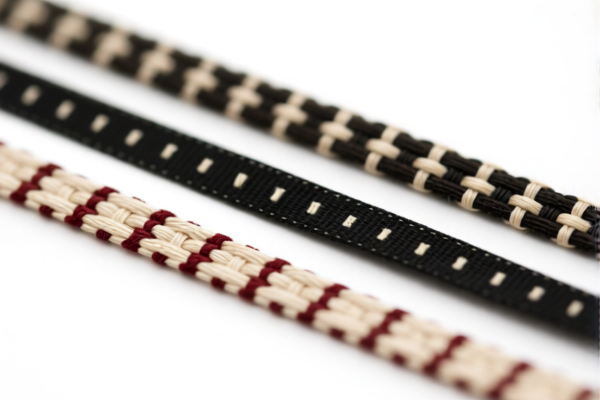
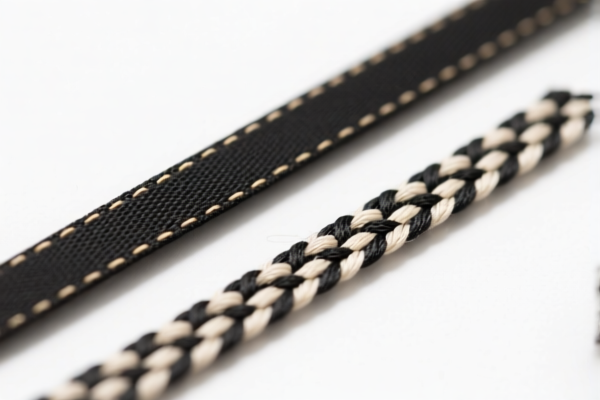
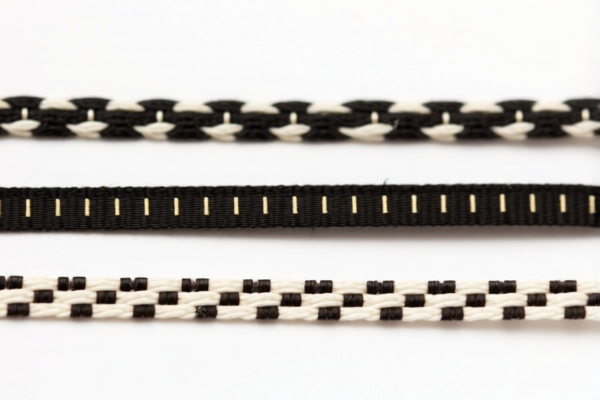
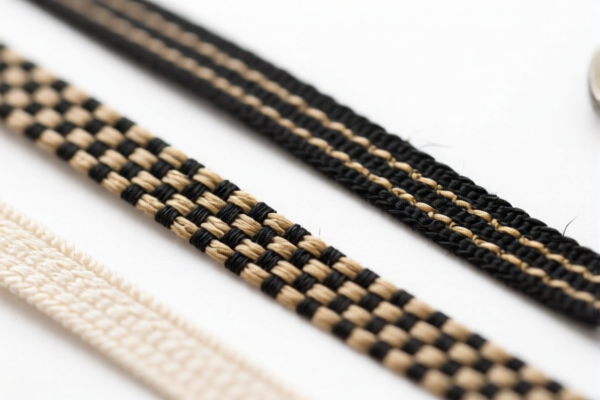
AI Analysis
🖋️ Typewriter Ribbons & Similar Inked Ribbons (Office Machine Accessories)
🌐 HS Code Reference & Customs Clearance Guide | 2026 Latest Tariff Analysis | Professional Strategy for US Imports from China
📌 I. Product Definition & Classification: What Exactly Are "Typewriter Ribbons"?
Ink ribbons and similar products are critical consumables for office equipment. In international trade, they are classified based on their material composition, coating type, and specific intended use. While often perceived as simple "ribbon" products, customs authorities strictly distinguish between:
- Standard Inked Ribbons: Those primarily for typewriters, printers, or encoding machines, usually held by a spindle or frame.
- Textile-Based Ribbons with Coatings: Ribbons where the textile base is coated with specific substances (rubber, starch, coloring matter) that define their function and classification.
⚠️ Key Distinction Point:
- If the item is a specialized part/accessory for a computer or office machine (even if used for printing), it may fall under Chapter 84.
- If the item is primarily a textile strip with a specific chemical coating (for industrial or general use), it may fall under Chapter 59.
- If the item is a dedicated accessory for typewriters/encoding devices without specific machine integration, it may fall under Chapter 96.
📦 II. HS Code Classification Details (2026 Latest Tariff Authority Comparison)
| HS Code | Product Description | Applicable Scenario | Material/Feature Basis |
|---|---|---|---|
8473.50.90.00 |
Typewriter Ribbons & Similar Items | Accessories/Consumables for Office/Calculation Machines | No material conflict; recognized as machine consumable accessory |
8473.29.00.00 |
Parts & Accessories for Typewriters | General accessories for typewriters; fallback category for printing accessories | Based on inference as other accessory items |
5901.90.40.00 |
Coated Textile Fabrics | Textile strips coated with coloring matter or chemicals | Shape is "ribbon-like"; coated with colored/chemical substances |
9612.10.90.90 |
Typewriter Ribbons | Direct match for typewriter ribbons and encoding purposes | Fallback principle for other categories; specific usage match |
5901.90.20.00 |
Textile Bands with Rubber/Starch | Textile bands treated with rubber or starch substances | Similar ribbon morphology; chemical treatment properties |
🔍 Key Reminder:
-8473codes are preferred if the ribbon is clearly marketed as a consumable part for a specific office machine (e.g., printer/typewriter replacement).
-9612.10is the most direct fit for dedicated typewriter ribbons.
-5901codes apply if the product is essentially a textile product being used as a ribbon, especially if the textile nature and coating are the defining features.
💰 III. 2026 Latest Tariff Rate Breakdown (Including Surtaxes & Policy Surcharges)
✅ Applicable Country: United States (US)
✅ Country of Origin: China (CN)
✅ Effective Date: From November 10, 2025 (including subsequent imports)
🎯 1. 8473.50.90.00 —— Typewriter Ribbons & Similar Items (Office Machine Accessories)
| Item | Content |
|---|---|
| Base Tariff | 0% (ad valorem) |
| Section 301 Surcharge | +25% (USITC Footnote 9903.88.01) |
| Section 122 Surcharge | +10% (Specific provision for certain Chinese imports) |
| Total Tariff Rate | 35.0% |
| Tax Calculation | CIF Value × 35% |
| De Minimis Exemption? | ❌ No (deny_de_minimis) |
| Legal Basis Path | USITC:8473.50.90.00 → FOOTNOTE:9903.88.01 → Section 122 |
📌 Explanation:
- This code treats the ribbon as an accessory to office machinery.
- The 25% Section 301 tax applies to most Chinese-origin machinery parts/accessories.
- The 10% Section 122 tax is an additional levy, resulting in a total of 35%.
- High Cost Alert: Do not assume "office supplies" are cheap to import; machinery accessories face heavy tariffs.
🎯 2. 8473.29.00.00 —— Parts & Accessories for Typewriters
| Item | Content |
|---|---|
| Base Tariff | 0% |
| Section 301 Surcharge | +25% |
| Section 122 Surcharge | +10% |
| Total Tariff Rate | 35.0% |
| Tax Calculation | CIF Value × 35% |
| De Minimis Exemption? | ❌ No (deny_de_minimis) |
| Legal Basis Path | USITC:8473.29.00.00 → FOOTNOTE:9903.88.01 → Section 122 |
📌 Note:
- Functionally similar to8473.50.90.00.
- Used when the ribbon is classified more broadly as a "part" rather than a "consumable accessory."
- Same 35% total tax burden.
🎯 3. 5901.90.40.00 —— Coated Textiles (Color/Chemical)
| Item | Content |
|---|---|
| Base Tariff | 4.1% |
| Section 301 Surcharge | +25% |
| Section 122 Surcharge | +10% |
| Total Tariff Rate | 39.1% |
| Tax Calculation | CIF Value × 39.1% |
| De Minimis Exemption? | ❌ No (deny_de_minimis) |
| Legal Basis Path | USITC:5901.90.40.00 → FOOTNOTE:9903.88.01 → Section 122 |
📌 Note:
- This code views the ribbon primarily as a textile product with a coating.
- The base tariff is higher (4.1%), but the surcharges remain the same.
- Total 39.1% is higher than the machinery accessory codes. Use only if the textile nature is dominant and machinery classification is rejected.
🎯 4. 9612.10.90.90 —— Typewriter Ribbons (Direct Match)
| Item | Content |
|---|---|
| Base Tariff | 7.9% |
| Section 301 Surcharge | +7.5% |
| Section 122 Surcharge | +10% |
| Total Tariff Rate | 25.4% |
| Tax Calculation | CIF Value × 25.4% |
| De Minimis Exemption? | ❌ No (deny_de_minimis) |
| Legal Basis Path | USITC:9612.10.90.90 → FOOTNOTE:9903.01.24 → Section 122 |
📌 CRITICAL ADVANTAGE:
- This is the lowest total tariff rate (25.4%) among all options.
- It directly matches the product description "Typewriter Ribbon."
- The Section 301 surcharge is lower (7.5%) compared to the 25% for machinery parts.
- Recommendation: Prioritize this code if the product is clearly a typewriter ribbon and not a general office machine accessory.
🎯 5. 5901.90.20.00 —— Textile Bands with Rubber/Starch
| Item | Content |
|---|---|
| Base Tariff | 7.0% |
| Section 301 Surcharge | +25% |
| Section 122 Surcharge | +10% |
| Total Tariff Rate | 42.0% |
| Tax Calculation | CIF Value × 42.0% |
| De Minimis Exemption? | ❌ No (deny_de_minimis) |
| Legal Basis Path | USITC:5901.90.20.00 → FOOTNOTE:9903.88.01 → Section 122 |
📌 Note:
- Applies if the ribbon is heavily processed with rubber or starch.
- Highest total tax (42.0%). Avoid unless the product’s chemical treatment is its primary defining feature and no other code fits.
🛠️ IV. Customs Clearance Practical Advice (Real-World Pitfall Guide)
✅ 1. Required Documentation Checklist (None Can Be Missing)
| Document | Required | Explanation |
|---|---|---|
| ✅ Product Specification Sheet | ✔️ | Must specify: Ribbon width, material (fabric/paper), ink type, spool type. |
| ✅ Product Photos | ✔️ | Clear images of the ribbon, spool, and any packaging labeling. |
| ✅ Commercial Invoice | ✔️ | Must accurately state: "Typewriter Ribbon" or "Inked Ribbon for Office Machines." Avoid vague terms like "Craft Ribbon." |
| ✅ Packing List | ✔️ | Item count, weight, dimensions. |
| ✅ Material Composition Statement | ✔️ | Crucial for 5901 vs 8473/9612 distinction. E.g., "Polyester fabric with water-based ink coating." |
✅ 2. Declaration Strategy (Key Mnemonics)
🔥 "Be Specific, Avoid Generics, Match the Machine!"
| Scenario | Correct Declaration | Incorrect Action |
|---|---|---|
| Standard Typewriter Ribbon | Use 9612.10.90.90 |
Declare as "Office Supply" → Ambiguous |
| Ribbon for Dot-Matrix Printer | Consider 8473.50.90.00 |
Declare as "Typewriter Ribbon" → Misclassification |
| Plain Textile Ribbon with Ink | Consider 5901.90.40.00 |
Declare as "Typewriter Ribbon" → Rejected if no machine link |
| Ribbon with Heavy Rubber Coating | Consider 5901.90.20.00 |
Declare as "Textile Ribbon" → Higher tax if 9612 is applicable |
📌 Strategy Tip:
-9612.10.90.90offers the lowest tax (25.4%). If your product is a true typewriter ribbon, push for this code.
- Ensure your invoice description supports this: "Inked Ribbon for Manual Typewriters, Model XYZ."
✅ 3. Special Case Handling
| Scenario | Handling Advice |
|---|---|
| Multi-Function Printer Ribbon | Likely falls under 8473.50.90.00 (35% tax). Justify it as a machine accessory. |
| Vintage/Collector Ribbon | Still subject to same HS codes. No duty exemption for "antiques" unless proven. |
| Blank Ribbon for Custom Ink | If not inked, may not qualify as "inked ribbon." Could be classified as textile accessory → Higher tax. |
| Sample for Testing | Even samples are subject to duties if declared as commercial. Use "Non-Commercial Sample" only if truly non-saleable. |
🌍 V. Global Market Clearance Comparison (2026 Latest)
| Country/Region | Recommended HS Code | Tariff | Certification Requirements | Notes |
|---|---|---|---|---|
| 🇺🇸 USA | 9612.10.90.90 |
25.4% | None | Lowest US tax; avoid 8473 (35%) |
| 🇨🇳 China | 9612.10.90.90 |
10% | None | Import duties apply |
| 🇪🇺 EU | 9612.10.00.00 |
0% (if under quota) | CE (if electronic components) | No Section 301/122 surcharges |
| 🇬🇧 UK | 9612.10.00.00 |
0% | UKCA (if applicable) | Post-Brexit rules apply |
| 🇦🇺 Australia | 9612.10.00.00 |
5% | RCM (if electrical) | GST applies |
📌 Conclusion:
- USA is the most challenging market due to Section 301 and Section 122 surcharges.
- EU/UK/Australia have much lower or zero tariffs, but USA requires strategic HS code selection to minimize costs.
📌 VI. Common Mistakes & Pitfall Guide (Lessons Learned)
❌ Mistake 1: Declaring "Typewriter Ribbon" as "Craft Ribbon"
👉 Consequence: Customs may reclassify as 5901 (39.1%-42.0%) due to material analysis.
Fix: Provide clear product usage info.
❌ Mistake 2: Declaring "Printer Ribbon" as "Typewriter Ribbon" (9612)
👉 Consequence: If the ribbon is for a dot-matrix printer, it may be rejected as 9612 and forced to 8473 (35%).
Fix: Match the code to the exact machine type.
❌ Mistake 3: Ignoring Section 122 Surcharge
👉 Consequence: Underestimating total cost by 10%.
Fix: Always include the 10% Section 122 in budget calculations for Chinese goods.
❌ Mistake 4: Using "Office Accessory" as a generic term
👉 Consequence: Customs ambiguity leads to longer clearance times or audits.
Fix: Be specific: "Inked Ribbon for Manual Typewriter."
✅ Correct Declaration Example:
"Typewriter Inked Ribbon, Polyester Fabric Base, Water-Based Ink Coating, 10mm Width, For Manual Typewriters, Model XYZ, Made in China"
🎯 VII. Conclusion: Precise Classification, Cost Savings!
🎯 Remember the Golden Rule:
🔹 "Typewriter Ribbon = 9612 (25.4%);
🔹 "Printer/Office Machine Accessory = 8473 (35%);
🔹 "Textile-Coated Ribbon = 5901 (39.1%-42.0%)."
🔹 Choose9612whenever possible to save 9.6%–16.6% in taxes!
📌 Pro Tip:
If your product is not made in China (e.g., Vietnam, Thailand), Section 301 and Section 122 surcharges do not apply. Tariffs will be 0%–7.9% depending on the HS code. Consider supply chain diversification for high-volume imports.
📣 Action Required:
📞 Consult a licensed customs broker.
📸 Provide clear product photos and specs.
📝 Apply for Pre-Ruling if unsure about classification.
🚀 Minimize duty, maximize profit!
✨ Professional Clearance Starts with Accurate Classification!
💼 Your Every Penny Counts in Global Trade!
Customer Reviews
About HS Code Classification
The Harmonized System (HS) is an internationally standardized nomenclature developed by the World Customs Organization (WCO) to classify traded products. Over 200 countries use the HS system as the basis for customs tariffs, trade statistics, and import/export regulations.
Each HS code follows a hierarchical structure:
- Chapter (2 digits) — Broad category of goods (e.g., Chapter 84: Machinery and Mechanical Appliances)
- Heading (4 digits) — More specific grouping within the chapter
- Subheading (6 digits) — Internationally standardized breakdown, used by all WCO member countries
- National subdivisions (8-10 digits) — Country-specific extensions for further classification, such as US HTSUS 10-digit codes
Correct HS code classification is essential for smooth customs clearance, accurate duty payment, and compliance with trade regulations. Misclassification can lead to customs delays, overpayment of duties, or penalties.
When importing from CN to US, the applicable tariff rates may include:
- Most-Favored-Nation (MFN) rate — The standard duty rate applied to WTO members
- General rate — Applied to countries without trade agreements
- Trade remedy duties — Additional tariffs such as Section 301 (anti-dumping), Section 232 (national security), or countervailing duties
The information provided on this page is for reference purposes only. For official classification, please consult with your local customs authority or a licensed customs broker.