Typewriter Ribbon and Similar Ribbons
CN → US| HS Code | Tariff Rate | Origin | Destination | Doc |
|---|---|---|---|---|
| 8473509000 | 35.0% | CN | US | Official Doc |
| 8473290000 | 35.0% | CN | US | Official Doc |
| 5901904000 | 39.1% | CN | US | Official Doc |
| 9612109090 | 25.4% | CN | US | Official Doc |
| 5901902000 | 42.0% | CN | US | Official Doc |
Product Images
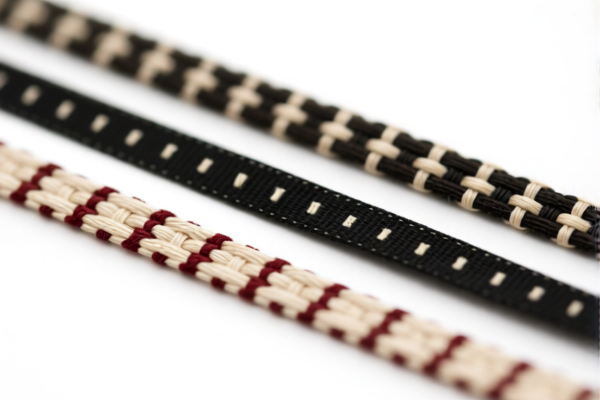
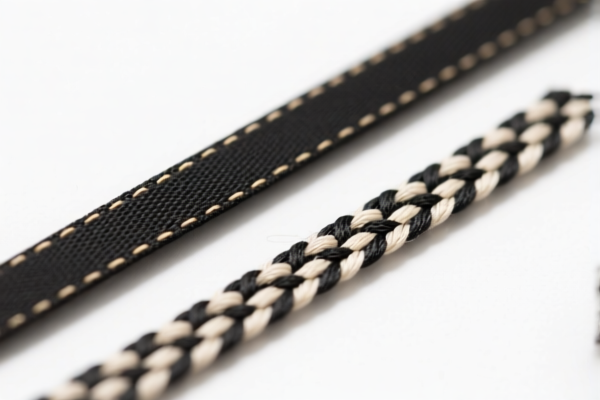
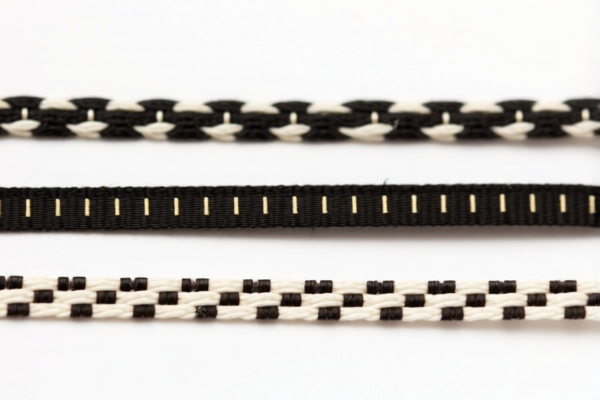
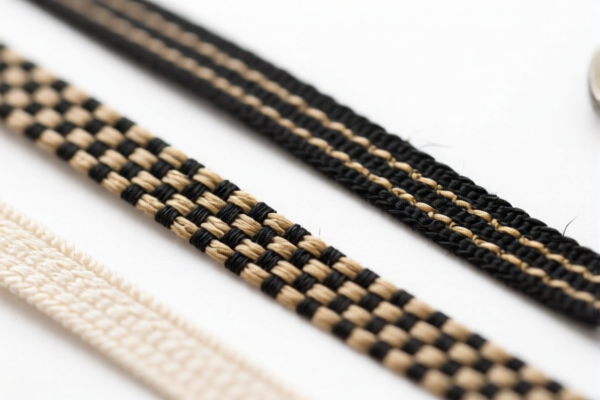
AI Analysis
🎞️ Typewriter Ribbons & Similar Ribbons (打字机色带及类似带子)
🌐 HS Code Reference & Customs Clearance Guide | 2026 Latest Tariff Analysis | Professional Strategy for US Imports
📌 Part 1: Product Definition & Classification: Do You Really Understand "Typewriter Ribbons"?
Typewriter ribbons are essential consumables for mechanical and manual typing machines, used to transfer ink onto paper. In international trade, the classification depends heavily on the material composition and the specific function of the ribbon. Misclassification is common because these items can be viewed as "accessories," "textiles," or "writing instruments."
⚠️ Key Distinction Points:
- If it matches office/computing machine accessories and has no conflicting material properties → 8473.50.90.00
- If it is a specialized part/attachment for typewriters → 8473.29.00.00
- If it is a coated textile (rubber/starch coated) → 5901.90.20.00 or 5901.90.40.00
- If classified by coding/encoding purpose (catch-all) → 9612.10.90.90
📦 Part 2: HS Code Classification Details (2026 Latest Tariff Authority Comparison)
| HS Code | Product Description | Application Scenario | Material/Logic Basis |
|---|---|---|---|
8473.50.90.00 |
Typewriter ribbons & similar bands; accessories for office/computing machines | General office supplies, matching computing accessories; no material conflict | Accessory Logic: Matches office machine consumables |
8473.29.00.00 |
Typewriter ribbons & similar bands; parts/attachments for typewriters | Specific typewriter parts; fallback to "other" category attributes | Part Logic: Specialized component for typewriters |
5901.90.40.00 |
Typewriter ribbons & similar bands; coated textiles; fallback to textile logic | Textile-based ribbons; coated fabric form | Textile Logic: Coated textile material |
9612.10.90.90 |
Typewriter ribbons & similar bands; coded/encoding purpose | General coding use; fallback to "other" category principle | Coding Logic: Based on usage/function over material |
5901.90.20.00 |
Typewriter ribbons & similar bands; coated with rubber or starch substances | Textile bands treated with rubber/starch | Material Logic: Specific chemical treatment of textile fabric |
🔍 Key Reminder:
- 8473.50.90.00 and 8473.29.00.00 are generally preferred for standard office ribbons as they align with the machine's primary function. - 5901 codes apply if the ribbon is structurally a textile with specific coatings (rubber/starch). - 9612.10.90.90 is a fallback if the primary classification criteria are ambiguous, often resulting in lower base tariffs but potentially higher total costs due to different surcharges.
💰 Part 3: 2026 Latest Tariff Rate Breakdown (Including Surcharges & Policy Add-ons)
✅ Applicable Country: United States (US)
✅ Origin: China (CN)
✅ Effective Date: Post-November 2025 (Includes subsequent imports)
🎯 1. 8473.50.90.00 & 8473.29.00.00 —— Office/Typewriter Accessories (Most Common)
| Item | Content |
|---|---|
| Base Duty Rate | 0.0% |
| Section 301 Surcharge | +25.0% |
| Section 122 Tariff | +10.0% |
| Total Tax Rate | 35.0% |
| Tax Calculation | CIF Value × 35% |
| De Minimis Exemption? | ❌ No (Deny de minimis for Section 301 goods) |
| Legal Basis Path | 301:8473.50.90.00 → IEEPA:122 |
📌 Explanation:
- Both8473.50.90.00and8473.29.00.00share the same tax structure. - The 25% comes from the Section 301 Trade Act against China. - The 10% is the Section 122 tariff (national security/trade deficit related). - Total: 35%. This is the standard rate for most official office machine accessories.
🎯 2. 5901.90.40.00 —— Coated Textiles (Fallback)
| Item | Content |
|---|---|
| Base Duty Rate | 4.1% |
| Section 301 Surcharge | +25.0% |
| Section 122 Tariff | +10.0% |
| Total Tax Rate | 39.1% |
| Tax Calculation | CIF Value × 39.1% |
| De Minimis Exemption? | ❌ No |
| Legal Basis Path | 301:5901.90.40.00 → IEEPA:122 |
📌 Note:
- Slightly higher than the 35% rate due to the 4.1% base duty. - Use only if the product is clearly a coated textile and not primarily an "accessory."
🎯 3. 5901.90.20.00 —— Rubber/Starch Coated Textiles
| Item | Content |
|---|---|
| Base Duty Rate | 7.0% |
| Section 301 Surcharge | +25.0% |
| Section 122 Tariff | +10.0% |
| Total Tax Rate | 42.0% |
| Tax Calculation | CIF Value × 42.0% |
| De Minimis Exemption? | ❌ No |
| Legal Basis Path | 301:5901.90.20.00 → IEEPA:122 |
📌 Note:
- The highest rate among the options due to the 7.0% base duty. - Avoid this classification unless the ribbon is explicitly manufactured with rubber/starch coatings as its primary feature.
🎯 4. 9612.10.90.90 —— Coding/Encoding Purpose (Fallback/Catch-all)
| Item | Content |
|---|---|
| Base Duty Rate | 7.9% |
| Section 301 Surcharge | +7.5% |
| Section 122 Tariff | +10.0% |
| Total Tax Rate | 25.4% |
| Tax Calculation | CIF Value × 25.4% |
| De Minimis Exemption? | ❌ No |
| Legal Basis Path | 301:9612.10.90.90 → IEEPA:122 |
📌 Strategic Insight:
- Lowest Total Rate (25.4%). - Why? The Section 301 surcharge is only 7.5% instead of 25%. - Risk: Customs may challenge this if the product is clearly a "typewriter accessory" (8473). If rejected, you face back-taxes + penalties. - Use Case: Only if you can strongly argue the "coding/encoding" purpose and lack of specific machine accessory status.
🛠️ Part 4: Customs Clearance Practical Advice (Battle-Tested Pitfall Guide)
✅ 1. Documentation Checklist (Must-Have)
| Document | Required? | Notes |
|---|---|---|
| ✅ Product Spec Sheet | ✔️ | Detail: Material (cloth/plastic), Ink Type, Dimensions, Compatibility (Model #s). |
| ✅ Commercial Invoice | ✔️ | Must state: "Typewriter Ribbon" or "Printing Ribbon," NOT vague terms like "Office Supply." |
| ✅ Packing List | ✔️ | Confirm quantity and unit weight. |
| ✅ Country of Origin Cert. | ✔️ | Critical for proving CN origin (triggers surcharges). |
| ✅ Product Photos | ✔️ | Show the ribbon spool, core, and ink coating if possible. |
| ✅ HS Code Ruling (Optional) | ✔️ | If available, cite previous CBP rulings to support 8473 or 9612. |
✅ 2. Declaration Strategy (Key Mnemonics)
🔥 "Accessory First, Textile Second, Coding Last! Avoid 42%, Aim for 25% but Risk Audit!"
| Scenario | Recommended HS Code | Total Tax | Risk Level |
|---|---|---|---|
| Standard Office Ribbon | 8473.50.90.00 |
35.0% | 🟢 Low (Standard) |
| Typewriter Specific Part | 8473.29.00.00 |
35.0% | 🟢 Low (Standard) |
| Coated Textile Ribbon | 5901.90.40.00 |
39.1% | 🟡 Medium (Material Focus) |
| Rubber/Starch Coated | 5901.90.20.00 |
42.0% | 🔴 High (Costly) |
| Ambiguous/Coding Use | 9612.10.90.90 |
25.4% | 🔴 High (Audit Risk) |
📌 Strategy Tip:
- Safest Route: Use 8473.50.90.00 or 8473.29.00.00. Customs readily accepts these as "accessories." - Aggressive Route: Use 9612.10.90.90 to save ~10% in tax. However, be prepared to justify why it’s not an "accessory" under 8473. If CBP disagrees, you’ll owe the difference + interest.
✅ 3. Special Cases & Solutions
| Situation | Handling Advice |
|---|---|
| Multi-packs (Retail) | Declare as a set. Ensure the primary value is the ribbon. |
| Blank Ribbons for Re-inking | Still classified as ribbons/accessories. Same tax applies. |
| Digital Printer Cartridges | NOT typewriter ribbons. These may fall under 8443 or 8471 with different taxes. Do not mix. |
| Non-CN Origin | If produced in Vietnam/Malaysia, Section 301/122 may not apply. Tax could drop to Base Rate Only. Verify origin! |
🌍 Part 5: Global Market Comparison (2026 Update)
| Country/Region | Recommended HS Code | Base Duty | US-Specific Surcharges | Total Est. Cost (CN Origin) |
|---|---|---|---|---|
| 🇺🇸 USA | 8473.50.90.00 |
0.0% | +25% (301) + 10% (122) | 35.0% |
| 🇨🇳 China | 8473.50.90.00 |
~6-10% | None | ~6-10% |
| 🇪🇺 EU | 8473.50.90.00 |
0-4% | None | ~0-4% |
| 🇬🇧 UK | 8473.50.90.00 |
0-4% | None | ~0-4% |
| 🇯🇵 Japan | 8473.50.90.00 |
0-5% | None | ~0-5% |
📌 Conclusion:
- USA is the most expensive market for these goods due to layered tariffs. - China, EU, UK, Japan have significantly lower entry costs. - If shipping to the US, consider supplier negotiation to absorb part of the 35% tax, or explore duty drawback programs if re-exporting.
📌 Part 6: Common Errors & Pitfalls (Lessons Learned)
❌ Error 1: Classifying a "Typewriter Ribbon" as "Office Accessory" generally without specifying HS Code
👉 Consequence: Customs may assign a higher default rate or request detailed breakdown.
❌ Error 2: Using 5901.90.20.00 for standard cloth ribbons
👉 Consequence: Paying 42% instead of 35%. No benefit, higher cost.
❌ Error 3: Assuming 9612.10.90.90 is always cheaper
👉 Consequence: CBP audit leads to back-taxes, penalties, and shipment delays. The 10% savings is not worth the risk for standard goods.
❌ Error 4: Ignoring Section 122 Tariff
👉 Consequence: Under-declaring by forgetting the 10% add-on. CBP will catch this during reconciliation.
✅ Correct Practice:
"Typewriter Ribbon, Cloth, Ink-Soaked, Compatible with Model XYZ, Made in China"
- HS Code:8473.50.90.00
- Tax: 35%
- Docs: Invoice + Packing List + Origin Cert.
🎯 Part 7: Conclusion: Precise Classification Saves Money!
🎯 Remember the Mantra:
🔹 "Accessories First (35%), Textiles Middle (39-42%), Coding Last (25.4% - Risky)."
🔹 "35% is standard, 42% is avoidable, 25% is a gamble."
🔹 "Check Origin! If not CN, Surcharges Drop!"
📌 Pro Tip:
- If your volume is high, consider applying for a Binding Ruling from CBP to lock in the 8473 classification.
- For small batches, 9612.10.90.90 might be tempting, but ensure your product description clearly supports "coding purpose" to reduce audit risk.
📣 Call to Action:
📞 Consult a Customs Broker before shipping large volumes.
🚀 Verify HS Code with your supplier’s export documents to ensure consistency.
💼 Plan for 35% Duty in your cost model to avoid margin erosion!
✨ Smart Classification, Smooth Clearance, Higher Profits!
💼 Every Percentage Point Counts in International Trade!
Customer Reviews
About HS Code Classification
The Harmonized System (HS) is an internationally standardized nomenclature developed by the World Customs Organization (WCO) to classify traded products. Over 200 countries use the HS system as the basis for customs tariffs, trade statistics, and import/export regulations.
Each HS code follows a hierarchical structure:
- Chapter (2 digits) — Broad category of goods (e.g., Chapter 84: Machinery and Mechanical Appliances)
- Heading (4 digits) — More specific grouping within the chapter
- Subheading (6 digits) — Internationally standardized breakdown, used by all WCO member countries
- National subdivisions (8-10 digits) — Country-specific extensions for further classification, such as US HTSUS 10-digit codes
Correct HS code classification is essential for smooth customs clearance, accurate duty payment, and compliance with trade regulations. Misclassification can lead to customs delays, overpayment of duties, or penalties.
When importing from CN to US, the applicable tariff rates may include:
- Most-Favored-Nation (MFN) rate — The standard duty rate applied to WTO members
- General rate — Applied to countries without trade agreements
- Trade remedy duties — Additional tariffs such as Section 301 (anti-dumping), Section 232 (national security), or countervailing duties
The information provided on this page is for reference purposes only. For official classification, please consult with your local customs authority or a licensed customs broker.