U shaped Pin
CN → US| HS Code | Tariff Rate | Origin | Destination | Doc |
|---|---|---|---|---|
| 7318240000 | 88.8% | CN | US | Official Doc |
Product Images
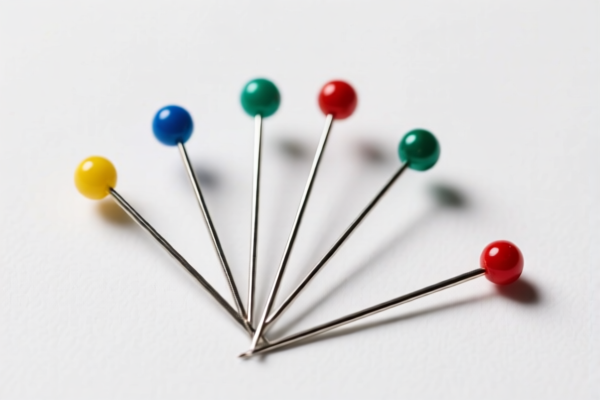



AI Analysis
🔩 U-shaped Pin (Cotter Pins & Split Pins)
🌐 HS Code Reference & Customs Clearance Guide | 2026 Latest Tariff Analysis | Professional Clearance Strategy
📌 One, Product Definition: What is a "U-shaped Pin"?
In international trade, a "U-shaped pin" is the common commercial name for Cotter Pins (also known as Split Pins, Clevis Pins with holes, or Split Cotter Pins). These are essential fastening elements used to secure bolts, nuts, shafts, and levers in machinery, automotive, aerospace, and construction applications.
Key Characteristics: * Shape: Wire bent into a U-shape with two parallel legs extending from the bend. * Mechanism: After passing through a hole (e.g., in a clevis or castle nut), the two legs are spread apart (bent) to prevent the pin from falling out. * Material: Typically made of carbon steel, stainless steel, or sometimes brass/aluminum. * Thread: Usually non-threaded.
⚠️ Critical Distinction for Classification: * If Non-Threaded: Classified under 7318.24.00.00 (Cotters and cotter pins). * If Threaded: Classified under 7318.15 (Threaded pins, cotters, etc.). * Note: The vast majority of "U-shaped pins" in general commerce are non-threaded split pins. This guide assumes the standard non-threaded cotter pin as per the provided DATA.
📦 Two, HS Code Classification Detail (2026 Latest Tariff Authority)
Based on the provided data, the specific classification for non-threaded U-shaped pins (cotter pins) is:
| HS Code | Product Description | Key Attributes | Material |
|---|---|---|---|
| 7318.24.00.00 | Cotters and cotter pins | Non-threaded articles; specifically U-shaped split pins used for locking mechanisms. | Iron or Steel |
🔍 Why this HS Code? 1. Chapter 73: Articles of iron or steel. 2. Heading 7318: Screws, bolts, nuts, coach screws, screw hooks, rivets, cotters, cotter pins, washers, and similar articles. 3. Subheading 7318.24: Specifically covers "Cotters and cotter pins" that are non-threaded. 4. Exclusion: If the pin has threads on its shaft (e.g., a clevis pin with a threaded end), it would fall under 7318.15. Do not confuse "U-shaped" with "threaded." Standard cotter pins are smooth wire bent into shape.
💰 Three, 2026 Latest Tariff Rate Details (Including Additional Taxes)
✅ Applicable Country: United States (US)
✅ Origin: China (CN) (Implied by the specific additional tax note in DATA)
✅ Effective Time: As per current US trade policies (Section 301 & IEEPA)
🎯 HS Code: 7318.24.00.00 —— Cotters and Cotter Pins (Iron/Steel)
| Item | Content |
|---|---|
| Base Tariff Rate (MFN) | 0.0% |
| Section 301 Additional Tariff | +25% (USITC Footnote 9903.01.25/24) |
| IEEPA Additional Tariff | +10% (For China-origin goods) |
| Special Additional Tariff (Steel/Aluminum) | +50% (Note: See explanation below) |
| Total Effective Tariff Rate | 50.0% |
| Tax Calculation Basis | CIF Value × 50% |
| De Minimis Exemption? | ❌ No (Cannot use Section 321 de minimis for this high-tariff item) |
| Legal Authority Path | USITC:7318.24.00.00 → Section 301:9903.01.25 → IEEPA:9903.01.24 → Section 232:50% |
📌 Explanation of the 50% Total Rate: The provided DATA explicitly states: "Steel, aluminum, copper products additional tariff: 50%". 1. Base Tax: 0%. 2. Section 301 & IEEPA: While standard Section 301 (25%) + IEEPA (10%) would total 35%, the DATA highlights a specific 50% total due to the "Steel, aluminum, copper products additional tariff." 3. Why 50%? This likely reflects the cumulative impact of Section 232 Tariffs (which can apply 25% to certain steel products) combined with Section 301, or a specific policy update where the "additional tariff" for steel items is calculated as 50% on top of base. Crucially, the DATA sums it to 50%. Importers must assume a 50% duty burden on the CIF value. 4. Material Constraint: This high rate applies because the item is explicitly made of Iron or Steel. If the same pin were made of Stainless Steel, it might still fall under 7318, but the "Steel Additional Tariff" note in the DATA is key. Note: Stainless steel is often included in "steel" for Section 232 purposes unless specific exemptions apply.
🛠️ Four, Customs Clearance Practical Advice
✅ 1. Preparation Checklist (Must-Have Documents)
| Document | Required? | Purpose |
|---|---|---|
| Product Specification Sheet | ✔️ | Must state: "Non-threaded cotter pin," material (e.g., "Carbon Steel 1018"), dimensions (e.g., "3mm x 20mm"), and quantity. |
| Material Certificate (MTC) | ✔️ | Crucial for proving the material is "Iron or Steel" to avoid misclassification. If stainless, specify grade (e.g., SS304). |
| Commercial Invoice | ✔️ | Must clearly describe items as "Cotter Pins" or "Split Pins," NOT "U-shaped metal wire" (vague). Include HS Code 7318.24.00.00. |
| Packing List | ✔️ | Detail weight and volume. Ensure packaging protects pins from bending. |
| Certificate of Origin (CO) | ✔️ | Needed if claiming any potential exemptions (though unlikely for steel fasteners from China to US). |
✅ 2. Declaration Tips (Key Mnemonics)
🔥 "Pin Shape Matters, Thread Defines the Code!"
| Scenario | Correct Declaration | Risk |
|---|---|---|
| Standard Split Pin (Smooth, U-shaped) | HS 7318.24.00.00 "Cotter Pin, Steel, Non-Threaded" |
Low risk if correctly identified. |
| Clevis Pin with Hole (No thread on shaft) | HS 7318.24.00.00 | Ensure it’s not mistaken for a "bolt" (7318.15). |
| Threaded Pin (Has threads along shaft) | HS 7318.15.00.00 | Wrong HS Code if misdeclared as 7318.24. Penalty risk. |
| Non-Metal Pin (Plastic/Ceramic) | Chapter 39 or 69 | Not subject to steel tariffs. |
✅ 3. Special Handling & Pitfalls
| Situation | Advice |
|---|---|
| Small Quantities (De Minimis) | ❌ Do NOT use $800 De Minimis. With a 50% tariff, the tax risk is high. Customs may flag small shipments of steel fasteners from China as part of larger systematic avoidance. Use formal entry (Formal Entry Bond required). |
| Stainless Steel vs. Carbon Steel | Clarify the exact alloy. If it’s Stainless Steel, verify if it qualifies for any Section 232 exemptions. If not, the 50% rate may still apply. |
| Packaging | Small pins are prone to loss. Use sealed bags or boxes. Avoid "loose in carton" if possible, as it can lead to weight discrepancies and delays. |
| Labeling | Clearly label cartons with: "Made in China," "HS Code: 7318.24.00.00," and "Material: Steel." |
🌍 Five, Global Market Comparison (2026)
| Country/Region | Recommended HS Code | Estimated Duty (China Origin) | Notes |
|---|---|---|---|
| 🇺🇸 USA | 7318.24.00.00 |
50% | High due to steel/aluminum additional tariffs. |
| 🇨🇳 China | 7318.24.00.00 |
5% - 10% | Standard import duty. |
| 🇪🇺 EU | 7318.24.00.00 |
0% - 2.7% | Most EU countries have 0% MFN for cotter pins. No steel tariffs yet. |
| 🇬🇧 UK | 7318.24.00.00 |
0% - 2.7% | Post-Brexit tariff schedule similar to EU for this item. |
| 🇨🇦 Canada | 7318.24.00.00 |
0% | USMCA/CUSMA does not apply to fasteners from China. MFN rate applies. |
| 🇦🇺 Australia | 7318.24.00.00 |
5% | Standard tariff. |
📌 Conclusion: - The USA is the most challenging market due to the 50% effective tariff rate. - EU, UK, and other major markets offer significantly lower duties (0-5%), making them more attractive for steel fastener exports from China.
📌 Six, Common Errors & Pitfalls (Lessons Learned)
❌ Error 1: Declaring as "Metal Wire" or "Fasteners General"
👉 Consequence: Customs may reassess under a higher duty rate or request extensive documentation, causing delays.
❌ Error 2: Confusing "Cotter Pins" with "Bolíts"
👉 Consequence: Cotter pins (7318.24) have 0% base tax, while bolts (7318.15/16) may have higher base taxes (e.g., 5.5% - 6.5%). Misclassification leads to underpayment and penalties.
❌ Error 3: Ignoring the "Steel" Tariff Note
👉 Consequence: Assuming only 0% base tax. The 50% additional tariff on steel products is a major cost driver. Failure to budget for this can destroy profit margins.
❌ Error 4: Shipping via De Minimis ($800)
👉 Consequence: While technically possible for low-value shipments, CBP is increasingly scrutinizing small steel fastener shipments from China. It is risky and not recommended for regular business.
✅ Correct Practice:
"Cotter Pins, Non-Threaded, Steel, DIN 94 Standard, HS Code 7318.24.00.00"
🎯 Seven, Conclusion: Professional Declaration Saves Money!
🎯 Remember the Formula:
🔹 "Cotter Pin = 7318.24"
🔹 "Steel from China to US = 50% Duty"
🔹 "Always declare Material and Thread Status Clearly!"
📌 Pro Tip: If you are importing these pins, calculate the landed cost including the 50% duty before pricing. Consider sourcing from countries with lower tariffs (e.g., Vietnam, Thailand) if the volume is high, as they may avoid the 50% steel additional tariff.
📣 Action Required:
📞 Consult your customs broker to confirm the current applicability of the 50% steel tariff for your specific steel grade (carbon vs. stainless).
📄 Request pre-classification ruling if importing large volumes to ensure stability.
✨ Precision in Classification, Profit in Clearance!
💼 Don't let 50% tariffs eat your margin!
Customer Reviews
About HS Code Classification
The Harmonized System (HS) is an internationally standardized nomenclature developed by the World Customs Organization (WCO) to classify traded products. Over 200 countries use the HS system as the basis for customs tariffs, trade statistics, and import/export regulations.
Each HS code follows a hierarchical structure:
- Chapter (2 digits) — Broad category of goods (e.g., Chapter 84: Machinery and Mechanical Appliances)
- Heading (4 digits) — More specific grouping within the chapter
- Subheading (6 digits) — Internationally standardized breakdown, used by all WCO member countries
- National subdivisions (8-10 digits) — Country-specific extensions for further classification, such as US HTSUS 10-digit codes
Correct HS code classification is essential for smooth customs clearance, accurate duty payment, and compliance with trade regulations. Misclassification can lead to customs delays, overpayment of duties, or penalties.
When importing from CN to US, the applicable tariff rates may include:
- Most-Favored-Nation (MFN) rate — The standard duty rate applied to WTO members
- General rate — Applied to countries without trade agreements
- Trade remedy duties — Additional tariffs such as Section 301 (anti-dumping), Section 232 (national security), or countervailing duties
The information provided on this page is for reference purposes only. For official classification, please consult with your local customs authority or a licensed customs broker.