US Envelope Stapler
CN → US| HS Code | Tariff Rate | Origin | Destination | Doc |
|---|---|---|---|---|
| 8441200000 | 35.0% | CN | US | Official Doc |
| 8441100000 | 35.0% | CN | US | Official Doc |
| 8422909160 | 35.0% | CN | US | Official Doc |
| 8422409181 | 35.0% | CN | US | Official Doc |
Product Images
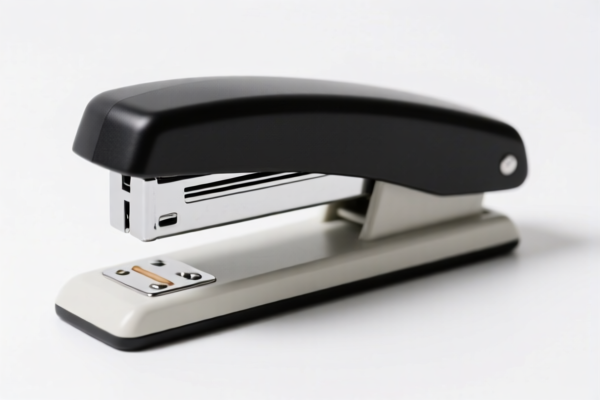
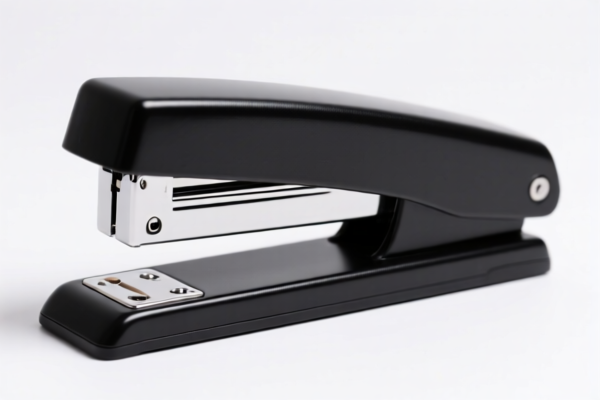
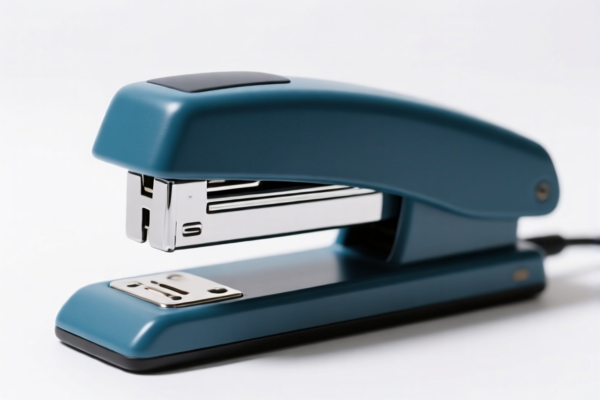

AI Analysis
📎 US Envelope Stapler & Machinery Classification Guide
🌐 HS Code Reference & Customs Clearance Strategy | 2026 Latest Tariff Analysis | Professional Compliance
📌 I. Product Definition & Classification: What is an "Envelope Stapler"?
In international trade, the term "Envelope Stapler" can be ambiguous. It typically refers to one of two distinct categories: 1. Manual Desktop Envelope Openers/Staplers: Small, hand-held or desktop office tools used for sealing or opening envelopes. 2. Industrial Envelope Manufacturing Machinery: Large-scale automated equipment used in factories to manufacture bags, pouches, or envelopes from paper/film rolls.
⚠️ Critical Distinction for Customs:
- If the item is a finished office tool (manual or electric) used by a worker to seal envelopes → It is classified under Chapter 84 as machinery for paper processing.
- If the item is an industrial machine that produces the envelope from raw material → It is classified under Chapter 84 as machinery for making bags/pouches.
- Note: The provided data (<DATA>) specifically lists machinery under HS Codes 8441 and 8422, indicating that for customs purposes, we are treating this as industrial/mechanical equipment or paper-processing machinery, not simple hand tools.
📦 II. HS Code Classification Details (Based on Provided Data)
The following HS Codes are derived strictly from the provided <DATA> block. All items fall under US Chapter 84 (Nuclear reactors, boilers, machinery and mechanical appliances) and Chapter 84 (Specifically paper/printing machinery).
| HS Code | Product Description (From <DATA>) |
Application / Function | Classification Logic |
|---|---|---|---|
8441.20.00.00 |
Machinery for making bags, pouches, or envelopes | Envelope manufacturing line | Primary Match: Specifically designated for manufacturing envelopes. |
8441.10.00.00 |
Paper/paper processing machinery (Finished office/stationery tools, binding function) | Office/Stationery tooling | Secondary Match: Classified as "finished office/stationery tools" with binding functions. |
8422.90.91.60 |
Other packaging and covering machinery (Sealing/Binding machinery) | Packaging/Sealing line | Alternative Match: General packaging machinery focused on sealing or binding. |
8422.40.91.81 |
Packaging/wrapping machinery (Binding/Packaging purpose) | Envelope sealing/packaging | Alternative Match: Machinery specifically for binding or wrapping packages. |
🔍 Key Insight:
-8441.20.00.00is the most precise code if the device is an industrial machine that creates the envelope.
-8441.10.00.00is appropriate if the device is a finished office machine (like an electric stapler/binder) used on envelopes.
- Codes8422.90.91.60and8422.40.91.81serve as fallbacks for general packaging/sealing machinery if the device is part of a larger packaging line.
💰 III. 2026 Latest Tariff Rate Breakdown (Including Surcharges)
✅ Applicable Country: United States (US)
✅ Country of Origin: China (CN)
✅ Effective Date: 2025/2026 (Current Trade Regulations)
All HS Codes in the provided data carry the same total tax rate of 35.0%, composed of the following layers:
🎯 1. 8441.20.00.00 (Envelope Manufacturing Machinery)
| Item | Content |
|---|---|
| Base Tariff | 0.0% (Ad Valorem) |
| Section 301 Surcharge | +25.0% (USITC Footnote for Chinese Origin) |
| Section 122 Tariff | +10.0% (Specific 122 Clause Tariff) |
| Total Tax Rate | 35.0% |
| Tax Calculation | CIF Value × 35% |
| De Minimis Exemption | ❌ Not Applicable (Deny De Minimis) |
| Legal Basis Path | Section 301: 8441.20.00.00 → Section 122: 10% |
📌 Explanation:
- The 25% Section 301 tariff applies to all Chinese-origin goods in this HS code due to trade disputes.
- The 10% Section 122 tariff is a specific additional duty applied to certain industrial/packaging machinery.
- Total Effective Duty: 35%. This is a significant cost burden and must be factored into pricing strategies.
🎯 2. 8441.10.00.00 (Paper Processing/Binding Machinery)
| Item | Content |
|---|---|
| Base Tariff | 0.0% |
| Section 301 Surcharge | +25.0% |
| Section 122 Tariff | +10.0% |
| Total Tax Rate | 35.0% |
| Tax Calculation | CIF Value × 35% |
| De Minimis Exemption | ❌ Not Applicable |
| Legal Basis Path | Section 301: 8441.10.00.00 → Section 122: 10% |
🎯 3. 8422.90.91.60 & 8422.40.91.81 (Packaging/Sealing Machinery)
| Item | Content |
|---|---|
| Base Tariff | 0.0% |
| Section 301 Surcharge | +25.0% |
| Section 122 Tariff | +10.0% |
| Total Tax Rate | 35.0% |
| Tax Calculation | CIF Value × 35% |
| De Minimis Exemption | ❌ Not Applicable |
| Legal Basis Path | Section 301: 8422.xxxxxx → Section 122: 10% |
⚠️ Critical Note:
- All four HS Codes listed in the data share the identical 35% total tax rate.
- There is no tax advantage to switching between these codes if the product is Chinese-origin.
- The Section 122 and Section 301 tariffs are cumulative, not alternative.
🛠️ IV. Customs Clearance Practical Advice (Pitfall Avoidance)
✅ 1. Documentation Checklist (Mandatory)
| Document | Required | Purpose |
|---|---|---|
| Product Specification Sheet | ✔️ | Must detail: Mechanical vs. Electronic, Output Capacity, Envelope Size Range. |
| Technical Diagrams | ✔️ | To prove it is "Machinery" (HS 84) and not "Office Supplies" (HS 96). |
| Commercial Invoice | ✔️ | Must explicitly state: "Envelope Manufacturing Machinery" or "Paper Processing Binding Machine". |
| Country of Origin Certificate | ✔️ | Crucial for applying Section 301/122 tariffs correctly. |
| Packing List | ✔️ | Ensure no disassembly that could trigger separate duty assessments. |
✅ 2. Declaration Tips (Key Rules)
🔥 "Declare as Machinery, Not Tool! Define Function Clearly!"
| Scenario | Correct Declaration | Incorrect Declaration |
|---|---|---|
| Industrial Envelope Maker | 8441.20.00.00 - "Automatic Envelope Manufacturing Machine" |
"Office Stapler" → Risk of misclassification |
| Electric Desk Stapler | 8441.10.00.00 - "Paper Binding Machine for Office" |
"Stapler" → May be rejected as incomplete description |
| Sealing Machine in Packaging Line | 8422.90.91.60 - "Packaging Sealing Machinery" |
"Gluer" → Vague, may trigger audits |
| Hand-Held Stapler | ❌ Do Not Use These Codes | Hand tools belong to HS 9609 (Pencils/Chalk) or 8205 (Hand Tools). Using HS 84 codes for hand tools is a major compliance violation. |
⚠️ Warning: If the "US Envelope Stapler" is a simple manual hand tool (no motor, no mechanical drive), it DOES NOT belong in the provided HS codes. It likely falls under HS 8205.59 or HS 9609.20. Using the provided HS codes for a hand tool will result in severe penalties.
✅ 3. Special Cases
| Case | Handling Advice |
|---|---|
| OEM Custom Machinery | Provide client order + design specs to prove industrial use. |
| Machinery with Software | Declare hardware under HS 84; software may be treated as free or bundled. |
| Parts for Envelope Machines | If imported separately, declare as "Parts" under the same HS code (e.g., 8441.90) but ensure main machine classification is accurate. |
| Dual-Use (Packaging & Envelope) | Declare based on primary function. If it makes envelopes, use 8441.20.00.00. |
🌍 V. Global Market Clearance Comparison (2026)
| Country/Region | Recommended HS Code | Tariff (China Origin) | Key Requirements | Notes |
|---|---|---|---|---|
| 🇺🇸 USA | 8441.20.00.00 |
35% (25% Sec 301 + 10% Sec 122) | FCC (if electrical), Labeling | High duty burden; pre-clearance essential. |
| 🇨🇳 China | 8441.20.00.00 |
~10-15% | CCC (if applicable) | Lower duty than US, but verify specific tariff rate. |
| 🇪🇺 EU | 8441.20.00.00 |
0-5% (CE Mark) | CE, RoHS, REACH | No Section 301/122 equivalents. |
| 🇯🇵 Japan | 8441.20.00.00 |
0-5% | PSE (if electrical) | Stable trade relations. |
📌 Conclusion:
- The USA imposes a 35% total duty, making it the most expensive market for this product from China.
- Cost Mitigation: Consider sourcing from Vietnam/Mexico for US market to avoid Section 301 (though Section 122 may still apply depending on specific rules).
- Pre-Ruling: Apply for a Binding Ruling from US CBP if the product's classification is borderline between8441and8422.
📌 VI. Common Mistakes & Pitfall Guide (Lessons Learned)
❌ Mistake 1: Classifying a hand-held stapler as 8441.20.00.00
👉 Consequence: Customs rejection, delay, or penalty. Hand tools are HS 8205/9609, not machinery.
✅ Fix: Verify if the product has a motor or mechanical drive. If not, use the correct HS code for hand tools.
❌ Mistake 2: Ignoring Section 122 Tariff
👉 Consequence: Underpayment of duties, leading to audits and back taxes + interest.
✅ Fix: Always add 10% for Section 122 on top of Section 301 for Chinese-origin machinery.
❌ Mistake 3: Inaccurate Product Description
👉 Consequence: CBP may reclassify to a higher duty code.
✅ Fix: Use precise descriptions: "Industrial Automatic Envelope Manufacturing Machine, Model XYZ, Made in China."
❌ Mistake 4: Assuming "Stapler" = Office Supply (0% Duty)
👉 Consequence: Significant underpayment if classified as industrial machinery.
✅ Fix: Distinguish between Office Tools (often lower duty/exempt) and Industrial Machinery (35% duty).
🎯 VII. Conclusion: Professional Declaration for Cost Optimization
🎯 Remember the Golden Rules:
🔹 "Is it a Hand Tool or a Machine? Hand Tool = HS 96/82; Machine = HS 84."
🔹 "China Origin = 35% Total Duty (25% Sec 301 + 10% Sec 122)."
🔹 "Accurate Description Saves Thousands!"
📌 Pro Tip:
If your "Envelope Stapler" is a small, electric desk stapler, ensure it is not mistaken for industrial machinery. However, based on the provided data, it seems the context is machinery.
For industrial envelope makers, the 35% duty is unavoidable for US imports from China. Consider tariff engineering or supply chain diversification if margins are tight.
📣 Immediate Action:
📞 Consult a licensed US Customs Broker to verify if your specific product fits
8441.20.00.00or8422.xx.xx.
📄 Prepare technical specs proving industrial functionality.
🚀 Ensure accurate HS Code declaration to avoid 35% surprises.
✨ Professional Clearance Starts with Precise Classification!
💼 Your Cost Control Depends on Every Digit of the HS Code!
Customer Reviews
About HS Code Classification
The Harmonized System (HS) is an internationally standardized nomenclature developed by the World Customs Organization (WCO) to classify traded products. Over 200 countries use the HS system as the basis for customs tariffs, trade statistics, and import/export regulations.
Each HS code follows a hierarchical structure:
- Chapter (2 digits) — Broad category of goods (e.g., Chapter 84: Machinery and Mechanical Appliances)
- Heading (4 digits) — More specific grouping within the chapter
- Subheading (6 digits) — Internationally standardized breakdown, used by all WCO member countries
- National subdivisions (8-10 digits) — Country-specific extensions for further classification, such as US HTSUS 10-digit codes
Correct HS code classification is essential for smooth customs clearance, accurate duty payment, and compliance with trade regulations. Misclassification can lead to customs delays, overpayment of duties, or penalties.
When importing from CN to US, the applicable tariff rates may include:
- Most-Favored-Nation (MFN) rate — The standard duty rate applied to WTO members
- General rate — Applied to countries without trade agreements
- Trade remedy duties — Additional tariffs such as Section 301 (anti-dumping), Section 232 (national security), or countervailing duties
The information provided on this page is for reference purposes only. For official classification, please consult with your local customs authority or a licensed customs broker.