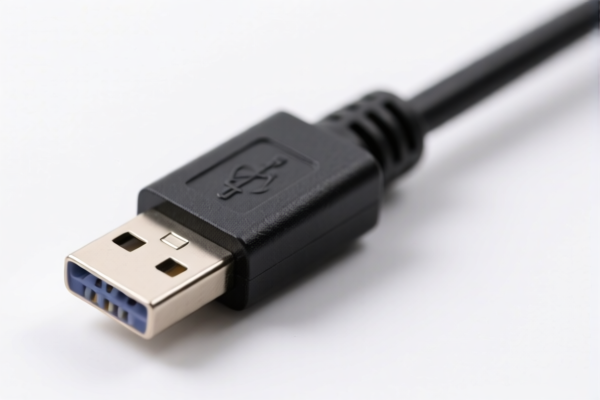
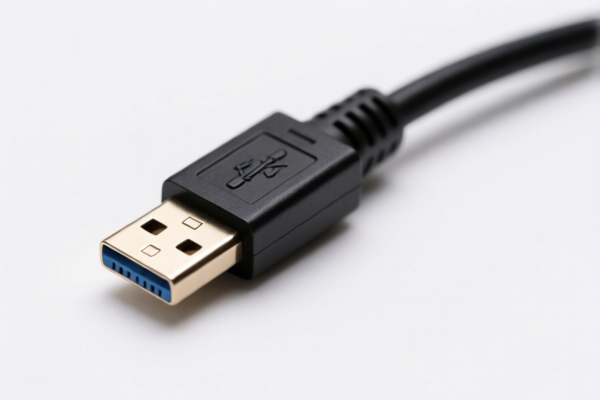
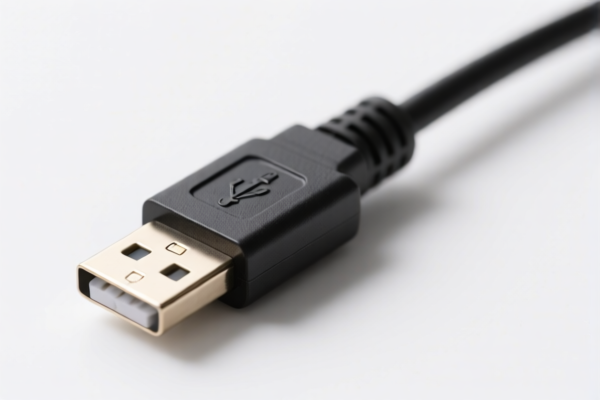
USB Data Cable
CN → US| HS Code | Tariff Rate | Origin | Destination | Doc |
|---|---|---|---|---|
| 8517790000 | 67.5% | CN | US | Official Doc |
| 8471801000 | 35.0% | CN | US | Official Doc |
| 8517620090 | 35.0% | CN | US | Official Doc |
| 8471809000 | 35.0% | CN | US | Official Doc |
| 8544429090 | 87.6% | CN | US | Official Doc |
| 8544422000 | 85.0% | CN | US | Official Doc |
Product Images

AI Analysis
🔌 USB Data Cables: The Ultimate HS Code & Tariff Classification Guide (2026)
🌐 HS Code Reference & Customs Clearance Strategy | Latest Tariff Analysis | Professional Compliance Guide
📌 I. Product Definition: What is a USB Data Cable?
USB Data Cables are essential accessories for transmitting data between electronic devices. In international trade, their classification depends heavily on their functional purpose and physical structure. Are they seen as communication equipment parts, computer peripherals, or simple electrical conductors?
⚠️ Critical Distinction Point:
- If viewed as a communication/data transmission accessory → Group 8517 (Lower Tax)
- If viewed as a computer peripheral/connection unit → Group 8471 (Medium Tax)
- If viewed as an electrical wire/cable → Group 8544 (High Tax)
📦 II. HS Code Classification Details (2026 Latest Tariff)
Based on current trade regulations and customs interpretations, USB data cables fall into the following categories:
| HS Code | Product Description | Functional Definition | Total Tax Rate (China Origin) |
|---|---|---|---|
8517.79.00.00 |
Parts of machines for transmission/reception of data | Communication equipment accessories; used for data transmission. | 67.5% |
8471.80.10.00 |
Units for automatic data processing machines | Connection/adapter for data processing equipment; functional connectivity. | 35.0% |
8517.62.00.90 |
Machines for transmission of voice, images, or data | Accessories for machines transmitting data; categorized under data transmission devices. | 35.0% |
8471.80.90.00 |
Other units for automatic data processing | Peripheral connection units not specifically listed elsewhere; general PC peripherals. | 35.0% |
8544.42.90.90 |
Insulated wires/cables with connectors, voltage ≤1000V | Electrical conductors in cable form; insulated wires with connectors. | 87.6% |
8544.42.20.00 |
Conductors for telecommunications/data transmission | Cables used in telecom/data transmission fields; electrical conductors. | 85.0% |
🔍 Key Insight:
- The lowest valid tariff for general USB cables is 35.0% (Groups8471and8517.62).
- Classifying as a simple electrical wire (8544) results in the highest tax burden due to steel/aluminum/copper surcharges.
- Classification must align with the primary function of the product.
💰 III. Detailed Breakdown of 2026 Tariff Rates (Including Surcharges & Policies)
✅ Applicable Country: USA (US)
✅ Country of Origin: China (CN)
✅ Effective Date: From November 10, 2025 (including subsequent imports)
🎯 1. Group 8517.79.00.00 – Communication Equipment Parts
| Item | Detail |
|---|---|
| Base Tariff | 0.0% |
| Additional Duty (Section 301) | +7.5% |
| Section 122 Duty | +10% |
| Steel/Aluminum/Copper Surcharge | +50% |
| Total Effective Tax Rate | 67.5% |
| Calculation Basis | CIF Value × 67.5% |
| De Minimis Exemption | ❌ Not Eligible (deny_de_minimis) |
| Legal Path | Section 301 → Section 122 → USITC:8517.79.00.00 → Steel/Aluminum Surcharge |
📌 Explanation:
- While the base duty is low, the 50% steel/aluminum/copper surcharge drastically increases the cost.
- This classification is often challenged if the cable is purely plastic/insulated without metal components, but customs may apply it based on internal conductors.
🎯 2. Group 8471.80.10.00 – Data Processing Unit Connections
| Item | Detail |
|---|---|
| Base Tariff | 0.0% |
| Additional Duty (Section 301) | +25.0% |
| Section 122 Duty | +10% |
| Total Effective Tax Rate | 35.0% |
| Calculation Basis | CIF Value × 35.0% |
| De Minimis Exemption | ❌ Not Eligible |
| Legal Path | Section 301 → Section 122 → USITC:8471.80.10.00 |
📌 Explanation:
- This is a competitive classification for cables specifically marketed as computer peripherals or adapters.
- No steel/aluminum surcharge applies here, making it significantly cheaper than the8544group.
🎯 3. Group 8517.62.00.90 – Data Transmission Machines
| Item | Detail |
|---|---|
| Base Tariff | 0.0% |
| Additional Duty (Section 301) | +25.0% |
| Section 122 Duty | +10% |
| Total Effective Tax Rate | 35.0% |
| Calculation Basis | CIF Value × 35.0% |
| De Minimis Exemption | ❌ Not Eligible |
| Legal Path | Section 301 → Section 122 → USITC:8517.62.00.90 |
📌 Explanation:
- Similar to8471, this falls under communication equipment.
- Suitable if the cable is used in broader data transmission contexts beyond just PC connections.
🎯 4. Group 8471.80.90.00 – Other Data Processing Units
| Item | Detail |
|---|---|
| Base Tariff | 0.0% |
| Additional Duty (Section 301) | +25.0% |
| Section 122 Duty | +10% |
| Total Effective Tax Rate | 35.0% |
| Calculation Basis | CIF Value × 35.0% |
| De Minimis Exemption | ❌ Not Eligible |
| Legal Path | Section 301 → Section 122 → USITC:8471.80.90.00 |
📌 Explanation:
- A "catch-all" for computer peripherals not specifically listed.
- Safe for general-purpose USB cables used with computers, printers, etc.
🎯 5. Group 8544.42.90.90 – Insulated Wires with Connectors
| Item | Detail |
|---|---|
| Base Tariff | 2.6% |
| Additional Duty (Section 301) | +25.0% |
| Section 122 Duty | +10% |
| Steel/Aluminum/Copper Surcharge | +50% |
| Total Effective Tax Rate | 87.6% |
| Calculation Basis | CIF Value × 87.6% |
| De Minimis Exemption | ❌ Not Eligible |
| Legal Path | Section 301 → Section 122 → Steel/Aluminum Surcharge → USITC:8544.42.90.90 |
⚠️ Warning:
- This is the most expensive classification.
- Applies if customs views the item primarily as a wire/cable rather than a functional device part.
- The 50% metal surcharge is the primary driver of cost.
🎯 6. Group 8544.42.20.00 – Telecommunications Conductors
| Item | Detail |
|---|---|
| Base Tariff | 0.0% |
| Additional Duty (Section 301) | +25.0% |
| Section 122 Duty | +10% |
| Steel/Aluminum/Copper Surcharge | +50% |
| Total Effective Tax Rate | 85.0% |
| Calculation Basis | CIF Value × 85.0% |
| De Minimis Exemption | ❌ Not Eligible |
| Legal Path | Section 301 → Section 122 → Steel/Aluminum Surcharge → USITC:8544.42.20.00 |
⚠️ Warning:
- Similar to the above, the metal surcharge makes this highly costly.
- Avoid this classification unless the product is strictly defined as a telecom wire component.
🛠️ IV. Practical Customs Clearance Advice (Avoid Pitfalls)
✅ 1. Required Documentation Checklist
| Document | Required | Notes |
|---|---|---|
| ✅ Product Specifications | ✔️ | Must detail connector types (USB-A, C, etc.), length, data transfer speed. |
| ✅ Function Description | ✔️ | Explicitly state "Used for data transmission with computers/phones." |
| ✅ Product Photos | ✔️ | Show connectors, labeling, and overall structure. |
| ✅ Commercial Invoice | ✔️ | Use clear descriptions: "USB Data Cable for Data Transmission." |
| ✅ Packing List | ✔️ | Ensure no separation of cables from intended devices if bundled. |
| ✅ Certifications | ✔️ | FCC, CE, RoHS, UL (if applicable). |
✅ 2. Declaration Strategies (Key Tips)
🔥 Golden Rule: "Define Function, Not Just Material!"
| Scenario | Recommended HS Code | Why? |
|---|---|---|
| General USB Cable for PC/Phone | 8471.80.10.00 or 8517.62.00.90 |
Classified as data processing or communication equipment. Lowest tax (35%). |
| Cable Bundled with a Device | Same as the Device | Do not declare separately. The cable is an accessory. |
| Pure Wire/Spool of Cable | 8544.42.90.90 |
If sold as raw material/wire, high tax (87.6%) applies. |
| Industrial Communication Cable | 8517.79.00.00 |
Higher tax due to metal surcharge, but valid for specific comms equipment. |
📌 Critical Tip:
- Avoid using generic terms like "Electric Wire" or "Conductor" in declarations.
- Use terms like "USB Data Cable," "Data Transfer Cable," or "Adapter Cable for Automatic Data Processing Equipment."
✅ 3. Special Handling
| Situation | Recommendation |
|---|---|
| OEM Custom Cables | Provide client design specs to prove specific functional use (e.g., for a specific machine). |
| High-Speed Data Cables | Emphasize data transmission capability (e.g., USB 3.0, 3.1, 4.0) to support 8471 or 8517 classification. |
| Bundled Sales | If sold with a phone/PC, declare the main item. The cable is included. |
| Military/Industrial Use | If for specialized comms, 8517.79.00.00 may be more appropriate despite higher tax. |
🌍 V. Global Market Comparison (2026)
| Market | Recommended HS Code | Tax Rate (China Origin) | Notes |
|---|---|---|---|
| 🇺🇸 USA | 8471.80.10.00 / 8517.62.00.90 |
35.0% | Avoid 8544 due to 50% metal surcharge. |
| 🇨🇳 China | 8544.42.90.90 (Typical) |
~5-7% | Domestic imports have different rules. |
| 🇪🇺 EU | 8544.42.90.90 |
0-4% | Generally low duty, but requires CE/RoHS. |
| 🇬🇧 UK | 8544.42.90.90 |
0-4% | Post-Brexit, similar to EU but requires UKCA. |
| 🇯🇵 Japan | 8544.42.90.90 |
0-3% | Low duty, strict PSE certification. |
📌 Conclusion:
- The USA is the most complex market due to Section 301, Section 122, and metal surcharges.
- Classification is critical: A 52.6% tax difference exists between the best (35%) and worst (87.6%) classifications.
- Strategy: Always argue for functional classification (8471/8517) over material classification (8544).
📌 VI. Common Mistakes & Pitfalls
❌ Mistake 1: Declaring as "Electric Wire" (8544)
👉 Result: Tax jumps to 85-87.6%. Avoid!
❌ Mistake 2: Using vague descriptions like "USB Cable"
👉 Result: Customs may default to the highest applicable tax or request additional info.
❌ Mistake 3: Separating cables from devices they are bundled with
👉 Result: Each item taxed separately, potentially increasing total cost.
❌ Mistake 4: Ignoring Metal Surcharge
👉 Result: Underestimating costs if classified under 8544 or 8517.79.
✅ Correct Approach:
"USB Data Cable for Data Transmission with Automatic Data Processing Equipment, Model XYZ, FCC Certified"
🎯 VII. Conclusion: Precision in Classification Saves Money!
🎯 Remember the Formula:
🔹 Function > Material
🔹 Data Processing/Communication = 35% Tax
🔹 Wire/Cable = 85%+ Tax
📌 Pro Tip:
- If your USB cable is part of a larger system (e.g., a charging station, a PC), declare the main item.
- For standalone cables, ensure your technical documentation supports the data transmission function, not just electrical conductivity.
📣 Immediate Action:
📞 Consult with a customs broker to pre-classify your USB cables.
📄 Prepare functional descriptions that highlight data transfer capabilities.
🚀 Save up to 52.6% in taxes by choosing the correct HS Code!
✨ Smart Customs Clearance Starts with Smart Classification!
💼 Every Percent Matters in International Trade!
Customer Reviews
About HS Code Classification
The Harmonized System (HS) is an internationally standardized nomenclature developed by the World Customs Organization (WCO) to classify traded products. Over 200 countries use the HS system as the basis for customs tariffs, trade statistics, and import/export regulations.
Each HS code follows a hierarchical structure:
- Chapter (2 digits) — Broad category of goods (e.g., Chapter 84: Machinery and Mechanical Appliances)
- Heading (4 digits) — More specific grouping within the chapter
- Subheading (6 digits) — Internationally standardized breakdown, used by all WCO member countries
- National subdivisions (8-10 digits) — Country-specific extensions for further classification, such as US HTSUS 10-digit codes
Correct HS code classification is essential for smooth customs clearance, accurate duty payment, and compliance with trade regulations. Misclassification can lead to customs delays, overpayment of duties, or penalties.
When importing from CN to US, the applicable tariff rates may include:
- Most-Favored-Nation (MFN) rate — The standard duty rate applied to WTO members
- General rate — Applied to countries without trade agreements
- Trade remedy duties — Additional tariffs such as Section 301 (anti-dumping), Section 232 (national security), or countervailing duties
The information provided on this page is for reference purposes only. For official classification, please consult with your local customs authority or a licensed customs broker.