USB Flash Drive Storage Box
CN → US| HS Code | Tariff Rate | Origin | Destination | Doc |
|---|---|---|---|---|
| 8542320051 | 60.0% | CN | US | Official Doc |
| 8542320071 | 60.0% | CN | US | Official Doc |
| 8523590000 | 35.0% | CN | US | Official Doc |
| 8471706000 | 35.0% | CN | US | Official Doc |
| 8523510000 | 17.5% | CN | US | Official Doc |
Product Images
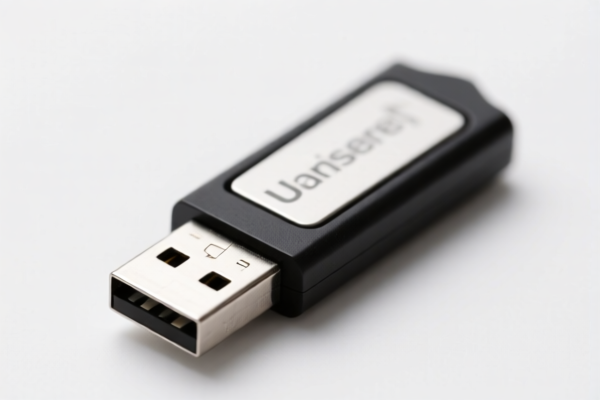
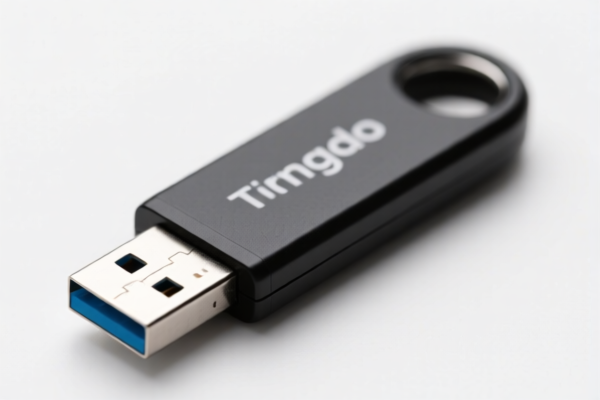
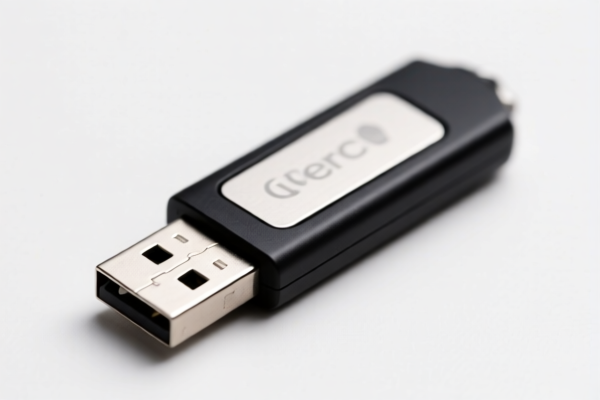
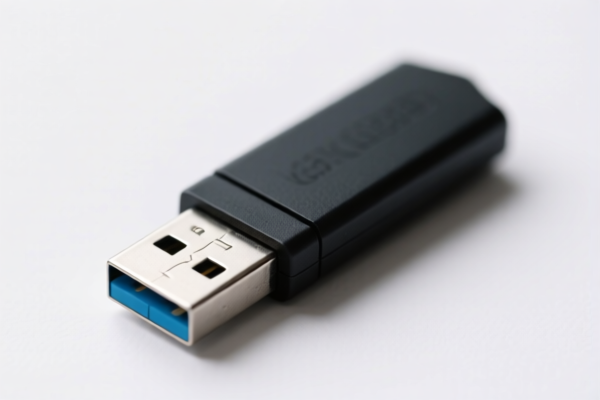
AI Analysis
🚀 USB Flash Drive & Storage Units (The "Box" of Data)
🌐 HS Code Classification & Customs Clearance Guide | 2026 Latest Tariff Analysis | Strategic Compliance Strategy
📌 I. Product Definition & Classification: What Exactly is a "USB Flash Drive"?
In international trade, USB Flash Drives are not merely "storage boxes" but complex electronic devices integrating semiconductor memory chips, control circuits, and USB interfaces. Their classification depends heavily on whether they are viewed as integrated circuits (chips) or finished storage media.
The provided data highlights four distinct classification pathways, ranging from semiconductor chip logic to peripheral storage device logic. Each path carries different tax implications, particularly under current US trade restrictions.
⚠️ Critical Distinction:
- 8542 Codes: Treat the drive as a semiconductor integrated circuit (focusing on the memory chip technology like EEPROM/NAND).
- 8523 Codes: Treat the drive as a solid-state recording medium (focusing on the non-volatile storage function).
- 8471 Codes: Treat the drive as a unit of storage for automatic data processing machines (focusing on its role as a computer peripheral).
📦 II. HS Code Classification Matrix (Based on Provided Data)
| HS Code | Product Description & Logic | Total Tax Rate | Key Tax Components |
|---|---|---|---|
| 8542.32.00.51 | Semiconductor Memory Chips: Classified under "Electronic Integrated Circuits -> Memories". Core technology includes EEPROM. | 60.0% | Base: 0% + Section 301: 50% + IEEPA 122: 10% |
| 8542.32.00.71 | Other Integrated Circuit Memories: Fits "ICs -> Memories -> Others". Core function is data storage via semiconductor logic. | 60.0% | Base: 0% + Section 301: 50% + IEEPA 122: 10% |
| 8523.59.00.00 | Non-Volatile Solid-State Storage: Classified as "Other Solid-State Non-Volatile Storage Media". Material is semiconductor medium. | 35.0% | Base: 0% + Section 301: 25% + IEEPA 122: 10% |
| 8471.70.60.00 | Storage Units for ADP Machines: Classified as "Other Storage Units" for automatic data processing. Fits the logic of computer peripherals. | 35.0% | Base: 0% + Section 301: 25% + IEEPA 122: 10% |
| 8523.51.00.00 | Solid-State Storage Media: Specifically "Solid-State Non-Volatile Storage Devices". Focuses on material and non-volatility. | 17.5% | Base: 0% + Section 301: 7.5% + IEEPA 122: 10% |
🔍 Key Insight:
- The 60% rate (8542 series) is the most expensive but technically rigorous for drives focused on chip-level technology.
- The 35% rate (8523/8471 series) is a middle-ground classification for general storage media/peripherals.
- The 17.5% rate (8523.51) is the most favorable but strictly applies to "Solid-State Non-Volatile Storage Media" (often interpreted narrowly for bare memory cards or specific media, though some argue it applies to finished drives).
💰 III. 2026 Latest Tariff Rate Breakdown (Detailed Policy Analysis)
✅ Applicable Country: United States (US)
✅ Origin: China (CN) (Implied by "Section 122" and high tariffs, typical of US-China trade context)
✅ Effective Time: Current Active Rates (Post-2025 adjustments)
🎯 1. High-Tier Classification: 8542.32.00.51 & 8542.32.00.71
Classification Logic: Electronic Integrated Circuits -> Memories
| Item | Detail |
|---|---|
| Base Duty Rate | 0% (Most Favored Nation rate for ICs) |
| Section 301 Duty | +50.0% |
| IEEPA Section 122 Duty | +10.0% |
| Total Effective Rate | 60.0% |
| Tax Calculation | CIF Value × 60% |
| De Minimis Eligibility | ❌ NO (Strictly prohibited for Chinese-origin ICs) |
| Legal Basis | USITC:8542.32.00 → FOOTNOTE:301 → IEEPA:122 |
📌 Why this rate?
- These codes treat the USB drive as a semiconductor product. Under US trade policy, semiconductor components from China face the highest retaliatory tariffs (50% Section 301 + 10% IEEPA).
- Risk: High compliance scrutiny. Customs may require detailed technical specifications proving it is an "integrated circuit" rather than a "peripheral."
🎯 2. Mid-Tier Classification: 8523.59.00.00 & 8471.70.60.00
Classification Logic: Solid-State Storage Media / Storage Units
| Item | Detail |
|---|---|
| Base Duty Rate | 0% |
| Section 301 Duty | +25.0% |
| IEEPA Section 122 Duty | +10.0% |
| Total Effective Rate | 35.0% |
| Tax Calculation | CIF Value × 35% |
| De Minimis Eligibility | ❌ NO (Still subject to IEEPA restrictions) |
| Legal Basis | USITC:8523.59 / 8471.70 → FOOTNOTE:301 → IEEPA:122 |
📌 Why this rate?
- This classification shifts the focus from "semiconductor chip" to "storage device."
- Section 301 tariffs for general electronics/storage are often lower (25%) than for advanced semiconductors (50%).
- Advantage: Potentially saves 25% in duty compared to the 8542 classification.
🎯 3. Low-Tier Classification: 8523.51.00.00
Classification Logic: Solid-State Non-Volatile Storage Media
| Item | Detail |
|---|---|
| Base Duty Rate | 0% |
| Section 301 Duty | +7.5% (Note: Specific sub-heading rate may vary; data indicates 7.5%) |
| IEEPA Section 122 Duty | +10.0% |
| Total Effective Rate | 17.5% |
| Tax Calculation | CIF Value × 17.5% |
| De Minimis Eligibility | ⚠️ Check Specific Exclusions (Often IEEPA applies regardless of Section 301) |
| Legal Basis | USITC:8523.51 → IEEPA:122 |
📌 Why this rate?
- This is the most cost-effective option.
- It categorizes the product purely as storage media, stripping away the "computer peripheral" (8471) or "integrated circuit" (8542) complexity.
- Caution: Customs may challenge this if the product has significant circuitry beyond simple storage, arguing it fits better under 8471 or 8542.
🛠️ IV. Customs Clearance Operational Advice (Risk Mitigation)
✅ 1. Documentation Checklist (Mandatory)
| Document | Requirement | Purpose |
|---|---|---|
| Product Specification Sheet | Must detail: Capacity, Interface (USB 2.0/3.0/3.1), Controller Chip Type, NAND Flash Type. | Determines HS Code logic (IC vs. Media vs. Peripheral). |
| Circuit Diagram/Block Diagram | Show internal structure. Does it have a controller? | Proves if it's a "device" (8471/8542) or "media" (8523). |
| Commercial Invoice | Clearly state: "USB Flash Drive, [Capacity], [Brand], Model #[X]". Avoid vague terms like "Storage Box." | Prevents misclassification disputes. |
| Certificate of Origin | Essential for verifying origin (China vs. Non-China) to apply correct IEEPA tariffs. | Determines applicability of 10% IEEPA tariff. |
| FCC/CE Certificates | Proof of electromagnetic compatibility. | Required for electronic imports into US/EU. |
✅ 2. Classification Strategy & Declaration Tips
🔥 Golden Rule: "Technical Precision Overrides Common Name"
| Scenario | Recommended HS Code | Reasoning | Tax Impact |
|---|---|---|---|
| High-End/Industrial Drive | 8542.32.00.51 |
Emphasize EEPROM/NAND IC technology. Best if marketing focuses on chip quality/speed. | 60% (High Risk/Cost) |
| General Consumer Drive | 8471.70.60.00 |
Position as "Storage Unit for ADP". Standard USB drives used with PCs. | 35% (Balanced) |
| Bulk Storage Media | 8523.59.00.00 |
Position as "Solid-State Storage Media". Focus on data capacity, not computing function. | 35% (Balanced) |
| Simple Thumb Drive | 8523.51.00.00 |
Argue it is purely storage media. Minimal circuitry view. | 17.5% (Lowest Cost) |
⚠️ Warning:
- Do NOT use the term "Storage Box" in the declaration. It is ambiguous and may lead to reclassification under generic goods with higher duties or delays.
- Use "USB Flash Drive" or "Solid State Storage Device".
✅ 3. Special Considerations for US Imports
-
IEEPA Section 122 (10% Tariff):
- Applies to all Chinese-origin electronics, regardless of HS Code.
- No Exemption: You cannot avoid the 10% IEEPA tariff by changing the HS Code. It is added on top of Section 301.
-
Section 301 Tariffs (7.5% – 50%):
- Varies by HS Code.
8542(ICs) → 50%8471/8523(Storage) → 25% (or 7.5% for specific sub-headings)- Strategy: Try to justify classification under
8523.51.00.00or8523.59.00.00to reduce Section 301 from 50% to 25% or 7.5%.
-
De Minimis (Section 321):
- USB Drives from China generally DO NOT qualify for de minimis entry (under $800) due to IEEPA and Section 301 exclusions.
- Plan for Full Duty Payment: Budget for CIF Value × (Base + Section 301 + IEEPA).
🌍 V. Global Market Comparison (Brief Overview)
| Market | Likely HS Code | Est. Duty (China Origin) | Notes |
|---|---|---|---|
| 🇺🇸 USA | 8523.51.00.00 / 8542.32.00.51 |
17.5% – 60.0% | High tariffs due to IEEPA + Section 301. |
| 🇨🇳 China | 8523.51.00.00 |
~0-5% | Low duty, but focus on domestic circulation. |
| 🇪🇺 EU | 8523.51.00.00 |
0% | No general tariff for USB drives. VAT applies separately. |
| 🇬🇧 UK | 8523.51.00.00 |
0% | Post-Brexit, still 0% for standard USB drives. |
| 🇯🇵 Japan | 8523.51.00.00 |
0% | Free trade agreement benefits may apply. |
📌 Conclusion:
- The USA is the only major market with punitive tariffs on these items.
- For US exports, classification strategy is critical to save up to 42.5% in duties (60% vs 17.5%).
📌 VI. Common Mistakes & Pitfalls (Learn from Others' Failures)
❌ Mistake 1: Declaring as "Computer Parts" without specifying.
👉 Result: Customs assigns a generic code with 25%+10% tariff.
❌ Mistake 2: Using "Storage Box" as the product name.
👉 Result: Delay for inspection; potential reclassification to higher-duty categories.
❌ Mistake 3: Assuming De Minimis applies.
👉 Result: Package seized or delayed at border because Chinese electronics are excluded from $800 exemption.
❌ Mistake 4: Ignoring the Controller Chip.
👉 Result: If the drive has a complex controller, 8542 (IC) classification may be forced, leading to 60% duty.
✅ Correct Declaration Example:
"USB Flash Drive, 32GB, USB 3.0, Solid State Storage, Non-Volatile, Model XYZ, [Brand]"
- HS Code:8523.51.00.00(Aim for 17.5%) OR8523.59.00.00(Aim for 35%)
- Duty: 10% (IEEPA) + 7.5% or 25% (Section 301) = 17.5% or 35%
🎯 VII. Conclusion: Strategic Classification for Cost Efficiency
🎯 Key Takeaway:
🔹 Aim for
8523.51.00.00if possible (17.5% total). This treats the USB drive as pure storage media.
🔹 Fallback to8523.59.00.00or8471.70.60.00(35% total) if the drive is seen as a complex peripheral.
🔹 Avoid8542.32.00.51(60% total) unless marketing specifically emphasizes the semiconductor chip technology.
📌 Pro Tip:
- Pre-Ruling: Apply for an ACE Pre-Ruling from US CBP to lock in the
8523.51.00.00classification before shipping.- Supply Chain: If volume is high, consider transshipment or value-add assembly in a non-China country (e.g., Vietnam, Malaysia) to mitigate IEEPA tariffs, though US rules of origin are strict.
📣 Immediate Action Required:
📞 Consult a customs broker with your technical datasheet.
📝 Prepare declaration using "Solid State Storage" language, not "Storage Box."
💰 Budget for 17.5% – 60% duty depending on classification.
✨ Smart Classification = Lower Costs = Higher Profits
💼 Don't let tariffs erase your margin!
Customer Reviews
About HS Code Classification
The Harmonized System (HS) is an internationally standardized nomenclature developed by the World Customs Organization (WCO) to classify traded products. Over 200 countries use the HS system as the basis for customs tariffs, trade statistics, and import/export regulations.
Each HS code follows a hierarchical structure:
- Chapter (2 digits) — Broad category of goods (e.g., Chapter 84: Machinery and Mechanical Appliances)
- Heading (4 digits) — More specific grouping within the chapter
- Subheading (6 digits) — Internationally standardized breakdown, used by all WCO member countries
- National subdivisions (8-10 digits) — Country-specific extensions for further classification, such as US HTSUS 10-digit codes
Correct HS code classification is essential for smooth customs clearance, accurate duty payment, and compliance with trade regulations. Misclassification can lead to customs delays, overpayment of duties, or penalties.
When importing from CN to US, the applicable tariff rates may include:
- Most-Favored-Nation (MFN) rate — The standard duty rate applied to WTO members
- General rate — Applied to countries without trade agreements
- Trade remedy duties — Additional tariffs such as Section 301 (anti-dumping), Section 232 (national security), or countervailing duties
The information provided on this page is for reference purposes only. For official classification, please consult with your local customs authority or a licensed customs broker.