USB Flash Drive Storage Case
CN → US| HS Code | Tariff Rate | Origin | Destination | Doc |
|---|---|---|---|---|
| 8542320051 | 60.0% | CN | US | Official Doc |
| 8542320071 | 60.0% | CN | US | Official Doc |
| 8523590000 | 35.0% | CN | US | Official Doc |
| 8471706000 | 35.0% | CN | US | Official Doc |
| 8523510000 | 17.5% | CN | US | Official Doc |
Product Images
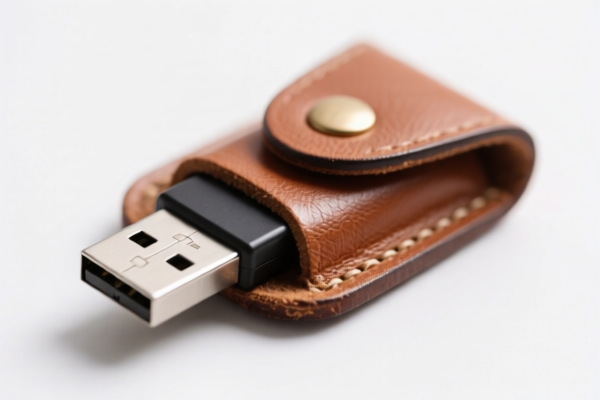
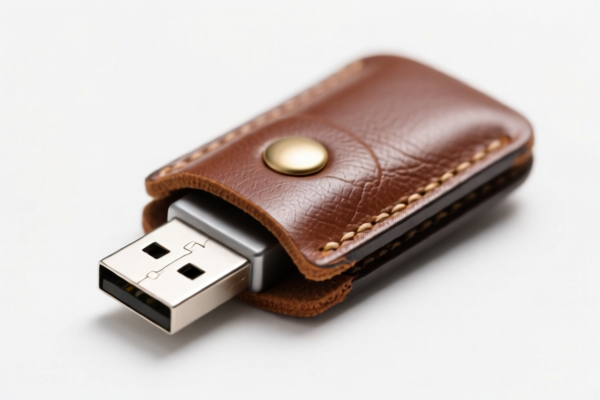
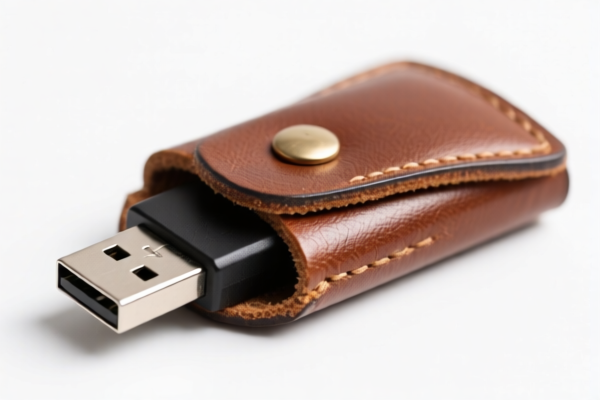
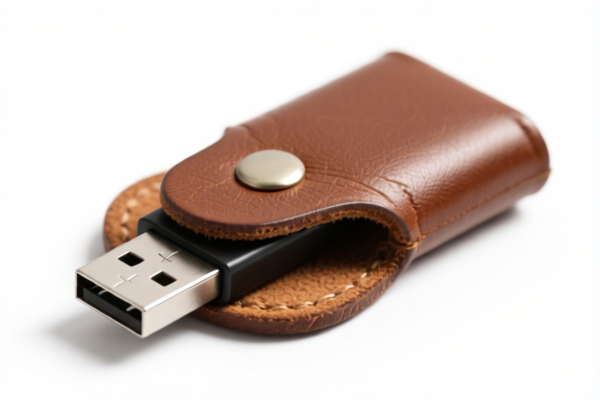
AI Analysis
💾 USB Flash Drive Storage Case (Portable USB Memory Devices)
🌐 HS Code Reference & Customs Clearance Guide | 2026 Latest Tariff Analysis | Professional Clearance Strategy
📌 I. Product Definition & Classification: Do You Really Understand "USB Drives"?
USB Flash Drives are essential portable data storage devices in the digital age, widely used in office, industrial, and consumer electronics. In international trade, their classification depends heavily on the internal technology (e.g., EEPROM, NAND flash) and functional attributes (storage medium vs. peripheral device).
There are two main classification logics: 1. Integrated Circuit/Chip Level: If the product is viewed as a semiconductor memory device (containing EEPROM/NAND chips), it falls under Heading 8542. 2. Storage Media/Peripheral Level: If the product is viewed as a finished storage medium or peripheral for data processing machines, it falls under Heading 8523 or 8471.
⚠️ Key Distinction:
- If the focus is on the semiconductor technology (EEPROM/NAND) and the device is considered a "memory integrated circuit," it may be classified under 8542.32.xxxx.
- If the focus is on the storage media function (non-volatile solid-state storage), it may be classified under 8523.59.xxxx or 8523.51.xxxx.
- If the focus is on its role as a peripheral storage device for computers, it may be classified under 8471.70.xxxx.
📦 II. HS Code Classification Details (2026 Latest Tariff Authority Comparison)
| HS Code | Product Description | Applicable Scenario | Technical Logic |
|---|---|---|---|
8542.32.00.51 |
Other Memories: USB storage devices functionally classified as memories, featuring EEPROM technology. | High-end USB drives where semiconductor content is emphasized; fits "Electronic ICs -> Memories -> Other." | ✅ Semiconductor/Memory IC |
8542.32.00.71 |
Other Memories: Fits the logic of "Electronic Integrated Circuits -> Memories -> Others." | Similar to above; emphasizes the integrated circuit nature of the storage controller and memory chips. | ✅ Semiconductor/Memory IC |
8523.59.00.00 |
Other Recording Media for Solid-State Non-Volatile Storage: USB drives are non-volatile solid-state storage devices. | General USB flash drives where the "storage medium" aspect is primary; fits the definition of "storage devices." | ✅ Solid-State Storage Media |
8471.70.60.00 |
Other Storage Units: USB drives are storage devices fitting the "Other Storage Devices" attribute. | Viewed as a peripheral unit for data processing machines; standard office/commercial USB drives. | ✅ Computer Peripheral/Storage Unit |
8523.51.00.00 |
Solid-State Non-Volatile Storage Devices: USB drives are solid-state storage media matching material and use characteristics. | Focuses on the "solid-state" and "non-volatile" physical properties of the USB drive. | ✅ Solid-State Physical Media |
🔍 Key Reminder:
- 8542 Codes emphasize the semiconductor chip technology (EEPROM/NAND).
- 8523 Codes emphasize the storage media function (non-volatile, solid-state).
- 8471 Code emphasizes the computer peripheral function (storage unit for ADP machines).
- Misclassification can lead to significant tax differences (17.5% vs. 60%).
💰 III. 2026 Latest Tariff Rate Details (Including Additional Taxes & Policy Surcharges)
✅ Applicable Country: United States (US)
✅ Country of Origin: China (CN)
✅ Effective Date: From November 10, 2025 (including subsequent imports)
🎯 1. 8542.32.00.51 & 8542.32.00.71 —— Semiconductor Memory Classification
| Item | Content |
|---|---|
| Base Duty Rate | 0.0% (ad valorem) |
| Section 301 Additional Duty | +50.0% |
| Section 122 Duty | +10.0% |
| Total Effective Rate | 60.0% |
| Tax Calculation | CIF Value × 60% |
| De Minimis Exemption | ❌ Not Applicable (deny_de_minimis) |
| Legal Basis Path | Section 301 (50%) + Section 122 (10%) |
📌 Explanation:
- Under this classification, the USB drive is treated as a semiconductor memory device.
- The 50% Section 301 duty applies to Chinese-origin semiconductors and electronic components.
- The 10% Section 122 duty applies to certain technology products.
- Total 60% is an extremely high tariff, making this classification cost-prohibitive for many traders unless no alternative applies.
🎯 2. 8523.59.00.00 & 8471.70.60.00 —— Storage Media/Peripheral Classification
| Item | Content |
|---|---|
| Base Duty Rate | 0.0% (ad valorem) |
| Section 301 Additional Duty | +25.0% |
| Section 122 Duty | +10.0% |
| Total Effective Rate | 35.0% |
| Tax Calculation | CIF Value × 35% |
| De Minimis Exemption | ❌ Not Applicable (deny_de_minimis) |
| Legal Basis Path | Section 301 (25%) + Section 122 (10%) |
📌 Explanation:
- These codes classify the USB drive as a storage medium or computer peripheral.
- The 25% Section 301 duty is lower than the 50% applied to semiconductors under 8542.
- Total 35% is still high but significantly more favorable than the 60% rate.
- This is the most common and recommended classification for general consumer USB drives to minimize tax burden while remaining compliant.
🎯 3. 8523.51.00.00 —— Solid-State Non-Volatile Storage Media
| Item | Content |
|---|---|
| Base Duty Rate | 0.0% (ad valorem) |
| Section 301 Additional Duty | +7.5% |
| Section 122 Duty | +10.0% |
| Total Effective Rate | 17.5% |
| Tax Calculation | CIF Value × 17.5% |
| De Minimis Exemption | ❌ Not Applicable (deny_de_minimis) |
| Legal Basis Path | Section 301 (7.5%) + Section 122 (10%) |
📌 Explanation:
- This code specifically targets solid-state non-volatile storage devices with a lower Section 301 rate.
- The 7.5% Section 301 duty is the lowest among the US tariffs for USB drives.
- Total 17.5% offers the most competitive tax rate.
- Prerequisite: Must clearly demonstrate that the product is a "solid-state non-volatile storage device" in its functional description. This requires strong technical documentation to support the classification.
🛠️ IV. Customs Clearance Practical Advice (Avoid Pitfalls)
✅ 1. Required Documentation Checklist (Mandatory)
| Document | Required | Description |
|---|---|---|
| ✅ Product Specifications | ✔️ | Include capacity, interface type (USB 2.0/3.0/Type-C), speed, and material. |
| ✅ Technical Diagrams | ✔️ | Show internal structure to prove it is a "solid-state device" or "peripheral," not just a raw chip. |
| ✅ Product Photos | ✔️ | Clear images of the device, label, and ports. |
| ✅ Third-Party Test Reports | ✔️ | FCC, CE, RoHS compliance reports are essential for electronic imports. |
| ✅ Commercial Invoice | ✔️ | Clearly state "USB Flash Drive" or "Portable USB Memory Storage Device." Avoid vague terms like "electronic component." |
| ✅ Packing List | ✔️ | Detail items per box. Do not split packaging artificially. |
✅ 2. Declaration Tips (Key Mantra)
🔥 "Clarify Function, Choose the Right Code, Lower the Tax!"
| Scenario | Recommended HS Code | Risk of Incorrect Declaration |
|---|---|---|
| General Consumer USB Drive | 8523.59.00.00 or 8471.70.60.00 (35%) |
Misclassifying as 8542 → 60% Tax (Huge Overpayment) |
| High-Spec Solid State Drive | 8523.51.00.00 (17.5%) |
Misclassifying as 8542 → 60% Tax (Huge Overpayment) |
| Raw Semiconductor Chip (No Case) | 8542.32.00.xxxx (60%) |
Not applicable for finished USB drives |
| USB Drive + Box + Manual | Declare as One Unit | Splitting into "Drive" + "Case" → Each item taxed separately, potentially higher total cost |
📌 Note:
- Always prefer 8523 or 8471 over 8542 for finished USB flash drives to avoid the 50% Section 301 rate.
- If your product is a high-end solid-state device, try to argue for 8523.51.00.00 (17.5%) with strong technical justification.
✅ 3. Special Circumstances
| Situation | Handling Advice |
|---|---|
| OEM/White Label USB Drives | Provide customer order and design drawings. Ensure the description matches the technical specs. |
| USB Drive with Encryption | Still classified under 8523 or 8471 based on storage function, not security features. |
| USB Drive with Wireless Function | May fall under 8517 (Radiotelephone apparatus) or other telecom codes. Requires specific technical review. |
| USB Drive for Medical/Industrial Use | If used in specialized equipment, still generally classified as 8523 or 8471 unless it's a custom IC. |
🌍 V. Global Market Customs Clearance Comparison (2026 Latest)
| Country/Region | Recommended HS Code | Tariff Rate (China Origin) | Certification Requirements | Notes |
|---|---|---|---|---|
| 🇺🇸 USA | 8523.59.00.00 / 8471.70.60.00 |
35% (incl. S301 & S122) | FCC + RoHS | 60% for 8542 classification |
| 🇨🇳 China | 8523.51.00.00 / 8523.59.00.00 |
0% - 5% | CCC (if applicable) | Low duty, focus on compliance |
| 🇪🇺 EU | 8523.51.00.00 |
0% | CE + RoHS | No Section 301 taxes |
| 🇦🇺 Australia | 8523.59.00.00 |
5% | RCM | No additional surcharges |
| 🇯🇵 Japan | 8523.59.00.00 |
0% | PSE | No additional surcharges |
📌 Conclusion:
- The US is the only major market with significant additional tariffs on USB drives from China.
- Misclassification can double your tax burden (from 35% to 60%).
- EU, Japan, and Australia offer much lower tariffs (0-5%) and fewer surcharges.
📌 VI. Common Errors & Pitfalls Guide (Blood-Teaching Lessons)
❌ Error 1: Classifying a finished USB drive as a "Semiconductor Memory" (8542)
👉 Consequence: 60% Tax instead of 35%. Huge Overpayment!
❌ Error 2: Declaring "USB Drive" without technical details
👉 Consequence: Customs may reclassify to the highest applicable rate (8542) due to uncertainty. Delay + Potential Penalty.
❌ Error 3: Splitting the USB drive and its packaging for declaration
👉 Consequence: Each item taxed separately. Total Cost Increases.
❌ Error 4: Ignoring Section 122 Duty (10%)
👉 Consequence: Incorrect tax calculation. 10% Underpayment + Penalties.
✅ Correct Practice:
"USB Flash Drive, 64GB, USB 3.0, Portable Storage Device, Model XYZ, FCC & RoHS Certified"
🎯 VII. Conclusion: Professional Declaration, Save Time, Reduce Cost!
🎯 Remember the Mantra:
🔹 "Choose 8523 or 8471, Avoid 8542, Save 25% Tax!"
🔹 "HS Code Determines Tax, 17.5% is Best, 60% is Pain, 35% is Standard!"
📌 Pro Tip:
If your USB drives are manufactured in Vietnam, Mexico, or Malaysia, you may qualify for IEEPA Exemptions or FTA Benefits, reducing taxes to 0%~5%.
Consider Advance Ruling (Pre-classification) with US Customs to confirm your specific product's HS Code and tax rate before shipment.
📣 Immediate Action:
📞 Contact a professional customs broker + Provide Product Specs + Apply for HS Code Pre-ruling
🚀 Let your USB drives clear customs smoothly, export efficiently, and maximize profits!
✨ Professional Clearance Starts with Accurate Classification!
💼 Every penny of your cost deserves precise calculation!
Customer Reviews
About HS Code Classification
The Harmonized System (HS) is an internationally standardized nomenclature developed by the World Customs Organization (WCO) to classify traded products. Over 200 countries use the HS system as the basis for customs tariffs, trade statistics, and import/export regulations.
Each HS code follows a hierarchical structure:
- Chapter (2 digits) — Broad category of goods (e.g., Chapter 84: Machinery and Mechanical Appliances)
- Heading (4 digits) — More specific grouping within the chapter
- Subheading (6 digits) — Internationally standardized breakdown, used by all WCO member countries
- National subdivisions (8-10 digits) — Country-specific extensions for further classification, such as US HTSUS 10-digit codes
Correct HS code classification is essential for smooth customs clearance, accurate duty payment, and compliance with trade regulations. Misclassification can lead to customs delays, overpayment of duties, or penalties.
When importing from CN to US, the applicable tariff rates may include:
- Most-Favored-Nation (MFN) rate — The standard duty rate applied to WTO members
- General rate — Applied to countries without trade agreements
- Trade remedy duties — Additional tariffs such as Section 301 (anti-dumping), Section 232 (national security), or countervailing duties
The information provided on this page is for reference purposes only. For official classification, please consult with your local customs authority or a licensed customs broker.