USB Type C Cable
CN → US| HS Code | Tariff Rate | Origin | Destination | Doc |
|---|---|---|---|---|
| 8517790000 | 67.5% | CN | US | Official Doc |
| 8471801000 | 35.0% | CN | US | Official Doc |
| 8517620090 | 35.0% | CN | US | Official Doc |
| 8471809000 | 35.0% | CN | US | Official Doc |
| 8544429090 | 87.6% | CN | US | Official Doc |
| 8544422000 | 85.0% | CN | US | Official Doc |
Product Images
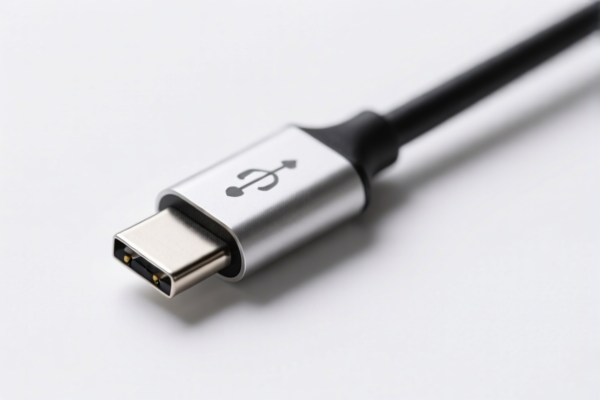
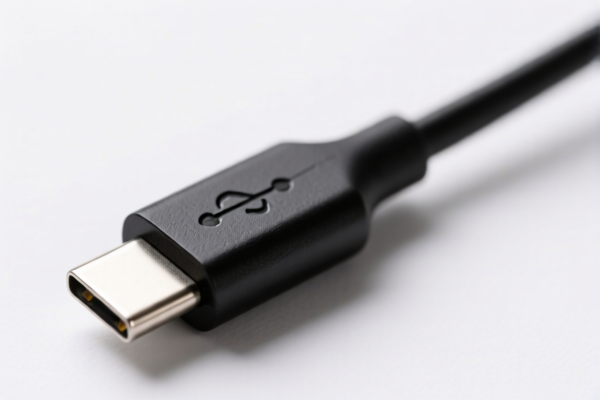
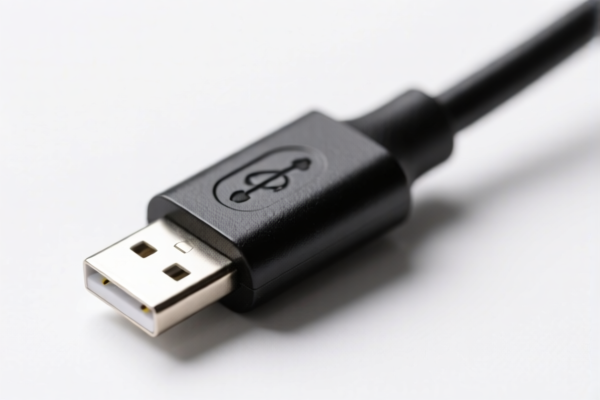
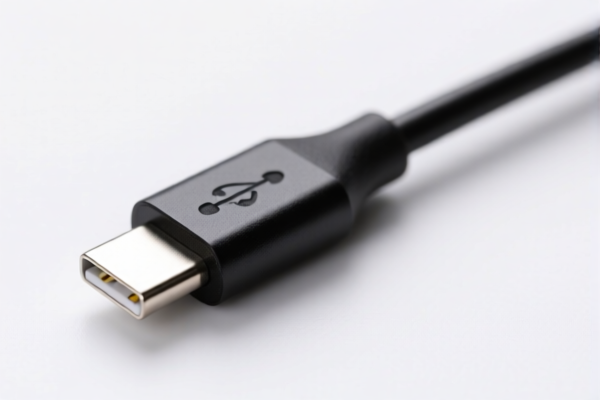
AI Analysis
🔌 USB Type C Cable (USB Data Cable)
🌐 HS Code Reference & Customs Clearance Guide | 2026 Latest Tariff Analysis | Professional Clearance Strategy
📌 I. Product Definition & Classification: Do You Really Know the "USB Cable"?
The USB Type-C cable is the modern standard for data transmission and power delivery. In international trade, its classification is often a source of confusion because it can be viewed either as a communication equipment accessory or as an electrical conductor. The distinction lies in its primary function and structural description under the Harmonized System (HS).
⚠️ Key Distinction:
- If classified primarily as a component for data transfer machines (logic/function-based) → It falls under 8517 or 8471.
- If classified primarily as an insulated wire/cable with connectors (material/physical-based) → It falls under 8544.
📦 II. HS Code Classification Details (2026 Latest Tariff Authority Comparison)
Based on the provided data, here are the four possible classifications for USB Type-C Cables, ranging from low to high tax liability:
| HS Code | Product Description | Usage Logic / Summary | Total Tax Rate (China Origin to US) |
|---|---|---|---|
8517.79.00.00 |
Other transmission/receiving equipment parts | Classified as an accessory for data transmission devices. | 67.5% |
8471.80.10.00 |
Control or adaptation units | Infers the cable as a transmission medium for connecting data processing equipment. | 35.0% |
8517.62.00.90 |
Machines for transmitting voice, image, or data | Functionally belongs to machines for transmitting data. | 35.0% |
8471.80.90.00 |
Other units for automatic data processing equipment | Classified as a peripheral connection unit not listed in specific categories. | 35.0% |
8544.42.90.90 |
Insulated electric conductors with connectors | Classified physically as an electrical conductor (wire) < 1000V with connectors. | 87.6% |
🔍 Critical Insight:
- Lowest Risk/Lowest Cost:8471.80.10.00,8517.62.00.90,8471.80.90.00at 35.0%. - Highest Cost:8544.42.90.90at 87.6%. Avoid this classification if possible, as it attracts the maximum "Steel, Aluminum, Copper Products" surcharge. - Middle Ground:8517.79.00.00at 67.5%.
💰 III. 2026 Latest Tariff Rate Detailed Breakdown (Including Surcharges & Policy Add-ons)
✅ Applicable Country: United States (US)
✅ Origin: China (CN)
✅ Effective Time: From November 10, 2025 (including subsequent imports)
🎯 1. 8517.79.00.00 – Other parts for transmission/receiving equipment
| Item | Detail |
|---|---|
| Base Tariff | 0.0% |
| Section 301 (Additional) | +7.5% |
| Section 301 (122 Clause) | +10% |
| Section 301 (Steel, Aluminum, Copper) | +50% |
| Total Tax Rate | 67.5% |
| Tax Calculation | CIF Value × 67.5% |
| De Minimis Eligibility | ❌ No (deny_de_minimis) |
📌 Explanation:
- This classification triggers the highest surcharge tier due to the inclusion of copper conductors. - The 50% surcharge for Steel, Aluminum, and Copper products is applied on top of the base and other Section 301 tariffs. - This is a very high tariff category. Use only if justified by specific hardware integration claims.
🎯 2. 8471.80.10.00 – Control or adaptation units
| Item | Detail |
|---|---|
| Base Tariff | 0.0% |
| Section 301 (Additional) | +25.0% |
| Section 301 (122 Clause) | +10% |
| Total Tax Rate | 35.0% |
| Tax Calculation | CIF Value × 35.0% |
| De Minimis Eligibility | ❌ No (deny_de_minimis) |
📌 Explanation:
- No Copper/Steel Surcharge: This code does not trigger the additional 50% surcharge for metallic products. - Lower Risk: By framing the cable as an "adaptation unit" for data processing, you avoid the heavy material-based surcharge. - Recommended Strategy: Aim for this classification if the cable is marketed as part of a data transfer solution.
🎯 3. 8517.62.00.90 – Machines for transmitting voice, image, or data
| Item | Detail |
|---|---|
| Base Tariff | 0.0% |
| Section 301 (Additional) | +25.0% |
| Section 301 (122 Clause) | +10% |
| Total Tax Rate | 35.0% |
| Tax Calculation | CIF Value × 35.0% |
| De Minimis Eligibility | ❌ No (deny_de_minimis) |
📌 Explanation:
- Similar to the above, this focuses on the function (data transmission) rather than the material (copper wire). - Same 35% Rate: Avoids the 50% copper surcharge. - Usage: Best described as an accessory to "machines for transmitting data."
🎯 4. 8471.80.90.00 – Other units for automatic data processing equipment
| Item | Detail |
|---|---|
| Base Tariff | 0.0% |
| Section 301 (Additional) | +25.0% |
| Section 301 (122 Clause) | +10% |
| Total Tax Rate | 35.0% |
| Tax Calculation | CIF Value × 35.0% |
| De Minimis Eligibility | ❌ No (deny_de_minimis) |
📌 Explanation:
- A "catch-all" for data processing peripherals. - Same 35% Rate: Avoids the 50% copper surcharge. - Usage: Useful if the cable doesn't fit neatly into "control units" but is clearly a peripheral for a computer/device.
🎯 5. 8544.42.90.90 – Insulated electric conductors with connectors
| Item | Detail |
|---|---|
| Base Tariff | 2.6% |
| Section 301 (Additional) | +25.0% |
| Section 301 (122 Clause) | +10% |
| Section 301 (Steel, Aluminum, Copper) | +50% |
| Total Tax Rate | 87.6% |
| Tax Calculation | CIF Value × 87.6% |
| De Minimis Eligibility | ❌ No (deny_de_minimis) |
📌 Warning:
- Highest Tariff: This is the most expensive classification. - Why so high? It combines a base tariff (2.6%) with all surcharges, including the massive 50% copper product surcharge. - Avoid Unless Necessary: Only use if the customs authority strictly requires physical description over functional description and refuses other codes.
🛠️ IV. Customs Clearance Practical Advice (Battle-Tested Pitfall Guide)
✅ 1. Preparation Checklist (All Required)
| Document | Required? | Notes |
|---|---|---|
| ✅ Product Specification Sheet | ✔️ | Must detail length, connector type (USB-C), data speed (e.g., USB 3.1/3.2), and power rating. |
| ✅ Structure/Exploded View | ✔️ | Proves it is a cable, not a complex electronic device. |
| ✅ Product Photos | ✔️ | Clear shots of connectors and labeling. |
| ✅ Commercial Invoice | ✔️ | Description should match the HS Code logic (e.g., "Data Cable for PC" vs. "Electrical Wire"). |
| ✅ Packing List | ✔️ | Include net/gross weight and piece count. |
✅ 2. Declaration Strategy (Key Tips)
🔥 Golden Rule:
"Function over Material, Avoid Copper Surcharge!"
| Scenario | Recommended HS Code | Tax Rate | Risk Level |
|---|---|---|---|
| Standard USB-C Data Cable | 8471.80.10.00 or 8517.62.00.90 |
35.0% | 🟢 Low (Best Balance) |
| Generic/Unspecified Cable | 8517.79.00.00 |
67.5% | 🟡 Medium (High Surcharge) |
| Purely Descriptive (Wire Focus) | 8544.42.90.90 |
87.6% | 🔴 High (Avoid!) |
📌 Explanation:
- When declaring, emphasize the data transfer function. Use terms like "Data Transmission Accessory" or "Peripheral for Automatic Data Processing." - Do NOT describe it merely as "Insulated Copper Wire with Connectors" unless forced to, as this triggers the 50% surcharge under8544.42.90.90.
✅ 3. Special Cases Handling
| Scenario | Handling Advice |
|---|---|
| Charging-Only Cable (No Data) | Still often classified under 8544 or 8517. Verify if it has data pins. If purely power, some argue for lower rates, but customs often still apply Section 301. |
| Cable with Built-in Chip (e.g., e-marker) | Strongly supports classification under 8471 or 8517 (as a "control/adaptation unit"), helping avoid the 8544 material surcharge. |
| Short Cables (<1m) | Same classification logic applies. Do not assume small size changes HS Code. |
| Bulk vs. Retail | Bulk shipments may face stricter scrutiny. Ensure documentation matches retail claims. |
🌍 V. Global Market Comparison (2026 Latest)
| Country/Region | Recommended HS Code | Tariff (China Origin) | Certification Requirements | Notes |
|---|---|---|---|---|
| 🇺🇸 USA | 8471.80.10.00 |
35.0% | FCC (if applicable) | Avoid 8544 (87.6%). |
| 🇨🇳 China | 8544.42.90.90 |
~5-8% | CCC (if needed) | China itself has lower base rates. |
| 🇪🇺 EU | 8544.42.90.90 |
0-4% | CE | No Section 301 tariffs. |
| 🇬🇧 UK | 8544.42.90.90 |
0-4% | UKCA | No Section 301 tariffs. |
| 🇯🇵 Japan | 8544.42.90.90 |
0-5% | PSE | No Section 301 tariffs. |
📌 Conclusion:
- The US market is the most critical due to high Section 301 tariffs. - EU, UK, Japan, and China do not have these punitive surcharges, making the classification less critical for cost (though still important for duty rates). - For US Imports, precise classification under8471or8517can save you ~52.6% in taxes compared to8544.
📌 VI. Common Mistakes & Pitfall Guide (Blood Lessons)
❌ Mistake 1: Declaring as "Insulated Wire" (8544)
👉 Consequence: Tax jumps from 35% to 87.6%.
👉 Fix: Emphasize data function and connection to data processing equipment.
❌ Mistake 2: Using "USB Cable" as the sole description
👉 Consequence: Customs officer has discretion to choose the highest-taxed code.
👉 Fix: Use specific descriptions like "USB Type-C Data Transfer Cable for Peripheral Device."
❌ Mistake 3: Ignoring the Copper Surcharge
👉 Consequence: Unexpected high bill due to the 50% "Steel, Aluminum, Copper" add-on.
👉 Fix: Ensure the HS Code does not trigger the copper surcharge (i.e., avoid 8544 if possible).
❌ Mistake 4: Assuming All USB Cables Are the Same
👉 Consequence: Mixed shipments with different specs may be rejected.
👉 Fix: Provide clear specs for each variant (length, speed, power).
✅ Correct Approach:
"USB Type-C Data Cable, for connecting external storage and peripherals to Automatic Data Processing Machines, Model XYZ, Certified."
🎯 VII. Conclusion: Professional Declaration, Save Money, Avoid Delays!
🎯 Remember the Mantra:
🔹 "Function First, Avoid Copper, 35% is the Goal, 87% is the Trap!"
🔹 "HS Code Decides Your Profit, A 50% Difference Can Kill Your Margin!"
📌 Pro Tip:
If your USB-C cables are originating from Vietnam, Mexico, Thailand, or Malaysia, you may be eligible for IEEPA Exemptions, reducing the tax to 0%~5%.
Recommend Applying for a Advance Ruling if your volume is high, to secure the 35% rate and avoid audits.
📣 Immediate Action:
📞 Contact a Professional Customs Broker + Provide Product Specs + Clarify Data Function
🚀 Let your USB-C Cables Clear Smoothly, Export Efficiently, and Maximize Profits!
✨ Professional Clearance Starts with Accurate Classification!
💼 Every Cent of Cost Deserves Precise Calculation!
Customer Reviews
About HS Code Classification
The Harmonized System (HS) is an internationally standardized nomenclature developed by the World Customs Organization (WCO) to classify traded products. Over 200 countries use the HS system as the basis for customs tariffs, trade statistics, and import/export regulations.
Each HS code follows a hierarchical structure:
- Chapter (2 digits) — Broad category of goods (e.g., Chapter 84: Machinery and Mechanical Appliances)
- Heading (4 digits) — More specific grouping within the chapter
- Subheading (6 digits) — Internationally standardized breakdown, used by all WCO member countries
- National subdivisions (8-10 digits) — Country-specific extensions for further classification, such as US HTSUS 10-digit codes
Correct HS code classification is essential for smooth customs clearance, accurate duty payment, and compliance with trade regulations. Misclassification can lead to customs delays, overpayment of duties, or penalties.
When importing from CN to US, the applicable tariff rates may include:
- Most-Favored-Nation (MFN) rate — The standard duty rate applied to WTO members
- General rate — Applied to countries without trade agreements
- Trade remedy duties — Additional tariffs such as Section 301 (anti-dumping), Section 232 (national security), or countervailing duties
The information provided on this page is for reference purposes only. For official classification, please consult with your local customs authority or a licensed customs broker.