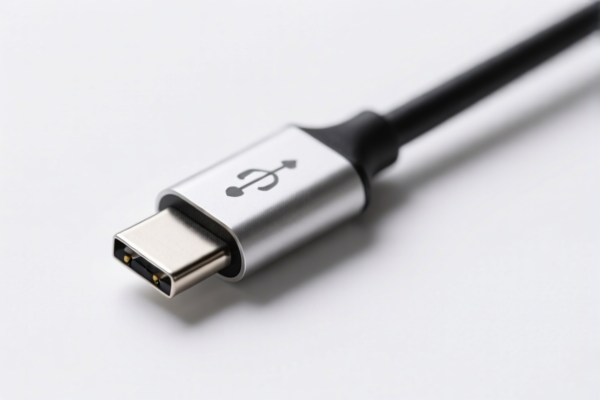
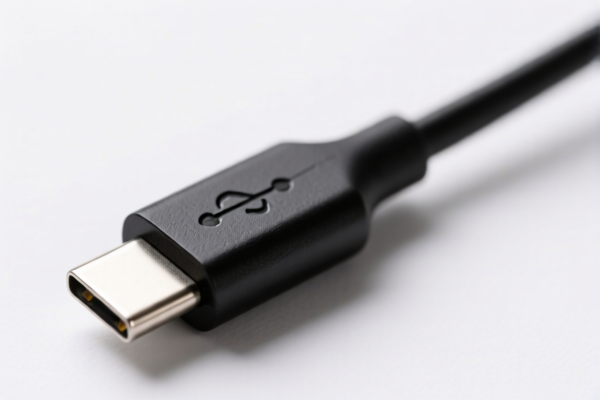
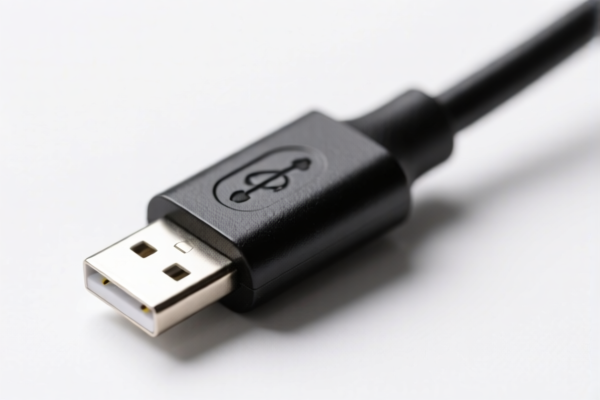
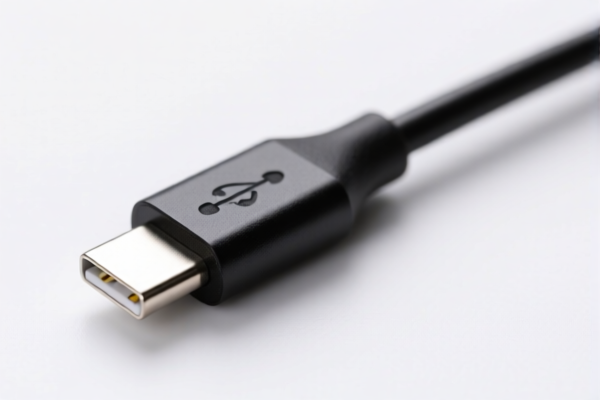
USB Type C Data Cable
CN → US| HS Code | Tariff Rate | Origin | Destination | Doc |
|---|---|---|---|---|
| 8517790000 | 67.5% | CN | US | Official Doc |
| 8471801000 | 35.0% | CN | US | Official Doc |
| 8517620090 | 35.0% | CN | US | Official Doc |
| 8471809000 | 35.0% | CN | US | Official Doc |
| 8544429090 | 87.6% | CN | US | Official Doc |
Product Images
AI Analysis
🔌 USB Type-C Data Cable: The Ultimate Import Classification & Tax Strategy Guide (2026 Edition)
🌐 HS Code Reference & Clearance Guide | 2026 Latest Tariff Analysis | Professional Compliance Strategy
📌 I. Product Definition: What Exactly Is a "USB Type-C Data Cable"?
The USB Type-C Data Cable is a versatile connector cable widely used for data transmission, fast charging, and video output across smartphones, laptops, tablets, and IoT devices. However, in international trade customs classification, not all USB-C cables are created equal.
Depending on the internal structure, voltage rating, and intended function, this simple cable can fall into four completely different HS Codes, leading to tax rates ranging from 35% to a staggering 87.6%.
⚠️ Critical Distinction:
- Is it a simple conductor with insulation? → Likely 8544.42.90.90 (Highest Tax!)
- Is it a communication accessory for data transmission? → Likely 8517.79.00.00 (High Tax due to Steel/Aluminum)
- Is it an adapter/connection unit for computers? → Likely 8471.80.10.00 or 8471.80.90.00 (Moderate Tax)
- Is it considered part of the communication machine itself? → Likely 8517.62.00.90 (Moderate Tax)
📦 II. HS Code Classification Matrix (2026 Latest Tariff Mapping)
Based on the provided data, here are the four valid classification paths for USB Type-C Data Cables, along with their logic and tax implications.
| HS Code | Summary/Logic | Total Tax Rate | Key Risk Factor |
|---|---|---|---|
8517.79.00.00 |
Data Transmission Accessory: Classified as a part of devices for transmitting/receiving data. | 67.5% | 🚨 Highest Risk: Contains Steel/Aluminum components triggering the 50% Section 232 tariff. |
8471.80.10.00 |
Control/Adaptation Unit: Treated as a transmission medium for connecting/adaptive units for Automatic Data Processing (ADP) machines. | 35.0% | ✅ Optimal for ADP Connection: Avoids steel/aluminum surcharges if classified as an ADP unit. |
8517.62.00.90 |
Communication Machine Accessory: Functionally categorized under machines for transmitting voice, image, or data. | 35.0% | ✅ Balanced: Similar to above, focuses on communication functionality rather than pure wiring. |
8471.80.90.00 |
Other ADP Unit: Classified as "Other units" for automatic data processing equipment, not specifically listed elsewhere. | 35.0% | ✅ Safe Harbor: Broad category for data equipment peripherals. |
8544.42.90.90 |
Insulated Conductor: Treated as a wire/cable with connectors, voltage ≤1000V. | 87.6% | 🚨 DANGER ZONE: Treated as basic electrical goods, attracting both Section 301 (25%) and Section 232 (50%) tariffs. |
🔍 Key Insight:
- The difference between 35% and 87.6% is massive.
- The 87.6% rate applies if the cable is viewed purely as an "electrical wire" (8544).
- The 67.5% rate applies if it is viewed as a "data device part" (8517) containing steel/aluminum (Section 232).
- The 35% rate is the strategic target for ADP or Communication equipment accessories.
💰 III. 2026 Tariff Rate Breakdown (Detailed Analysis)
✅ Target Market: United States (US)
✅ Origin: China (CN)
✅ Effective Date: Post-November 2025 (Current Policy Context)
🎯 1. The "Safe" Path: ADP/Communication Accessories (35.0%)
Applicable HS Codes: 8471.80.10.00, 8471.80.90.00, 8517.62.00.90
| Item | Detail |
|---|---|
| Base Duty | 0.0% (Free Trade/General Rate) |
| Section 301 Duty | +25.0% (Standard USITC Footnote 9903.88.01 for China-origin ADP/Comm parts) |
| IEEPA Duty | +10.0% (China-specific surcharge effective from Nov 10, 2025) |
| Section 232 Duty | 0.0% (Not applied to these specific subheadings) |
| Total Effective Rate | 35.0% |
📌 Why this works:
- These codes fall under Chapter 84 (Machinery/ADP) or specific Communication Machines (8517.62).
- They are not considered "Steel/Aluminum articles" for the purpose of Section 232 tariffs.
- Recommendation: If your cable is branded, packaged, and marketed as a "USB-C Adapter for Laptop/MacBook" or "Data Sync Cable for Computer," aim for this classification.
🎯 2. The "High Risk" Path: Data Device Parts (67.5%)
Applicable HS Code: 8517.79.00.00
| Item | Detail |
|---|---|
| Base Duty | 0.0% |
| Section 301 Duty | +7.5% (Note: Data suggests reduced Section 301 for this specific subcode, or possibly a specific exclusion logic) |
| IEEPA Duty | +10.0% |
| Section 232 Duty | +50.0% (Critical: "Steel/Aluminum/Copper Articles") |
| Total Effective Rate | 67.5% |
📌 Why this happens:
- This code falls under "Other parts of transmission/reception devices."
- Customs may interpret the connector shell or internal shielding as Steel/Aluminum.
- Warning: If you use this code, you pay the Section 232 50% tariff. This is likely not the best strategy unless you have an exclusion.
🎯 3. The "Trap" Path: Insulated Conductors (87.6%)
Applicable HS Code: 8544.42.90.90
| Item | Detail |
|---|---|
| Base Duty | 2.6% |
| Section 301 Duty | +25.0% |
| IEEPA Duty | +10.0% |
| Section 232 Duty | +50.0% (Steel/Aluminum/Copper Articles) |
| Total Effective Rate | 87.6% |
📌 Why this is dangerous:
- This code classifies the item strictly as an electric conductor (wire/cable).
- It attracts ALL tariffs: Base + 301 + IEEPA + 232.
- Avoid this classification unless you are forced to by customs and cannot prove ADP/Communication functionality.
🛠️ IV. Clearance Strategy & Practical Advice
✅ 1. Documentation & Declaration Tips
To secure the 35% tax rate (8471.80.x0 or 8517.62.00), your documentation must tell a specific story:
| Document | Recommended Description | Reason |
|---|---|---|
| Commercial Invoice | "USB Type-C Data Cable for Automatic Data Processing Machines (ADP)" | Links product to Chapter 84 (ADP). |
| Packing List | "Cable for connecting Laptop/Tablet to PC for Data Transfer" | Emphasizes functionality over physical form (wire). |
| Product Specs | Highlight: "Supports USB 3.1/3.2 Data Protocols, Compatible with Dell/HP/Lenovo Laptops" | Proves it is a peripheral device part, not just a wire. |
| Photos | Show the cable plugged into a laptop/PC, not just the cable alone. | Visual proof of ADP connection. |
❌ Do NOT write: "Copper Wire Cable" or "Electrical Conductor."
✅ Do write: "Data Transmission Accessory" or "ADP Peripheral."
✅ 2. Strategic HS Code Selection Matrix
| Scenario | Recommended HS Code | Tax Rate | Action |
|---|---|---|---|
| Cable sold with Laptops/Tablets | 8471.80.10.00 or 8471.80.90.00 |
35.0% | ✅ Best Option: Bundle as ADP accessory. |
| Cable sold as "Sync Cable for Computer" | 8517.62.00.90 |
35.0% | ✅ Good Option: Emphasize communication data transfer. |
| Cable sold as generic "USB-C Cord" (No ADP context) | 8517.79.00.00 |
67.5% | ⚠️ Risky: High tariff due to steel/aluminum. |
| Cable sold as "Wire" (No connectors mentioned or generic wire) | 8544.42.90.90 |
87.6% | 🚫 Avoid: Highest tariff. |
✅ 3. Special Considerations for 2026
-
Section 232 (Steel/Aluminum):
- The 50% tariff on steel/aluminum products is a major risk for
8517.79and8544.42. - Mitigation: Argue that the primary function is data transmission via communication protocols, not just electrical conductivity. Use ADP codes (
8471) to bypass the steel/aluminum classification.
- The 50% tariff on steel/aluminum products is a major risk for
-
IEEPA 10% Surcharge:
- Applies to all China-origin goods entering the US post-Nov 2025.
- Ensure your supplier declares Country of Origin as China accurately to avoid fraud penalties, but use this fact to prepare for the +10% cost in all scenarios.
-
Pre-Ruling (Advance Ruling):
- Given the 52% difference between the best (35%) and worst (87.6%) scenarios, apply for a CBP Advance Ruling.
- Submit samples, photos, and spec sheets to CBP requesting classification under 8471.80 for "Data Cable for ADP Machines."
🌍 V. Global Market Comparison (Quick Reference)
| Market | Recommended HS Code | Est. Tax Rate | Notes |
|---|---|---|---|
| 🇺🇸 USA | 8471.80.10.00 |
35.0% | Avoid 8544 (87.6%) and 8517.79 (67.5%). |
| 🇨🇳 China | 8544.42.90.90 |
~0-5% | Low import duties, but focus on domestic sales. |
| 🇪🇺 EU | 8544.42.90.90 |
~2.7% | No Section 301/232 equivalent. Lower risk. |
| 🇯🇵 Japan | 8544.42.90.90 |
~10-15% | Standard duties, no aggressive surcharges. |
📌 Conclusion for US Imports:
Strictly avoid classifying USB-C cables as simple wires (8544) or generic parts (8517.79) if you can substantiate their use as ADP accessories (8471). The 35% rate is significantly more profitable than the 67.5% or 87.6% alternatives.
📌 VI. Common Mistakes & Pitfalls (Learn from Errors)
❌ Mistake 1: Declaring as "USB Cable" without specifying function.
👉 Result: Customs defaults to 8544.42 (Wire) → 87.6% Tax.
❌ Mistake 2: Using 8517.79 without analyzing material content.
👉 Result: Triggered by Steel/Aluminum content → 67.5% Tax.
❌ Mistake 3: Not bundling with ADP context.
👉 Result: Missing the "Control/Adaptation Unit" logic required for 8471.80.
✅ Correct Approach:
"USB Type-C Data Cable, designed for data synchronization and power delivery to Automatic Data Processing Machines (Laptops/PCs), Model XYZ, Certified for USB 3.2 Protocol."
🎯 VII. Final Recommendation: Action Plan
- Re-evaluate Packaging: Ensure marketing materials emphasize "ADP Connection" or "Computer Data Transfer."
- Submit Advance Ruling: Request CBP classification under 8471.80.10.00 or 8471.80.90.00.
- Supplier Communication: Ask suppliers for test reports proving data transmission capabilities (not just voltage/amperage).
- Cost Calculation: Model your landed cost using the 35% rate. If you must use 67.5%, re-negotiate prices with suppliers.
📣 Immediate Action:
📞 Contact your Customs Broker today: Provide the product specs and insist on exploring 8471.80 classifications to avoid the 87.6% trap.
🚀 Optimize your supply chain: Turn a 52% tax difference into competitive advantage.
✨ Precision Classification Saves Thousands.
💼 Don't let a simple cable cost you your margin.
Customer Reviews
About HS Code Classification
The Harmonized System (HS) is an internationally standardized nomenclature developed by the World Customs Organization (WCO) to classify traded products. Over 200 countries use the HS system as the basis for customs tariffs, trade statistics, and import/export regulations.
Each HS code follows a hierarchical structure:
- Chapter (2 digits) — Broad category of goods (e.g., Chapter 84: Machinery and Mechanical Appliances)
- Heading (4 digits) — More specific grouping within the chapter
- Subheading (6 digits) — Internationally standardized breakdown, used by all WCO member countries
- National subdivisions (8-10 digits) — Country-specific extensions for further classification, such as US HTSUS 10-digit codes
Correct HS code classification is essential for smooth customs clearance, accurate duty payment, and compliance with trade regulations. Misclassification can lead to customs delays, overpayment of duties, or penalties.
When importing from CN to US, the applicable tariff rates may include:
- Most-Favored-Nation (MFN) rate — The standard duty rate applied to WTO members
- General rate — Applied to countries without trade agreements
- Trade remedy duties — Additional tariffs such as Section 301 (anti-dumping), Section 232 (national security), or countervailing duties
The information provided on this page is for reference purposes only. For official classification, please consult with your local customs authority or a licensed customs broker.