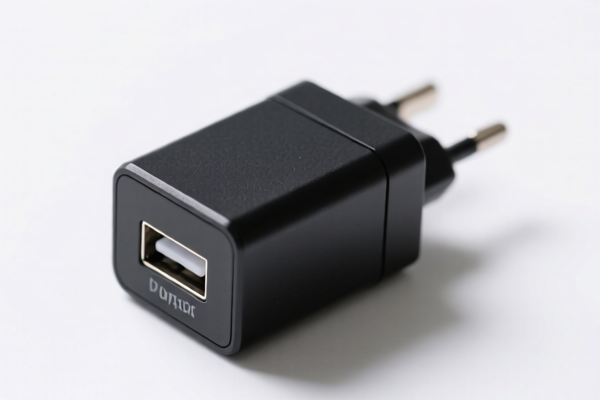
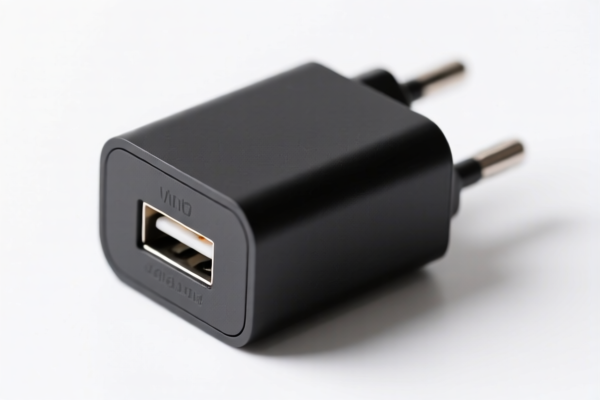
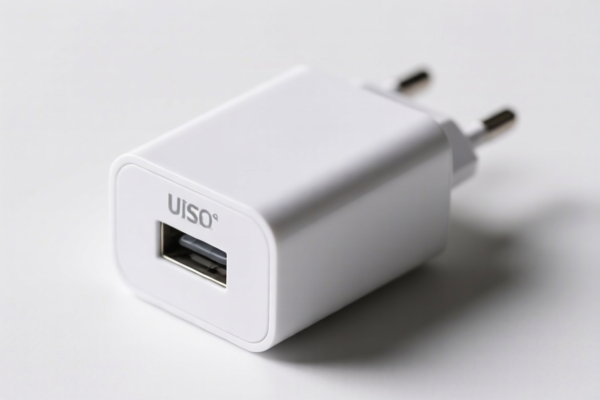
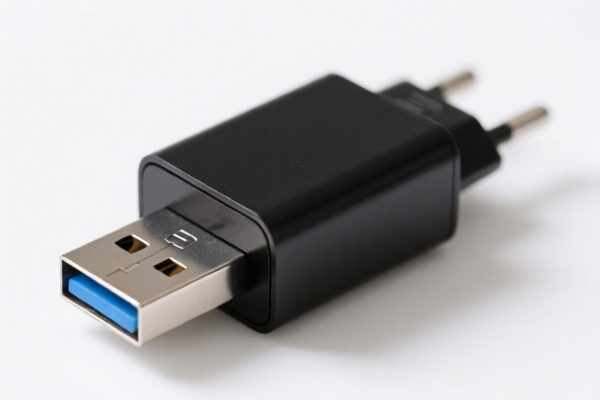
USB Wall Charger
CN → US| HS Code | Tariff Rate | Origin | Destination | Doc |
|---|---|---|---|---|
| 8504404000 | 35.0% | CN | US | Official Doc |
| 8504409580 | 35.0% | CN | US | Official Doc |
| 8543706000 | 35.0% | CN | US | Official Doc |
| 8543709860 | 37.6% | CN | US | Official Doc |
| 8544429090 | 87.6% | CN | US | Official Doc |
Product Images
AI Analysis
🔌 USB Wall Charger (EV Charging Stations)
🌐 HS Code Reference & Clearance Guide | 2026 Latest Tariff Analysis | Professional Clearance Strategy
📌 1. Product Definition & Classification: What Exactly is a "Wall Charger"?
In the context of electric vehicles (EVs), a Wall Charger (also known as a Wallbox or EVSE - Electric Vehicle Supply Equipment) is a stationary device used to transfer electrical energy from the power grid to the electric vehicle's battery. Its core function involves power conversion (AC to DC or AC-AC control) and communication/control logic.
International trade classification depends heavily on the internal architecture: * AC/DC Conversion Models: Devices that contain rectifiers to convert Grid AC power into DC for the vehicle battery. These fall under Static Converters. * AC Control Models: Devices that simply regulate AC power flow, often with communication protocols (OCPP), falling under Automatic Data Processing or Other Electrical Machines. * Cable/Connector Only: If the product is merely a cable assembly without active control electronics, it falls under Insulated Wires/Cables.
⚠️ Critical Distinction:
- If it has Power Electronics (Rectifiers/Inverters) →归类 to Chapter 85.04 (Static Converters) or 85.43 (Electrical Machines).
- If it is purely a cable/connector with no control box →归类 to 85.44 (Insulated Conductors).
- Note: Most modern "Wall Chargers" include control boards, making them active electrical apparatus, NOT just cables.
📦 2. HS Code Classification Matrix (2026 Latest Tariff Authority)
The provided data highlights 5 distinct HS Codes for USB Wall Chargers/EVSE, ranging from 0% to 87.6% total tax. This variation is critical for cost calculation.
| HS Code | Product Description (Based on Summary) | Core Function Logic | Total Tax (China Origin) |
|---|---|---|---|
8504.40.40.00 |
Wallbox (Wall-mounted Charger) | Classified as a Static Converter. Core function is energy conversion and control. | 35.0% |
8504.40.95.80 |
Static Converter (AC/DC) | Matches "Other Static Converters". Assumes AC/DC conversion function. | 35.0% |
8543.70.60.00 |
Electrical Apparatus | Classified as an electrical device for connecting power networks or specific equipment. | 35.0% |
8543.70.98.60 |
Independent Electrical Control Device | Classified as an apparatus with independent functional capabilities. | 37.6% |
8544.42.90.90 |
Insulated Conductor / Cabling | Classified as voltage $\le$ 1,000V insulated electrical conductor. Misclassification Risk. | 87.6% |
🔍 Key Insight:
- Codes8504and8543(35%-37.6%) are the most common and technically accurate for active EV wall boxes with control units.
- Code8544(87.6%) is a dangerous misclassification trap. If declared as "cable" or "connector" when it contains a control box, you face nearly 2x the duty.
💰 3. 2026 Tariff Rate Breakdown (Detailed Tax Structure)
✅ Applicable Market: United States (US)
✅ Origin: China (CN)
✅ Status: High Tariff Environment (Section 301 & IEEPA)
🎯 Group A: The "Standard" Wall Charger Classification (HS 8504 / 8543)
Applicable Codes: 8504.40.40.00, 8504.40.95.80, 8543.70.60.00, 8543.70.98.60
| Tax Component | Rate | Legal Basis / Description |
|---|---|---|
| Basic Customs Duty | 0.0% OR 2.6% |
- 8504 & 8543 (Codes 1-3): 0%- 8543 (Code 4): 2.6% |
| Section 301 (Retaliatory) | +25.0% | Applied to all Chinese-origin goods under these HTSUs. |
| Section 122 (IEEPA) | +10.0% | Additional tariff on Chinese electrical goods under IEEPA authorities. |
| Total Effective Rate | 35.0% OR 37.6% |
- 35.0%: For codes with 0% base duty. - 37.6%: For code 8543.70.98.60 (2.6% base + 25% + 10%). |
📌 Explanation:
- The 35.0% rate is the most favorable for active EVSEs.
- The 37.6% rate applies if the specific subheading8543.70.98.60is chosen, which has a higher base duty.
- No De Minimis Exemption: These goods are NOT eligible for the $800 de minimis exemption under current enforcement trends for EV-related electronics.
🎯 Group B: The "Misclassification" Risk (HS 8544)
Applicable Code: 8544.42.90.90
| Tax Component | Rate | Legal Basis / Description |
|---|---|---|
| Basic Customs Duty | 2.6% | For insulated conductors/wires. |
| Section 301 | +25.0% | Retaliatory tariff. |
| Section 122 (IEEPA) | +10.0% | IEEPA tariff. |
| Steel/Aluminum/Copper Surcharge | +50.0% | CRITICAL: This code falls under metal products surcharge rules if components are deemed metal-intensive or misclassified as such. |
| Total Effective Rate | 87.6% | CATASTROPHIC COST. 2.6% + 25% + 10% + 50% = 87.6%. |
⚠️ WARNING:
Declaring a complex electronic Wall Charger as a simple "insulated cable" (8544.42.90.90) triggers the 50% metal surcharge.
Result: Tax jumps from 35% to 87.6%. DO NOT USE THIS CODE FOR ACTIVE CHARGERS.
🛠️ 4. Clearance Operational Advice (Pitfall Avoidance Guide)
✅ 1. Preparation Checklist (Non-Negotiable)
| Document | Required | Purpose |
|---|---|---|
| Product Datasheet | ✔️ | Must specify: Input/Output Voltage, Power Rating (kW), Protocol (OCPP 1.6J?), Certification (UL 2594). |
| Circuit Diagram / Block Diagram | ✔️ | Proof of Function: Shows the presence of control boards/rectifiers to justify 8504 or 8543, NOT 8544. |
| Photos (Labeled) | ✔️ | Show the control box, display screen, and connector. Proves it is an "apparatus," not just a wire. |
| Test Reports | ✔️ | UL 2594, FCC Part 15, CE. Critical for US market entry. |
| Commercial Invoice | ✔️ | Description: "EV Charging Station, Model XYZ, 7.2kW, AC/DC Conversion, With Control Unit." |
✅ 2. Declaration Strategy (Key Mnemonic)
🔥 "Active Box = 8504/8543; Cable Only = 8544. Wrong Code = 87% Tax!"
| Scenario | Correct HS Code | Risk of Misclassification |
|---|---|---|
| Wall Charger with Control Box & Display | 8504.40.40.00 or 8543.70.60.00 |
High Risk if declared as "charger cable" |
| Charger with Integrated AC/DC Rectifier | 8504.40.95.80 |
Accurate for BEV charging |
| Pure Extension Cord / Cable (No Control) | 8544.42.90.90 |
Only for passive cables |
| Charger + Cable Kit (Shipped Together) | Declare as Unit (8504 or 8543) |
Do NOT split into cable + box |
✅ 3. Special Cases & Mitigation
| Situation | Advice |
|---|---|
| OEM/ODM Products | Provide original design documents to prove the nature of the device. Avoid generic terms like "electric adapter." |
| Smart Wall Boxes (IoT) | Emphasize "Networked Electrical Apparatus" to support 8543 classification. |
| Components vs. Whole Unit | If shipping only the PCB board, classify as part of the converter. If shipping the full unit, classify as the whole apparatus. |
| Steel/Aluminum Content | Avoid 8544 entirely. The 50% surcharge is triggered by metal classification rules. Stick to electronic classifications (8504/8543). |
🌍 5. Global Market Comparison (2026 Outlook)
| Country/Region | Recommended HS Code | Est. Tariff (CN Origin) | Key Certification | Notes |
|---|---|---|---|---|
| 🇺🇸 USA | 8504.40.40.00 |
35.0% | UL 2594, FCC | High compliance cost. Avoid 8544. |
| 🇨🇳 China | 8504.40.40.00 |
0% - 5% | CCC | Domestic market is competitive. |
| 🇪🇺 EU | 8543.70.99 |
0% - 4% | CE, RoHS, WEEE | Green deal incentives may apply. |
| 🇬🇧 UK | 8543.70.99 |
0% - 4% | UKCA, RoHS | Post-Brexit rules align with EU. |
| 🇨🇦 Canada | 8543.70.99 |
0% - 5% | IC, CSA | CUSMA benefits if assembled in North America. |
📌 Conclusion:
The US market is the most expensive due to the layered tariffs (301 + 122).
Accurate classification is the only way to minimize cost. Misclassifying as8544increases cost by 150%.
📌 6. Common Errors & Blood-Lesson Pitfalls
❌ Error 1: Declaring a Smart Wall Box as "USB Cable" or "Power Cord" (8544.42.90.90)
👉 Consequence: 87.6% Tax + Potential Customs Penalty for fraud.
❌ Error 2: Ignoring the Control Board in the description
👉 Consequence: Customs may reclassify to 8543 or 8504, causing delays and audits.
❌ Error 3: Using generic terms like "Electric Charger" without specifying function
👉 Consequence: Ambiguity leads to Customs examination. Provide technical specs (Input/Output, kW, Protocol).
❌ Error 4: Forgetting Section 122 (10%) in cost calculations
👉 Consequence: Profit margin erosion. 10% is significant for high-volume electronics.
✅ Correct Declaration Example:
"EV Wall Charger, Model XYZ, 7.2kW, AC Input / DC Output, Includes Control Unit & OCPP Protocol, UL 2594 Certified. HS: 8504.40.40.00"
🎯 7. Conclusion: Precision Saves Profit!
🎯 Remember the Golden Rule:
🔹 "Control Box Present = 8504/8543 (35%)! No Control = 8544 (87.6%)!"
🔹 "One percent classification error leads to 50% tax disaster."
📌 Pro Tip:
If your supply chain allows, consider final assembly in a non-China country (e.g., Vietnam, Mexico) to potentially bypass Section 301 and 122 tariffs, though Rules of Origin must be strictly met.
For US imports, Apply for a Binding Ruling (Advance Ruling) from CBP to lock in the 8504.40.40.00 classification and avoid disputes.
📣 Immediate Action:
📞 Audit your current declarations against
8544.42.90.90.
🚀 Switch to8504.40.40.00or8543.70.60.00to save 52.6% in taxes!
✨ Professional Classification, Cost Efficiency, Risk Mitigation.
💼 Your Tariff Bill is Only as Good as Your HS Code.
Customer Reviews
About HS Code Classification
The Harmonized System (HS) is an internationally standardized nomenclature developed by the World Customs Organization (WCO) to classify traded products. Over 200 countries use the HS system as the basis for customs tariffs, trade statistics, and import/export regulations.
Each HS code follows a hierarchical structure:
- Chapter (2 digits) — Broad category of goods (e.g., Chapter 84: Machinery and Mechanical Appliances)
- Heading (4 digits) — More specific grouping within the chapter
- Subheading (6 digits) — Internationally standardized breakdown, used by all WCO member countries
- National subdivisions (8-10 digits) — Country-specific extensions for further classification, such as US HTSUS 10-digit codes
Correct HS code classification is essential for smooth customs clearance, accurate duty payment, and compliance with trade regulations. Misclassification can lead to customs delays, overpayment of duties, or penalties.
When importing from CN to US, the applicable tariff rates may include:
- Most-Favored-Nation (MFN) rate — The standard duty rate applied to WTO members
- General rate — Applied to countries without trade agreements
- Trade remedy duties — Additional tariffs such as Section 301 (anti-dumping), Section 232 (national security), or countervailing duties
The information provided on this page is for reference purposes only. For official classification, please consult with your local customs authority or a licensed customs broker.