USB数据线
CN → US| HS Code | Tariff Rate | Origin | Destination | Doc |
|---|---|---|---|---|
| 8544429090 | 87.6% | CN | US | Official Doc |
| 8544422000 | 85.0% | CN | US | Official Doc |
| 8471801000 | 35.0% | CN | US | Official Doc |
| 8471809000 | 35.0% | CN | US | Official Doc |
| 8517620090 | 35.0% | CN | US | Official Doc |
| 8517790000 | 67.5% | CN | US | Official Doc |
Product Images
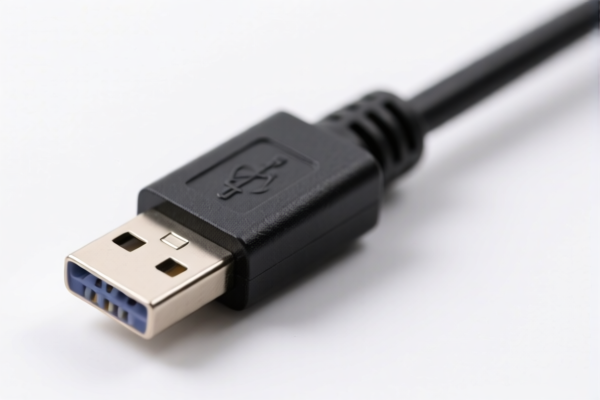
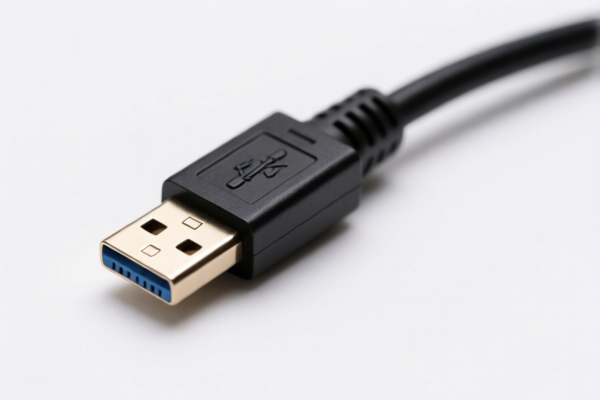
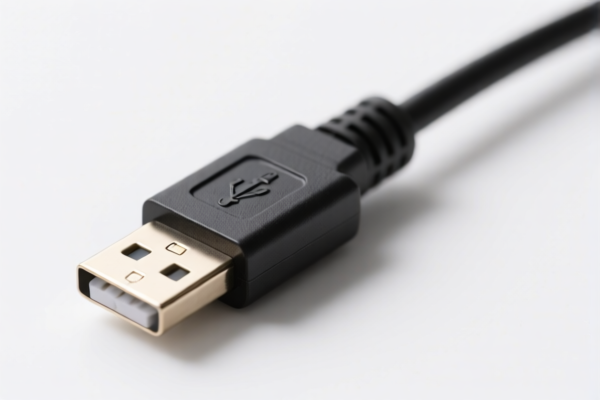

AI Analysis
🔌 USB Data Cable (USB Cables for Data Transmission)
🌐 HS Code Reference & Customs Clearance Guide | 2026 Latest Tariff Analysis | Professional Entry Strategy
📌 I. Product Definition & Classification: What Exactly Is a "USB Data Cable"?
A USB data cable is a flexible electrical conductor used to transmit data and power between devices. In international trade, its classification is highly debated because it straddles the line between electrical wiring (Chapter 85) and data processing equipment accessories (Chapter 84/8517).
Key Distinction Points: * Is it just a wire with connectors? → Likely 8544 (Insulated Wire/Cable). * Is it part of a computing/peripheral system? → Likely 8471 or 8517.
⚠️ Critical Warning:
- The tariff difference is massive: 35% to 87.6%.
- Misclassification leads to severe penalties, delays, or retroactive tax payments.
- Material Composition (Copper/Aluminum) triggers additional "Section 301" and "122 Clause" tariffs in the US.
📦 II. HS Code Classification Details (2026 Latest Tariff Authority Match)
Based on the specific characteristics provided in the data, here are the 6 most likely HS Codes, ranked by relevance and tax impact.
| HS Code | Product Description | Match Logic & Summary | Total Tax Rate (US/CN) |
|---|---|---|---|
| 8544.42.90.90 | Insulated Electric Conductor | Match: Cable form factor, voltage ≤1000V, insulated, fitted with connectors (USB). Focuses on the physical material. | 87.6% ⚠️ Highest |
| 8544.42.20.00 | Insulated Wire for Telecom/Data | Match: Cable for data transmission. Fits "insulated conductor" category. Voltage/Usage aligns. | 85.0% ⚠️ Very High |
| 8517.79.00.00 | Parts of Telecommunication Apparatus | Match: Accessory for data transmission devices. Fails if considered "wiring" rather than "device part." | 67.5% ❗ High |
| 8471.80.10.00 | Unit for Automatic Data Processing | Match: Connection/Adapter unit for ADP equipment. Focuses on functionality (connection). | 35.0% ✅ Favorable |
| 8471.80.90.00 | Other ADP Equipment Units | Match: "Other" unit for data processing. Supplemental category for peripherals not explicitly listed. | 35.0% ✅ Favorable |
| 8517.62.00.90 | Machines for Transmission of Data | Match: Accessory for machines transmitting voice/image/data. Broad "communication device" interpretation. | 35.0% ✅ Favorable |
💰 III. 2026 Latest Tariff Rate Breakdown (Detailed Policy Analysis)
✅ Applicable Country: United States (US)
✅ Origin: China (CN)
✅ Effective Date: 2025/2026 (Including subsequent imports)
🎯 1. The "High Tariff" Trap: Electrical Conductors (8544 Series)
HS Codes: 8544.42.90.90, 8544.42.20.00
These codes classify the cable purely as wiring. This is the most conservative and heavily taxed route.
| Item | Detail |
|---|---|
| Base Tariff | 0% - 2.6% |
| Section 301 Tariff (25%) | +25% (USITC Footnote 9903.88.01 type) |
| Section 122 Tariff (10%) | +10% (Specific to Steel, Aluminum, Copper products) |
| Copper/Aluminum Surcharge | +50% (If material is Cu/Al, additional 50% applies under specific clauses) |
| Total Effective Rate | 85.0% - 87.6% |
| Calculation Basis | CIF Value × (100% + Tariffs) |
| De Minimis Exemption | ❌ DENIED (Section 301 & 122 apply even to small parcels) |
📌 Explanation:
- The 25% is the standard Section 301 tariff on Chinese goods.
- The 10% is the "122 Clause" tariff targeting critical materials.
- The 50% is an additional surcharge if the cable contains significant copper or aluminum, pushing the total to nearly 90%.
- Result: Extremely expensive. Only suitable if no other classification applies.
🎯 2. The "Medium Tariff" Route: Communication Parts (8517 Series)
HS Codes: 8517.79.00.00
This classifies the cable as a part of a telecommunications device.
| Item | Detail |
|---|---|
| Base Tariff | 0% |
| Section 301 Tariff | +7.5% (Reduced rate for certain comms parts in some contexts) OR +25% (Standard) |
| Section 122 Tariff | +10% |
| Copper/Aluminum Surcharge | +50% (If applicable) |
| Total Effective Rate | 67.5% |
| De Minimis Exemption | ❌ DENIED |
📌 Explanation:
- This code is risky because it still incurs the 122 Clause (10%) and potentially the 50% material surcharge.
- It avoids the higher 25% Section 301 rate in some specific interpretations, but the material surcharge is the killer here.
🎯 3. The "Strategic Low Tariff" Route: Data Processing Units (8471 & 8517.62)
HS Codes: 8471.80.10.00, 8471.80.90.00, 8517.62.00.90
These codes classify the cable as an accessory/unit for data processing or data transmission machines. This is the most favorable classification for cost-saving.
| Item | Detail |
|---|---|
| Base Tariff | 0% |
| Section 301 Tariff | +25% |
| Section 122 Tariff | +10% |
| Copper/Aluminum Surcharge | None (Not classified as raw material/conductor) |
| Total Effective Rate | 35.0% |
| De Minimis Exemption | ❌ DENIED (Due to Section 301) |
📌 Explanation:
- Why 35%? It is simply Base (0%) + Section 301 (25%) + Section 122 (10%).
- Why is it cheaper? It avoids the 50% Copper/Aluminum surcharge.
- Logic: By defining the item as a "Unit" or "Transmission Machine Part" rather than just "Wire," you argue that the function (data transfer via a standard interface) outweighs the material (copper wire).
- Risk: Customs may challenge this if the cable is extremely basic (no chips, no shielding). You must provide specs showing it is a standard ADP peripheral.
🛠️ IV. Customs Clearance Practical Advice (Battle-Tested Strategies)
✅ 1. Documentation Checklist (Non-Negotiable)
| Document | Required? | Purpose |
|---|---|---|
| Product Spec Sheet | ✔️ | Must detail: Length, Connector Type (USB-A/C), Data Rate (e.g., USB 3.0), Material (Copper core). |
| Function Description | ✔️ | Explicitly state: "Used for data transfer between Computer and Peripheral," NOT "Electrical Wiring." |
| Photos | ✔️ | Show connectors, branding, and any labeling. Avoid images that look like "industrial cables." |
| Commercial Invoice | ✔️ | Description must match the chosen HS Code logic (e.g., "Data Cable for PC" vs. "Electric Conductor"). |
| Origin Certificate | ✔️ | To prove China origin (triggers tariffs) or other origin (if applicable). |
✅ 2. Classification Strategy & Logic
🔥 "Function Over Material, Unit Over Wire!"
| Scenario | Recommended HS Code | Reasoning | Risk Level |
|---|---|---|---|
| Standard USB Cable (PC/Mobile) | 8471.80.10.00 or 8517.62.00.90 | Argue it is a peripheral unit for data processing. Avoids material surcharge. | 🟡 Medium (Need strong defense) |
| High-Speed Data Cable (Thunderbolt/USB4) | 8517.62.00.90 | Clearly a "machine for transmission of data." Harder to classify as simple wire. | 🟢 Low |
| Basic Low-Speed Cable (No shielding/cheap) | 8544.42.90.90 | If it has no data-specific features, Customs will default to Wire. | 🟢 Low (But High Tax) |
| Cable with Integrated Chip (e.g., Active Hub) | 8471.80.90.00 | The chip makes it a "unit," not just a wire. | 🟢 Low |
✅ 3. Critical Avoidance Tips
| Mistake | Consequence | Solution |
|---|---|---|
| Describing as "Electric Wire" | Triggers 8544 → 87.6% Tax | Use terms: "Data Transfer Cable," "USB Peripheral," "Interconnect Unit." |
| Ignoring Material Surcharge | Unexpected 50% added tax | Ensure classification does not trigger "Copper/Aluminum Product" surcharge by using 8471/8517.62. |
| Splitting Shipment | De Minimis abuse flags | Do not split a single order into tiny packages to avoid $800 threshold. Customs watches this. |
| Wrong Invoice Description | Audit Risk | Invoice must match the HS Code logic. If using 8471, invoice says "Computer Accessory," not "Wire." |
🌍 V. Global Market Comparison (2026 Context)
| Market | Recommended HS Code | Est. Tax Rate (CN Origin) | Key Notes |
|---|---|---|---|
| 🇺🇸 United States | 8471.80.10.00 |
35.0% | Target Code. Avoids 50% material surcharge. |
| 🇺🇸 United States | 8544.42.90.90 |
87.6% | Avoid. Highest possible tax. |
| 🇪🇺 European Union | 8544.42.90 |
0% - 4% | EU generally does not have Section 301/122. Low tax. |
| 🇨🇳 China (Export) | N/A | N/A | Export duties are minimal, but origin rules apply. |
| 🇯🇵 Japan | 8544.42.90 |
0% - 2% | Generally low tariffs, no Section 301. |
📌 Conclusion:
- USA is the only critical market where classification changes tax from ~3% to ~87%.
- Strategy for USA: Fight for 8471 or 8517.62 to save ~52% in taxes compared to 8544.
- Strategy for EU/JP: Can safely use 8544 as tariffs are low and stable.
📌 VI. Common Errors & Pitfalls (Lessons Learned)
❌ Error 1: Using "Wire" or "Cable" in the product description for US imports.
👉 Result: Customs auto-assigns 8544 → 87.6% Tax.
✅ Fix: Use "Data Accessory," "Peripheral," or "Interconnect Unit."
❌ Error 2: Assuming all cables are the same.
👉 Result: Failing to distinguish between "Basic Wire" and "Data Unit."
✅ Fix: Highlight Data Transfer Function in specs. Mention USB standards (3.0, 3.1, 4.0) to prove it's for data, not just power/conduction.
❌ Error 3: Ignoring the "122 Clause" (Section 122).
👉 Result: Even if you avoid Section 301 (25%), you may still hit 10% + 50% if misclassified.
✅ Fix: Ensure the HS Code is not interpreted as a "Steel, Aluminum, or Copper Product" under Section 122. 8471/8517.62 are safer than 8544.
🎯 VII. Conclusion: Precision in Classification Saves Millions
🎯 Key Takeaway:
🔹 "Function First, Material Second"
🔹 "Avoid 8544 if possible in the US"
🔹 "Aim for 8471.80 or 8517.62 for 35% Rate"
🔹 "Every 52% Tax Difference is Pure Profit Lost!"
📌 Pro Tip:
If you are shipping to the US, consider applying for a Binding Ruling (Section 177) from CBP before shipment. This locks in your classification and protects you from retroactive audits.
If you are shipping to EU/Asia, standard 8544 classification is cost-effective and simple.
📣 Immediate Action:
📞 Review your product specs → Do they emphasize "Data Transfer" or "Electrical Conduction"?
📝 Adjust your Invoice Description → Match the chosen HS Code logic.
🚀 Consult a Customs Broker → Get a pre-filing ruling for high-volume US shipments.
✨ Smart Classification, Lower Tariffs, Faster Clearance!
💼 Your Supply Chain Efficiency Starts with the Right HS Code!
Customer Reviews
About HS Code Classification
The Harmonized System (HS) is an internationally standardized nomenclature developed by the World Customs Organization (WCO) to classify traded products. Over 200 countries use the HS system as the basis for customs tariffs, trade statistics, and import/export regulations.
Each HS code follows a hierarchical structure:
- Chapter (2 digits) — Broad category of goods (e.g., Chapter 84: Machinery and Mechanical Appliances)
- Heading (4 digits) — More specific grouping within the chapter
- Subheading (6 digits) — Internationally standardized breakdown, used by all WCO member countries
- National subdivisions (8-10 digits) — Country-specific extensions for further classification, such as US HTSUS 10-digit codes
Correct HS code classification is essential for smooth customs clearance, accurate duty payment, and compliance with trade regulations. Misclassification can lead to customs delays, overpayment of duties, or penalties.
When importing from CN to US, the applicable tariff rates may include:
- Most-Favored-Nation (MFN) rate — The standard duty rate applied to WTO members
- General rate — Applied to countries without trade agreements
- Trade remedy duties — Additional tariffs such as Section 301 (anti-dumping), Section 232 (national security), or countervailing duties
The information provided on this page is for reference purposes only. For official classification, please consult with your local customs authority or a licensed customs broker.