USR Tools
CN → USProduct Images
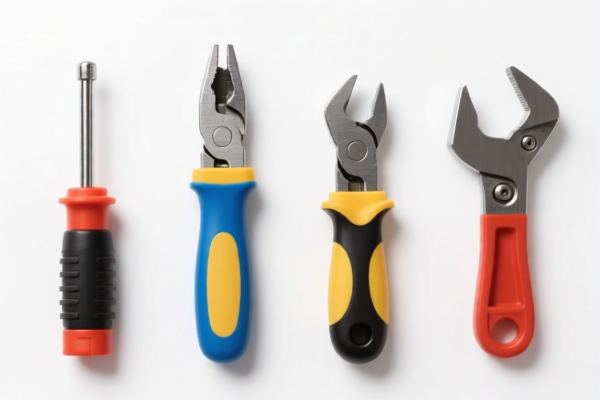
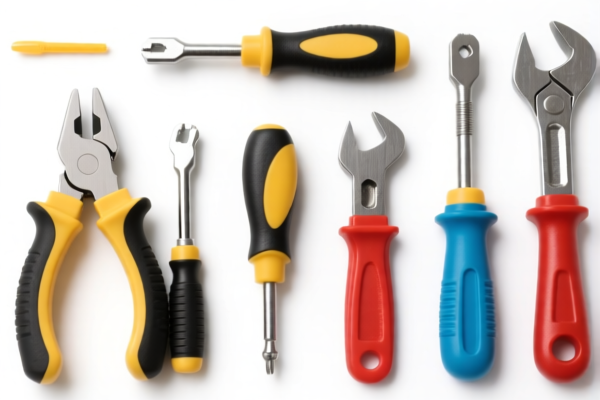
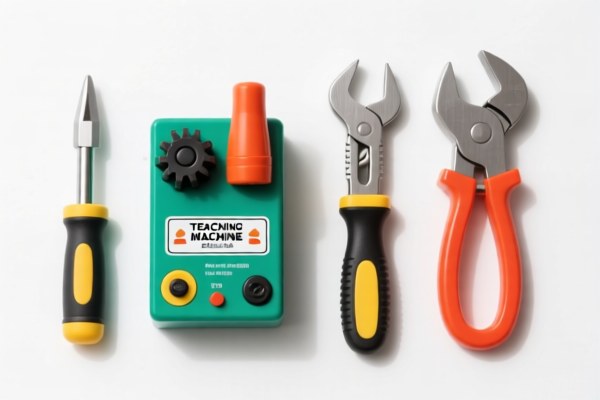
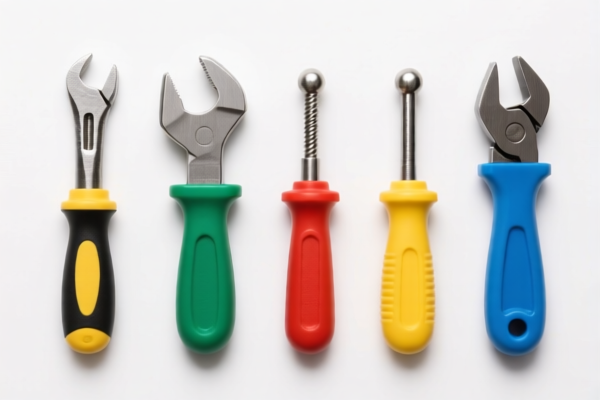
AI Analysis
🛠️ Industrial Tools & Hand Tools (USR Tools Category)
🌐 HS Code Reference & Customs Clearance Guide | 2026 Latest Tariff Analysis | Professional-Level Entry Strategy
📌 I. Product Definition & Classification: Do You Really Understand "USR Tools"?
In international trade, "USR Tools" typically refers to General Industrial Tools, Hand Tools, or Power Tools supplied by companies using the "USR" prefix (commonly associated with manufacturers like U.S. Rawlings or generic imports labeled for the US market). However, for HS Code classification, the brand is irrelevant. The function, composition, and drive mechanism determine the classification.
Hand tools are generally categorized into three main groups: 1. Hand Operated Tools (No motor, e.g., wrenches, pliers, screwdrivers): Chapter 82 or 84. 2. Power Tools (Motor-driven, e.g., drills, saws, grinders): Chapter 84. 3. Specialized Industrial Tools (e.g., precision instruments): Chapter 90.
⚠️ Key Distinction Point:
- If the tool is hand-operated (no external power source) → Classify under Chapter 82 (Base Metal Tools) or Chapter 84 (Woodworking/Stone tools).
- If the tool is electric/pneumatic/hydraulic → Classify under 8467 or 8466.
- If the tool is precision/measuring → Classify under Chapter 90.
📦 II. HS Code Classification Details (2026 Latest Tariff Authority Comparison)
| HS Code | Product Description | Applicable Scenario | Power Source |
|---|---|---|---|
8205.59.00.00 |
Hand tools (e.g., screwdrivers, wrenches, pliers) | General workshop hand tools | ❌ No Motor |
8206.00.00.00 |
Hand tools of a kind used for agriculture, horticulture, or forestry | Gardening shears, rakes, hoes | ❌ No Motor |
8467.19.00.00 |
Tools for working in the direction indicated by the head | Electric drills, drivers (hand-held) | ✅ Electric |
8467.29.00.00 |
Tools for working stone, concrete, or masonry | Concrete saws, jackhammers (hand-held) | ✅ Electric/Pneumatic |
8467.89.00.00 |
Other power tools (not specified above) | Impact wrenches, polishers, sanders | ✅ Electric/Pneumatic |
8202.99.00.00 |
Saw blades and parts thereof | Replacement blades for power tools | ❌ N/A (Accessory) |
🔍 Key Reminder:
- Hand tools without motors are often subject to Section Notes that may exclude them if they are "parts of machines." - Power tools are strictly classified by their function (drilling, sawing, grinding) rather than their brand. - "USR" is a brand name, not an HS Code descriptor. Do not search for "USR" in the tariff schedule; search for the function.
💰 III. 2026 Latest Tariff Rate Details (Including Surcharges, Policy Add-ons)
✅ Applicable Country: United States (US)
✅ Country of Origin: China (CN)
✅ Effective Date: November 10, 2025 onwards (and subsequent imports)
🎯 1. 8205.59.00.00 —— Hand Tools (General Purpose)
| Item | Content |
|---|---|
| Base Tariff | 0% (ad valorem) |
| USITC Additional Duty | +7.5% – 25% (Depending on specific sub-category and USITC Footnote) |
| IEEPA Additional Duty | +10% (Targeting China/HK products, effective Nov 10, 2025) |
| Total Rate | ~17.5% – 35% |
| Calculation | CIF Value × Total Rate |
| De Minimis Exemption | ❌ Not Eligible (deny_de_minimis for Section 301 items) |
| Legal Path | IEEPA:9903.01.25 → USITC:8205.59.00.00 → FOOTNOTE:301 |
📌 Explanation:
- "IEEPA 10%" is the new surcharge under the International Emergency Economic Powers Act.
- "USITC Additional Duty" depends on the specific type of hand tool. Simple screwdrivers may have lower surcharges, while complex wrench sets may have higher ones.
- Total cost impact: Significant for high-volume imports.
🎯 2. 8467.19.00.00 —— Electric Hand-Operated Drills/Drivers
| Item | Content |
|---|---|
| Base Tariff | 0% |
| USITC Additional Duty | +7.5% |
| IEEPA Additional Duty | +10% |
| Total Rate | ~17.5% |
| De Minimis Exemption | ❌ Not Eligible |
| Legal Path | IEEPA:9903.01.25 → USITC:8467.19.00.00 |
📌 Note:
- Electric tools are generally subject to Section 301 tariffs.
- If the tool is cordless (battery-operated), ensure the battery is declared separately if possible, as lithium batteries have specific UN38.3 shipping requirements.
🛠️ IV. Customs Clearance Practical Advice (Real-World Pitfall Avoidance Guide)
✅ 1. Preparation Checklist (All Required)
| Document | Must Provide | Description |
|---|---|---|
| ✅ Product Specification Sheet | ✔️ | Material (e.g., Chromium-Vanadium Steel), dimensions, weight |
| ✅ Power Source Declaration | ✔️ | Is it electric, pneumatic, or manual? |
| ✅ Product Photos (Including Label) | ✔️ | Show brand, model, voltage, and power rating |
| ✅ Third-Party Test Report | ✔️ | UL, CE, FCC (if electronic), ANSI standards |
| ✅ Commercial Invoice | ✔️ | Clearly state "Hand Tools" or "Power Tools" with HS Code |
| ✅ Bill of Lading | ✔️ | Ensure weight matches invoice |
✅ 2. Declaration Tips (Key Mantra)
🔥 "Function Over Brand, Material Over Model, Power Source is Key!"
| Scenario | Correct Declaration | Wrong Practice |
|---|---|---|
| Hand Screwdriver | 8205.59.00.00 "Hand Tool: Screwdriver, Steel" |
Misclassified as "Part of Machine" → 32% |
| Electric Drill | 8467.19.00.00 "Electric Drill, 18V" |
Misclassified as "Toy" → De Minimis Risk |
| Garden Shears | 8206.00.00.00 "Hand Tool for Agriculture" |
Misclassified as "Household Cutlery" → 0% (Illegal) |
| Saw Blades | 8202.99.00.00 "Saw Blade for Machine" |
Misclassified as "Hand Tool" → Wrong Chapter |
✅ 3. Special Case Handling
| Scenario | Handling Advice |
|---|---|
| OEM Branding (USR) | Provide authorization letter if claiming brand rights, but HS Code depends on function, not brand. |
| Tool Kits | Declare by the primary function of the kit. If a kit has both hand and power tools, it may be split or classified by the principal item. |
| Lithium Battery Tools | Must include UN38.3 Certificate and MSDS. Battery voltage and capacity must be declared. |
| Made in Vietnam/Malaysia | Apply for IEEPA Exemption if eligible. Tariffs may drop to 0%–5%. |
🌍 V. Global Market Clearance Comparison (2026 Latest)
| Country/Region | Recommended HS Code | Tariff | Certification Requirements | Notes |
|---|---|---|---|---|
| 🇺🇸 USA | 8205.59.00.00 / 8467.19.00.00 |
17.5%–35% (China) | UL/CE + ANSI | High scrutiny on "Made in China" |
| 🇨🇳 China | 8205.59.00.00 / 8467.19.00.00 |
0%–13% | CCC (if electric) | No additional surcharges |
| 🇪🇺 EU | 8205.59.00.00 / 8467.19.00.00 |
0%–4.5% | CE + RoHS | Low tariffs, strict safety |
| 🇦🇺 Australia | 8205.59.00.00 / 8467.19.00.00 |
5% | RCM (electric) | No additional surcharges |
| 🇯🇵 Japan | 8205.59.00.00 / 8467.19.00.00 |
0%–7% | PSE (electric) | No additional surcharges |
📌 Conclusion:
- USA is the most expensive market due to Section 301 + IEEPA surcharges.
- EU and Asia are preferred for cost-effective clearance.
- Consider transshipment or assembly in Vietnam/Mexico to avoid US tariffs.
📌 VI. Common Mistakes & Pitfall Guide (Lessons Learned)
❌ Mistake 1: Classifying Electric Drills as Hand Tools (8205)
👉 Consequence: Wrong chapter → 17.5% vs 0% base tariff, plus audit risk.
❌ Mistake 2: Declaring Tool Kits as multiple items without justification
👉 Consequence: Customs may consolidate and apply the highest tariff to the whole kit.
❌ Mistake 3: Ignoring Lithium Battery Regulations
👉 Consequence: Shipment held at port due to safety compliance issues (UN38.3 missing).
❌ Mistake 4: Using "USR" as a keyword in HS Code search
👉 Consequence: No such HS Code. Must classify by function.
✅ Correct Practice:
"Power Drill, 18V Cordless, Lithium Ion Battery, Model XYZ, UL Certified, HS Code 8467.19.00.00"
🎯 VII. Conclusion: Precise Classification Saves Money!
🎯 Remember the Mantra:
🔹 "Function First, Brand Second, Power Source Key, Tariff Depends on Chapter!"
🔹 "Hand Tools 82, Power Tools 84, Battery Tools 383, De Minimis Dead!"
📌 Pro Tip:
If your tools are assembled in Vietnam, Malaysia, or Mexico, apply for Form A (ASEAN) or USMCA certificates to avoid IEEPA surcharges.
Recommend pre-classification rulings from CBP for complex tool kits.
📣 Immediate Action:
📞 Contact professional customs brokers + Provide product specs + Apply for HS Code Pre-ruling
🚀 Ensure your USR Tools clear customs smoothly, efficiently, and cost-effectively!
✨ Professional Clearance Starts with Accurate Classification!
💼 Every Dollar Saved is a Dollar Earned!
Customer Reviews
About HS Code Classification
The Harmonized System (HS) is an internationally standardized nomenclature developed by the World Customs Organization (WCO) to classify traded products. Over 200 countries use the HS system as the basis for customs tariffs, trade statistics, and import/export regulations.
Each HS code follows a hierarchical structure:
- Chapter (2 digits) — Broad category of goods (e.g., Chapter 84: Machinery and Mechanical Appliances)
- Heading (4 digits) — More specific grouping within the chapter
- Subheading (6 digits) — Internationally standardized breakdown, used by all WCO member countries
- National subdivisions (8-10 digits) — Country-specific extensions for further classification, such as US HTSUS 10-digit codes
Correct HS code classification is essential for smooth customs clearance, accurate duty payment, and compliance with trade regulations. Misclassification can lead to customs delays, overpayment of duties, or penalties.
When importing from CN to US, the applicable tariff rates may include:
- Most-Favored-Nation (MFN) rate — The standard duty rate applied to WTO members
- General rate — Applied to countries without trade agreements
- Trade remedy duties — Additional tariffs such as Section 301 (anti-dumping), Section 232 (national security), or countervailing duties
The information provided on this page is for reference purposes only. For official classification, please consult with your local customs authority or a licensed customs broker.