USdless synchronous belt
CN → US| HS Code | Tariff Rate | Origin | Destination | Doc |
|---|---|---|---|---|
| 8483901050 | 37.8% | CN | US | Official Doc |
| 8483908080 | 37.8% | CN | US | Official Doc |
| 4010359000 | 38.3% | CN | US | Official Doc |
| 4010369000 | 38.3% | CN | US | Official Doc |
| 5910001020 | 39.0% | CN | US | Official Doc |
Product Images
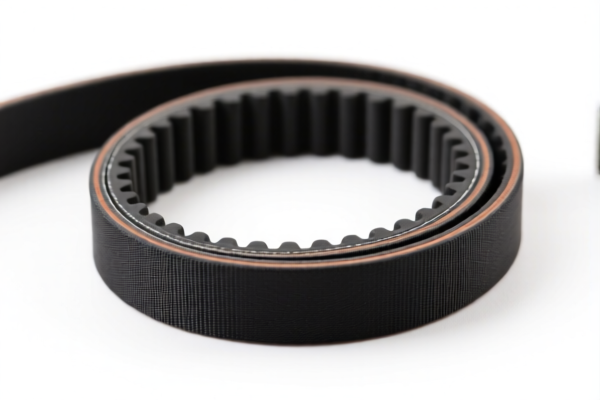
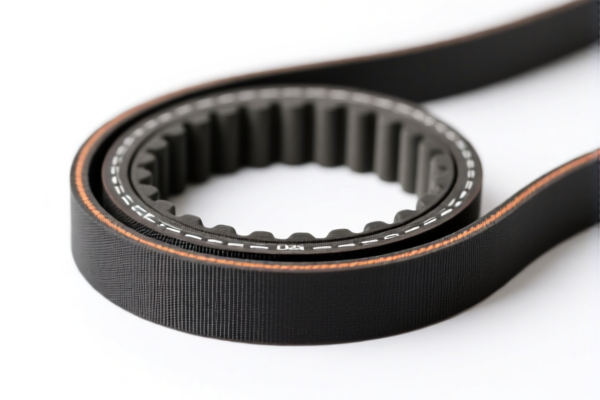
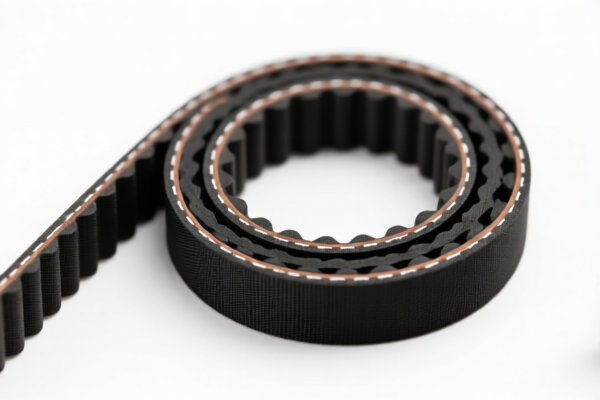

AI Analysis
🎡 Synchronous Belt (USDless / No-Brand)
🌐 HS Code Reference & Customs Clearance Guide | 2026 Latest Tariff Analysis | Professional Clearance Strategy
📌 I. Product Definition & Classification: Do You Truly Understand "Synchronous Belts"?
A Synchronous Belt (also known as a timing belt) is a mechanical power transmission element that combines the friction drive of a belt with the positive drive of a gear chain. It features teeth on the inner surface that mesh with grooves in pulleys, ensuring zero slip and precise motion control.
In international trade, synchronous belts are often misclassified due to their material composition (Rubber vs. Textile/Composite). The correct HS Code depends heavily on the primary material and structural form:
1. Mechanical Transmission Components (Metal/Composite Core):
If the belt is viewed primarily as a machine part/transmission element, often reinforced with steel cords or synthetic materials, it falls under Chapter 84 (Machinery).
2. Rubber Products:
If the belt is made of vulcanized rubber (even with fabric/steel reinforcement), it falls under Chapter 40.
3. Textile/Non-Woven Fabrics:
If the belt is constructed primarily of textile materials, fibers, or non-woven fabrics reinforced with cords, it falls under Chapter 59.
⚠️ Key Distinction Point:
- Rubber Base + Fabric/Steel Cord → Typically 4010 (Vulcanized Rubber)
- Textile/Composite Base → Typically 5910 (Textile/Non-woven)
- General Mechanical Part (No Specific Material Priority) → 8483 (Transmission Parts)
📦 II. HS Code Classification Details (2026 Latest Tariff Authority Comparison)
| HS Code | Product Description | Application Scenario | Material/Structure Conflict? |
|---|---|---|---|
8483.90.10.50 |
Other transmission elements (Synchronous Belt) | Industrial machinery transmission; viewed as a mechanical component | ✅ No material/shape conflict |
8483.90.80.80 |
Other transmission parts (Residual/Catch-all) | Synchronous belts as general transmission accessories | ✅ No material conflict (Catch-all category) |
4010.35.90.00 |
Synchronous belts of vulcanized rubber | Standard industrial timing belts; rubber is the primary base material | ✅ No rubber vulcanization conflict |
4010.36.90.00 |
Other synchronous belts of vulcanized rubber | High-precision or specialized rubber timing belts | ✅ No material conflict |
5910.00.10.20 |
Synchronous belts of textile materials | Belts made of woven fabric, non-woven, or composite textile fibers | ✅ No textile material conflict |
🔍 Key Reminder:
- 8483 categories treat the belt as a machine part. This is often preferred if the belt is highly engineered with steel/aramid cords and viewed functionally as a "gear chain." - 4010 categories treat the belt as a rubber product. This is standard for most PVC/Rubber synchronous belts. - 5910 categories treat the belt as a textile product. Used if the belt structure is predominantly fabric-based. - Do NOT split shipments: If a package contains belts of different materials, customs may require separate declarations or select the highest duty rate among the components.
💰 III. 2026 Latest Tariff Rate Details (Including Surcharges & Policy Add-ons)
✅ Applicable Country: United States (US)
✅ Origin: China (CN)
✅ Effective Date: From November 10, 2025 (and subsequent imports)
✅ Target Product: Synchronous Belts (All HS Codes listed above)
🎯 1. 8483.90.10.50 & 8483.90.80.80 —— Mechanical Transmission Elements
| Item | Details |
|---|---|
| Base Tariff | 2.8% (Ad valorem) |
| USITC Surcharge (Section 301) | +25.0% |
| IEEPA Surcharge (Section 122) | +10.0% |
| Total Effective Rate | 37.8% |
| Tax Calculation | CIF Value × 37.8% |
| De Minimis Exemption | ❌ Not Eligible (deny_de_minimis) |
| Legal Basis Path | Section 301:8483.90 → Section 122:IEEPA → HTS:8483.90.10.50/80.80 |
📌 Explanation:
- 2.8% Base: Standard Most Favored Nation (MFN) duty for transmission parts. - 25% USITC: Additional duty under Trade Act Section 301 against Chinese imports. - 10% IEEPA: Additional duty under the International Emergency Economic Powers Act (Section 122). - Total 37.8%: High duty rate. Must be factored into cost models.
🎯 2. 4010.35.90.00 & 4010.36.90.00 —— Vulcanized Rubber Synchronous Belts
| Item | Details |
|---|---|
| Base Tariff | 3.3% (Ad valorem) |
| USITC Surcharge (Section 301) | +25.0% |
| IEEPA Surcharge (Section 122) | +10.0% |
| Total Effective Rate | 38.3% |
| Tax Calculation | CIF Value × 38.3% |
| De Minimis Exemption | ❌ Not Eligible (deny_de_minimis) |
| Legal Basis Path | Section 301:4010 → Section 122:IEEPA → HTS:4010.35.90.00/36.90.00 |
📌 Explanation:
- 3.3% Base: Slightly higher base rate than mechanical parts, but still low before surcharges. - Same Surcharges: The 301 and 122 clauses apply uniformly to Chapter 40 products from China. - Total 38.3%: Slightly higher than 8483 codes due to the 0.5% difference in base rates.
🎯 3. 5910.00.10.20 —— Textile/Composite Synchronous Belts
| Item | Details |
|---|---|
| Base Tariff | 4.0% (Ad valorem) |
| USITC Surcharge (Section 301) | +25.0% |
| IEEPA Surcharge (Section 122) | +10.0% |
| Total Effective Rate | 39.0% |
| Tax Calculation | CIF Value × 39.0% |
| De Minimis Exemption | ❌ Not Eligible (deny_de_minimis) |
| Legal Basis Path | Section 301:5910 → Section 122:IEEPA → HTS:5910.00.10.20 |
📌 Explanation:
- 4.0% Base: Highest base rate among the options, reflecting the textile nature. - Same Surcharges: Applies equally to Chinese textile goods. - Total 39.0%: The highest total duty rate in this dataset. Use only if the product strictly meets the textile definition.
🛠️ IV. Customs Clearance Practical Advice (Real-World Pitfall Avoidance)
✅ 1. Essential Documentation Checklist (None Can Be Omitted)
| Document | Required | Notes |
|---|---|---|
| ✅ Product Specification Sheet | ✔️ | Must include: Width, Pitch, Length, Tooth Count, Material (Rubber/Textile/Composite), Reinforcement Type (Steel/Fiberglass) |
| ✅ Material Composition Statement | ✔️ | Crucial for distinguishing between 8483, 4010, and 5910. Specify % of rubber vs. textile vs. metal. |
| ✅ Product Photos (Clear & Detailed) | ✔️ | Show teeth profile, inner/outer surface, and any branding (even "No Brand" needs a clear view). |
| ✅ Commercial Invoice | ✔️ | Description must match HS Code logic (e.g., "Rubber Synchronous Belt" vs. "Transmission Component"). |
| ✅ Packing List | ✔️ | Weight and dimensions for duty calculation. |
| ✅ Certificate of Origin (CO) | ✔️ | Essential for proving Chinese origin (triggers surcharges). |
✅ 2. Declaration Strategies (Key Mnemonics)
🔥 "Material First, Function Second; Rubber vs. Textile vs. Part!"
| Scenario | Correct Declaration | Incorrect Practice |
|---|---|---|
| Standard Rubber Belt | 4010.35.90.00 (Rubber) |
Misdeclaring as 8483 to save 0.5%? Risky. Customs may challenge material. |
| High-Strength Steel-Cord Belt | 8483.90.10.50 (Mechanical Part) |
Declaring as 4010 if steel is dominant structure. |
| Fabric-Reinforced Belt | 5910.00.10.20 (Textile) |
Declaring as 4010 if rubber is minimal. |
| "No Brand" Items | Clearly state "No Brand" or "Generic" | Avoid vague terms like "Belt" without material specification. |
✅ 3. Special Handling Tips
| Situation | Recommendation |
|---|---|
| Mixed Material Belts | If a single belt contains both rubber and significant textile/steel, classify based on essential character. Usually, rubber base → 4010. |
| OEM/Private Label | If you are the importer but the product has no brand, ensure the invoice does not show a third-party brand unless authorized. |
| Pre-Clearance Ruling | Highly Recommended. Since the tariff difference between 8483 (37.8%) and 5910 (39.0%) is small, but the material definition is strict, apply for an Advance Ruling to avoid disputes. |
🌍 V. Global Market Clearance Comparison (2026 Latest)
| Country/Region | Recommended HS Code | Tariff (China Origin) | Certification Requirements | Notes |
|---|---|---|---|---|
| 🇺🇸 USA | 4010.35.90.00 / 8483.90.10.50 |
37.8% - 39.0% | None specific, but FDA/Prop 65 may apply if food-grade | High Duty: Surcharges are massive. |
| 🇨🇳 China | 4010.35.90.00 |
5% - 8% | CCC (if for specific machinery) | No 301/122 surcharges. |
| 🇪🇺 EU | 4010.35.90.00 |
0% - 3.5% | CE (if part of machinery) | No US-style surcharges. |
| 🇬🇧 UK | 4010.35.90.00 |
0% - 3.5% | UKCA (if part of machinery) | Post-Brexit tariffs apply. |
| 🇯🇵 Japan | 4010.35.90.00 |
0% - 3% | PSE (if part of electrical equipment) | Low base tariffs. |
📌 Conclusion:
- The USA is uniquely punitive with the 35%+ total duty rate due to Sections 301 and 122. - For non-US markets, focus on accurate material classification to benefit from low or zero base tariffs. - For US imports, consider supply chain diversification (e.g., sourcing from Vietnam or Mexico) to potentially qualify for tariff exclusions or lower duties.
📌 VI. Common Errors & Pitfall Guide (Lessons Learned)
❌ Error 1: Declaring all synchronous belts as 8483 to avoid rubber classifications.
👉 Consequence: Customs may audit material composition. If found to be primarily rubber, they may reclassify to 4010 and impose penalties for misdeclaration.
❌ Error 2: Ignoring the "122 Clause" (IEEPA).
👉 Consequence: Many importers forget the 10% IEEPA surcharge. If not included in landed cost, profit margins will be wiped out.
❌ Error 3: Vague Description "Timing Belt" on Invoice.
👉 Consequence: CBP (Customs and Border Protection) may reject the entry or require extensive documentation to determine the correct material, leading to storage fees and delays.
❌ Error 4: Assuming "No Brand" means lower duty.
👉 Consequence: Duty is based on HS Code and Origin, not brand. "No Brand" Chinese goods still face 37.8%+ duties.
✅ Correct Practice:
"Synchronous Timing Belt, Rubber-Based with Fabric Reinforcement, 50mm Width, 1000mm Length, No Brand, For Industrial Machinery Use"
🎯 VII. Conclusion: Professional Classification Saves Money!
🎯 Remember the Mnemonic:
🔹 "Rubber Base? 4010 (38.3%). Mechanical Part? 8483 (37.8%). Textile? 5910 (39.0%)."
🔹 "Don't forget the 35% Surcharges! 301 + 122 = Pain."
📌 Pro Tip:
If your synchronous belt is rubber-based, 4010.35.90.00 is the most common and defensible classification. However, if it is a high-tech composite with significant structural steel/carbon fibers, 8483.90.10.50 might be argued as a "mechanical part."
Recommendation: Consult a customs broker for an Advance Ruling if the material composition is ambiguous.
📣 Immediate Action:
📞 Contact a Licensed Customs Broker
📄 Prepare Material Composition Certificate
🚀 Calculate Landed Cost with 37.8%+ Duty
✨ Professional Customs Clearance Starts with Precise Classification!
💼 Your Profit Margin Depends on Accurate HS Codes!
Customer Reviews
About HS Code Classification
The Harmonized System (HS) is an internationally standardized nomenclature developed by the World Customs Organization (WCO) to classify traded products. Over 200 countries use the HS system as the basis for customs tariffs, trade statistics, and import/export regulations.
Each HS code follows a hierarchical structure:
- Chapter (2 digits) — Broad category of goods (e.g., Chapter 84: Machinery and Mechanical Appliances)
- Heading (4 digits) — More specific grouping within the chapter
- Subheading (6 digits) — Internationally standardized breakdown, used by all WCO member countries
- National subdivisions (8-10 digits) — Country-specific extensions for further classification, such as US HTSUS 10-digit codes
Correct HS code classification is essential for smooth customs clearance, accurate duty payment, and compliance with trade regulations. Misclassification can lead to customs delays, overpayment of duties, or penalties.
When importing from CN to US, the applicable tariff rates may include:
- Most-Favored-Nation (MFN) rate — The standard duty rate applied to WTO members
- General rate — Applied to countries without trade agreements
- Trade remedy duties — Additional tariffs such as Section 301 (anti-dumping), Section 232 (national security), or countervailing duties
The information provided on this page is for reference purposes only. For official classification, please consult with your local customs authority or a licensed customs broker.