USergy saver
CN → US| HS Code | Tariff Rate | Origin | Destination | Doc |
|---|---|---|---|---|
| 8537109170 | 37.7% | CN | US | Official Doc |
| 8537109150 | 37.7% | CN | US | Official Doc |
| 8481809050 | 37.0% | CN | US | Official Doc |
| 8481809035 | 37.0% | CN | US | Official Doc |
| 8543706000 | 35.0% | CN | US | Official Doc |
Product Images
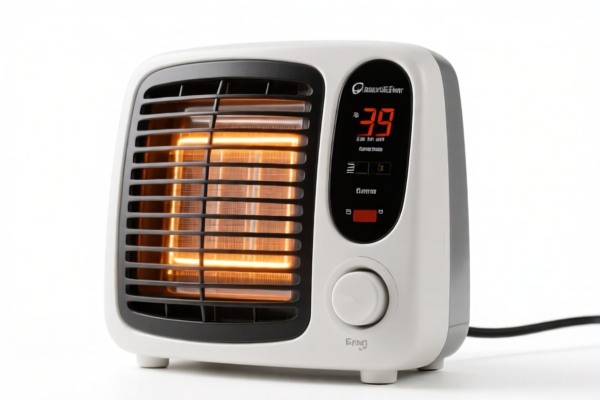
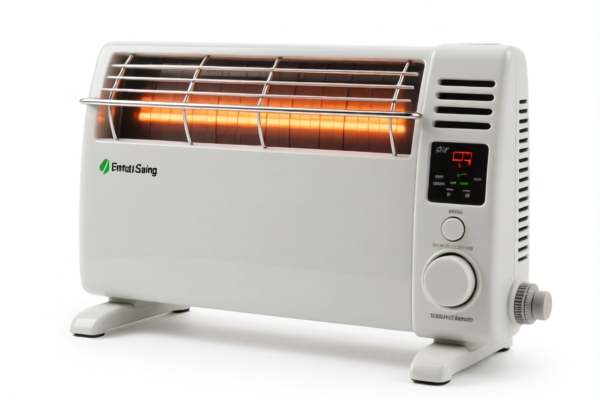
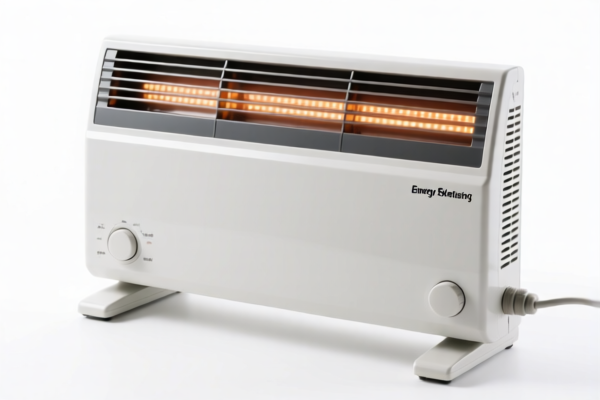
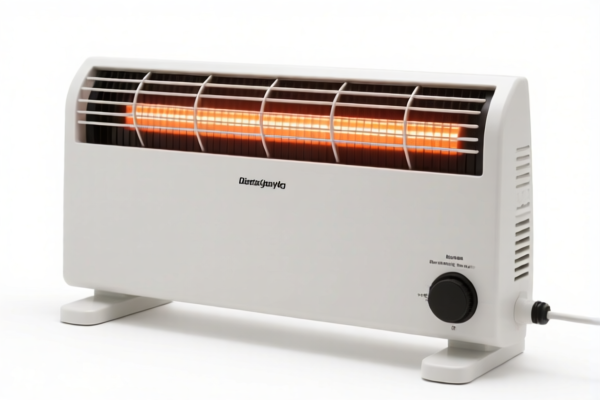
AI Analysis
⚡ Energy Saver / Power Controller (USergy Saver)
🌐 HS Code Reference & Customs Clearance Guide | 2026 Latest Tariff Analysis | Professional-Level Clearance Strategy
📌 I. Product Definition & Classification: What is an "Energy Saver"?
The term "Energy Saver" (or "USergy Saver") is a generic commercial term, not a precise technical description. In international trade, it usually refers to devices that claim to optimize power usage, regulate voltage, or control industrial machinery.
Because these devices can serve different functions, their HS Code classification depends entirely on their physical structure and primary function: 1. Electrical Control Panels: Devices that regulate voltage/current for power distribution (<1000V). 2. Valves/Piping Components: Devices used in thermal or fluid systems to optimize energy efficiency. 3. Special Function Electrical Apparatus: Devices acting as intermediate regulators or connectors within an electrical network.
⚠️ Key Distinction Point:
- If the device is a panel/board controlling electricity → 8537
- If the device is a valve/pipe fitting for heat/flow → 8481
- If the device is a specialized regulator/adapter → 8543
📦 II. HS Code Classification Details (2026 Latest Tariff Authorities)
Based on the provided data, here are the 5 possible HS Codes for "Energy Savers" and the specific reasons for their classification:
| HS Code | Product Description | Classification Logic (Why here?) | Total Tax Rate |
|---|---|---|---|
8537.10.91.70 |
Power Control Equipment (Catch-all) | Used for electrical regulation/control where voltage ≤ 1,000V. Classified as a "catch-all" category for other power control devices that don't fit more specific sub-headings. | 37.7% |
8537.10.91.50 |
Electrical Control Panels | Classified as part of an electrical installation. Specifically designed for paneling and distribution boards. Involves voltage control and power distribution functions. | 37.7% |
8481.80.90.50 |
Valves & Similar Apparatus (Thermal) | Used in piping or thermal systems to optimize heat utilization. Classified as a valve or similar industrial component used in industrial supporting equipment. | 37.0% |
8481.80.90.35 |
Control Valves (Industrial) | Functions as a component of an industrial control system. Compatible with valves and similar equipment categories due to its nature as a control valve. | 37.0% |
8543.70.60.00 |
Special Function Electrical Apparatus | Designed to connect/integrate into specific electrical networks. Acts as an intermediate connector or regulator with specific functional properties, rather than a general power distributor. | 35.0% |
🔍 Critical Insight:
- 8537 vs 8481: If the "Energy Saver" plugs into a wall and controls electronics, it’s likely 8537. If it connects to pipes or gas lines to save heat, it’s 8481. - 8543 vs 8537: 8543 is for devices with specific functions not covered elsewhere (e.g., specialized signal processing or specific network integration), while 8537 is for general power distribution/control.
💰 III. 2026 Latest Tariff Rate Breakdown (Including Surtaxes)
✅ Applicable Country: United States (US)
✅ Origin: China (CN)
✅ Effective Date: Ongoing (Includes Section 301 & Section 232/122 measures)
🎯 1. For HS Codes 8537.10.91.70 & 8537.10.91.50 (Electrical Control)
| Item | Detail |
|---|---|
| Base Tariff | 2.7% |
| Section 301 Surtax | +25.0% |
| Section 122 Tariff | +10.0% |
| Total Tax Rate | 37.7% |
| Tax Calculation | CIF Value × 37.7% |
| De Minimis Exemption | ❌ Not Eligible (Section 301 taxes apply regardless of value) |
| Legal Basis | USITC:8537.10.91.xx → Section 301: 25% → Section 122: 10% |
📌 Explanation:
- 2.7%: Standard MFN (Most Favored Nation) duty for electrical control apparatus. - 25%: Section 301 tariff imposed on Chinese goods. - 10%: Section 122 tariff (often applied to certain industrial/electronic imports). - Total 37.7%: High cost for clearance. Must be factored into pricing.
🎯 2. For HS Codes 8481.80.90.50 & 8481.80.90.35 (Valves/Industrial)
| Item | Detail |
|---|---|
| Base Tariff | 2.0% |
| Section 301 Surtax | +25.0% |
| Section 122 Tariff | +10.0% |
| Total Tax Rate | 37.0% |
| Tax Calculation | CIF Value × 37.0% |
| De Minimis Exemption | ❌ Not Eligible |
| Legal Basis | USITC:8481.80.90.xx → Section 301: 25% → Section 122: 10% |
📌 Explanation:
- Slightly lower base rate (2.0%) than electrical controls, but surtaxes are identical. - Classification as a "valve" is critical here. If misclassified as a simple pipe part, penalties may apply.
🎯 3. For HS Code 8543.70.60.00 (Special Function Apparatus)
| Item | Detail |
|---|---|
| Base Tariff | 0.0% |
| Section 301 Surtax | +25.0% |
| Section 122 Tariff | +10.0% |
| Total Tax Rate | 35.0% |
| Tax Calculation | CIF Value × 35.0% |
| De Minimis Exemption | ❌ Not Eligible |
| Legal Basis | USITC:8543.70.60.00 → Section 301: 25% → Section 122: 10% |
📌 Explanation:
- This is the most cost-effective classification if the product truly fits the "special function" criteria (not general power control). - 0% Base Rate saves 2.7% or 2.0% compared to others. - Risk: Customs may challenge this if the device is seen as a general "power saver" (which might fall under 8537). You must prove its specific, unique function.
🛠️ IV. Customs Clearance Practical Advice (Avoid Pitfalls)
✅ 1. Documentation Checklist (Must-Haves)
| Document | Required | Purpose |
|---|---|---|
| Product Specification Sheet | ✔️ | Details technical function, voltage, current, and intended use. |
| Circuit Diagram / Schematic | ✔️ | Crucial for distinguishing between 8537 (control), 8481 (valve), and 8543 (special function). |
| Product Photos (Internal & External) | ✔️ | Shows if it contains moving parts (valves) or is purely electronic. |
| Commercial Invoice | ✔️ | Must clearly state "Electrical Control Device" or "Industrial Valve," not just "Energy Saver." |
| Origin Certificate | ✔️ | To confirm CN origin and assess surtax applicability. |
| Third-Party Test Report | ✔️ | FCC (for US market), CE, RoHS to prove safety and compliance. |
✅ 2. Declaration Strategy (Key Mantra)
🔥 "Define Function, Not Functionality!"
| Scenario | Correct Declaration | Wrong Declaration | Consequence |
|---|---|---|---|
| Device controls voltage for a machine | 8537.10.91.70/50 | "Energy Saver" | Misclassification penalty + Delay |
| Device regulates water/heat flow | 8481.80.90.50/35 | "Electrical Controller" | Wrong HS Code, higher audit risk |
| Device is a specialized network adapter | 8543.70.60.00 | "Power Strip" | Missed opportunity for 0% base rate |
✅ 3. Special Handling for "Energy Saver" Claims
| Issue | Recommendation |
|---|---|
| Vague Name "USergy Saver" | Never use this alone on the invoice. Use technical terms like "Voltage Regulator," "Industrial Control Panel," or "Thermal Control Valve." |
| Proof of Function | If claiming 8543 (0% base), provide engineering documents proving it performs a specific function not covered by general power distribution rules. |
| Section 122 Impact | Be aware that the 10% Section 122 tariff applies to many of these HS codes. Ensure your customs broker is aware of this to avoid surprise costs. |
🌍 V. Global Market Comparison (2026)
| Country/Region | Recommended HS Code | Estimated Duty (CN Origin) | Notes |
|---|---|---|---|
| 🇺🇸 USA | 8543.70.60.00 |
35.0% | Lowest base rate (0%). Avoid 8537 if possible. |
| 🇺🇸 USA | 8537.10.91.xx |
37.7% | Higher base rate (2.7%). Common for general controllers. |
| 🇺🇸 USA | 8481.80.90.xx |
37.0% | For thermal/fluid systems. |
| 🇪🇺 EU | Varies by function | ~4-7% | No Section 301/122 surtaxes. Lower overall cost. |
| 🇨🇳 China | Varies by function | ~0-10% | Domestic sales avoid export duties. |
📌 Conclusion:
- The USA imposes significant Section 301 (25%) + Section 122 (10%) surtaxes on Chinese "Energy Savers," regardless of the HS Code. - To minimize costs, strive for HS Code8543.70.60.00if the product’s function allows, as it has a 0% base tariff, bringing the total to 35% instead of 37.7%.
📌 VI. Common Errors & Pitfalls (Lessons Learned)
❌ Error 1: Declaring simply as "Energy Saver"
👉 Result: Customs may classify it arbitrarily, often leading to the highest possible duty or detention for lack of clarity.
👉 Fix: Use technical description: "Electric Power Control Panel" or "Industrial Temperature Control Valve."
❌ Error 2: Misclassifying an Electrical Controller as a Valve (8481)
👉 Result: If the device is purely electrical, customs will reject 8481 and move it to 8537, potentially delaying clearance.
👉 Fix: Ensure the product actually interfaces with pipes/valves to justify 8481.
❌ Error 3: Ignoring Section 122 Tariff
👉 Result: Unexpected 10% cost added at customs.
👉 Fix: Always include Section 122 in your landed cost calculation for US imports.
✅ Correct Declaration Example:
"Electrical Control Panel for Voltage Regulation, ≤1000V, Model XYZ, FCC Certified, HS 8537.10.91.70"
🎯 VII. Conclusion: Professional Declaration, Cost Control!
🎯 Remember the Mantra:
🔹 "Function Determines Code, Code Determines Cost!"
🔹 "Base 0% + 35% Surtax = 35% Total. Base 2.7% + 35% Surtax = 37.7% Total. Save 2.7% if Possible!"
📌 Pro Tip:
If your "Energy Saver" has a unique, specialized function (e.g., specific AI-driven load balancing, not just voltage regulation), argue for HS Code 8543.70.60.00 to secure the 0% base rate.
If it is a standard power distribution panel, accept 8537 at 37.7%.
Never assume "Energy Saver" is a valid HS Code—it is a marketing term, not a customs term.
📣 Immediate Action:
📞 Consult your customs broker with technical diagrams.
🚀 Pre-classify using a Binding Ruling if importing in volume.
💼 Precision in description saves thousands in duties!
✨ Professional Clearance Starts with Accurate Classification!
💼 Every percentage point counts!
Customer Reviews
About HS Code Classification
The Harmonized System (HS) is an internationally standardized nomenclature developed by the World Customs Organization (WCO) to classify traded products. Over 200 countries use the HS system as the basis for customs tariffs, trade statistics, and import/export regulations.
Each HS code follows a hierarchical structure:
- Chapter (2 digits) — Broad category of goods (e.g., Chapter 84: Machinery and Mechanical Appliances)
- Heading (4 digits) — More specific grouping within the chapter
- Subheading (6 digits) — Internationally standardized breakdown, used by all WCO member countries
- National subdivisions (8-10 digits) — Country-specific extensions for further classification, such as US HTSUS 10-digit codes
Correct HS code classification is essential for smooth customs clearance, accurate duty payment, and compliance with trade regulations. Misclassification can lead to customs delays, overpayment of duties, or penalties.
When importing from CN to US, the applicable tariff rates may include:
- Most-Favored-Nation (MFN) rate — The standard duty rate applied to WTO members
- General rate — Applied to countries without trade agreements
- Trade remedy duties — Additional tariffs such as Section 301 (anti-dumping), Section 232 (national security), or countervailing duties
The information provided on this page is for reference purposes only. For official classification, please consult with your local customs authority or a licensed customs broker.