USgineering plastic polyacetal resin
CN → US| HS Code | Tariff Rate | Origin | Destination | Doc |
|---|---|---|---|---|
| 3907100000 | 41.5% | CN | US | Official Doc |
| 3907210000 | 41.5% | CN | US | Official Doc |
| 3902100000 | 41.5% | CN | US | Official Doc |
| 3916905000 | 40.8% | CN | US | Official Doc |
| 3902300000 | 41.5% | CN | US | Official Doc |
| 3916903000 | 41.5% | CN | US | Official Doc |
Product Images


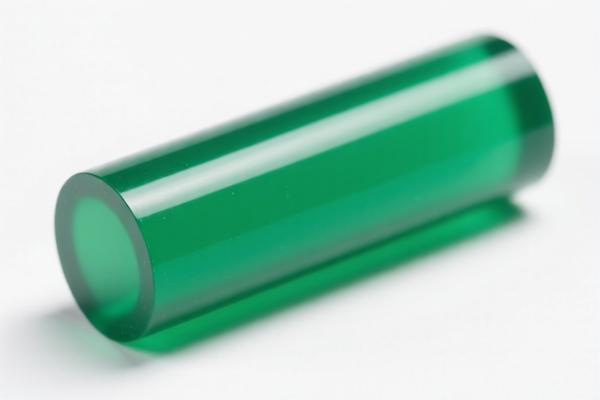

AI Analysis
🏭 Polyacetal Resin (Engineering Plastic) | The "Steel of Plastics"
🌐 HS Code Reference & Customs Clearance Guide | 2026 Latest Tariff Analysis | Professional Clearance Strategy
📌 1. Product Definition: What is Polyacetal Resin?
Polyacetal Resin, also known as Polyoxymethylene (POM), is a high-performance engineering thermoplastic. It is renowned for its high stiffness, low friction, excellent dimensional stability, and superior resistance to solvents and fuels. Often referred to as the "steel of plastics," it is widely used in automotive components, precision gears, zippers, and mechanical parts.
⚠️ Key Classification Distinction:
- If the material is primarily Polyoxymethylene (POM), it falls under Chapter 39, Heading 3907 (Other Polymers of Epoxides, Polyacetals, and Other Polyethers).
- Do NOT confuse with Polypropylene (PP): While both are engineering plastics, their HS codes differ significantly. POM is 3907, whereas PP is 3902.
📦 2. HS Code Classification Details (Based on Provided Data)
The following HS Codes are the most likely classifications for Polyacetal Resin (POM) based on the provided dataset. Note that some entries in the data mention "Polypropylene" due to potential data overlap or generic engineering plastic descriptions, but for Pure Polyacetal, the first two codes are the primary targets.
| HS Code | Product Description (From Data) | Material Match | Total Tax Rate |
|---|---|---|---|
| 3907.10.00.00 | Polyacetal Resin (Polyoxymethylene) classified here. Material match successful. | ✅ Exact Match | 41.5% |
| 3907.21.00.00 | Polyacetal Resin classified here. Material fully conforms to classification explanation. | ✅ Exact Match | 41.5% |
| 3902.10.00.00 | Polypropylene engineering plastic classified here. Material consistent with description. | ❌ Mismatch (PP vs POM) | 41.5% |
| 3902.30.00.00 | Polypropylene engineering plastic classified here. Olefin polymer. | ❌ Mismatch (PP vs POM) | 41.5% |
| 3916.90.50.00 | Polypropylene engineering plastic. Other plastic category fallback. | ❌ Mismatch (PP vs POM) | 40.8% |
| 3916.90.30.00 | Polypropylene engineering plastic. Other plastic category. | ❌ Mismatch (PP vs POM) | 41.5% |
🔍 Critical Note:
- The primary HS Codes for Polyacetal (POM) are 3907.10.00.00 and 3907.21.00.00.
- Codes under 3902 (e.g., 3902.10, 3902.30) refer to Polypropylene (PP), which is a different material. Misclassification here can lead to severe penalties.
- Codes under 3916 (e.g., 3916.90) refer to plastics in primary forms (like rods, tubes, profiles), not raw resin pellets. If you are importing POM Resin Pellets, use 3907. If you are importing POM Rods/Tubes, use 3916.
💰 3. 2026 Latest Tariff Rate Breakdown (Including Surtaxes & Policy Add-ons)
✅ Applicable Country: United States (US)
✅ Country of Origin: China (CN)
✅ Effective Date: November 10, 2025 (and subsequent imports)
🎯 1. HS Code 3907.10.00.00 —— Polyacetal Resin (Raw Material)
| Item | Detail |
|---|---|
| Base Tariff Rate | 6.5% |
| Surtax (Section 301) | +25.0% (USITC Footnote 9903.88.01) |
| 122 Clause Surtax | +10.0% (IEEPA-based surcharge for Chinese products) |
| Total Tax Rate | 41.5% |
| Tax Calculation | CIF Value × 41.5% |
| De Minimis Exemption | ❌ Not Eligible (deny_de_minimis) |
| Legal Pathway | IEEPA:9903.01.25 → IEEPA:9903.01.24 → USITC:3907.10.00.00 → FOOTNOTE:9903.88.01 |
📌 Explanation:
- The 6.5% is the standard Most Favored Nation (MFN) tariff.
- The 25% is the Section 301 tariff imposed on Chinese goods.
- The 10% is the additional "122 Clause" tariff targeting specific Chinese manufacturing sectors.
- Total: 41.5%. This is a high-cost item for importers.
🎯 2. HS Code 3907.21.00.00 —— Polyacetal Resin (Alternative Classification)
| Item | Detail |
|---|---|
| Base Tariff Rate | 6.5% |
| Surtax (Section 301) | +25.0% |
| 122 Clause Surtax | +10.0% |
| Total Tax Rate | 41.5% |
| Tax Calculation | CIF Value × 41.5% |
| De Minimis Exemption | ❌ Not Eligible |
| Legal Pathway | IEEPA:9903.01.25 → IEEPA:9903.01.24 → USITC:3907.21.00.00 → FOOTNOTE:9903.88.01 |
📌 Note:
- This code is also for Polyacetal Resin. The tax rate is identical to 3907.10.00.00.
- The distinction between 3907.10 and 3907.21 often depends on the specific polymer structure (e.g., homopolymer vs. copolymer), but both attract the same high tariff.
🛠️ 4. Customs Clearance Practical Advice (Battle-Tested Guide)
✅ 1. Required Documentation Checklist (Non-negotiable)
| Document | Must Provide | Description |
|---|---|---|
| ✅ Product Specification Sheet | ✔️ | Must explicitly state "Polyacetal" or "Polyoxymethylene (POM)". Do not use generic terms like "Engineering Plastic." |
| ✅ Composition Analysis | ✔️ | Certificate of Analysis (CoA) proving the material is POM and not PP or PE. |
| ✅ Product Photos | ✔️ | Clear images of the resin pellets, packaging, and label. |
| ✅ Commercial Invoice | ✔️ | Must list HS Code 3907.10.00.00 or 3907.21.00.00. |
| ✅ Certificate of Origin (CO) | ✔️ | Essential for verifying China origin (to calculate accurate surtaxes). |
| ✅ Packaging List | ✔️ | Detail net/gross weight, packaging type (bags, pallets). |
✅ 2. Declaration Tips (Key Mantras)
🔥 “Be Specific, Avoid Generic, Match the Chemistry!”
| Scenario | Correct Declaration | Error Consequence |
|---|---|---|
| POM Resin Pellets | HS Code: 3907.10.00.00 | Misclassifying as 3902 (PP) → Risk of penalty & back taxes. |
| POM Rods/Tubes | HS Code: 3916.90.50.00 (if PP) or 3916.90.30.00 (if other) | Misclassifying resin as formed articles → Potential reclassification. |
| Generic "Engineering Plastic" | Do Not Do This | Customs will reject vague terms. Specify POM. |
| POM with Glass Fiber Additive | Still 3907 (if POM is primary) | Adding filler doesn’t change base material classification. |
✅ 3. Special Circumstances Handling
| Situation | Handling Advice |
|---|---|
| OEM Custom POM | Provide customer order + material spec sheet to prove it’s POM, not PP. |
| POM vs. PP Confusion | POM has a higher melting point and better chemical resistance. Use this in your spec sheet to justify 3907 over 3902. |
| Mixed Containers | If a container has both POM and other plastics, declare separately. Do not combine under one HS Code. |
| Small Sample Shipments | Even small samples are subject to 41.5% tax. No de minimis exemption. |
🌍 5. Global Market Comparison (2026 Latest)
| Country/Region | Recommended HS Code | Tariff (China Origin) | Certification Requirements | Notes |
|---|---|---|---|---|
| 🇺🇸 USA | 3907.10.00.00 |
41.5% | No specific CE/FCC for raw resin | High tariff due to Section 301 + 122 Clause. |
| 🇨🇳 China | 3907.10.00.00 |
5% | RoHS (if applicable) | Low import tax. |
| 🇪🇺 EU | 3907.10.00 |
6.5% | REACH Compliance | No additional surtaxes like US. |
| 🇦🇺 Australia | 3907.10.00 |
5% | ACCC Standards | No Section 301 equivalent. |
| 🇯🇵 Japan | 3907.10.00 |
6.0% | PSE (if processed) | Stable tariff. |
📌 Conclusion:
- The US market is the most expensive for importing Polyacetal Resin from China due to the 41.5% total tariff.
- EU, Japan, and Australia offer significantly lower tariffs (~6%). Consider supply chain diversification if targeting the US.
📌 6. Common Mistakes & Pitfalls (Lessons Learned)
❌ Mistake 1: Declaring "POM" as "Plastic Pellets"
👉 Consequence: Customs may assign a random HS Code → Audit + Penalties.
👉 Solution: Always use the full name "Polyacetal Resin (POM)".
❌ Mistake 2: Confusing POM with PP (Polypropylene)
👉 Consequence: PP (3902) and POM (3907) have different chemical properties. Misclassification can lead to rejection of goods.
👉 Solution: Provide a Certificate of Analysis proving the polymer type.
❌ Mistake 3: Ignoring the 122 Clause Surtax
👉 Consequence: Underestimating costs by 10%.
👉 Solution: Budget for 41.5% total tax, not just the base rate.
✅ Correct Practice:
"Polyacetal Resin (Polyoxymethylene), Unfilled, Granular Form, Model XYZ, for Industrial Injection Molding, HS Code: 3907.10.00.00"
🎯 7. Conclusion: Professional Declaration, Save Costs, Ensure Compliance
🎯 Remember the Mantra:
🔹 "POM is 3907, PP is 3902. Don’t mix them!"
🔹 "US Tariff is 41.5%, Budget Accordingly!"
🔹 "Be Specific, Stay Compliant, Avoid Audits!"
📌 Pro Tip:
If your POM resin is sourced from Vietnam, Thailand, or Mexico, you may apply for IEEPA Exemptions or avoid Section 301 tariffs, reducing the rate to 0%-6.5%.
Recommend Advance Ruling from US Customs (CBP) to lock in the HS Code classification before shipment.
📣 Immediate Action:
📞 Contact your customs broker + Provide Material Safety Data Sheet (MSDS) + Apply for HS Code Advance Ruling
🚀 Let your Polyacetal Resin clear customs smoothly, reduce costs, and maximize profit!
✨ Professional Customs Clearance Starts with Accurate Classification!
💼 Every Percent in Tariff is Money Saved or Lost!
Customer Reviews
About HS Code Classification
The Harmonized System (HS) is an internationally standardized nomenclature developed by the World Customs Organization (WCO) to classify traded products. Over 200 countries use the HS system as the basis for customs tariffs, trade statistics, and import/export regulations.
Each HS code follows a hierarchical structure:
- Chapter (2 digits) — Broad category of goods (e.g., Chapter 84: Machinery and Mechanical Appliances)
- Heading (4 digits) — More specific grouping within the chapter
- Subheading (6 digits) — Internationally standardized breakdown, used by all WCO member countries
- National subdivisions (8-10 digits) — Country-specific extensions for further classification, such as US HTSUS 10-digit codes
Correct HS code classification is essential for smooth customs clearance, accurate duty payment, and compliance with trade regulations. Misclassification can lead to customs delays, overpayment of duties, or penalties.
When importing from CN to US, the applicable tariff rates may include:
- Most-Favored-Nation (MFN) rate — The standard duty rate applied to WTO members
- General rate — Applied to countries without trade agreements
- Trade remedy duties — Additional tariffs such as Section 301 (anti-dumping), Section 232 (national security), or countervailing duties
The information provided on this page is for reference purposes only. For official classification, please consult with your local customs authority or a licensed customs broker.