USglish 12 Sets Scratch Cards Envelopes
CN → US| HS Code | Tariff Rate | Origin | Destination | Doc |
|---|---|---|---|---|
| 4820900000 | 35.0% | CN | US | Official Doc |
| 4820104000 | 35.0% | CN | US | Official Doc |
Product Images
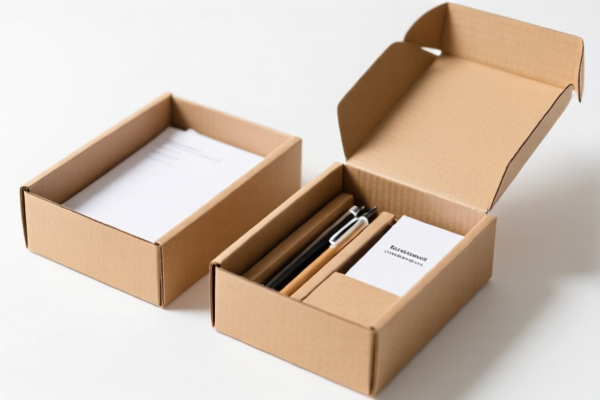
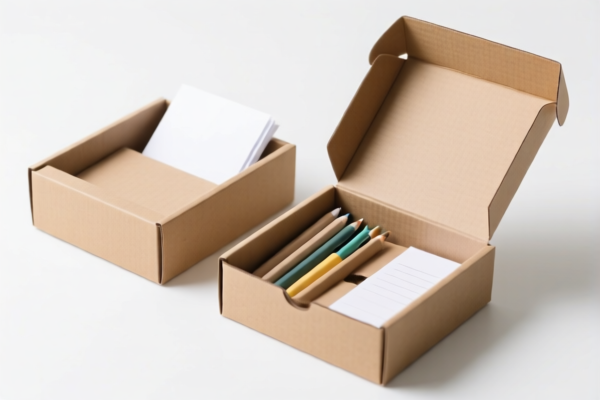
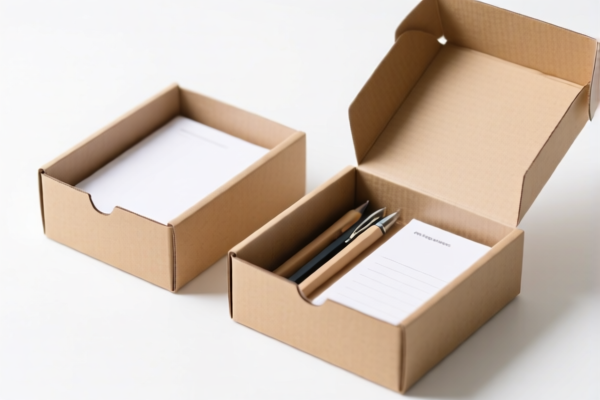
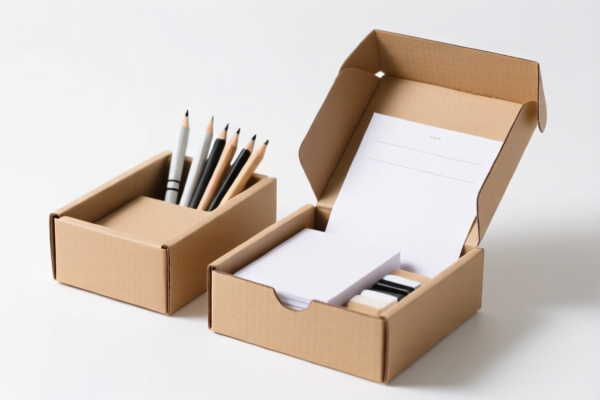
AI Analysis
🎫 USglish 12 Sets Scratch Cards Envelopes
🌐 HS Code Reference & Customs Clearance Guide | 2026 Latest Tariff Analysis | Professional Strategy for Paper Stationery
📌 I. Product Definition & Classification: Do You Really Understand "Scratch Card Envelopes"?
Scratch Card Envelopes are specialized packaging components used in promotional games, lottery systems, and direct marketing. They typically consist of paper or paperboard envelopes designed to hold scratch-off tickets, lottery numbers, or prize coupons.
In international trade, these items are classified based on their material (paper/paperboard) and their function (stationery/package). They fall under Chapter 48: Paper and Paperboard.
⚠️ Key Classification Logic:
- Material: Paper or Paperboard (Primary material).
- Function: Envelopes/Packaging for stationery/promotional items.
- Exclusion: If they contain electronic chips or complex non-paper mechanisms, they might fall elsewhere (e.g., Chapter 85), but standard "scratch card envelopes" are paper-based.
- Specific Category: They fit best under "Articles of stationery... of paper or paperboard".
📦 II. HS Code Classification Details (2026 Latest Tariff Authority Comparison)
Based on the provided data, here are the applicable HS Codes for Scratch Card Envelopes:
| HS Code | Product Description | Applicable Scenario | Key Characteristics |
|---|---|---|---|
4820.90.00.00 |
Other articles of stationery, of paper or paperboard | Standard scratch card envelopes, generic promotional envelopes | ✅ General classification for stationery items not specified elsewhere |
4820.10.40.00 |
Registers, account books, notebooks, order books, receipt books, letter pads, memorandum pads, diaries and similar articles: Other | Envelopes specifically categorized under "diaries/similar articles" or general stationery lists | ✅ Specific sub-heading for stationery accessories |
🔍 Critical Note:
- Scratch card envelopes are NOT considered "printed documents" (Chapter 49) unless they contain complex forms.
- They are NOT "books" (Chapter 49) because they are packaging/envelopes.
- Why4820.90.00.00? This is the "catch-all" for paper stationery items not explicitly listed in4820.10(which focuses on registers/books). Most plain or simple printed envelopes fall here.
- Why4820.10.40.00? If the customs authority interprets "envelopes" as part of a "letter pad" or "similar article" set, this code may apply. However,4820.90.00.00is generally safer for standalone envelopes unless they are part of a diary/stationery set.
💰 III. 2026 Latest Tariff Rate Details (Including Additional Duties)
✅ Applicable Country: United States (US)
✅ Country of Origin: China (CN)
✅ Effective Date: 2025 November 10 onwards (for subsequent imports)
🎯 1. 4820.90.00.00 —— Other Articles of Stationery, of Paper or Paperboard
| Item | Content |
|---|---|
| Base Tariff Rate | 0.0% |
| Section 301 Additional Duty | +25.0% |
| Total Tariff Rate | 25.0% |
| Tax Calculation | CIF Value × 25% |
| De Minimis Exemption | ❌ Not Eligible (Deemed "Article of Stationery" under Section 301) |
| Legal Basis Path | HTSUS:4820.90.00.00 → USITC Footnote 9903.88.01 → Section 301 |
📌 Explanation:
- Base Rate: Paper products often have low or zero base tariffs.
- Section 301 Duty: 25% is applied to most Chinese-origin paper products under the US Trade Representative’s Section 301 list.
- Total Cost Impact: For every $1,000 of goods, you pay $250 in additional tariffs.
- No De Minimis: Unlike small parcels, bulk imports of stationery are subject to full duty assessment.
🎯 2. 4820.10.40.00 —— Registers, Account Books, Notebooks... Other
| Item | Content |
|---|---|
| Base Tariff Rate | 0.0% |
| Section 301 Additional Duty | +25.0% |
| Total Tariff Rate | 25.0% |
| Tax Calculation | CIF Value × 25% |
| De Minimis Exemption | ❌ Not Eligible |
| Legal Basis Path | HTSUS:4820.10.40.00 → USITC Footnote 9903.88.01 → Section 301 |
📌 Note:
- The tariff rate is identical to4820.90.00.00.
- The choice between these two codes depends on how the envelope is marketed and described in the commercial invoice. If it’s a standalone envelope,4820.90.00.00is more accurate. If it’s part of a "diary" or "notebook" set,4820.10.40.00may be used.
🛠️ IV. Customs Clearance Practical Advice (Pro Tips for Avoiding Pitfalls)
✅ 1. Required Documentation Checklist
| Document | Mandatory? | Notes |
|---|---|---|
| ✅ Commercial Invoice | ✔️ | Must clearly state: "Scratch Card Envelopes, Paper, 12 Sets, For Promotional Use" |
| ✅ Packing List | ✔️ | Detail quantity per box, total sets, weight |
| ✅ Product Images | ✔️ | Show envelope design, material (paper), and contents (scratch cards inside) |
| ✅ Material Declaration | ✔️ | Confirm composition: 100% Paper or Paperboard (no plastic windows if possible to avoid Chapter 39 issues) |
| ✅ Country of Origin Certificate | ✔️ | If claiming any exemptions (rare for CN origin paper goods) |
| ✅ FCC/Consumer Safety Docs | ❌ | Not required for plain paper, but if scratch cards contain metal flakes, ensure compliance |
✅ 2. Declaration Tips (Key Mnemonic)
🔥 "Paper Envelopes, Stationery Category, 25% Duty, No Tricks!"
| Scenario | Correct Declaration | Incorrect Practice |
|---|---|---|
| Plain Paper Envelopes | 4820.90.00.00 |
Misclassifying as "Packaging Material" (Chapter 48, different heading) |
| Envelopes with Plastic Windows | Check if Chapter 39 applies! | Assuming all paper envelopes go to 4820 |
| Envelopes with Electronic Components | Chapter 85 or 90 | Declaring as simple paper → Seizure Risk |
| Bulk Import vs. Retail | Bulk | Trying to use de minimis (Section 321) for large shipments → Flagged |
✅ 3. Special Cases
| Case | Handling Advice |
|---|---|
| Plastic-Coated Envelopes | If >50% surface area is plastic, may fall under Chapter 39 (Plastics). Check tariff difference! |
| Envelopes with Glue/Adhesive | Still Chapter 48 if paper is primary. Ensure adhesive is minimal. |
| Promotional Sets (with toys) | If the envelope is part of a toy set, it may be classified under Chapter 95. Keep envelopes separate if possible. |
| Reused/Second-hand Envelopes | Not Allowed for import as "new" goods. Must be declared as "used" or recycled. |
🌍 V. Global Market Comparison (2026 Latest)
| Country/Region | Recommended HS Code | Tariff (CN Origin) | Certification Required | Notes |
|---|---|---|---|---|
| 🇺🇸 USA | 4820.90.00.00 |
25% | None (unless plastic) | High duty due to Section 301 |
| 🇨🇳 China | 4820.90.00.00 |
0% - 5% | None | Low duty for domestic production |
| 🇪🇺 EU | 4820.90.00.00 |
0% | CE (if plastic components) | No Section 301 equivalent |
| 🇬🇧 UK | 4820.90.00.00 |
0% | UKCA (if applicable) | Post-Brexit rules apply |
| 🇯🇵 Japan | 4820.90.00.00 |
0% - 3% | PSE (if electronic) | Favorable for paper goods |
📌 Conclusion:
- USA is the only major market with a 25% additional tariff on this product from China.
- Cost-Benefit Analysis: If profit margins are thin (<25%), consider sourcing from Vietnam, Thailand, or Mexico to avoid Section 301 duties.
- Alternative: If the envelope is 100% plastic, it might fall under 3923.29 (Plastic sacks), which may have different duty rates (check current HTSUS).
📌 VI. Common Errors & Pitfalls (Lessons Learned)
❌ Error 1: Misclassifying as "Packaging Material" (4805/4819)
👉 Consequence: Different tariff rate, potential audit for misdeclaration.
✅ Fix: Use 4820 for "Stationery Articles."
❌ Error 2: Ignoring Plastic Components
👉 Consequence: If the envelope has a plastic window or seal, it may be classified under Chapter 39 (Plastics), which has different tariffs and regulations.
✅ Fix: Verify material composition. If >50% plastic, consider 3923.29.00.00.
❌ Error 3: Assuming De Minimis Applies
👉 Consequence: Section 301 goods are not eligible for Section 321 de minimis exemption in many cases, especially if valued over $800 but shipped in bulk.
✅ Fix: Declare accurately and pay duties upfront.
❌ Error 4: Incorrect Description on Invoice
👉 Consequence: "Envelope" is too vague. Use "Scratch Card Envelope, Paper, Promotional."
✅ Fix: Be specific.
🎯 VII. Conclusion: Smart Classification, Cost Control, Smooth Clearance
🎯 Remember the Golden Rules:
🔹 "Paper Envelopes = 4820.90.00.00"
🔹 "25% Duty for China Origin = Budget Accordingly"
🔹 "No Plastic = No Chapter 39 Trouble"
🔹 "De Minimis Not Allowed = Pay Up Front"
📌 Pro Tip:
If your scratch card envelopes are part of a larger promotional kit (e.g., with toys, electronics), consider separating them in your customs declaration. The kit might be classified under Chapter 95 (Toys) or 85 (Electronics), where tariffs might be different or exempt.
📣 Immediate Action:
📞 Consult a licensed customs broker for a Pre-Ruling if your product contains mixed materials (paper + plastic).
🚀 Optimize your supply chain: Consider tariff engineering by sourcing paper from non-China origins (e.g., Malaysia, Vietnam) to save 25% on duties.
✨ Professional Customs Clearance Starts with Accurate Classification!
💼 Every Percent Saved is Pure Profit!
Customer Reviews
About HS Code Classification
The Harmonized System (HS) is an internationally standardized nomenclature developed by the World Customs Organization (WCO) to classify traded products. Over 200 countries use the HS system as the basis for customs tariffs, trade statistics, and import/export regulations.
Each HS code follows a hierarchical structure:
- Chapter (2 digits) — Broad category of goods (e.g., Chapter 84: Machinery and Mechanical Appliances)
- Heading (4 digits) — More specific grouping within the chapter
- Subheading (6 digits) — Internationally standardized breakdown, used by all WCO member countries
- National subdivisions (8-10 digits) — Country-specific extensions for further classification, such as US HTSUS 10-digit codes
Correct HS code classification is essential for smooth customs clearance, accurate duty payment, and compliance with trade regulations. Misclassification can lead to customs delays, overpayment of duties, or penalties.
When importing from CN to US, the applicable tariff rates may include:
- Most-Favored-Nation (MFN) rate — The standard duty rate applied to WTO members
- General rate — Applied to countries without trade agreements
- Trade remedy duties — Additional tariffs such as Section 301 (anti-dumping), Section 232 (national security), or countervailing duties
The information provided on this page is for reference purposes only. For official classification, please consult with your local customs authority or a licensed customs broker.