USzymatic Leather Cleaner
CN → US| HS Code | Tariff Rate | Origin | Destination | Doc |
|---|---|---|---|---|
| 3402501100 | 39.0% | CN | US | Official Doc |
| 3402905030 | 38.7% | CN | US | Official Doc |
| 3402901000 | 38.8% | CN | US | Official Doc |
| 3402905030 | 38.7% | CN | US | Official Doc |
| 3402501100 | 39.0% | CN | US | Official Doc |
Product Images
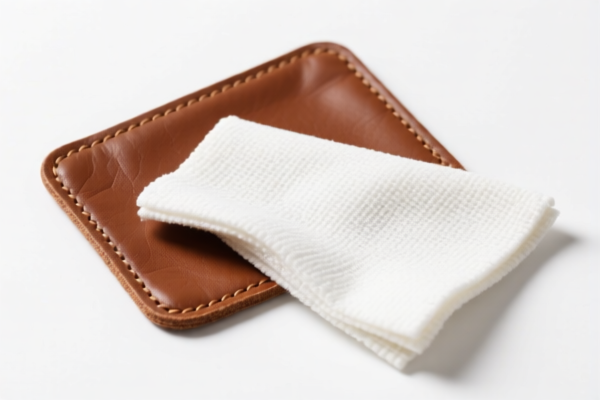
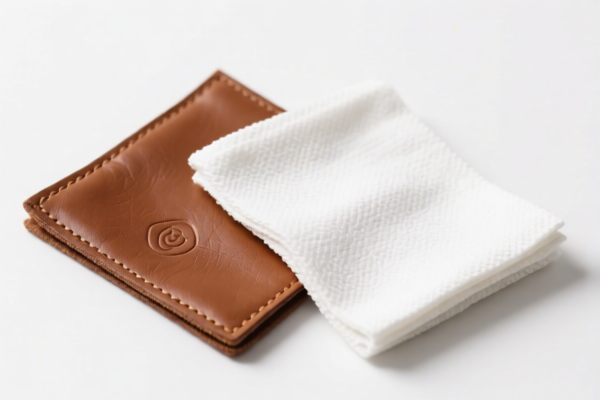
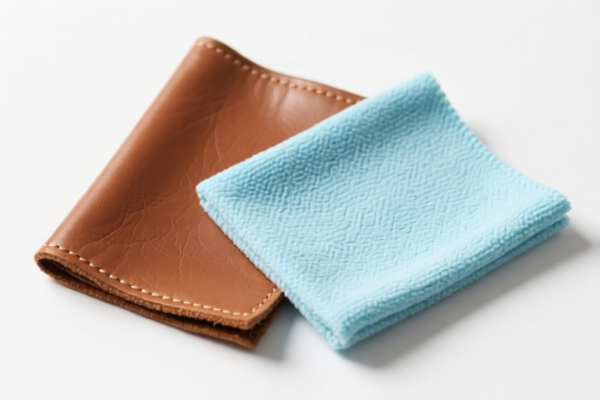
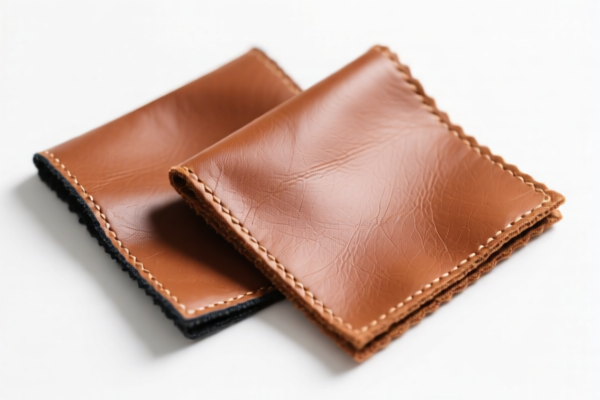
AI Analysis
🧴 Enzymatic Leather Cleaner (USzymatic Leather Cleaner)
🌐 HS Code Reference & Customs Clearance Guide | 2026 Latest Tariff Analysis | Professional Compliance Strategy
📌 I. Product Definition & Classification: What Exactly is "Enzymatic Leather Cleaner"?
Enzymatic Leather Cleaner is a specialized cleaning agent designed for the maintenance of leather goods (furniture, automotive interiors, apparel). Unlike traditional solvents, it relies on enzymes to break down organic stains (grease, sweat, urine) and contains surface-active agents to lift dirt.
In international trade, the classification hinges on two key factors: 1. Chemical Composition: Does it contain organic surface-active agents? 2. Primary Function: Is it primarily a cleaning preparation or a chemical product not elsewhere specified?
⚠️ Key Distinction:
- If the product is formulated as a cleaning preparation containing surface-active agents → It falls under Chapter 34 (Soap, Organic Surface-Active Agents, Washing Preparations).
- If it is strictly an enzymatic preparation without significant surfactant content for cleaning, it might fall elsewhere, but for "Leather Cleaner," 3402 is the dominant category due to its surfactant-based cleaning mechanism.
📦 II. HS Code Classification Details (2026 Latest Tariff Authority Mapping)
Based on the provided data, the product is classified into two main HS Code groups depending on the specific formulation nuances.
| HS Code | Product Description | Applicable Scenario | Key Ingredient Feature |
|---|---|---|---|
3402.50.11.00 |
Enzymatic Leather Cleaner, Cleaning Preparation | Standard formulation containing organic surface-active agents | ✅ Yes (Surfactants) |
3402.90.50.30 |
Enzymatic Leather Cleaner, General Cleaning Prep | General chemical cleaning formulation, no conflict with chemical substance classification | ✅ Yes (Surfactants/Enzymes) |
3402.90.10.00 |
Enzyme-based Leather Cleaner, Cleaning Use | Specific organic surface-active component formulation | ✅ Yes (Organic Surfactants) |
🔍 Key Reminder:
-3402.50.11.00is for cleaning preparations containing surface-active agents.
-3402.90.xxxxseries is for other organic surface-active agents and preparations (not elsewhere specified).
- All these codes carry high tariff risks due to Section 301 and Section 122 tariffs.
💰 III. 2026 Latest Tariff Rate Breakdown (Including Surcharges & Policy Add-ons)
✅ Applicable Country: United States (US)
✅ Origin: China (CN)
✅ Effective Time: 2025/2026 (Current Trade War Status)
🎯 1. 3402.50.11.00 —— Cleaning Preparations (Surfactant-Based)
| Item | Content |
|---|---|
| Base Tariff | 4.0% (ad valorem) |
| Section 301 Tariff | +25.0% (USITC Footnote 9903.08.01) |
| Section 122 Tariff | +10.0% (Trade Expansion Act) |
| Total Tariff Rate | 39.0% |
| Tax Calculation | CIF Value × 39.0% |
| De Minimis Eligibility | ❌ Not Eligible (Section 301 goods are excluded from de minimis relief under current enforcement) |
| Legal Path | IEEPA:9903.01.25 → USITC:3402.50.11.00 → FOOTNOTE:9903.08.01 |
📌 Explanation:
- The 25% is the standard Section 301 punitive tariff on Chinese chemical products.
- The 10% is the Section 122 additional duty (often applied to protect domestic manufacturing).
- Total 39% makes this a high-cost commodity for US importers.
🎯 2. 3402.90.50.30 & 3402.90.10.00 —— Other Chemical Cleaning Preparations
| Item | Content |
|---|---|
| Base Tariff | 3.7% - 3.8% (varies by subheading) |
| Section 301 Tariff | +25.0% |
| Section 122 Tariff | +10.0% |
| Total Tariff Rate | 38.7% - 38.8% |
| Tax Calculation | CIF Value × ~38.7% |
| De Minimis Eligibility | ❌ Not Eligible |
| Legal Path | IEEPA:9903.01.24 → USITC:3402.90.xxxx → FOOTNOTE:9903.08.01 |
📌 Note:
- The difference between 38.7% and 39.0% is minimal but significant for large volumes.
- Even if the base duty is slightly lower (3.7-3.8%), the 35% in total surcharges (25% + 10%) dominate the cost structure.
- Do not attempt to use "De Minimis" (Section 321) for these items; US Customs (CBP) is aggressively auditing chemical shipments under this threshold.
🛠️ IV. Customs Clearance Practical Advice (Pitfall Avoidance Guide)
✅ 1. Documentation Checklist (Mandatory)
| Document | Required? | Description |
|---|---|---|
| ✅ Product Specification Sheet | ✔️ | Must detail % of surfactants, enzymes, pH level, and active ingredients. |
| ✅ Safety Data Sheet (SDS) | ✔️ | Essential for chemical classification. Must confirm it is not "Hazardous" in a way that changes HS code. |
| ✅ Ingredient List | ✔️ | To prove "Enzymatic" nature vs. pure "Organic Surface-Active Agent." |
| ✅ Commercial Invoice | ✔️ | Must clearly state "Enzymatic Leather Cleaner" and not vague terms like "Cleaning Liquid." |
| ✅ Label Copy | ✔️ | Shows intended use (Leather Care). |
✅ 2. Declaration Tips (Critical Mnemonic)
🔥 "Be Specific, Be Chemical, Avoid 'Soap' Trap!"
| Scenario | Correct Declaration | Wrong Practice |
|---|---|---|
| Leather Cleaner | 3402.50.11.00 or 3402.90.50.30 |
Misdeclare as "Soap" (3401) → Higher scrutiny |
| Enzyme Component | Emphasize "Enzymatic" in description | Hide enzyme content → Misclassification risk |
| Liquid Form | Specify "Liquid Preparation" | Just "Chemical" → Ambiguity leads to delay |
✅ 3. Special Situation Handling
| Situation | Handling Advice |
|---|---|
| OEM Private Label | Provide authorization letter + formula sheet to prove origin of formulation. |
| Kit Composition | If sold with a brush/cloth, declare main item (Cleaner) + separate line for accessories (different HS). Do not bundle into one HS code unless legally permissible. |
| Biomass/Bio-based Claim | If marketing as "Eco-Friendly," provide bio-degradability reports. However, does not exempt from Section 301 tariffs. |
🌍 V. Global Market Comparison (2026 Latest)
| Country/Region | Recommended HS Code | Tariff | Certification | Remarks |
|---|---|---|---|---|
| 🇺🇸 USA | 3402.50.11.00 / 3402.90.50.30 |
38.7% - 39.0% | None Specific | Highest Risk: Section 301 + 122 |
| 🇨🇳 China | 3402.50.11.00 |
~5-7% | None | Domestic production |
| 🇪🇺 EU | 3402.50 |
~6.5% | REACH Compliance | No Section 301 equivalent |
| 🇨🇦 Canada | 3402.50 |
~5-10% | CDER Approval | Lower than US |
📌 Conclusion:
- USA is the most expensive market due to political tariffs.
- EU and Canada are more stable, but REACH (EU) compliance for surfactants is strict.
- Profit Margin Alert: A 39% tariff can erase all profit margins. Consider pricing strategies or supply chain adjustments.
📌 VI. Common Errors & Pitfall Guide (Blood & Tears Lessons)
❌ Error 1: Declaring "Leather Cleaner" as "Household Detergent"
👉 Consequence: Incorrect HS code → Audit + Penalties + Retroactive Tariffs.
❌ Error 2: Ignoring Section 122 Tariff
👉 Consequence: Underpaying by 10% → Seizure of goods at border.
❌ Error 3: Assuming "Enzymatic" = "Biological Product" (Chapter 30)
👉 Consequence: Wrong Chapter 30 declaration → Shipment Rejected/Returned. Enzymatic cleaners are Chapter 34.
❌ Error 4: Using "De Minimis" for shipments <$800
👉 Consequence: CBP will seize these goods as they are subject to Section 301/122. No exemptions apply.
✅ Correct Action:
Declare as: "Enzymatic Leather Cleaning Preparation, Liquid, Containing Organic Surface-Active Agents, HS 3402.50.11.00, Origin: China, Duty: 39%."
🎯 VII. Conclusion: Precision Classification Saves Money!
🎯 Remember the Mantra:
🔹 "Enzymatic Cleaner ≠ Soap"
🔹 "US Tariff = 39% (Base + 301 + 122)"
🔹 "No De Minimis for Chemicals"
🔹 "SDS & Formula are Your Best Friends"
📌 Pro Tip:
If you are importing large volumes (> container load), consider:
1. Applying for an Exclusion (if any exist for specific chemical types).
2. Bonded Warehouse Storage to defer duty payment until sold.
3. Pre-Arrival Review (CBP Ruling) to lock in the HS code and avoid surprise audits.
📣 Immediate Action:
📞 Contact a licensed Customs Broker + Provide SDS + Verify Section 122 Applicability
🚀 Your Leather Cleaner, Cleared Safely, Tariff-Optimized, Profit-Protected!
✨ Professional Customs Clearance Starts with Accurate Classification!
💼 Every Percentage Point of Tariff Matters!
Customer Reviews
About HS Code Classification
The Harmonized System (HS) is an internationally standardized nomenclature developed by the World Customs Organization (WCO) to classify traded products. Over 200 countries use the HS system as the basis for customs tariffs, trade statistics, and import/export regulations.
Each HS code follows a hierarchical structure:
- Chapter (2 digits) — Broad category of goods (e.g., Chapter 84: Machinery and Mechanical Appliances)
- Heading (4 digits) — More specific grouping within the chapter
- Subheading (6 digits) — Internationally standardized breakdown, used by all WCO member countries
- National subdivisions (8-10 digits) — Country-specific extensions for further classification, such as US HTSUS 10-digit codes
Correct HS code classification is essential for smooth customs clearance, accurate duty payment, and compliance with trade regulations. Misclassification can lead to customs delays, overpayment of duties, or penalties.
When importing from CN to US, the applicable tariff rates may include:
- Most-Favored-Nation (MFN) rate — The standard duty rate applied to WTO members
- General rate — Applied to countries without trade agreements
- Trade remedy duties — Additional tariffs such as Section 301 (anti-dumping), Section 232 (national security), or countervailing duties
The information provided on this page is for reference purposes only. For official classification, please consult with your local customs authority or a licensed customs broker.