USzyme precursor extracts
CN → US| HS Code | Tariff Rate | Origin | Destination | Doc |
|---|---|---|---|---|
| 350790 | 0.0% | CN | US | Official Doc |
| 293690 | 0.0% | CN | US | Official Doc |
Product Images
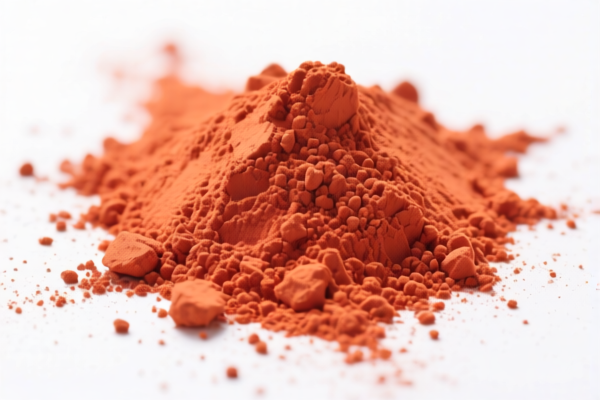
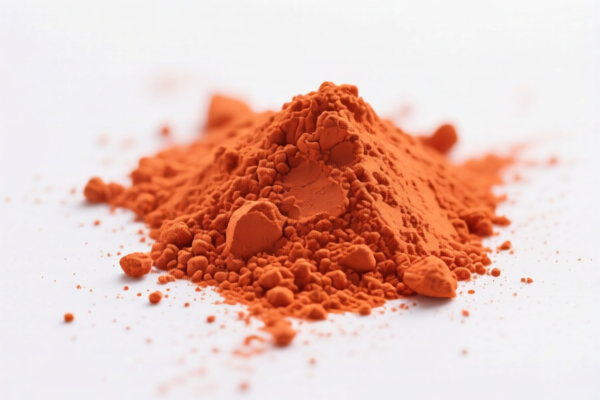
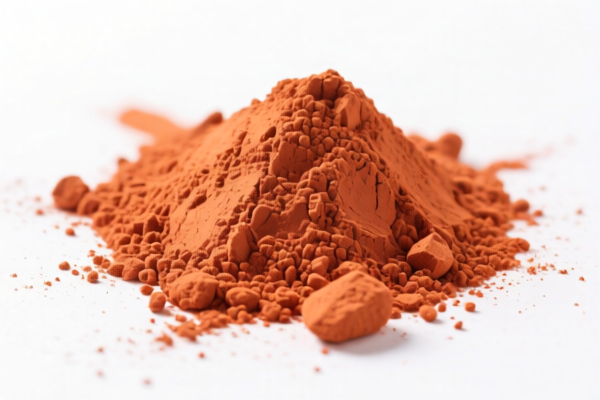
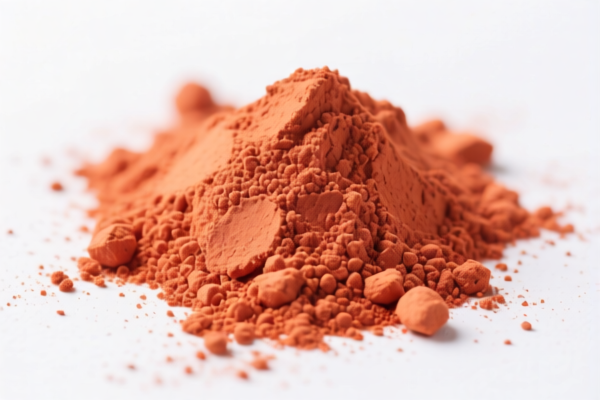
AI Analysis
🧪 USzyme Precursor Extracts: The Biochemical Powerhouse
🌐 HS Code Classification & Customs Clearance Guide | 2026 Tax Analysis | Professional Import Strategy
📌 One: Product Definition & Chemical Nature: What Exactly is "USzyme"?
USzyme is a trade name often associated with specific enzyme preparations derived from biological sources (often microbial or plant-based) containing complex protein structures with catalytic activity. The term "Precursor Extracts" implies these are intermediate biochemical products, rich in proteins, peptides, or enzymatic activity, used as raw materials for further fermentation, food processing, or industrial catalysis.
In international trade, these products fall strictly under Chapter 35: Albuminoidal Substances; Modified Starches; Glues; Enzymes.
⚠️ Critical Distinction:
- If the product is a pure, isolated chemical compound (e.g., a specific synthesized amino acid or single enzyme like pure Trypsin), it may fall under Chapter 29 (Organic Chemicals).
- However, "Extracts" and "Precursor Preparations" containing multiple components (proteins, peptides, salts, buffers) retain biological activity and are classified under Chapter 35.
- Key Test: Does it have biological/enzymatic function? If yes → Chapter 35. If it's a simple organic molecule without specific biological complexity → Chapter 29.
📦 Two: HS Code Classification Details (2026 Tariff Authority)
Based on the provided <DATA>, here are the precise classifications for USzyme Precursor Extracts.
| HS Code | Product Description | Application Scenario | Key Classification Criteria |
|---|---|---|---|
3507.90 |
Other enzymes, not elsewhere specified or included; enzyme preparations not elsewhere specified or included, including those obtained by chemical synthesis | Industrial enzyme mixes, microbial extracts, multi-enzyme precursors, catalytic protein preparations | ✅ Biological/Enzymatic Activity: The product contains active enzymes or enzyme precursors that function as catalysts. It is a "preparation" rather than a pure chemical. |
2936.90 |
Other organic compounds not elsewhere specified or included, containing oxygen, nitrogen, or sulfur, not elsewhere specified or included | Pure isolated organic molecules (e.g., specific peptides, amino acid derivatives) that do NOT retain full enzymatic complexity or are classified as "chemicals" rather than "enzyme preparations" | ❌ Chemical Nature: If customs determines the "extract" is actually a pure organic compound (not a mixture of enzymes) or lacks specific enzymatic classification elsewhere, it may fall here. Note: This is a residual category. |
🔍 Expert Note on
<DATA>Limitations:
- The provided<DATA>indicates"tax_detail": "Failed to retrieve tax information"and"total_tax": "Error".
- This means no specific tariff rates are pre-calculated in this dataset for these HS Codes.
- Action Required: You must consult the local customs tariff database (e.g., US ITC Tariff, China Customs Tariff) for the specific duty rate, as it varies by country of origin and trade agreement.
💰 Three: Tariff Rate Analysis (General Guidance)
✅ Applicable Context: Since tax data is missing in
<DATA>, below is a general industry standard analysis. You MUST verify with local customs for 2026 rates.
🎯 1. 3507.90 – Enzyme Preparations (Most Likely for "USzyme")
| Item | Content |
|---|---|
| Base Duty | Typically 0% - 5% in many major markets (US, EU, CN) for enzyme preparations used in industry/food. |
| Additional Duties | Check for 301 Tariffs (US): If originating from China, additional 25% may apply. |
| VAT/GST | Standard local consumption tax applies (e.g., 13% in China, 20% in EU, varies in US). |
| Legal Basis | Chapter 35 Note 1: "Enzymes" include preparations containing enzymes. |
📌 Explanation:
- Enzyme preparations (3507.90) are often treated as biochemical raw materials.
- In the US, many enzymes enter duty-free under HTS3507.90.90unless subject to trade wars.
- In China, the import duty for enzymes is often 0% or low, but VAT is applicable.
🎯 2. 2936.90 – Other Organic Compounds
| Item | Content |
|---|---|
| Base Duty | Typically 0% - 8.5% depending on country. |
| Additional Duties | Check for 301 Tariffs (US): Additional 25% if from China. |
| VAT/GST | Standard local tax applies. |
| Legal Basis | Chapter 29: Residual category for organic chemicals not specified in 2901-2934. |
📌 Explanation:
- If customs classifies your "precursor extract" as a pure organic molecule (not an enzyme mix), it falls here.
- This category is broader and may have higher duties than enzymes in some jurisdictions.
🛠️ Four: Customs Clearance Practical Advice (Real-World Pitfall Guide)
✅ 1. Documentation Checklist (Non-Negotiable)
| Document | Required? | Notes |
|---|---|---|
| ✅ Product Specification Sheet | ✔️ | Must state: "Contains enzymatic activity," "Protein content," "pH range," "Source organism." |
| ✅ Safety Data Sheet (SDS) | ✔️ | Classify as Non-Hazardous or Biohazard depending on activity. |
| ✅ Certificate of Analysis (COA) | ✔️ | Prove it is an "enzyme preparation" (biological) not just a "chemical extract." |
| ✅ Commercial Invoice | ✔️ | Description: "USzyme Precursor Extract – Enzyme Preparation for Industrial Use." |
| ✅ Declaration of Non-Hazardous | ✔️ | If applicable, declare no biohazard risk. |
| ✅ HS Code Ruling (Optional) | ✔️ | Recommended for high-value shipments to avoid disputes. |
✅ 2. Declaration Strategy (Key Mnemonics)
🔥 "Enzyme First, Chemical Second; Biological Function Wins!"
| Scenario | Correct HS Code | Incorrect HS Code | Risk |
|---|---|---|---|
| Multi-component enzyme mix | 3507.90 |
2936.90 |
Underpaying duty if enzyme rates are lower; or overpaying if chemical rates are higher. |
| Pure isolated organic compound | 2936.90 |
3507.90 |
Overpaying duty if enzyme rates are lower; or misclassification penalties. |
| Unknown biological extract | Apply for Ruling | Guess | Delay at customs, fines, or re-inspection. |
✅ 3. Special Cases & Handling
| Case | Handling Advice |
|---|---|
| USzyme from China → US | Check Section 301 Exclusions. Enzymes may be excluded; if not, 25% additional duty applies. |
| USzyme from China → EU | Check Preferential Tariffs. If no FTA, standard WTO rate applies. |
| Biosafety Concerns | If the extract is from a pathogenic source, additional biosafety permits (e.g., FDA, USDA in US) are required. |
| Food Grade vs. Industrial | If Food Grade, ensure GRAS (Generally Recognized As Safe) status for US import. |
🌍 Five: Global Customs Comparison (2026 Overview)
| Country/Region | Recommended HS Code | Estimated Duty | Certification | Notes |
|---|---|---|---|---|
| 🇺🇸 USA | 3507.90.90 |
0% + 301 (if CN) | FDA/GRAS (if food) | Enzymes often duty-free, but 301 tariffs apply to Chinese origin. |
| 🇨🇳 China | 3507.90.90 |
0% | N/A | Most enzymes enter duty-free. VAT applies. |
| 🇪🇺 EU | 3507.90 |
0% | REACH Compliance | Enzyme preparations often duty-free. REACH registration may be needed. |
| 🇯🇵 Japan | 3507.90 |
0% | FSC (if food) | Low tariffs for biochemicals. |
📌 Conclusion:
- USA: Watch for 301 tariffs (25%) if originating from China.
- China/EU/Japan: Generally 0% duty for enzymes, but VAT/REACH compliance is key.
- Always verify if the product is classified as "Enzyme Preparation" (3507.90) vs. "Organic Compound" (2936.90) – the duty difference can be significant.
📌 Six: Common Errors & Pitfalls (Lessons Learned)
❌ Error 1: Declaring "USzyme" as a "Chemical Reagent" (2936.90) when it's an "Enzyme Preparation" (3507.90)
👉 Consequence: Misclassification. If enzyme duty is 0% and chemical duty is 5%, you underdeclare and face penalties.
❌ Error 2: Ignoring Biosafety Regulations
👉 Consequence: Shipment held at border for biohazard inspection. Delays of 2-4 weeks.
❌ Error 3: Not disclosing Origin
👉 Consequence: Missing out on FTA benefits or triggering 301 tariffs unintentionally.
❌ Error 4: Vague Description ("Extract")
👉 Consequence: Customs requests additional documentation, causing clearance delays.
✅ Correct Practice:
"USzyme Precursor Extract: Enzyme Preparation, Microbial Origin, Protein Content >50%, for Industrial Catalysis. HS Code: 3507.90. Origin: [Country]."
🎯 Seven: Conclusion: Precision in Biochemical Imports
🎯 Remember:
🔹 "Enzyme = 3507, Chemical = 2936. Biological function dictates the code."
🔹 "Check Origin. 301 Tariffs can kill margins."
🔹 "Documentation is Key: SDS, COA, Specification."
📌 Tips:
- If your USzyme is Food Grade, ensure FDA GRAS notification for US import.
- If Industrial, ensure REACH compliance for EU import.
- Always apply for a Pre-Ruling from local customs if the classification is ambiguous.
📣 Immediate Action:
📞 Contact a Customs Broker with biochemical expertise.
📄 Provide SDS + COA + Specification.
🚀 Ensure Smooth Clearance, Zero Delays, Maximum Profit!
✨ Professional Customization, Starting with Accurate Classification!
💼 Every Dollar in Duties Saved is Profit Earned!
Customer Reviews
About HS Code Classification
The Harmonized System (HS) is an internationally standardized nomenclature developed by the World Customs Organization (WCO) to classify traded products. Over 200 countries use the HS system as the basis for customs tariffs, trade statistics, and import/export regulations.
Each HS code follows a hierarchical structure:
- Chapter (2 digits) — Broad category of goods (e.g., Chapter 84: Machinery and Mechanical Appliances)
- Heading (4 digits) — More specific grouping within the chapter
- Subheading (6 digits) — Internationally standardized breakdown, used by all WCO member countries
- National subdivisions (8-10 digits) — Country-specific extensions for further classification, such as US HTSUS 10-digit codes
Correct HS code classification is essential for smooth customs clearance, accurate duty payment, and compliance with trade regulations. Misclassification can lead to customs delays, overpayment of duties, or penalties.
When importing from CN to US, the applicable tariff rates may include:
- Most-Favored-Nation (MFN) rate — The standard duty rate applied to WTO members
- General rate — Applied to countries without trade agreements
- Trade remedy duties — Additional tariffs such as Section 301 (anti-dumping), Section 232 (national security), or countervailing duties
The information provided on this page is for reference purposes only. For official classification, please consult with your local customs authority or a licensed customs broker.