UV Filter
CN → US| HS Code | Tariff Rate | Origin | Destination | Doc |
|---|---|---|---|---|
| 3304995000 | 35.0% | CN | US | Official Doc |
| 3304910050 | 35.0% | CN | US | Official Doc |
| 3824992900 | 41.5% | CN | US | Official Doc |
| 3824999397 | 40.0% | CN | US | Official Doc |
| 3204900000 | 40.9% | CN | US | Official Doc |
| 3204204000 | 10.0% | CN | US | Official Doc |
Product Images
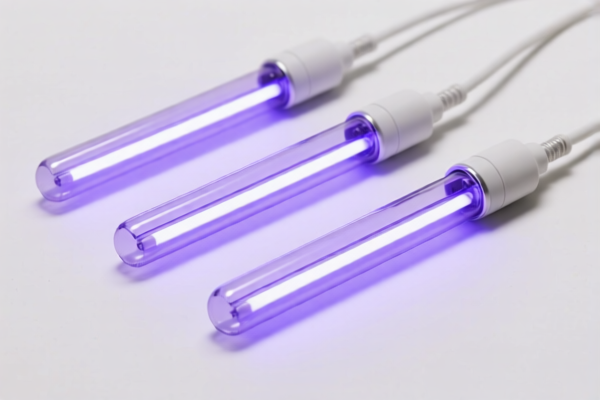

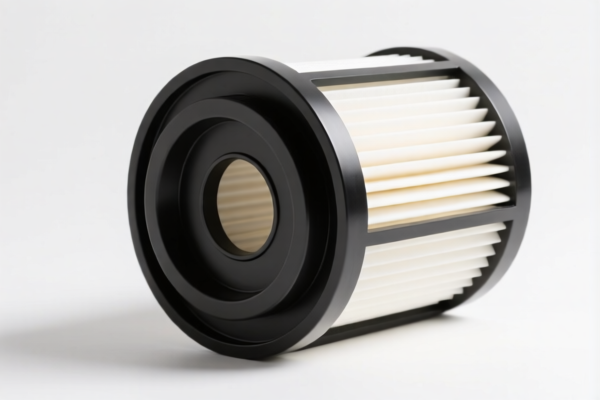
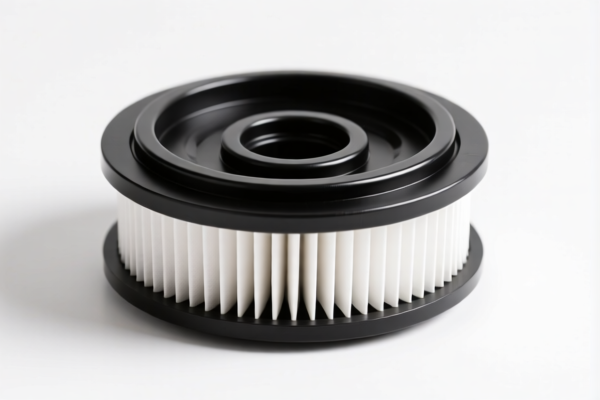
AI Analysis
☀️ UV Filter (Sunscreen & Sun Care Preparations)
🌐 Global HS Code Reference & Customs Clearance Guide | 2026 Tax Policy Breakdown | Expert Compliance Strategy
📌 I. Product Definition & Classification: Do You Understand "UV Filter"?
UV Filters (commonly known as Sunscreen, Sun tan preparations, or Skin Care Preparations) are chemical or biological agents designed to absorb or reflect ultraviolet radiation, protecting the skin from sunburn and aging. In international trade, these are strictly categorized under Chapter 33 (Essential Oils & Resins; Perfumery, Cosmetic or Toilet Preparations) or Chapter 32 (Tanning Extracts; Dyes & Pigments) depending on their primary function and chemical composition.
Key Distinctions for Customs: 1. Finished Cosmetic/Sun Care Product: A formulated cream, lotion, spray, or powder intended for direct human skin application (e.g., SPF 50 Sunscreen Lotion). * Classification: Chapter 33 (Specifically 33.04). 2. Raw Chemical Intermediate: A pure synthetic organic coloring matter or chemical compound (e.g., Benzoxazole, Benzophenone derivatives) sold as a raw material for manufacturing sunscreen, not sold as a finished skin preparation. * Classification: Chapter 32 (Dyes & Pigments) or Chapter 38 (Miscellaneous Chemical Products).
⚠️ Critical Classification Point:
- If the product is "Prepared for the care of the skin (including sunscreen)" → It belongs to 33.04. - If the product is a "Synthetic organic coloring matter" or "Chemical preparation" (pure active ingredient) → It belongs to 32.04 or 38.24. - Powders: Whether compressed or loose, if intended as a cosmetic finish/sun protection, they fall under 33.04.
📦 II. HS Code Classification Details (Based on Provided Data)
Based on the specific dataset provided, here is the authoritative mapping of "UV Filter" products to their HS Codes and tax implications.
| HS Code | Product Description (Scope) | Applicable Scenario | Tax Rate (Total) |
|---|---|---|---|
| 3304.99.50.00 | Beauty or make-up preparations; care of skin (other than medicaments), including sunscreen; manicure/pedicure preparations. (Other: Other: Other) |
Liquid/Lotion/Spray Sunscreens: Finished skincare products, face/body sunscreens, tanning oils, not classified under specific powders or foundations. | 25.0% |
| 3304.91.00.50 | Beauty or make-up preparations; care of skin (including sunscreen); manicure/pedicure preparations. (Other: Powders, whether or not compressed) |
Sun Care Powders: Loose face powders with SPF, pressed powder compacts for sun protection, setting powders with UV filters. | 25.0% |
| 3824.99.29.00 | Prepared binders for foundry molds; chemical products... (Mixtures containing ≥5% aromatic/modified aromatic substances) |
Chemical Mixtures: Sunscreen raw material mixtures or specialized chemical formulations not intended as direct cosmetic "preparations" but as industrial/chemical intermediates containing specific aromatic compounds. | 31.5% |
| 3824.99.93.97 | Prepared binders; chemical products... (Other: Other: Other: Other Other) |
Generic Chemical Preparations: Broad-spectrum chemical preparations, including certain UV filter base mixtures or proprietary chemical blends not fitting specific cosmetic categories. | 30.0% |
| 3204.90.00.00 | Synthetic organic coloring matter; preparations based on synthetic organic coloring matter; synthetic organic products used as fluorescent brightening agents... (Other) |
Pure Dyes/Colorants: Synthetic UV absorbers sold primarily as coloring matter or brightening agents, not formulated as a "sunscreen preparation" for skin. | 0.0% |
| 3204.20.40.00 | Synthetic organic coloring matter... (Synthetic organic products used as fluorescent brightening agents: Benzoxazol) |
Specific Chemical Raw Material: Pure Benzoxazole or similar compounds used as fluorescent brighteners or UV-absorbing chemical precursors. | 0.0% |
🔍 Key Insight:
- Cosmetic Sunscreens (33.04) attract a 25% tax due to "Add-on Tariffs" (likely US Section 301 or similar trade sanctions). - Chemical Intermediates (32.04) attract 0% tax, but this applies only if the product is sold as a raw chemical/dye, NOT as a finished skincare product. - Chemical Mixtures (38.24) face ~30-31.5% tax, often triggered by "aromatic substance" thresholds.
💰 III. 2026 Tax Rate Breakdown (Detailed Analysis)
✅ Applicable Market: China/Global Export (Based on data structure: "Base Tariff + Additional Tariff")
✅ Origin: Assumed to be subject to standard trade sanctions (e.g., US/China trade context)
✅ Effective Time: Current/2026 Projection
🎯 1. 3304.99.50.00 & 3304.91.00.50 — Finished Sunscreen & Sun Care (High Risk)
These codes cover the vast majority of consumer-facing UV filters.
| Item | Content |
|---|---|
| Base Tariff | 0.0% (ad valorem) |
| Additional Tariff (Section 301/Sanctions) | +25.0% |
| Total Tariff | 25.0% |
| Tax Calculation | CIF Value × 25% |
| De Minimis Exemption | ❌ NO (High-value commercial goods do not qualify for low-value exemption) |
| Legal Basis | Derived from "Add-on Tariff" policy (e.g., US Section 301 on Chinese goods) |
📌 Explanation:
- Even though the "Base Tariff" is 0% (free trade agreement friendly), the 25% Add-on Tariff makes these products expensive to import into protected markets. - Crucial: Do not try to declare "Sunscreen" under 32.04 (Dye) to avoid tax. Customs will reject this if the product is packaged for direct skin use.
🎯 2. 3824.99.29.00 & 3824.99.93.97 — Chemical Mixtures (Medium-High Risk)
Applies to industrial-grade UV filter mixtures or non-cosmetic chemical preparations.
| Item | Content |
|---|---|
| Base Tariff | 5.0% – 6.5% |
| Additional Tariff | +25.0% |
| Total Tariff | 30.0% – 31.5% |
| Tax Calculation | CIF Value × (Base + 25%) |
| Trigger Condition | Often triggered by the presence of 5% or more aromatic substances in the mixture. |
📌 Explanation:
- If your UV filter is a "chemical mixture" rather than a pure cosmetic, the base tariff rises to 5-6.5%, then the 25% surcharge is added. - Risk: High complexity in declaring "aromatic substance" content. Misdeclaration can lead to severe penalties.
🎯 3. 3204.90.00.00 & 3204.20.40.00 — Pure Chemical Raw Materials (Zero Tax)
Applies ONLY to pure synthetic dyes, brighteners (like Benzoxazol), or raw chemical intermediates.
| Item | Content |
|---|---|
| Base Tariff | 0.0% |
| Additional Tariff | 0.0% |
| Total Tariff | 0.0% |
| Tax Calculation | $0 |
| Condition | Product must be sold as raw material, dye, or chemical intermediate, NOT as "Sunscreen" or "Skin Care". |
📌 Explanation:
- This is the "Golden Path" for raw material suppliers. - Benzoxazol (3204.20.40.00) is a specific example of a fluorescent brightener/raw chemical that escapes the 25% surcharge. - Warning: If you import this for the purpose of making cosmetics, Customs may reclassify it to 33.04 and levy the 25% tax + penalties.
🛠️ IV. Customs Clearance Practical Advice (Avoiding Pitfalls)
✅ 1. Preparation Checklist (Must-Haves)
| Document | Requirement | Why It Matters |
|---|---|---|
| MSDS / Safety Data Sheet | ✔️ Mandatory | Must clearly state "Sunscreen Preparation" vs. "Chemical Intermediate". |
| Composition Formula | ✔️ Critical | Must show % of aromatic substances (for 38.24 classification) or active UV filter ingredients. |
| Product Labeling | ✔️ Must match HS | Label should NOT say "Sunscreen" if declaring as "Dye" (32.04). |
| Usage Intent Statement | ✔️ Essential | Declaration of "For Manufacturing" vs. "For Retail Consumer Use". |
| Third-Party Certificates | ✔️ FDA, CPNP, etc. | Proves if the product is a finished cosmetic. |
✅ 2. Declaration Strategy (The "Do's and Don'ts")
| Scenario | Correct Declaration | DANGEROUS Declaration |
|---|---|---|
| Finished Sunscreen Lotion | 3304.99.50.00 (Beauty/Skin Care) | Declaring as "Chemical Mixture" (38.24) → Penalty + 25% Tax |
| Benzoxazole Powder (Raw) | 3204.20.40.00 (Fluorescent Brightener) | Declaring as "Sunscreen" (33.04) → Unnecessary 25% Tax |
| Sunscreen Mix (Industrial) | 3824.99.29.00 (if >5% aromatic) | Declaring as "Dye" (32.04) → Audit Trigger |
| UV Filter Cream (Retail) | 3304.91.00.50 (if Powdered) | Declaring as "Liquid" (3304.99) → No tax diff, but wrong data |
🔥 Golden Rule:
"Function Dictates HS Code"
- If the product is ready to use on skin → 33.04 (Pay 25%). - If the product is a raw chemical for factories → 32.04 (Pay 0%) OR 38.24 (Pay ~30%).
✅ 3. Special Handling for "Benzoxazol" & Brighteners
- Product: Benzoxazol (3204.20.40.00).
- Strategy: Ensure the Bill of Lading and Invoice describe it as "Synthetic Organic Coloring Matter" or "Fluorescent Brightening Agent," NOT "Sunscreen" or "UV Blocker."
- Why: Customs officers link "Sunscreen" keywords directly to 33.04. Using technical chemical names keeps you in the 32.04 bracket (0% tax).
🌍 V. Global Market Comparison (2026 Outlook)
| Market | Recommended HS Code | Estimated Duty | Key Risk |
|---|---|---|---|
| 🇺🇸 USA | 3304.99.50.00 | 25% (Section 301) | High scrutiny on "Sunscreen" labeling. |
| 🇪🇺 EU | 3304.99.50.00 | 2.5% - 4.5% | No 25% surcharge, but strict safety regs (CPNP). |
| 🇨🇳 China | 3304.99.50.00 | 5% - 15% (VAT + Duty) | Depends on cosmetic registration status. |
| 🇦🇺 Australia | 3304.99.50.00 | 5% - 10% | Requires APVMA approval. |
📌 Conclusion:
- USA is the only market in this dataset applying the heavy 25% surcharge to finished sunscreens (33.04). - Raw Materials (32.04) are tax-free globally, but the "End Use" must be verifiable.
📌 VI. Common Errors & "Red Flags"
❌ Error 1: "Sunscreen" Label on Chemical HS Code
👉 Consequence: Customs reclassifies to 33.04 → Back-tax of 25% + Fines.
✅ Fix: Use technical names (e.g., "Benzoxazol") for raw materials; reserve "Sunscreen" for 33.04.
❌ Error 2: Declaring Finished Cream as "Powder"
👉 Consequence: If the product is a liquid cream but declared as "Powder" (3304.91.00.50), customs may flag it for misrepresentation.
✅ Fix: Match physical state (Liquid/Lotion vs. Powder) exactly to the HS description.
❌ Error 3: Ignoring "Aromatic Substance" Thresholds
👉 Consequence: If a mixture has >5% aromatic compounds, it might be forced into 38.24 (31.5% tax) instead of 33.04 (25% tax) if not a finished cosmetic.
✅ Fix: Calculate aromatic content strictly before declaring 38.24.
🎯 VII. Final Verdict: Optimize Your Tax Strategy
🎯 Summary Strategy: 1. For Finished Sunscreens (Creams, Sprays): Accept the 25% tax (33.04) but ensure packaging and marketing are compliant. Do not try to hide as chemicals. 2. For Raw Chemicals (Benzoxazol, Dyes): Declare under 32.04 to get 0% tax. Ensure invoices do not mention "Skin Care" or "SPF." 3. For Industrial Mixtures: Verify aromatic content. If >5%, expect 31.5% (38.24).
🔹 Pro Tip:
"If you sell Benzoxazol, call it a 'Fluorescent Brightener'. If you sell Lotion, call it 'Sunscreen'. Mixing these terms = Audit."
✨ Professional Customs Brokerage is Key!
💼 Every dollar saved on classification is a profit earned.
🚀 Contact your customs agent to verify the "End-Use" of your UV Filter batch before shipping!
Customer Reviews
About HS Code Classification
The Harmonized System (HS) is an internationally standardized nomenclature developed by the World Customs Organization (WCO) to classify traded products. Over 200 countries use the HS system as the basis for customs tariffs, trade statistics, and import/export regulations.
Each HS code follows a hierarchical structure:
- Chapter (2 digits) — Broad category of goods (e.g., Chapter 84: Machinery and Mechanical Appliances)
- Heading (4 digits) — More specific grouping within the chapter
- Subheading (6 digits) — Internationally standardized breakdown, used by all WCO member countries
- National subdivisions (8-10 digits) — Country-specific extensions for further classification, such as US HTSUS 10-digit codes
Correct HS code classification is essential for smooth customs clearance, accurate duty payment, and compliance with trade regulations. Misclassification can lead to customs delays, overpayment of duties, or penalties.
When importing from CN to US, the applicable tariff rates may include:
- Most-Favored-Nation (MFN) rate — The standard duty rate applied to WTO members
- General rate — Applied to countries without trade agreements
- Trade remedy duties — Additional tariffs such as Section 301 (anti-dumping), Section 232 (national security), or countervailing duties
The information provided on this page is for reference purposes only. For official classification, please consult with your local customs authority or a licensed customs broker.