UV Protection Flexible Polyester Film
CN → US| HS Code | Tariff Rate | Origin | Destination | Doc |
|---|---|---|---|---|
| 3920992000 | 39.2% | CN | US | Official Doc |
| 3920591000 | 41.0% | CN | US | Official Doc |
| 3919905060 | 40.8% | CN | US | Official Doc |
| 3919905040 | 40.8% | CN | US | Official Doc |
Product Images
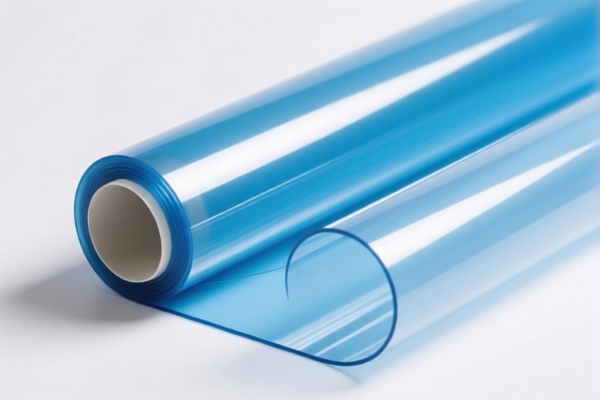
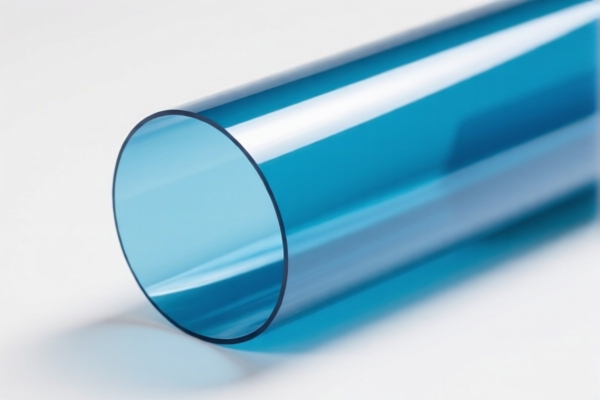
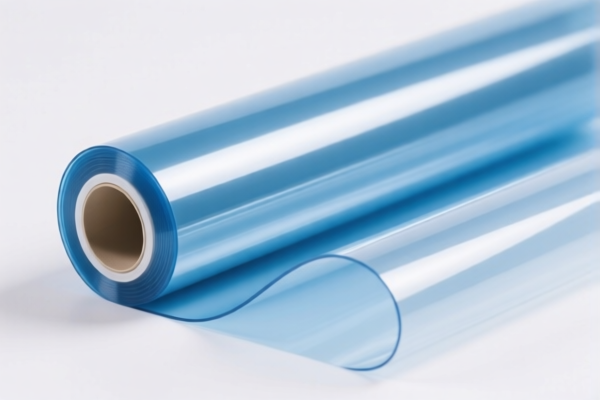
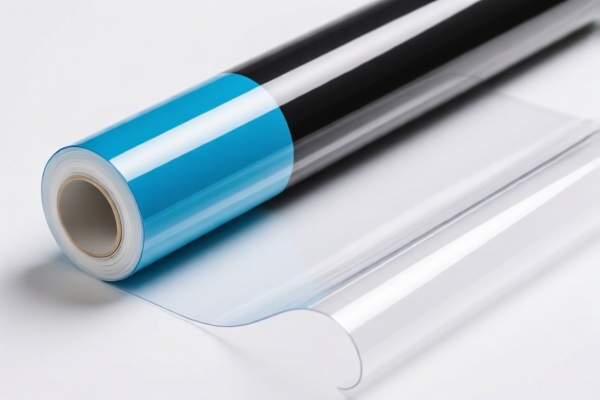
AI Analysis
🛡️ UV Protection Flexible Polyester Film
🌐 HS Code Reference & Customs Clearance Guide | 2026 Latest Tariff Analysis | Professional Clearance Strategy
📌 I. Product Definition and Classification: Do You Really Understand "UV Protection Polyester Film"?
Flexible polyester film with UV protection is a high-performance functional material widely used in automotive tinting, architectural glazing, solar energy shielding, and industrial packaging. In international trade, its classification hinges on two critical factors:
Material Composition: Polyester (a type of plastic/polymer).
Physical Form: Flexible film, sheet, or strip (non-foamed, non-reinforced).
⚠️ Key Classification Point:
- If the product is a flexible plastic film intended for wrapping, shielding, or general industrial use → It falls under Chapter 39 (Plastics and Articles Thereof).
- Specific subheadings depend on whether it is self-adhesive (sticky backing) or non-adhesive.
- Note: "Polyester" in trade context is classified as "Other plastics" under Heading 3901–3914. Since polyester films are typically flexible sheets, they map to 3920 (Plastics, non-cellular, plates, sheets, film, foil, and strip) or 3919 (Self-adhesive plastics, if applicable).
📦 II. HS Code Classification Details (2026 Latest Tariff Authoritative Comparison)
Based on the provided data, here are the four most relevant HS Codes with their matching logic and tax implications:
| HS Code | Product Description | Matching Logic (Why it fits) | Total Tax Rate (US Import from CN) |
|---|---|---|---|
3920.99.20.00 |
Other plates, sheets, film, foil, and strip, of other plastics | Match Basis: Product name explicitly contains "Plastic" material and "Film" form, matching the definition of "non-cellular plastics" and "flexible films, strips, and sheets." | 39.2% |
3920.59.10.00 |
Plates, sheets, film, foil, and strip, of acrylic polymers | Match Basis: Form is 'film', material is 'plastic' (commonly inferred as acrylic or similar polymer for UV films), purpose is 'UV protection'. Fully complies with 'flexible' and 'other' classification requirements for plastic plates/sheets. | 41.0% |
3919.90.50.60 |
Self-adhesive plates, sheets, film, foil, tape, strip and other flat shapes, of plastics | Match Basis: Material is "plastic", form is "film", perfectly matching HSCODE definition of "self-adhesive plastics... films... and other flat shapes" in material and form. | 40.8% |
3919.90.50.40 |
Self-adhesive plates, sheets, film, foil, tape, strip and other flat shapes, of plastics | Match Basis: Material is "plastic", form is "film", conforms to the description of plastic flat shapes (films) in the classification, no material conflict. | 40.8% |
🔍 Key Insight:
- The core distinction lies in Adhesiveness.
- Non-Adhesive Films → Use 3920 codes.
- Self-Adhesive Films (e.g., window tint rolls with backing) → Use 3919 codes.
- Polyester vs. Acrylic: If the film is specifically acrylic-based (common in some UV films),3920.59.10.00may apply. If it is pure polyester,3920.99.20.00is the general "other plastic" fallback.
💰 III. 2026 Latest Tariff Rate Breakdown (Including Surcharges, Policy Surcharges)
✅ Applicable Country: United States (US)
✅ Country of Origin: China (CN)
✅ Effective Date: November 10, 2025 onwards (including subsequent imports)
🎯 1. 3920.99.20.00 —— Other Plastic Films (Non-Cellular)
| Item | Content |
|---|---|
| Base Tariff | 4.2% |
| Section 301 Surcharge | +25.0% |
| IEEPA Section 122 Surcharge | +10.0% |
| Total Tax Rate | 39.2% |
| Tax Calculation | CIF Value × 39.2% |
| De Minimis Exemption Available? | ❌ NO (deny_de_minimis) |
| Legal Basis Path | USITC:3920.99.20.00 → FOOTNOTE:301 → IEEPA:122 |
📌 Explanation:
- "Base 4.2%": Standard Most Favored Nation (MFN) rate for general plastic films.
- "+25%": Additional tariff under Section 301 of the Trade Act against Chinese goods.
- "+10%": Additional tariff under IEEPA Section 122 (often applied to specific strategic materials or as a broader surcharge depending on current enforcement).
- Total 39.2%: A significant cost burden. Must be factored into pricing strategies.
🎯 2. 3920.59.10.00 —— Acrylic Polymer Films
| Item | Content |
|---|---|
| Base Tariff | 6.0% |
| Section 301 Surcharge | +25.0% |
| IEEPA Section 122 Surcharge | +10.0% |
| Total Tax Rate | 41.0% |
| Tax Calculation | CIF Value × 41.0% |
| De Minimis Exemption Available? | ❌ NO |
| Legal Basis Path | USITC:3920.59.10.00 → FOOTNOTE:301 → IEEPA:122 |
📌 Note:
- Acrylic films often have a slightly higher base rate (6.0% vs 4.2%) due to specific chemical composition classifications.
- However, the total tax burden is the highest among the options (41.0%). Only use if the material is definitively acrylic.
🎯 3. 3919.90.50.60 & 3919.90.50.40 —— Self-Adhesive Plastic Films
| Item | Content |
|---|---|
| Base Tariff | 5.8% |
| Section 301 Surcharge | +25.0% |
| IEEPA Section 122 Surcharge | +10.0% |
| Total Tax Rate | 40.8% |
| Tax Calculation | CIF Value × 40.8% |
| De Minimis Exemption Available? | ❌ NO |
| Legal Basis Path | USITC:3919.90.50.xx → FOOTNOTE:301 → IEEPA:122 |
📌 Note:
- Self-adhesive films (3919) have a base rate of 5.8%, which is higher than non-adhesive films (4.2%) but lower than acrylic films (6.0%).
- The total rate (40.8%) is slightly lower than3920.59.10.00but higher than3920.99.20.00.
- Critical Distinction: If your UV film has a sticky backing (like window tint rolls), you must use a3919code. Misclassifying self-adhesive film as non-adhesive (3920) can lead to customs penalties.
🛠️ IV. Customs Clearance Practical Advice (Battle-Tested Pitfall Guide)
✅ 1. Required Documentation Checklist (Missing Items = Delay/Reject)
| Document | Required? | Description |
|---|---|---|
| ✅ Product Spec Sheet | ✔️ | Must specify: Material (Polyester/Acrylic), Thickness, UV Blockage %, Adhesive Type (if any). |
| ✅ Commercial Invoice | ✔️ | Clearly state: "Flexible UV Protection Polyester Film", HS Code, CIF Value. |
| ✅ Packing List | ✔️ | Detail net/gross weight, dimensions, and number of rolls/sheets. |
| ✅ Material Safety Data Sheet (MSDS) | ✔️ | Proves non-hazardous nature of the plastic. |
| ✅ Certificate of Origin (CO) | ✔️ | Essential for verifying Chinese origin (triggers tariffs). |
| ✅ Product Photos | ✔️ | Show roll structure, label, and adhesive backing (if applicable). |
✅ 2. Declaration Tips (Key Mantra)
🔥 "Adhesive or Not? That is the Question!"
| Scenario | Correct HS Code | Mistake to Avoid |
|---|---|---|
| Non-Adhesive Roll (e.g., raw polyester film) | 3920.99.20.00 |
❌ Don't use 3919 (implies sticky) |
| Self-Adhesive Roll (e.g., window tint with liner) | 3919.90.50.40 or .60 |
❌ Don't use 3920 (wrong form) |
| Acrylic-Based UV Film | 3920.59.10.00 |
❌ Don't use generic 3920.99 if specifically acrylic |
| Composite Materials | Depends on Principal Feature | ❌ Don't assume plastic if glass/fabric is involved |
✅ 3. Special Situation Handling
| Situation | Handling Advice |
|---|---|
| OEM Customization | Provide client orders + design specs to prove end-use, but HS Code depends on physical properties, not end-use. |
| Laminated Films | If layered with glue/other materials, the classification may change. Consult customs broker. |
| Re-Export from Third Country | If shipped via Vietnam/Malaysia, ensure no substantial transformation occurred in China. If yes, origin remains CN. |
| De Minimis (Section 321) | ❌ NOT APPLICABLE. All four codes listed have deny_de_minimis. Even small packages are subject to full tariff. |
🌍 V. Global Market Clearance Comparison (2026 Latest)
| Country/Region | Recommended HS Code | Tariff Rate (CN Origin) | Certification Requirements | Notes |
|---|---|---|---|---|
| 🇺🇸 USA | 3920.99.20.00 (Non-Adhesive) |
39.2% | None specific | High tariff due to 301/122 |
| 🇺🇸 USA | 3919.90.50.40 (Self-Adhesive) |
40.8% | None specific | Slightly higher base rate |
| 🇨🇳 China | 3920.99.20.00 |
6.0% (Import) | RoHS (if electronic) | Low import tax |
| 🇪🇺 EU | 3920.59.10.00 |
6.5% | REACH | No Section 301 equivalent |
| 🇦🇺 Australia | 3920.99.20.00 |
5.0% | None | Competitive market |
| 🇯🇵 Japan | 3920.99.20.00 |
4.0% | JIS Standard | Stable demand |
📌 Conclusion:
- USA is the most expensive market for this product due to aggressive surcharges.
- EU and Asia-Pacific offer significantly lower tariff barriers, making them more attractive for cost-sensitive shipments.
📌 VI. Common Mistakes & Pitfall Guide (Blood-Stained Lessons)
❌ Mistake 1: Classifying self-adhesive film as non-adhesive (3920 instead of 3919)
👉 Consequence: Customs rejection, penalty for misclassification, potential seizure.
❌ Mistake 2: Ignoring the "Plastic" definition
👉 Consequence: If the film contains >50% glass fiber or metal, it may not be Chapter 39. Must verify composition.
❌ Mistake 3: Assuming De Minimis ($800) applies
👉 Consequence: Even small samples (e.g., $100) are subject to ~40% tax plus processing fees. Never rely on Section 321 for Chinese plastic films.
❌ Mistake 4: Using generic descriptions like "Plastic Sheet"
👉 Consequence: Lack of detail leads to delays. Specify "UV Protection," "Flexible," "Polyester/Acrylic."
✅ Correct Practice:
"UV-Blocking Flexible Polyester Film, Non-Adhesive, 50 Micron Thickness, Industrial Packaging Use, Model UV-50, Certified by SGS"
🎯 VII. Conclusion: Professional Declaration, Save Time, Reduce Costs!
🎯 Remember the Mantra:
🔹 "Check Adhesive, Check Material."
🔹 "Polyester → 3920, Self-Adhesive → 3919."
🔹 "No De Minimis, No Exemption, Plan for 40% Tax."
📌 Pro Tip:
If your film is originated in Vietnam, Mexico, Thailand, or Malaysia, you MAY qualify for IEEPA/Surcharge Exemptions, reducing tariffs to 0%~6%.
Recommendation: Obtain a Certificate of Origin from the third country to prove non-Chinese origin. Apply for an Advance Ruling from US Customs (CBP) to confirm HS Code accuracy before shipment.
📣 Immediate Action:
📞 Contact a professional customs broker + Provide product samples + Apply for HS Code Pre-Ruling
🚀 Ensure your UV Film clears customs smoothly, reduces costs, and maximizes profit!
✨ Professional Clearance Starts with Accurate Classification!
💼 Every cent of your cost deserves precise calculation!
Customer Reviews
About HS Code Classification
The Harmonized System (HS) is an internationally standardized nomenclature developed by the World Customs Organization (WCO) to classify traded products. Over 200 countries use the HS system as the basis for customs tariffs, trade statistics, and import/export regulations.
Each HS code follows a hierarchical structure:
- Chapter (2 digits) — Broad category of goods (e.g., Chapter 84: Machinery and Mechanical Appliances)
- Heading (4 digits) — More specific grouping within the chapter
- Subheading (6 digits) — Internationally standardized breakdown, used by all WCO member countries
- National subdivisions (8-10 digits) — Country-specific extensions for further classification, such as US HTSUS 10-digit codes
Correct HS code classification is essential for smooth customs clearance, accurate duty payment, and compliance with trade regulations. Misclassification can lead to customs delays, overpayment of duties, or penalties.
When importing from CN to US, the applicable tariff rates may include:
- Most-Favored-Nation (MFN) rate — The standard duty rate applied to WTO members
- General rate — Applied to countries without trade agreements
- Trade remedy duties — Additional tariffs such as Section 301 (anti-dumping), Section 232 (national security), or countervailing duties
The information provided on this page is for reference purposes only. For official classification, please consult with your local customs authority or a licensed customs broker.