UV Protection Sunshade Film
CN → US| HS Code | Tariff Rate | Origin | Destination | Doc |
|---|---|---|---|---|
| 7607196000 | 13.0% | CN | US | Official Doc |
| 7607205000 | 17.5% | CN | US | Official Doc |
| 3921905050 | 39.8% | CN | US | Official Doc |
| 5911900080 | 38.8% | CN | US | Official Doc |
| 3921904010 | 39.2% | CN | US | Official Doc |
Product Images
AI Analysis
☀️ UV Protection Sunshade Film (Shading Films)
🌐 HS Code Reference & Customs Clearance Guide | 2026 Latest Tariff Analysis | Professional Clearance Strategy
📌 I. Product Definition & Classification: What Exactly is a "Sunshade Film"?
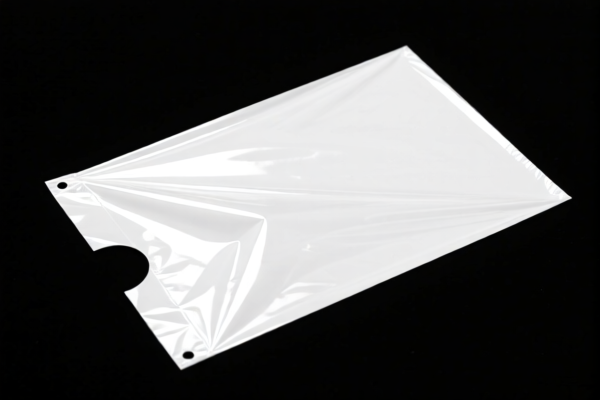
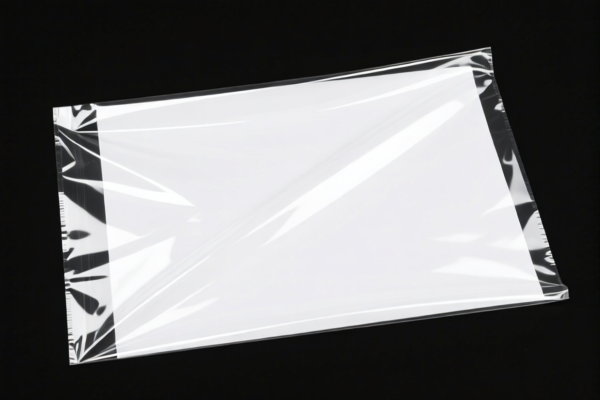
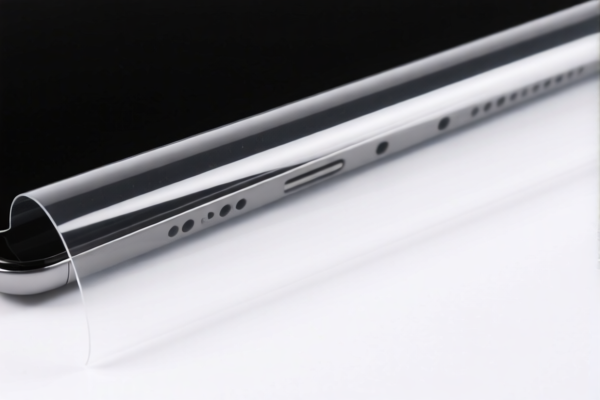
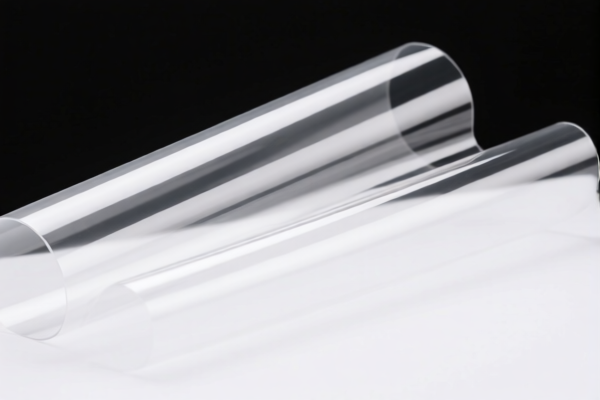
UV Protection Sunshade Film (often referred to in trade as "Shading Film," "Peel Film," or "Protective Film") is primarily used in industrial, automotive, or construction applications to block UV rays, provide privacy, or protect surfaces during manufacturing/construction.
In international trade, its classification is highly sensitive to: 1. Material Composition (e.g., Polyethylene/PE, Polyester/PET, or Aluminum-coated). 2. Function (Pure shading vs. Protective masking during painting/processing). 3. Structure (Single-layer plastic film vs. Composite film with metal/aluminum layers).
⚠️ Critical Distinction:
- If the film contains Aluminum or Metal Foil → It often falls under Chapter 76 (Aluminum Articles) or specific composite categories.
- If it is Pure Plastic (PE/PET) → It falls under Chapter 39 (Plastics) or Chapter 76/59 depending on thickness and structure.
- Misclassification Risk: Declaring a metal-composite film as pure plastic (Chapter 39) triggers massive tariff penalties due to "Additional Duties."
📦 II. HS Code Classification Details (2026 Latest Tariff Alignment)
Based on the provided data, here are the 5 most likely HS Codes for UV Protection Sunshade Films, ranked by classification logic:
| HS Code | Product Description | Material/Structure Logic | Key Characteristics |
|---|---|---|---|
| 7607.19.60.00 | Aluminum Foil or Aluminum Strip, Plated/Clad, in Rolls (Other) | Aluminum + Plastic Composite | Contains aluminum layer; classified under "Aluminum" category. |
| 7607.20.50.00 | Aluminum Foil or Aluminum Strip, Plated/Clad, in Rolls (Other) | Aluminum + Plastic Composite (Flexible) | Flexible aluminum-based film; "Other" fallback for aluminum composites. |
| 3921.90.50.50 | Other Plates, Sheets, Film, Foil and Strip, of Plastics | Pure Plastic (PE/PET) | Pure plastic film; no metal content; "Other" category for plastic films. |
| 5911.90.00.80 | Textile or Plastic Products, Technical/Industrial Use | Technical/Industrial Film | Used for technical/industrial shading/masking; "Other" fallback for industrial textiles/polymers. |
| 3921.90.40.10 | Other Plates, Sheets, Film, Foil and Strip, of Plastics | Pure Plastic (PE/PET) - Specific | Specific sub-category for plastic films; likely higher duty due to specific listing. |
🔍 Key Takeaway:
- Aluminum-based films (7607.x) generally have lower base duties but are subject to specific trade measures.
- Pure plastic films (3921.x) often face higher base duties and are heavily impacted by Section 301 Additional Duties and IEEPA taxes.
- Industrial use classification (5911.x) may apply if the film is primarily for masking/protection rather than just shading.
💰 III. 2026 Latest Tariff Rate Breakdown (Including Additional Duties)
✅ Applicable Country: United States (US)
✅ Origin: China (CN)
✅ Effective Date: November 10, 2025 onwards (for subsequent imports)
🎯 1. 7607.19.60.00 – Aluminum Foil/Strip (Composite)
| Item | Detail |
|---|---|
| Base Duty Rate | 3.0% |
| Section 301 Additional Duty | 0.0% |
| 122 Section Tax (IEEPA) | 10.0% |
| Total Effective Rate | 13.0% |
| Tax Calculation | CIF Value × 13.0% |
| De Minimis Exemption | ❌ Not Eligible (Deny de minimis) |
| Legal Basis Path | USITC:7607.19.60.00 → 122 Section: 10% |
📌 Explanation:
- This is the most tariff-efficient option if your film contains an aluminum layer.
- Note: The 0% Section 301 duty is a significant advantage. However, you must prove the aluminum content to avoid reclassification.
🎯 2. 7607.20.50.00 – Aluminum Foil/Strip (Flexible/Other)
| Item | Detail |
|---|---|
| Base Duty Rate | 0.0% |
| Section 301 Additional Duty | 7.5% |
| 122 Section Tax (IEEPA) | 10.0% |
| Total Effective Rate | 17.5% |
| Tax Calculation | CIF Value × 17.5% |
| De Minimis Exemption | ❌ Not Eligible (Deny de minimis) |
| Legal Basis Path | USITC:7607.20.50.00 → 122 Section: 10% |
📌 Explanation:
- Slightly higher than the previous code due to a 7.5% Section 301 duty.
- Still significantly lower than pure plastic alternatives. Ideal for flexible aluminum-composite shading films.
🎯 3. 3921.90.50.50 – Plastic Film (Other)
| Item | Detail |
|---|---|
| Base Duty Rate | 4.8% |
| Section 301 Additional Duty | 25.0% |
| 122 Section Tax (IEEPA) | 10.0% |
| Total Effective Rate | 39.8% |
| Tax Calculation | CIF Value × 39.8% |
| De Minimis Exemption | ❌ Not Eligible (Deny de minimis) |
| Legal Basis Path | USITC:3921.90.50.50 → Section 301: 25% → 122 Section: 10% |
📌 Explanation:
- High-risk classification. If your film is pure plastic (PE/PET), this is likely the correct code.
- Warning: The 25% Section 301 duty makes this very expensive. Only use if no aluminum content exists.
🎯 4. 5911.90.00.80 – Technical/Industrial Textile or Polymer Product
| Item | Detail |
|---|---|
| Base Duty Rate | 3.8% |
| Section 301 Additional Duty | 25.0% |
| 122 Section Tax (IEEPA) | 10.0% |
| Total Effective Rate | 38.8% |
| Tax Calculation | CIF Value × 38.8% |
| De Minimis Exemption | ❌ Not Eligible (Deny de minimis) |
| Legal Basis Path | USITC:5911.90.00.80 → Section 301: 25% → 122 Section: 10% |
📌 Explanation:
- Applies if the film is considered a "technical product" for industrial masking/shading.
- Similar cost to pure plastic films. Use only if the product’s primary function is industrial protection/masking rather than simple shading.
🎯 5. 3921.90.40.10 – Plastic Film (Specific Sub-category)
| Item | Detail |
|---|---|
| Base Duty Rate | 4.2% |
| Section 301 Additional Duty | 25.0% |
| 122 Section Tax (IEEPA) | 10.0% |
| Total Effective Rate | 39.2% |
| Tax Calculation | CIF Value × 39.2% |
| De Minimis Exemption | ❌ Not Eligible (Deny de minimis) |
| Legal Basis Path | USITC:3921.90.40.10 → Section 301: 25% → 122 Section: 10% |
📌 Explanation:
- Specific sub-category for plastic films.
- Very high total rate. Avoid unless the product strictly fits this narrow definition.
🛠️ IV. Customs Clearance Practical Advice (Pitfall Avoidance Guide)
✅ 1. Preparation Checklist (Essential Documents)
| Document | Required? | Description |
|---|---|---|
| ✅ Product Specification Sheet | ✔️ | Must clearly state material composition (e.g., "90% PE, 10% Aluminum Foil"). |
| ✅ Material Composition Proof | ✔️ | Lab test reports or supplier declarations confirming presence/absence of aluminum/metal. |
| ✅ Product Photos | ✔️ | Clear images showing layers (if composite), packaging, and labeling. |
| ✅ Commercial Invoice | ✔️ | Must match the HS Code description precisely (e.g., "Aluminum-Plastic Composite Shading Film"). |
| ✅ Packing List | ✔️ | Detail weight, dimensions, and unit count. |
| ✅ Third-Party Certification | ✔️ | CE, RoHS, or ASTM standards for UV blocking efficacy (if claimed). |
✅ 2. Declaration Strategy (Key Rules)
🔥 "Material Dictates Code, Composition Determines Cost!"
| Scenario | Recommended HS Code | Reason |
|---|---|---|
| Film has Aluminum Layer | 7607.19.60.00 or 7607.20.50.00 |
Lower base duty, no Section 301 (for .60).00. |
| Pure Plastic Film (PE/PET) | 3921.90.50.50 or 3921.90.40.10 |
Higher duty, subject to Section 301. |
| Industrial Masking Film | 5911.90.00.80 |
If used for protective masking during manufacturing. |
| Misdeclaration (Pure Plastic labeled as Aluminum) | High Risk | Customs will reclassify, impose penalties, and charge back-duties. |
✅ 3. Special Case Handling
| Situation | Recommendation |
|---|---|
| Composite Film (Aluminum + Plastic) | Declare as Aluminum Article (Chapter 76). Provide layer-by-layer composition. This saves 25% in Section 301 duties. |
| Single-Layer Plastic Film | Declare under Chapter 39. Accept the 39.8% total duty. Ensure accurate description to avoid being classified under a higher-rate sub-category. |
| Custom UV-Shading Window Film (Automotive) | May qualify for different HS codes under Chapter 85 or 90 if integrated with electronics. Check specific automotive regulations. |
| Rolls vs. Sheets | Ensure the invoice specifies "in Rolls" if applicable, as some HS codes are roll-specific. |
🌍 V. Global Market Comparison (2026 Latest)
| Country/Region | Recommended HS Code | Total Duty Rate | Key Certification | Remarks |
|---|---|---|---|---|
| 🇺🇸 USA | 7607.19.60.00 |
13.0% | CE, RoHS | Best option if aluminum composite. |
| 🇨🇳 China | 7607.19.60.00 |
~5-10% | N/A | Lower duties, no Section 301. |
| 🇪🇺 EU | 7607.19.60.00 |
~3-5% | CE, REACH | No additional anti-dumping duties typically. |
| 🇦🇺 Australia | 3921.90.50.50 |
~5% | RCM | Lower duties, no Section 301. |
| 🇯🇵 Japan | 3921.90.40.10 |
~0-5% | PSE | Low duties, strict safety standards. |
📌 Conclusion:
- USA is the most expensive market due to Section 301 and IEEPA taxes.
- Aluminum-composite films (Chapter 76) are significantly cheaper to import into the US than pure plastic films (Chapter 39).
- Optimize supply chain: If possible, use aluminum-composite films to reduce US import costs by ~25-27%.
📌 VI. Common Errors & Pitfall Guide (Lessons Learned)
❌ Error 1: Declaring an aluminum-plastic film as "Plastic Film" (3921.x)
👉 Consequence: Customs may reclassify to Chapter 76, or worse, impose retroactive duties if the aluminum content was hidden.
✅ Fix: Disclose material composition accurately.
❌ Error 2: Using generic term "Sunshade Film" without material details
👉 Consequence: Customs cannot determine the correct HS Code → Delay in clearance or higher estimated duties.
✅ Fix: Use specific descriptions: "Aluminum-Plastic Composite Shading Film, 0.1mm thick."
❌ Error 3: Ignoring Section 301 Impact on Plastic Films
👉 Consequence: Budgeting for 10% duty, but facing 40% due to Section 301.
✅ Fix: Factor in 25% Section 301 for pure plastic films in cost calculations.
❌ Error 4: Misdeclaring Industrial Masking Film as Consumer Shading Film
👉 Consequence: Incorrect HS Code, potential penalties.
✅ Fix: Align description with end-use (industrial vs. consumer).
🎯 VII. Conclusion: Smart Classification Saves Money!
🎯 Key Takeaways:
🔹 "Aluminum is Your Friend": If your film contains aluminum, classify under Chapter 76 to save ~25% in Section 301 duties.
🔹 "Plastic is Expensive in the US": Pure plastic films (3921.x) face 39.8% total duty.
🔹 "Be Precise": Vague descriptions lead to delays and higher duties. Provide detailed material compositions.
🔹 "Check Pre-Rulings": Apply for Advance Rulings from CBP to confirm HS Code classification before shipment.
📌 Pro Tip:
If you are importing pure plastic films, consider supply chain diversification (e.g., sourcing from Vietnam or Mexico) to avoid Section 301 and IEEPA taxes.
For aluminum-composite films, ensure layer integrity is maintained during shipping to avoid reclassification issues.
📣 Immediate Action:
📞 Contact Customs Brokers + Provide Material Composition Reports + Apply for HS Code Pre-Ruling.
🚀 Optimize your HS Code to save thousands in duties!
✨ Professional Customs Clearance Starts with Accurate Classification!
💼 Every Percent of Duty Saved is Pure Profit!
Customer Reviews
About HS Code Classification
The Harmonized System (HS) is an internationally standardized nomenclature developed by the World Customs Organization (WCO) to classify traded products. Over 200 countries use the HS system as the basis for customs tariffs, trade statistics, and import/export regulations.
Each HS code follows a hierarchical structure:
- Chapter (2 digits) — Broad category of goods (e.g., Chapter 84: Machinery and Mechanical Appliances)
- Heading (4 digits) — More specific grouping within the chapter
- Subheading (6 digits) — Internationally standardized breakdown, used by all WCO member countries
- National subdivisions (8-10 digits) — Country-specific extensions for further classification, such as US HTSUS 10-digit codes
Correct HS code classification is essential for smooth customs clearance, accurate duty payment, and compliance with trade regulations. Misclassification can lead to customs delays, overpayment of duties, or penalties.
When importing from CN to US, the applicable tariff rates may include:
- Most-Favored-Nation (MFN) rate — The standard duty rate applied to WTO members
- General rate — Applied to countries without trade agreements
- Trade remedy duties — Additional tariffs such as Section 301 (anti-dumping), Section 232 (national security), or countervailing duties
The information provided on this page is for reference purposes only. For official classification, please consult with your local customs authority or a licensed customs broker.