UV Stabilized Petroleum Resin Elastomer
CN → US| HS Code | Tariff Rate | Origin | Destination | Doc |
|---|---|---|---|---|
| 3824994900 | 41.5% | CN | US | Official Doc |
| 3913902090 | 40.8% | CN | US | Official Doc |
| 3913901000 | 35.0% | CN | US | Official Doc |
| 3824995500 | 38.7% | CN | US | Official Doc |
| 3911901000 | 35.0% | CN | US | Official Doc |
Product Images
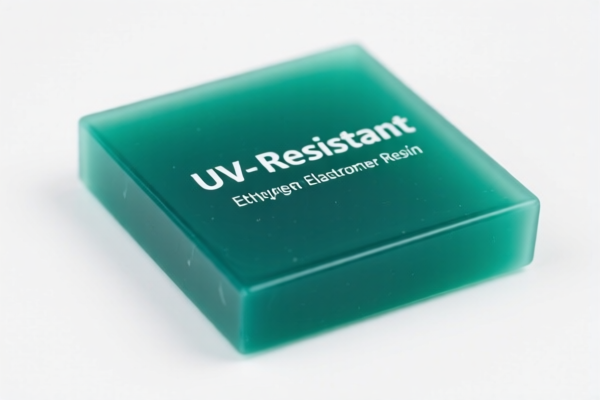



AI Analysis
🧪 UV Stabilized Petroleum Resin Elastomer (USPRE)
🌐 HS Code Reference & Customs Clearance Guide | 2026 Latest Tariff Analysis | Professional Clearance Strategy
📌 I. Product Definition & Classification: What is "UV Stabilized Petroleum Resin Elastomer"?
UV Stabilized Petroleum Resin Elastomer is a specialized chemical compound used primarily in the rubber, plastic, and adhesive industries. Its core characteristics are: 1. Base Material: Derived from petroleum (hydrocarbon-based). 2. Physical Form: Functions as an elastomer (elastic body) or a resinous additive that modifies elasticity. 3. Additive: Contains UV stabilizers to prevent degradation under sunlight, extending the lifespan of end-products like tires, seals, and outdoor plastics.
In international trade, classification depends heavily on whether the product is viewed as a chemical mixture/resin or as a modified natural polymer/elastomer. The following HS Codes represent the most accurate classifications based on 2026 tariff rules.
📦 II. HS Code Classification Details (2026 Latest Tariff Authority)
| HS Code | Product Description | Key Characteristics | Tax Rate (Total) |
|---|---|---|---|
3824.99.49.00 |
Miscellaneous Chemical Products Low-molecular-weight petroleum resin elastomer, hydrocarbon-based material derived from petroleum. |
✅ Material: Hydrocarbons ✅ Source: Petroleum ✅ Form: Low-molecular-weight resin |
41.5% |
3913.90.20.90 |
Miscellaneous Polymers Low-molecular-weight petroleum resin elastomer, natural polymers or modified derivatives, elastomeric form. |
✅ Material: Natural polymer/Modified derivative ✅ Form: Elastomer ✅ Nature: Chemical derivative |
40.8% |
3913.90.10.00 |
Natural Rubber & Derivatives Low-molecular-weight petroleum resin elastomer, natural rubber or chemical derivatives of polymers, primary form elastomer. |
✅ Material: Natural rubber/Chemical derivative ✅ Form: Primary form elastomer ✅ Nature: Rubber-like |
35.0% |
3824.99.55.00 |
Halogenated Hydrocarbon Mixtures Resin-like chemicals, halogenated hydrocarbon mixtures/other chemical products, chemical preparation/mixture. |
✅ Material: Halogenated hydrocarbon mix ✅ Form: Chemical preparation ✅ Nature: Mixture |
38.7% |
3911.90.10.00 |
Petroleum Resins & Derivatives Petroleum resin elastomer plasticizer, material is petroleum resin, attribute is elastomeric. |
✅ Material: Pure Petroleum Resin ✅ Function: Plasticizer ✅ Attribute: Elastomeric |
35.0% |
🔍 Key Distinction Logic: - If the product is primarily a petroleum-derived hydrocarbon mixture without significant natural rubber content →
3824.99.49.00is the safest general classification. - If it is explicitly a modified natural polymer or acts as a chemical derivative of rubber →3913.90.20.90or3913.90.10.00may apply. - If it is a plasticizer specifically made from petroleum resin →3911.90.10.00offers the lowest base duty but requires proof of "plasticizer" function. - If it contains halogenated compounds for UV stabilization →3824.99.55.00is technically precise for halogenated mixtures.
💰 III. 2026 Latest Tariff Rate Breakdown (Including Surcharges & Policy Add-ons)
✅ Applicable Country: United States (US)
✅ Country of Origin: China (CN)
✅ Effective Date: 2025-11-10 onwards (including subsequent imports)
🎯 1. 3824.99.49.00 —— Miscellaneous Chemical Products (Petroleum Hydrocarbon)
| Item | Detail |
|---|---|
| Base Duty Rate | 6.5% (ad valorem) |
| Section 301 Surcharge | +25.0% (Added Tariff) |
| Section 122 Tariff | +10.0% (Specific 122 Clause Tariff) |
| Total Effective Rate | 41.5% |
| Calculation | CIF Value × 41.5% |
| De Minimis Exemption | ❌ Not Eligible (deny_de_minimis) |
| Legal Basis Path | USITC:3824.99.49.00 → Section 301: +25% → Section 122: +10% |
📌 Explanation: - This is the most common classification for general petroleum-based resins. - The 25% Section 301 tariff applies to most Chinese-origin chemical products. - The 10% Section 122 tariff is a specific additional duty often applied to strategic chemicals. - Total burden: 41.5%.
🎯 2. 3913.90.20.90 —— Polymers (Natural Polymer Derivatives)
| Item | Detail |
|---|---|
| Base Duty Rate | 5.8% (ad valorem) |
| Section 301 Surcharge | +25.0% (Added Tariff) |
| Section 122 Tariff | +10.0% (Specific 122 Clause Tariff) |
| Total Effective Rate | 40.8% |
| Calculation | CIF Value × 40.8% |
| De Minimis Exemption | ❌ Not Eligible |
| Legal Basis Path | USITC:3913.90.20.90 → Section 301: +25% → Section 122: +10% |
📌 Note: - Slightly lower than
3824due to a lower base duty (5.8% vs 6.5%). - Requires strong documentation proving the product is a natural polymer derivative or modified rubber.
🎯 3. 3913.90.10.00 —— Natural Rubber & Derivatives (Primary Form)
| Item | Detail |
|---|---|
| Base Duty Rate | 0.0% (ad valorem) |
| Section 301 Surcharge | +25.0% (Added Tariff) |
| Section 122 Tariff | +10.0% (Specific 122 Clause Tariff) |
| Total Effective Rate | 35.0% |
| Calculation | CIF Value × 35.0% |
| De Minimis Exemption | ❌ Not Eligible |
| Legal Basis Path | USITC:3913.90.10.00 → Section 301: +25% → Section 122: +10% |
📌 Key Advantage: - Lowest Total Tax Rate (35.0%) among all options. - High Risk/High Reward: Requires proving the product is a primary form elastomer derived from natural rubber or its chemical derivatives. If Customs disagrees, you face penalties.
🎯 4. 3824.99.55.00 —— Halogenated Hydrocarbon Mixtures
| Item | Detail |
|---|---|
| Base Duty Rate | 3.7% (ad valorem) |
| Section 301 Surcharge | +25.0% (Added Tariff) |
| Section 122 Tariff | +10.0% (Specific 122 Clause Tariff) |
| Total Effective Rate | 38.7% |
| Calculation | CIF Value × 38.7% |
| De Minimis Exemption | ❌ Not Eligible |
| Legal Basis Path | USITC:3824.99.55.00 → Section 301: +25% → Section 122: +10% |
📌 Note: - Applies if the UV stabilization involves halogenated compounds (e.g., chlorinated or brominated stabilizers). - Intermediate tax rate.
🎯 5. 3911.90.10.00 —— Petroleum Resins & Derivatives
| Item | Detail |
|---|---|
| Base Duty Rate | 0.0% (ad valorem) |
| Section 301 Surcharge | +25.0% (Added Tariff) |
| Section 122 Tariff | +10.0% (Specific 122 Clause Tariff) |
| Total Effective Rate | 35.0% |
| Calculation | CIF Value × 35.0% |
| De Minimis Exemption | ❌ Not Eligible |
| Legal Basis Path | USITC:3911.90.10.00 → Section 301: +25% → Section 122: +10% |
📌 Key Advantage: - Tied for Lowest Rate (35.0%). - Must prove the product is strictly a petroleum resin used as a plasticizer or elastomer modifier. - Avoids the "chemical mixture" classification of
3824, which has higher base duties.
🛠️ IV. Customs Clearance Practical Advice (Avoiding Pitfalls)
✅ 1. Documentation Checklist (All Items Mandatory)
| Document | Required | Explanation |
|---|---|---|
| ✅ Technical Data Sheet (TDS) | ✔️ | Must specify molecular weight, base material (petroleum/natural), and UV stabilizer type. |
| ✅ Certificate of Origin (CO) | ✔️ | Must clearly state "Made in China". |
| ✅ Commercial Invoice | ✔️ | Use precise description: "UV Stabilized Petroleum Resin Elastomer, HS Code XXXX, Not for De Minimis". |
| ✅ Formula/Composition Report | ✔️ | Crucial: To justify HS Code 3911 (0% base) vs 3824 (6.5% base). Show % of petroleum resin vs other chemicals. |
| ✅ MSDS (Safety Data Sheet) | ✔️ | Confirms hazardous nature and chemical composition. |
| ✅ Application Statement | ✔️ | Explain end-use: "Used as a plasticizer in rubber tires, not as a standalone product". |
✅ 2. Classification Strategy (Critical Tips)
🔥 "Material First, Function Second, Document Everything!"
| Scenario | Recommended HS Code | Reason |
|---|---|---|
| General Petroleum Resin | 3824.99.49.00 |
Safest if composition is mixed hydrocarbons. Higher base duty but less scrutiny on "elastomer" definition. |
| Proven Plasticizer | 3911.90.10.00 |
Best for Cost (35%). Must prove it is a petroleum resin used to plasticize. |
| Rubber-Like Elastomer | 3913.90.10.00 |
Best for Cost (35%). Must prove it is a primary form elastomer/derivative. |
| Halogen-Based UV Stabilizer | 3824.99.55.00 |
Use only if UV stabilizer is halogenated. |
⚠️ Warning: - Do NOT declare as "Plastic" or "Rubber" generically. - Do NOT use
9013or8528codes (incorrect). - If you claim3911.90.10.00but Customs finds it is a general chemical mixture, you will face back taxes + penalties.
✅ 3. Special Cases
| Situation | Handling Advice |
|---|---|
| OEM Custom Resin | Provide client contract + formula. Proves it is a "specialty chemical" not a generic commodity. |
| Blended with Natural Rubber | If >50% natural rubber derivative, try 3913.90.10.00. If mostly synthetic, stick to 3911 or 3824. |
| Small Quantity (< $800) | ❌ De Minimis Exemption Denied. Section 301 and 122 tariffs apply regardless of value. |
| Transshipment from Vietnam/Mexico | ✅ Opportunity: If reprocessed to change HS Code or origin, may avoid US tariffs. Requires substantial transformation. |
🌍 V. Global Market Comparison (2026 Update)
| Country/Region | Recommended HS Code | Total Tax (China Origin) | Certification | Notes |
|---|---|---|---|---|
| 🇺🇸 USA | 3911.90.10.00 |
35.0% | TSCA Compliance | Highest burden due to 301+122 tariffs. |
| 🇨🇳 China | 3911.90.10.00 |
0% - 5% | CCC (if applicable) | No additional tariffs. |
| 🇪🇺 EU | 3911.90.10.00 |
0% - 6.5% | REACH + SVHC | No Section 301. Lower risk. |
| 🇬🇧 UK | 3911.90.10.00 |
0% - 6.5% | UKCA | Post-Brexit rules apply. |
| 🇮🇳 India | 3911.90.10.00 |
10% - 15% | BIS Certification | Higher base duties than US. |
📌 Conclusion: - USA is the most expensive market due to叠加 tariffs (301 + 122). - EU/UK offer better duty rates but have strict REACH/SVHC chemical regulations. - Optimization Strategy: If selling to the US, ensure the HS Code is as low as possible (
3911or3913) to save 6.5-16.5% compared to general chemicals.
📌 VI. Common Mistakes & Pitfalls (Lessons Learned)
❌ Mistake 1: Classifying as 3901 (Plastics) instead of 3911 (Resins).
👉 Result: Misclassification. 3901 is for primary plastics, while 3911 is for resins/polymers. Penalty for false declaration.
❌ Mistake 2: Ignoring Section 122 Tariff. 👉 Result: Under-declaration. Customs will assess an additional 10% on top of the 25% Section 301.
❌ Mistake 3: Claiming "De Minimis" Exemption for shipments <$800.
👉 Result: Seizure. Items under HS 3824 and 3911 from China are explicitly excluded from Section 321 de minimis relief.
❌ Mistake 4: Using "Petroleum Resin" without specifying "UV Stabilized". 👉 Result: Ambiguity. Must disclose UV stabilizers if they change the chemical nature (e.g., halogenated).
✅ Correct Practice:
"UV Stabilized Petroleum Resin Elastomer, Primary Form, Used as Plasticizer, TSCA Compliant, HS 3911.90.10.00, Origin: China"
🎯 VII. Conclusion: Professional Declaration, Cost Efficiency
🎯 Remember the Mantra:
🔹 "Petroleum Resin = 3911 (35%), General Chemical = 3824 (41.5%)." 🔹 "Section 301 (25%) + Section 122 (10%) = 35% Minimum Tax." 🔹 "De Minimis is Dead for Chinese Chemicals."
📌 Pro Tip:
If your product can be proven to be a natural rubber derivative, use 3913.90.10.00 (35%). If it is a pure petroleum resin plasticizer, use 3911.90.10.00 (35%). Both are 16.5% cheaper than the general 3824 classification.
📣 Immediate Action Required:
📞 Contact your customs broker immediately. 📄 Provide TDS & Formula. 🚀 Apply for Advance Ruling if importing large volumes to mitigate risk.
✨ Precision in Classification Saves Thousands! 💼 Every Percentage Point Matters in 2026 Trade.
Customer Reviews
About HS Code Classification
The Harmonized System (HS) is an internationally standardized nomenclature developed by the World Customs Organization (WCO) to classify traded products. Over 200 countries use the HS system as the basis for customs tariffs, trade statistics, and import/export regulations.
Each HS code follows a hierarchical structure:
- Chapter (2 digits) — Broad category of goods (e.g., Chapter 84: Machinery and Mechanical Appliances)
- Heading (4 digits) — More specific grouping within the chapter
- Subheading (6 digits) — Internationally standardized breakdown, used by all WCO member countries
- National subdivisions (8-10 digits) — Country-specific extensions for further classification, such as US HTSUS 10-digit codes
Correct HS code classification is essential for smooth customs clearance, accurate duty payment, and compliance with trade regulations. Misclassification can lead to customs delays, overpayment of duties, or penalties.
When importing from CN to US, the applicable tariff rates may include:
- Most-Favored-Nation (MFN) rate — The standard duty rate applied to WTO members
- General rate — Applied to countries without trade agreements
- Trade remedy duties — Additional tariffs such as Section 301 (anti-dumping), Section 232 (national security), or countervailing duties
The information provided on this page is for reference purposes only. For official classification, please consult with your local customs authority or a licensed customs broker.