UV resistant Acrylic Sheets
CN → US| HS Code | Tariff Rate | Origin | Destination | Doc |
|---|---|---|---|---|
| 3920515090 | 41.5% | CN | US | Official Doc |
| 9022906000 | 35.0% | CN | US | Official Doc |
| 3920515050 | 41.5% | CN | US | Official Doc |
| 9022909500 | 36.4% | CN | US | Official Doc |
| 3920515090 | 41.5% | CN | US | Official Doc |
Product Images
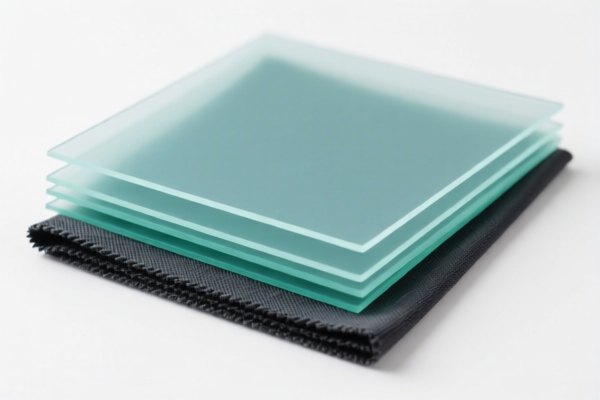
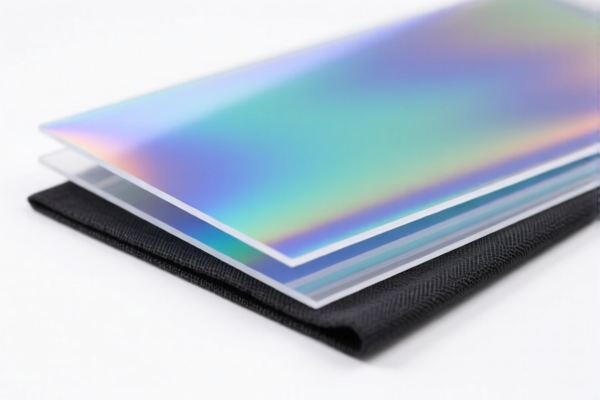
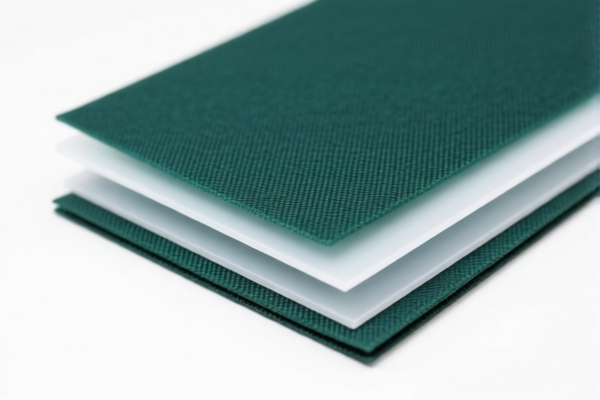
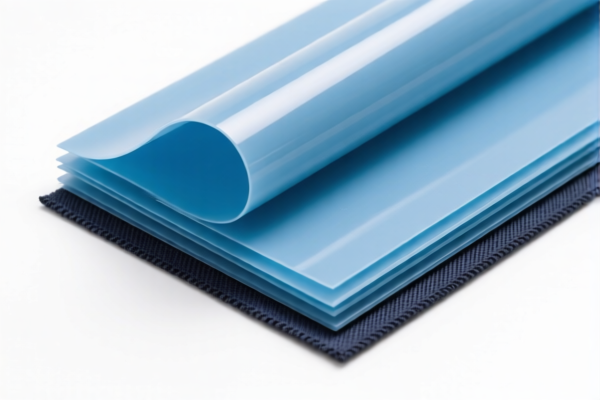
AI Analysis
🛡️ UV Resistant Acrylic Sheets (Polymethyl Methacrylate - PMMA)
🌐 HS Code Reference & Customs Clearance Guide | 2026 Latest Tariff Analysis | Professional Classification Strategy
📌 I. Product Definition & Classification: Do You Truly Understand "Acrylic"?
UV Resistant Acrylic Sheets, chemically known as Polymethyl Methacrylate (PMMA), are high-performance transparent thermoplastics widely used in architectural glazing, signage, automotive lighting, and medical radiation shielding. In international trade, these sheets are categorized not just by material, but by their specific application and physical form.
Core Distinction:
The classification hinges on whether the sheet is a generic polymer plate or a specialized component for a specific machine (like X-ray equipment). The provided data highlights four distinct classifications under HS Code 3920 and 9022.
⚠️ Key Classification Points:
- Generic UV Acrylic Panels: Classified under3920.51(Other plates, sheets, film, foil, and strip, of polymers of methyl methacrylate). This is the most common category for architectural or general-purpose UV-resistant sheets.
- Radiation Shielding Components: If specifically designed as parts for X-ray machines, they may fall under9022.90(Parts and accessories of appliances used for medical, surgical, dental or veterinary sciences).
- Functional Additives: Some sheets might be classified based on their functional additive properties, still largely under3920.51.
📦 II. HS Code Classification Details (2026 Latest Tariff Authority Comparison)
Based strictly on the provided <DATA>, here are the four specific HS Codes and their rationales:
| HS Code | Product Description | Application Scenario | Tax Category |
|---|---|---|---|
3920.51.50.90 |
Acrylic Plates, classified as acrylic polymer plates/sheets | General UV-resistant architectural panels, signage, display cases | ✅ 41.5% Total Tax |
9022.90.60.00 |
Radiation Protection Accessories, inferred parts classification based on use | Components for X-ray machines, lead-free shielding accessories | ✅ 35.0% Total Tax |
3920.51.50.50 |
Acrylic Sheets, applicable for functional additive plates | Specialized industrial sheets with specific functional additives | ✅ 41.5% Total Tax |
9022.90.95.00 |
X-ray Instrument Parts, other protective accessories under miscellaneous categories | Non-standard X-ray protective attachments, specific medical device parts | ✅ 36.4% Total Tax |
3920.51.50.90 |
Ray Protection Acrylic Sheets, material and form matching | UV-resistant acrylic specifically marketed for radiation shielding (generic classification) | ✅ 41.5% Total Tax |
🔍 Critical Observation:
-3920.51.50.90appears twice with identical tax rates (41.5%). Once as general acrylic, once as "ray protection acrylic" based on material form.
-9022.90.60.00and9022.90.95.00are specific to X-ray equipment parts. These have slightly different total taxes (35.0% vs 36.4%) due to different base tariffs.
- Never confuse3920(Plates/Sheets) with9022(Parts of Machines) without clear evidence of end-use. Misclassification can lead to significant tax discrepancies or customs penalties.
💰 III. 2026 Latest Tariff Rate Breakdown (Including Additional Duties & Policy Add-ons)
✅ Applicable Country: United States (US)
✅ Origin: China (CN)
✅ Effective Time: 2025+ (Reflecting current trade policies)
🎯 1. 3920.51.50.90 / 3920.51.50.50 —— UV Resistant Acrylic Plates/Sheets (Polymer Category)
| Item | Detail |
|---|---|
| Base Tariff | 6.5% (Ad valorem) |
| Section 301 Additional Duty | +25.0% |
| Section 122 Duty | +10.0% |
| Total Effective Tax Rate | 41.5% |
| Tax Calculation | CIF Value × 41.5% |
| De Minimis Exemption | ❌ Not Eligible (High tariff rate excludes it from low-value package exemptions) |
| Legal Basis Path | HTSUS:3920.51.50 → USITC:Section 301:9903.01.25 → Section 122 |
📌 Explanation:
- The 6.5% base rate applies to plates/sheets of polymers of methyl methacrylate (PMMA).
- The 25% Section 301 tariff is the standard additional duty on many Chinese-manufactured plastic products.
- The 10% Section 122 tariff (often linked to national security or specific trade remedies) further increases the cost.
- Total: 41.5%. This is a high-cost category. Importers must carefully calculate landed costs.
🎯 2. 9022.90.60.00 —— Radiation Protection Accessories (Medical Equipment Parts)
| Item | Detail |
|---|---|
| Base Tariff | 0.0% |
| Section 301 Additional Duty | +25.0% |
| Section 122 Duty | +10.0% |
| Total Effective Tax Rate | 35.0% |
| Tax Calculation | CIF Value × 35.0% |
| De Minimis Exemption | ❌ Not Eligible |
| Legal Basis Path | HTSUS:9022.90.60 → USITC:Section 301:9903.01.25 → Section 122 |
📌 Note:
- The 0% base tariff makes this category significantly cheaper than the acrylic sheet category.
- However, it requires proof that the item is a part/accessory for X-ray equipment (e.g., certificates of compliance with medical device standards).
- Total: 35.0%. Still high due to additional duties, but 6.5% lower than the generic acrylic classification.
🎯 3. 9022.90.95.00 —— X-ray Instrument Parts (Other Protective Accessories)
| Item | Detail |
|---|---|
| Base Tariff | 1.4% |
| Section 301 Additional Duty | +25.0% |
| Section 122 Duty | +10.0% |
| Total Effective Tax Rate | 36.4% |
| Tax Calculation | CIF Value × 36.4% |
| De Minimis Exemption | ❌ Not Eligible |
| Legal Basis Path | HTSUS:9022.90.95 → USITC:Section 301:9903.01.25 → Section 122 |
📌 Note:
- This code covers "other" parts not specifically listed under9022.90.60.
- The base rate is slightly higher (1.4% vs 0.0%), resulting in a total of 36.4%.
- Use this only if the product does not fit the specific definition of9022.90.60.00.
🛠️ IV. Customs Clearance Practical Advice (Battle-Tested Pitfall Avoidance)
✅ 1. Required Documentation Checklist (Non-Negotiable)
| Document | Required? | Explanation |
|---|---|---|
| ✅ Product Specification Sheet | ✔️ | Must clearly state material (PMMA/Acrylic), UV resistance rating, thickness, and dimensions. |
| ✅ End-Use Declaration | ✔️ | Crucial for distinguishing between 3920 (General Use) and 9022 (Medical/X-ray Parts). Provide a signed letter stating the exact application. |
| ✅ Product Photos | ✔️ | Clear images of the sheet, packaging, and any labels indicating "Radiation Shielding" or "UV Resistant". |
| ✅ Test Reports | ✔️ | UV resistance test results (e.g., ASTM G154), and if applicable, radiation shielding effectiveness reports. |
| ✅ Commercial Invoice | ✔️ | Must accurately reflect HS Code, description, and value. Avoid vague terms like "Plastic Sheet". |
| ✅ Certificate of Origin | ✔️ | Required to determine applicability of Section 301 and Section 122 duties. |
✅ 2. Declaration Strategy (Key Mnemonic)
🔥 “Material First, Use Second, Tax Hides in Details!”
| Scenario | Correct HS Code | Error Risk |
|---|---|---|
| General UV-Acrylic for Signage/Architecture | 3920.51.50.90 |
Misclassifying as 9022 → No benefit, risk of misdeclaration penalty. |
| Acrylic specifically for X-ray Machine Windows/Shields | 9022.90.60.00 or 9022.90.95.00 |
Misclassifying as 3920 → Overpaying 6.5% in base duty + potential compliance audit. |
| Acrylic with Functional Additives (Non-Medical) | 3920.51.50.50 |
Misclassifying as 9022 → High risk of rejection if no medical certification. |
| Mixed Shipment (General + Medical Parts) | Split Declaration | Consolidating into one code → Customs may audit and reclassify the entire batch, leading to delays. |
✅ 3. Special Case Handling
| Situation | Recommendation |
|---|---|
| OEM Custom Acrylic for Hospitals | Provide End-Use Certificate from the hospital or medical device manufacturer to justify 9022 classification (35.0% tax). |
| UV-Acrylic for Outdoor Signage | Clearly declare as 3920.51.50.90. Do not claim medical use. Expect 41.5% tax. |
| Acrylic Panels for Dental X-ray Rooms | If sold as part of a kit, declare as Parts of X-ray Machines (9022.90.60.00). If sold as standalone building materials, declare as 3920.51.50.90. |
| Pre-Cutting Acrylic Sheets | If pre-cut to fit specific machine frames, it strengthens the case for 9022 classification. |
🌍 V. Global Market Comparison (2026 Latest)
| Country/Region | Recommended HS Code | Base Tariff | Total Tax (US Origin) | Notes |
|---|---|---|---|---|
| 🇺🇸 USA | 3920.51.50.90 |
6.5% | 41.5% | High due to Section 301 & 122 |
| 🇺🇸 USA | 9022.90.60.00 |
0.0% | 35.0% | Best option if qualifying as medical part |
| 🇨🇳 China | 3920.51.50.90 |
6.5% | ~6.5% (Domestic) | No Section 301/122 |
| 🇪🇺 EU | 3920.51.50.00 |
6.5% | ~6.5% | No additional duties |
| 🇯🇵 Japan | 3920.51.50.00 |
3.5% | ~3.5% | Lower base rate |
📌 Conclusion:
- USA is the most challenging market due to Section 301 (25%) and Section 122 (10%) duties.
- Maximizing cost savings requires correctly identifying if the acrylic sheet qualifies as a medical device part (9022) rather than a general polymer sheet (3920).
- Differential of 6.5% in base duty and potential 1.4%-6.5% difference in total tax makes precise classification critical.
📌 VI. Common Mistakes & Pitfall Guide (Lessons Learned the Hard Way)
❌ Mistake 1: Calling all acrylic sheets "Acrylic Plastic" without specifying use.
👉 Consequence: Customs may default to the highest scrutiny category or request additional documentation, causing shipment delays.
❌ Mistake 2: Misclassifying general UV-acrylic for signage as "X-ray Parts" to save 6.5%.
👉 Consequence: Customs fraud penalty, fines, and potential loss of import privileges.
❌ Mistake 3: Ignoring Section 122 duties.
👉 Consequence: Underpayment of duties by 10%, leading to back taxes + interest.
❌ Mistake 4: Using vague descriptions like "Clear Sheets" on the invoice.
👉 Consequence: Customs officer has no basis for classification → Manual examination → 7-14 day delay.
✅ Correct Approach:
"UV-Resistant Polymethyl Methacrylate (PMMA) Plates, 5mm Thick, for Architectural Glazing – HS 3920.51.50.90"
OR
"Radiation Shielding Acrylic Panels, Specific for X-Ray Machine Enclosures – HS 9022.90.60.00"
🎯 VII. Conclusion: Precision Classification for Cost Optimization
🎯 Key Takeaways:
🔹 "General Use = 41.5% | Medical Part = 35.0%" – The 6.5% base duty difference is significant.
🔹 "Documentation is Key" – Without an End-Use Declaration, you cannot claim9022.
🔹 "No De Minimis" – Small shipments are still subject to full tariffs.
📌 Pro Tip:
If your product is dual-use (e.g., acrylic that can be used for both signage and X-ray shielding), declare it as the highest-tariff code (3920.51.50.90) unless you have irrefutable proof of its specific medical application. Attempting to claim the lower tax without proper documentation is risky.
📣 Immediate Action:
📞 Consult a Licensed Customs Broker before shipping.
📄 Prepare End-Use Certificates for medical applications.
🧮 Calculate Landed Cost using the 41.5% rate for safety, unless you have a ruling for9022.
✨ Professional Clearance Starts with Accurate Classification!
💼 Every Percentage Point of Tax Saved is Pure Profit!
Customer Reviews
About HS Code Classification
The Harmonized System (HS) is an internationally standardized nomenclature developed by the World Customs Organization (WCO) to classify traded products. Over 200 countries use the HS system as the basis for customs tariffs, trade statistics, and import/export regulations.
Each HS code follows a hierarchical structure:
- Chapter (2 digits) — Broad category of goods (e.g., Chapter 84: Machinery and Mechanical Appliances)
- Heading (4 digits) — More specific grouping within the chapter
- Subheading (6 digits) — Internationally standardized breakdown, used by all WCO member countries
- National subdivisions (8-10 digits) — Country-specific extensions for further classification, such as US HTSUS 10-digit codes
Correct HS code classification is essential for smooth customs clearance, accurate duty payment, and compliance with trade regulations. Misclassification can lead to customs delays, overpayment of duties, or penalties.
When importing from CN to US, the applicable tariff rates may include:
- Most-Favored-Nation (MFN) rate — The standard duty rate applied to WTO members
- General rate — Applied to countries without trade agreements
- Trade remedy duties — Additional tariffs such as Section 301 (anti-dumping), Section 232 (national security), or countervailing duties
The information provided on this page is for reference purposes only. For official classification, please consult with your local customs authority or a licensed customs broker.