UV resistant composite panels
CN → US| HS Code | Tariff Rate | Origin | Destination | Doc |
|---|---|---|---|---|
| 6815994110 | 35.0% | CN | US | Official Doc |
| 6815994170 | 35.0% | CN | US | Official Doc |
Product Images
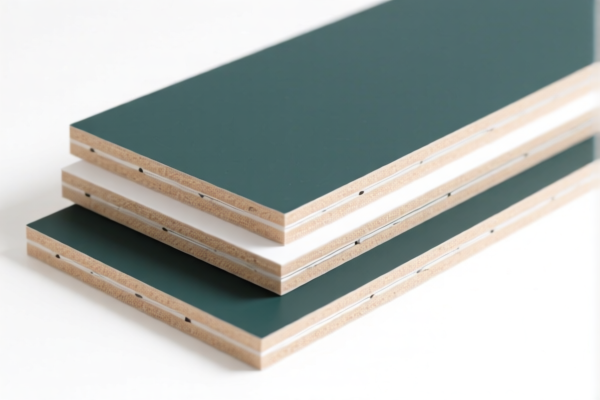
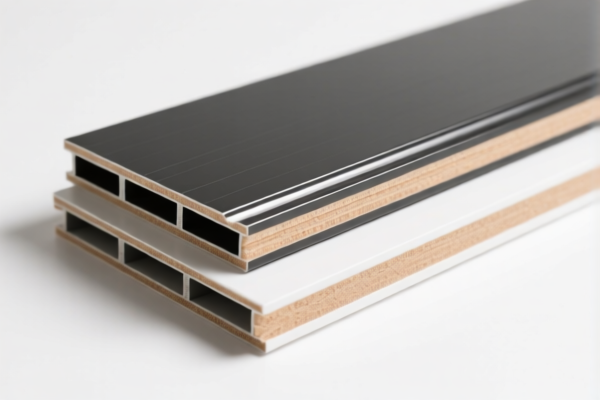
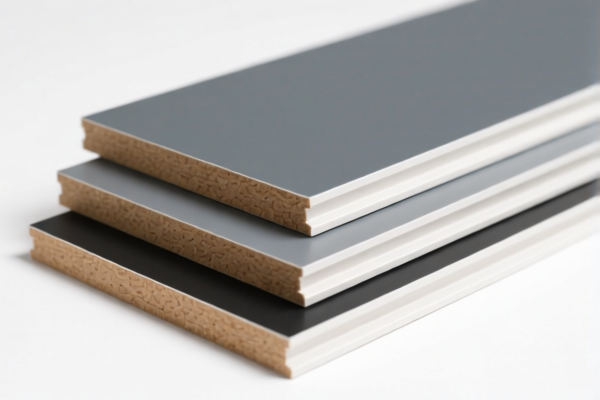
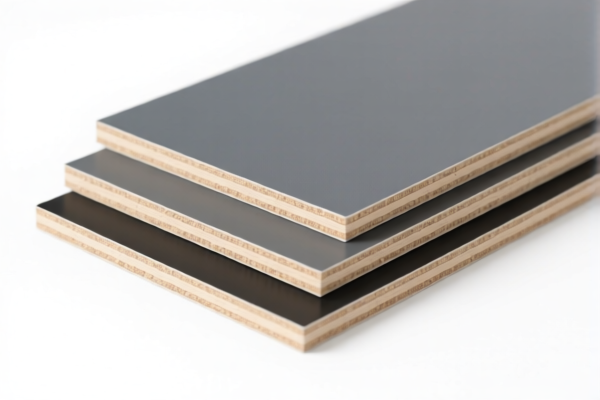
AI Analysis
🛡️ UV Resistant Composite Panels (Articles of Stone or Mineral Substances)
🌐 HS Code Reference & Clearance Guide | 2026 Latest Tariff Analysis | Specialized Clearance Strategy
📌 I. Product Definition & Classification: Are You Sure About "Composite"?
"UV resistant composite panels" in the context of mineral articles typically refer to panels made from stone, carbon fibers, or peat, chemically bonded (often with resin or pitch), and treated for UV resistance. These are not plastic/polymer composites (which fall under Chapter 39). They are mineral-based composites.
In international trade, these are classified under Chapter 68 (Articles of Stone, Plaster, Cement, Asbestos, Mica or Similar Mineral Substances). The key distinction lies in the magnesia content and carbon content.
⚠️ Key Classification Logic:
- If the panel is primarily stone/mineral + resin/pitch binder → Chapter 68.
- If the UV resistance comes from a plastic film/laminate but the core is mineral, it may still be Chapter 68 if the mineral component defines the essential character.
- Crucial Test: Magnesia (MgO) content >70% AND Carbon content <30% → HS 6815.99.41.10.
- Otherwise → HS 6815.99.41.70.
📦 II. HS Code Classification Details (2026 Latest Tariff Authority)
| HS Code | Product Description | Applicable Scenario | Magnesia (MgO) Content | Carbon Content |
|---|---|---|---|---|
6815.99.41.10 |
Articles of stone/mineral substances, chemically bonded by resin or pitch, containing >70% MgO (expressed as MgO) and carbon content <30% | Magnesia bricks, high-temp resistant mineral panels, specialized UV-stable mineral composites with high magnesia | ✅ >70% | ✅ <30% |
6815.99.41.70 |
Other articles of stone/mineral substances, not elsewhere specified | Standard stone composite panels, carbon fiber mineral panels (if MgO ≤70% or Carbon ≥30%), general mineral articles | ❌ ≤70% | ❌ ≥30% |
🔍 Critical Reminder:
- UV Resistance itself does not determine the HS code. It is a performance feature. The chemical composition (MgO vs. Carbon ratios) dictates the code.
- If your panel contains carbon fibers but the carbon content is ≥30%, it cannot be6815.99.41.10. It falls under6815.99.41.70.
- Resin/Pitch Bonding: The article must be chemically bonded. If mechanically fastened or clay-based, it may fall elsewhere (e.g., 6802, 6815.99.90).
💰 III. 2026 Latest Tariff Rate Breakdown (Including Additional Taxes)
✅ Applicable Country: United States (US)
✅ Origin: China (CN)
✅ Effective Date: 2025+ (Subject to Section 301 & IEEPA adjustments)
🎯 1. 6815.99.41.10 —— High-Magnesia Mineral Composite Panels
| Item | Content |
|---|---|
| Base Tariff Rate | 0% (ad valorem) |
| Section 301 Additional Tax | +25% (Under 301 Tariff List) |
| Total Tax Rate | 25.0% |
| De Minimis Exemption | ❌ Not Eligible (Section 301 goods are generally excluded from $800 de minimis relief) |
| Legal Basis | Section 301: 6815.99.41.10 |
📌 Explanation:
- The base duty for most mineral articles is 0%.
- However, US-China trade tensions have imposed a 25% additional tariff on many Chinese mineral/stone products under Section 301.
- No IEEPA 10% surcharge is currently listed for this specific HS code in the provided data (only 25% total), but verify with current USITC updates as IEEPA policies evolve.
- Total Cost Impact: 25% of CIF value.
🎯 2. 6815.99.41.70 —— Other Mineral Composite Panels
| Item | Content |
|---|---|
| Base Tariff Rate | 0% (ad valorem) |
| Section 301 Additional Tax | +25% (Under 301 Tariff List) |
| Total Tax Rate | 25.0% |
| De Minimis Exemption | ❌ Not Eligible |
| Legal Basis | Section 301: 6815.99.41.70 |
📌 Explanation:
- Same tariff structure as41.10.
- If your panel has lower magnesia or higher carbon, it still faces the 25% Section 301 tariff.
- No tax benefit for "other" subcategory; both are equally taxed in the US context provided.
🛠️ IV. Clearance Practical Advice (Battle-Proven Pitfall Avoidance)
✅ 1. Documentation Checklist (Non-Negotiable)
| Document | Required? | Purpose |
|---|---|---|
| ✅ Material Safety Data Sheet (MSDS) | ✔️ | To prove composition (MgO %, Carbon %) |
| ✅ Chemical Analysis Report | ✔️ | Critical: Must show MgO >70% for 41.10 or ≤70% for 41.70 |
| ✅ Product Specification Sheet | ✔️ | Confirm bonding agent (resin/pitch) vs. mechanical fasteners |
| ✅ Commercial Invoice | ✔️ | Clearly state "Composite Panel, Mineral-Based, UV Resistant" |
| ✅ Certificate of Origin | ✔️ | To verify CN origin (triggers 25% tariff) |
| ✅ Photos of Panel Cross-Section | ✔️ | To show layer structure and bonding |
✅ 2. Declaration Strategy (Key Mnemonic)
🔥 "Test the MgO, Check the Carbon, Bond is Key, Tariff Stays at 25!"
| Scenario | Correct HS Code | Risk if Incorrect |
|---|---|---|
| MgO >70%, Carbon <30%, Resin-Bonded | 6815.99.41.10 |
0% risk if accurate |
| MgO ≤70% OR Carbon ≥30% | 6815.99.41.70 |
0% risk if accurate |
| Not Chemically Bonded (e.g., clay, mortar) | ❌ NOT Chapter 68 | Misclassification → Seizure + Penalties |
| Plastic Core + Stone Veneer | ❌ Chapter 39 or 68 (depending on essential character) | Wrong chapter → Higher duties (up to 20-30%) |
✅ 3. Special Handling
| Situation | Recommendation |
|---|---|
| UV Coating Layer | Declare as "mineral panel with UV-resistant coating." The coating does not change the HS code unless it’s a separate plastic laminate. |
| Carbon Fiber Reinforced Mineral | If carbon content ≥30%, declare under 6815.99.41.70. Do not force 41.10 to save time; penalties are severe. |
| Pre-fabricated Walls | Ensure they are "articles of stone" not "concrete structures" (which may be 6810 or 6815.99.90). |
| Sample vs. Bulk | Provide chemical test reports for bulk production consistency, not just samples. |
🌍 V. Global Market Comparison (2026 Update)
| Country | Recommended HS Code | Total Tariff | Notes |
|---|---|---|---|
| 🇺🇸 USA | 6815.99.41.10 / .70 |
25% | Section 301 applies. No de minimis. |
| 🇨🇳 China | 6815.99.41.10 / .70 |
0-5% | Generally low base duty. Check for anti-dumping. |
| 🇪🇺 EU | 6815.99 |
3.7% | Standard MFN rate. No Section 301 equivalent. |
| 🇬🇧 UK | 6815.99 |
3.7% | Post-Brexit tariff aligns with EU MFN. |
| 🇯🇵 Japan | 6815.99 |
2.5% | Low tariff. Easy clearance. |
📌 Conclusion:
- USA is the hardest market due to the 25% Section 301 tariff.
- EU/UK/Japan offer significantly lower duties.
- Consider transshipment or origin optimization if selling to the US, but be aware of rules of origin enforcement.
📌 VI. Common Mistakes & Pitfalls (Lessons Learned)
❌ Mistake 1: Assuming "UV Resistant" = Plastic Composite (Chapter 39)
👉 Consequence: Misclassification → 20-30% tariff + penalties.
✅ Fix: Test for mineral content. If >50% mineral by weight, it’s Chapter 68.
❌ Mistake 2: Ignoring Carbon Content Thresholds
👉 Consequence: Declaring 6815.99.41.10 when carbon ≥30% → Customs audit → Back taxes + fines.
✅ Fix: Provide certified lab report showing carbon % <30%.
❌ Mistake 3: Claiming De Minimis ($800) for US Shipments
👉 Consequence: Section 301 goods are excluded from de minimis. Shipment held at customs.
✅ Fix: Pay duties upfront or use DDP (Delivered Duty Paid) terms with prepaid duties.
🎯 VII. Conclusion: Precision Saves Money
🎯 Key Takeaway:
🔹 "Mineral Base, Resin Bond, UV Shield."
🔹 "Test MgO & Carbon: >70% MgO & <30% C = .10; Else = .70."
🔹 "US Tariff is 25%: Budget accordingly, no shortcuts."
📌 Pro Tip:
If your product is not from China, verify if it qualifies for FTA benefits (e.g., USMCA, EU-Canada CETA) to reduce the 25% US tariff.
Always request a Pre-Ruling (Ruling Letter) from US Customs and Border Protection (CBP) for complex composite panels.
📣 Immediate Action:
📞 Engage a Customs Broker with experience in Chapter 68.
📄 Submit Lab Tests proving MgO/Carbon ratios before shipping.
🚀 Ensure Clear Documentation: "Composite Panel, Mineral-Based, Chemically Bonded, UV-Resistant Coating."
✨ Accurate Classification is Your Best Defense Against Tariff Surprises!
💼 Mineral Composites Are Not Simple. Treat Them With Precision.
Customer Reviews
About HS Code Classification
The Harmonized System (HS) is an internationally standardized nomenclature developed by the World Customs Organization (WCO) to classify traded products. Over 200 countries use the HS system as the basis for customs tariffs, trade statistics, and import/export regulations.
Each HS code follows a hierarchical structure:
- Chapter (2 digits) — Broad category of goods (e.g., Chapter 84: Machinery and Mechanical Appliances)
- Heading (4 digits) — More specific grouping within the chapter
- Subheading (6 digits) — Internationally standardized breakdown, used by all WCO member countries
- National subdivisions (8-10 digits) — Country-specific extensions for further classification, such as US HTSUS 10-digit codes
Correct HS code classification is essential for smooth customs clearance, accurate duty payment, and compliance with trade regulations. Misclassification can lead to customs delays, overpayment of duties, or penalties.
When importing from CN to US, the applicable tariff rates may include:
- Most-Favored-Nation (MFN) rate — The standard duty rate applied to WTO members
- General rate — Applied to countries without trade agreements
- Trade remedy duties — Additional tariffs such as Section 301 (anti-dumping), Section 232 (national security), or countervailing duties
The information provided on this page is for reference purposes only. For official classification, please consult with your local customs authority or a licensed customs broker.