UV resistant textile plastic sheet
CN → US| HS Code | Tariff Rate | Origin | Destination | Doc |
|---|---|---|---|---|
| 3920992000 | 39.2% | CN | US | Official Doc |
| 3920591000 | 41.0% | CN | US | Official Doc |
| 3919905060 | 40.8% | CN | US | Official Doc |
| 3919905040 | 40.8% | CN | US | Official Doc |
Product Images
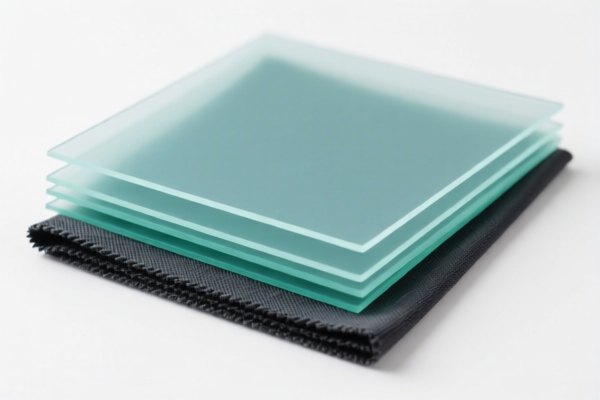
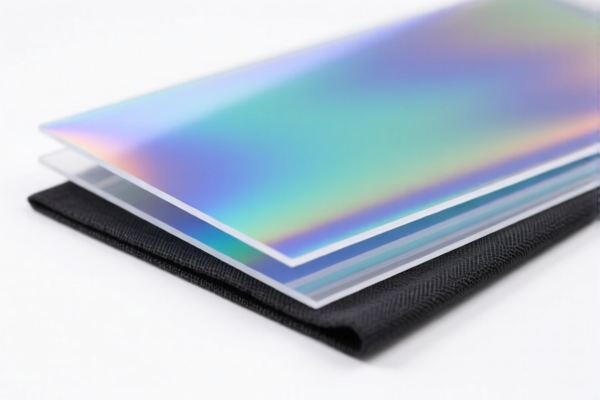
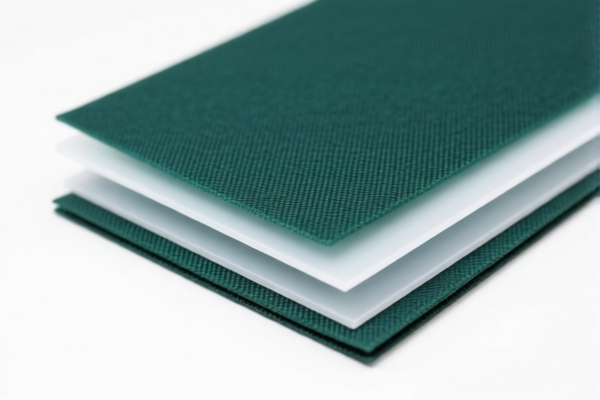
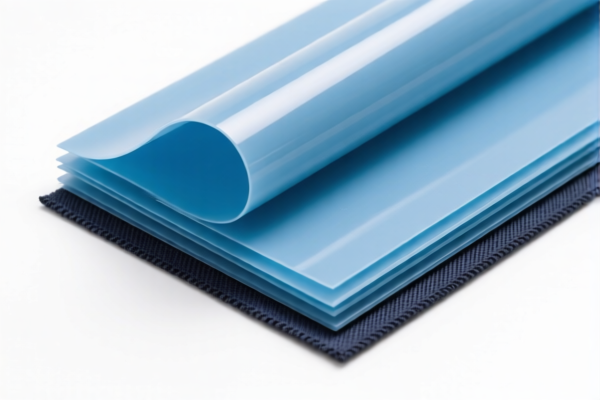
AI Analysis
🛡️ UV Resistant Textile Plastic Sheet
🌐 HS Code Reference & Customs Clearance Guide | 2024/2025 Latest Tariff Analysis | Professional Customs Strategy
📌 I. Product Definition & Classification: Do You Really Understand "UV Resistant Plastic Sheets"?
A "UV Resistant Textile Plastic Sheet" is a composite or specialized polymer product designed to withstand ultraviolet radiation while maintaining structural integrity. In international trade, the classification hinges on two critical factors: 1. Form: Is it a flexible film/roll (Chapter 39.19) or a rigid/non-rigid sheet/plate (Chapter 39.20)? 2. Material Composition: Is it pure plastic, or does it contain textile reinforcements?
⚠️ Key Distinction Point: - If the product is a flexible, roll-based film (often used for awnings, banners, or protective covers), it leans towards HS Code 3919 (Self-adhesive, films, strips). - If the product is a sheet, plate, or non-foam rigid/flexible board (used for windows, glazing, or industrial shielding), it leans towards HS Code 3920 (Non-cellular, non-reinforced boards, sheets).
📦 II. HS Code Classification Details (Latest Tariff Reference)
Based on the specific attributes of "UV Resistant Textile Plastic Sheet," here are the most accurate classifications from the provided data:
| HS Code | Product Description | Applicable Scenario | Matching Logic |
|---|---|---|---|
3920.99.20.00 |
Other plates, sheets, film, foil, and strip, of plastics | General UV-resistant plastic sheets/films | Name Match: Explicitly includes "Plastic" and "Film/Sheet" form. Fits "Flexible film, strip, and sheet" features. |
3920.59.10.00 |
Other plates, sheets, film, foil, and strip, of polymers of vinyl chloride | UV-resistant sheets (if Vinyl/PVC based) | Feature Match: Form is 'Sheet/Film', Material is 'Plastic', Use is 'UV Resistance'. Fits "Non-foam, non-reinforced" flexible categories. |
3919.90.50.60 |
Other self-adhesive plates, sheets, film, foil, strip, and other flat shapes, of plastics | Self-adhesive UV plastic films/rolls | Form Match: Material is "Plastic", Form is "Film". Matches "Flat shapes" definition for self-adhesive or non-self-adhesive films in roll form. |
3919.90.50.40 |
Other self-adhesive plates, sheets, film, foil, strip, and other flat shapes, of plastics | General UV plastic films/rolls | Shape Match: Material is "Plastic", Form is "Film". Fits the description of plastic flat shapes (films) without material conflict. |
🔍 Key Reminder: - The term "Textile" in the user input may imply reinforcement. However, if the primary characteristic is the plastic film/sheet form, it typically falls under Chapter 39 (Plastics). If it were primarily textile with plastic coating, it might fall under Chapter 59. Based on the provided data, the classification focuses on the Plastic/Film aspect. - "UV Resistant" is a functional attribute, not a primary classificatory key. It is described within the "Summary" of the codes.
💰 III. 2024/2025 Latest Tariff Rate Details (Including Surcharges & Policy Add-ons)
✅ Applicable Country: United States (US) ✅ Origin: China (CN) ✅ Effective Date: Current (Includes Section 301 and IEEPA surcharges)
🎯 1. 3920.99.20.00 —— Other Plastic Sheets/Films
| Item | Content |
|---|---|
| Base Tariff | 4.2% (Ad Valorem) |
| Section 301 Surcharge | +25.0% |
| 122 Provision Surcharge | +10.0% |
| Total Tax Rate | 39.2% |
| Tax Calculation | CIF Value × 39.2% |
| De Minimis Eligibility | ❌ Not Eligible (High tariff prevents $800 de minimis exemption in most cases) |
| Legal Basis Path | HTSUS:3920.99.20.00 → Section 301: Footnote 9903.88.03 → IEEPA:122 Provision |
📌 Explanation: - "Base 4.2%": Standard most-favored-nation (MFN) rate for other plastic sheets. - "301 Surcharge 25%": Imposed by USITC on Chinese goods under Trade Act Section 301. - "122 Provision 10%": Additional tariff based on recent executive orders or specific trade provisions (often related to non-market economy practices or specific strategic materials). - Total 39.2%: A high tariff burden. Cost planning is essential.
🎯 2. 3920.59.10.00 —— Vinyl Chloride Polymers Sheets
| Item | Content |
|---|---|
| Base Tariff | 6.0% (Ad Valorem) |
| Section 301 Surcharge | +25.0% |
| 122 Provision Surcharge | +10.0% |
| Total Tax Rate | 41.0% |
| Tax Calculation | CIF Value × 41.0% |
| De Minimis Eligibility | ❌ Not Eligible |
| Legal Basis Path | HTSUS:3920.59.10.00 → Section 301: Footnote 9903.88.03 → IEEPA:122 Provision |
📌 Note: - If the "Plastic" is specifically PVC (Polyvinyl Chloride), this code applies. - It has a higher base rate (6.0%) than general plastic sheets, leading to a higher total rate (41.0%). - Verify material composition (PVC vs. PE/PP/PMMA) to avoid misclassification penalties.
🎯 3. 3919.90.50.60 & 3919.90.50.40 —— Plastic Films/Rolls
| Item | Content |
|---|---|
| Base Tariff | 5.8% (Ad Valorem) |
| Section 301 Surcharge | +25.0% |
| 122 Provision Surcharge | +10.0% |
| Total Tax Rate | 40.8% |
| Tax Calculation | CIF Value × 40.8% |
| De Minimis Eligibility | ❌ Not Eligible |
| Legal Basis Path | HTSUS:3919.90.50.xx → Section 301 → IEEPA:122 Provision |
📌 Distinction between .60 and .40: - Both have the same total tax rate of 40.8%. - The difference lies in the specific sub-category of "other flat shapes" or self-adhesive properties. - If the sheet is flexible and sold in rolls, these codes are more appropriate than 3920 (sheets/plates). - Recommendation: Use 3919 codes if the product is a roll/film; use 3920 codes if it is a cut sheet/plate.
🛠️ IV. Customs Clearance Practical Advice (Operational Pitfalls Guide)
✅ 1. Document Checklist (All Required)
| Document | Required? | Description |
|---|---|---|
| ✅ Product Specification Sheet | ✔️ | Must specify material type (PVC, PE, PET, etc.), thickness, UV rating (e.g., 1000 hrs QUV), and form (roll/sheet). |
| ✅ Product Photos | ✔️ | Clear images showing the texture, roll/sheet format, and any labels indicating "UV Resistant". |
| ✅ Commercial Invoice | ✔️ | Must clearly state: "UV Resistant Plastic Sheet/Film, Material: [XX], Form: [Roll/Sheet]". Avoid vague terms like "Textile Plastic". |
| ✅ Packing List | ✔️ | Detail weight, dimensions, and number of rolls/sheets. |
| ✅ Certificate of Origin (CO) | ✔️ | Required for tariff determination. If not China origin, may qualify for lower rates. |
| ✅ Third-Party Test Report | ✔️ | Optional but recommended: UV resistance test report to prove "UV Resistant" claim if challenged. |
✅ 2. Declaration Tips (Critical Keywords)
🔥 "Form Defines Code, Material Defines Rate, UV is a Feature, Not a Code!"
| Scenario | Correct Declaration | Incorrect Declaration | Consequence |
|---|---|---|---|
| Product is in Rolls | "UV Resistant Plastic Film, Roll Form, PE Material" | "Plastic Sheet" | Risk of classification error (3919 vs 3920). Both ~41%, but accuracy matters. |
| Product is Cut Sheets | "UV Resistant Plastic Sheet, PVC Material, Non-Rigid" | "Plastic Film" | Risk of classification error. |
| Material is PVC | Use 3920.59.10.00 or 3919.90.50.xx |
Generic "Plastic Sheet" | May lead to higher base rate if specific code not used, or audit risk. |
| Material is Other Plastic | Use 3920.99.20.00 |
Generic "Plastic Sheet" | Correct general classification. |
📌 Warning: - Do not use the term "Textile" in the HS Code description unless it is a woven fabric laminated with plastic (which would fall under Chapter 59). The provided data suggests a plastic-dominated product. - If the product is a woven fabric with plastic coating, it may be classified differently (e.g., 5903.xx). Check with a customs broker if the textile component is structural.
✅ 3. Special Circumstances
| Scenario | Handling Advice |
|---|---|
| Mixed Shipments | If rolls and sheets are packed together, declare separately to ensure correct HS Code for each item. |
| Private Label/OEM | Provide buyer's design specs to confirm material and form. |
| Sample vs. Bulk | Samples still incur duties. No de minimis if value exceeds $800 or if subject to Section 301. |
| Origin Change | If manufactured in Vietnam/Thailand, IEEPA/301 surcharges may not apply. Seek Certificate of Origin for FTZ/USMCA if applicable. |
🌍 V. Global Market Comparison (2024/2025)
| Country/Region | Recommended HS Code | Tariff (China Origin) | Key Requirements | Notes |
|---|---|---|---|---|
| 🇺🇸 USA | 3920.99.20.00 / 3919.90.50.xx |
39.2% - 41.0% | FCC/Prop 65 (if applicable) | Highest cost. Section 301 + 122 Provisions apply. |
| 🇨🇳 China | 3920.99.20.00 |
5.0% - 6.0% | CCC (if applicable) | No surcharges. Low cost for domestic sale. |
| 🇪🇺 EU | 3920.99 / 3919.90 |
6.0% | CE/REACH | No Section 301. Standard MFN rate. |
| 🇬🇧 UK | 3920.99 / 3919.90 |
6.0% | UKCA/REACH | Post-Brexit rules. Standard MFN rate. |
| 🇦🇺 Australia | 3920.99 / 3919.90 |
5.0% | RCM | Free Trade Agreement (AChFTA) may reduce to 0%. |
📌 Conclusion: - USA is the most expensive market due to cumulative surcharges (301 + 122). - EU/UK/Australia have significantly lower tariffs (~6% or less). - Consider supply chain diversification if targeting the US market.
📌 VI. Common Mistakes & Pitfalls (Lessons Learned)
❌ Mistake 1: Declaring "UV Resistant Plastic" as "Textile" 👉 Consequence: If classified under Chapter 59 (Textile Impregnated), tariff may be different, but if it's primarily plastic, it's misclassification. Risk of penalty.
❌ Mistake 2: Confusing "Film" (Rolls) with "Sheet" (Cut) 👉 Consequence: While rates are similar (~41%), customs may request evidence of form (e.g., packing photos). Misdeclaration leads to delays.
❌ Mistake 3: Ignoring the "122 Provision" 👉 Consequence: Underestimating the 10% surcharge. Total cost will be higher than expected.
❌ Mistake 4: Assuming De Minimis ($800) Applies 👉 Consequence: Section 301 goods are excluded from de minimis exemption in most cases. Expect full duty payment.
✅ Correct Approach:
"UV Resistant Polyethylene Plastic Film, 0.5mm Thick, Sold in Rolls, For Outdoor Tarpaulin Use, Model XYZ, Made in China"
🎯 VII. Conclusion: Professional Declaration, Cost Control, Efficiency!
🎯 Key Takeaways:
🔹 "Form Matters: Rolls → 3919; Sheets → 3920. 🔹 "Material Matters: PVC → 3920.59; Other Plastics → 3920.99. 🔹 "Total Cost is ~41%: Base + 301 (25%) + 122 (10-10%) = 39.2% - 41.0%. 🔹 "UV Resistant" is a Feature: It does not change the HS Code, but must be declared for accuracy.
📌 Pro Tip: If your plastic sheet is originating from Vietnam, Thailand, or Mexico, you may avoid Section 301 and IEEPA surcharges. - Recommendation: Obtain a Certificate of Origin from the non-China country. - Result: Tariff could drop to Base Rate only (4.2% - 6.0%), saving ~35% in duties!
📣 Immediate Action:
📞 Consult a licensed customs broker to confirm Form (Roll vs. Sheet) and Material (PVC vs. Other). 🚀 Apply for Pre-Ruling if volume is high. 💡 Optimize Supply Chain: Consider non-China origin to reduce tax burden.
✨ Professional Customs Clearance Starts with Accurate Classification! 💼 Your Cost Savings Are Precision-Driven!
Customer Reviews
About HS Code Classification
The Harmonized System (HS) is an internationally standardized nomenclature developed by the World Customs Organization (WCO) to classify traded products. Over 200 countries use the HS system as the basis for customs tariffs, trade statistics, and import/export regulations.
Each HS code follows a hierarchical structure:
- Chapter (2 digits) — Broad category of goods (e.g., Chapter 84: Machinery and Mechanical Appliances)
- Heading (4 digits) — More specific grouping within the chapter
- Subheading (6 digits) — Internationally standardized breakdown, used by all WCO member countries
- National subdivisions (8-10 digits) — Country-specific extensions for further classification, such as US HTSUS 10-digit codes
Correct HS code classification is essential for smooth customs clearance, accurate duty payment, and compliance with trade regulations. Misclassification can lead to customs delays, overpayment of duties, or penalties.
When importing from CN to US, the applicable tariff rates may include:
- Most-Favored-Nation (MFN) rate — The standard duty rate applied to WTO members
- General rate — Applied to countries without trade agreements
- Trade remedy duties — Additional tariffs such as Section 301 (anti-dumping), Section 232 (national security), or countervailing duties
The information provided on this page is for reference purposes only. For official classification, please consult with your local customs authority or a licensed customs broker.