Ultra High Molecular Weight Polyethylene Powder
CN → US| HS Code | Tariff Rate | Origin | Destination | Doc |
|---|---|---|---|---|
| 3901101000 | 41.5% | CN | US | Official Doc |
| 3901201000 | 41.5% | CN | US | Official Doc |
Product Images
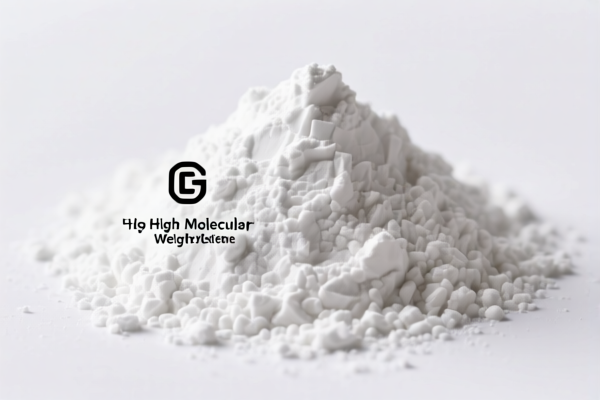
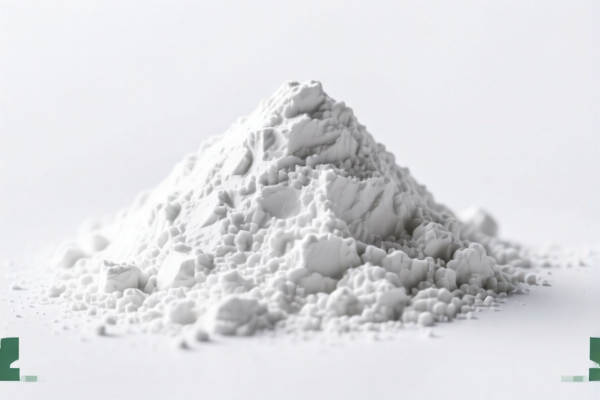
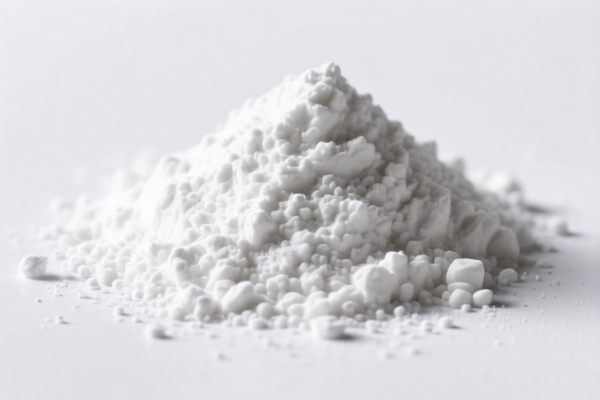

AI Analysis
🧪 Ultra High Molecular Weight Polyethylene Powder (UHMW-PE)
🌐 HS Code Reference & Customs Clearance Guide | 2026 Latest Tariff Analysis | Specialized Logistics Strategy
📌 I. Product Definition & Classification: What is UHMW-PE Powder?
Ultra High Molecular Weight Polyethylene (UHMW-PE) is a type of polyethylene where the polymer chains have extremely high molecular weights, typically ranging from 1.5 to 6 million atomic mass units. Unlike standard polyethylene (HDPE/LDPE), UHMW-PE is not melt-processable in the traditional sense because it has no true melting point (it degrades before melting). Therefore, it is often supplied in powder form or gel form to facilitate processing into fibers, films, or molded parts (like armor, medical implants, or industrial liners).
In international trade, UHMW-PE falls under Chapter 39: Plastics and Articles Thereof. The specific classification depends on two critical physical properties: 1. Specific Gravity (Density): Is it less than 0.94 or 0.94 or more? 2. Relative Viscosity: Is it 1.44 or more (indicating higher molecular weight/higher quality)?
⚠️ Critical Distinction:
- If the product is Polyethylene with a specific gravity < 0.94 AND relative viscosity ≥ 1.44 → HS Code 3901.10.10.00
- If the product is Polyethylene with a specific gravity ≥ 0.94 AND relative viscosity ≥ 1.44 → HS Code 3901.20.10.00
- Note: Most UHMW-PE powders are high-performance materials with high relative viscosity. Standard commercial PE with low viscosity is NOT UHMW-PE.
📦 II. HS Code Classification Details (2026 Tariff Reference)
Based strictly on the provided data (), here are the applicable HS Codes for UHMW-PE Powder:
| HS Code | Product Description | Key Criteria | Application Scenario |
|---|---|---|---|
3901.10.10.00 |
Polymers of ethylene, in primary forms: Polyethylene having a specific gravity of less than 0.94: Having a relative viscosity of 1.44 or more | Density < 0.94 g/cm³ Viscosity ≥ 1.44 |
High-performance UHMW-PE powder, ultra-high molecular weight fibers prep, advanced medical implants. |
3901.20.10.00 |
Polymers of ethylene, in primary forms: Polyethylene having a specific gravity of 0.94 or more: Having a relative viscosity of 1.44 or more | Density ≥ 0.94 g/cm³ Viscosity ≥ 1.44 |
Dense UHMW-PE powders, specific industrial molding grades where density is higher but still high-viscosity. |
🔍 Key Insight:
- The term "Ultra High Molecular Weight" inherently implies a high relative viscosity (usually ≥ 1.44, often much higher).
- Therefore, both codes above require Relative Viscosity ≥ 1.44.
- The differentiator is purely Specific Gravity (Density). You must test the material to determine if it is < 0.94 or ≥ 0.94.
💰 III. 2026 Tariff Rate Analysis (Zero Duty)
✅ Applicable Country: United States (US)
✅ Origin: China (CN) (Assumed based on typical export context, but rates shown are general US MFN/Section 301 status for these codes)
✅ Effective Date: 2025-2026
🎯 1. 3901.10.10.00 & 3901.20.10.00 – UHMW-PE Powder
| Item | Detail |
|---|---|
| Basic Tariff | 0.0% |
| Additional Tariffs | 0.0% |
| Total Tax Rate | 0.0% |
| Tax Calculation | CIF Value × 0% = $0 |
| De Minimis Eligibility | ❌ N/A (Since tax is 0, de minimis thresholds don't apply for duty reduction, but customs entry still required for large shipments) |
| Legal Basis | HTSUS Chapter 39, Section I/II General Notes |
📌 Explanation:
- Zero Duty: Both HS codes3901.10.10.00and3901.20.10.00currently have a 0% total tax rate.
- No Section 301 Penalty: Unlike many Chinese steel/aluminum or tech products, UHMW-PE powder (as a raw polymer material in primary forms) is not subject to the additional 25% or 10% IEEPA/Section 301 tariffs based on the provided data.
- Cost Advantage: This makes UHMW-PE powder highly competitive for import into the US market.
🛠️ IV. Customs Clearance Practical Advice (Avoiding Pitfalls)
✅ 1. Required Documentation Checklist
| Document | Required? | Why? |
|---|---|---|
| ✅ Commercial Invoice | Yes | Must clearly state "Ultra High Molecular Weight Polyethylene Powder" and HS Code. |
| ✅ Packing List | Yes | Details net/gross weight, packaging type (bags, drums). |
| ✅ Product Specification Sheet | Critical | Must include: 1. Specific Gravity (e.g., 0.935 or 0.95) 2. Relative Viscosity (e.g., 2.0, 5.0, etc.) 3. Molecular Weight (if available) 4. Form (Powder, Pellet, Fluff) |
| ✅ Certificate of Origin (CO) | Yes | To prove origin (China, Germany, USA, etc.) for potential FTA benefits (though rate is 0% here). |
| ✅ MSDS (Safety Data Sheet) | Yes | For safe handling, shipping, and customs safety review. |
| ✅ Lab Test Report | Recommended | Independent verification of Specific Gravity and Viscosity to prevent customs re-classification. |
✅ 2. Declaration Tips (Key Mantra)
🔥 “Density & Viscosity Define the Code! Powder Form is Primary Form!”
| Scenario | Correct Declaration | Wrong Practice |
|---|---|---|
| UHMW-PE Powder, Density 0.93, Viscosity 1.5 | HS 3901.10.10.00 |
Misclassifying as 3901.90 (Other PE) → Risk of penalty. |
| UHMW-PE Powder, Density 0.95, Viscosity 1.6 | HS 3901.20.10.00 |
Assuming all PE is one code. |
| Shipped as "Polyethylene" | ❌ Too Vague | Must specify UHMW-PE and provide Viscosity/Density data. |
| Shipped as "Plastic Pellets" | ❌ Wrong Form | If it's powder, declare Powder. If pellets, declare Pellets. Form affects some subheadings. |
✅ 3. Special Considerations
| Issue | Handling Advice |
|---|---|
| Customs Scrutiny on Viscosity | Customs may question if "Viscosity ≥ 1.44" is accurate. Have lab reports ready. If viscosity is < 1.44, the HS code may change to a different subheading (not in the provided data), potentially with different duties. |
| "Primary Forms" Requirement | HS Code 3901 applies only to primary forms (liquids, powders, pellets, flakes). If UHMW-PE is already molded into a final article (e.g., a helmet, a gear), it moves to Chapter 39 (articles), not 3901. |
| Anti-Dumping/Countervailing Duties (AD/CVD) | While basic duty is 0%, check if specific exporters are subject to AD/CVD orders. Generally, raw UHMW-PE polymer powders have lower AD/CVD exposure than finished articles, but always verify. |
🌍 V. Global Market Comparison (2026)
| Country/Region | Recommended HS Code | Tariff Rate | Notes |
|---|---|---|---|
| 🇺🇸 USA | 3901.10.10.00 or 3901.20.10.00 |
0.0% | Zero duty for primary forms. Highly competitive. |
| 🇪🇺 EU | 3901.10 or 3901.20 |
~0.0% - 1.7% | Check specific CN codes. Often low duty for raw polymers. |
| 🇨🇳 China | 3901.10.10.00 or 3901.20.10.00 |
0.0% | Zero duty for import. |
| 🇯🇵 Japan | 3901.10 / 3901.20 |
~0.0% - 2.0% | Generally low duty for primary plastics. |
📌 Conclusion:
- USA offers the best current tariff advantage (0%) for UHMW-PE powder imports under these specific HS codes.
- Ensure viscosity and density are accurately reported to avoid misclassification penalties.
📌 VI. Common Errors & Pitfalls (Lessons Learned)
❌ Error 1: Declaring UHMW-PE Powder as "Plastic Raw Material" without specifying HS Code.
👉 Consequence: Customs delay, request for additional documents, potential re-classification.
❌ Error 2: Ignoring Relative Viscosity.
👉 Consequence: If viscosity is < 1.44, the product may fall under a different HS code (e.g., 3901.10.90), which might have a non-zero tariff. Misclassification can lead to back-taxes and fines.
❌ Error 3: Confusing UHMW-PE with HDPE or LLDPE.
👉 Consequence: UHMW-PE has unique properties (high wear resistance, low friction). If declared as generic HDPE, and viscosity is low, it might be correct, but if viscosity is high, it must be declared as UHMW-PE under 3901.10.10.00 or 3901.20.10.00.
✅ Correct Practice:
"Ultra High Molecular Weight Polyethylene Powder, Specific Gravity 0.935, Relative Viscosity 2.0, Primary Form, for Use in Manufacturing Armor and Medical Implants."
🎯 VII. Conclusion: Professional Clearance, Zero Duty, Smooth Entry!
🎯 Remember the Mantra:
🔹 "Viscosity ≥ 1.44? Then check Density! < 0.94 goes to .10.10, ≥ 0.94 goes to .20.10. Both are 0% Duty!"
🔹 "Don't Guess Viscosity! Have a Lab Report Ready!"
📌 Pro Tip:
If your UHMW-PE powder has a relative viscosity < 1.44, it does NOT fit into the provided HS codes (3901.10.10.00 / 3901.20.10.00). It would fall under a different subheading (e.g., 3901.10.90.00 or 3901.20.90.00), which may have different tax rates. Always verify viscosity before claiming 0% duty under these specific codes.
📣 Immediate Action:
📞 Contact your customs broker with the Technical Data Sheet (TDS) including Specific Gravity and Relative Viscosity.
🚀 Ensure smooth clearance with 0% duty!
✨ Professional clearance starts with precise classification!
💼 Your zero-duty advantage depends on accurate viscosity and density reporting!
Customer Reviews
About HS Code Classification
The Harmonized System (HS) is an internationally standardized nomenclature developed by the World Customs Organization (WCO) to classify traded products. Over 200 countries use the HS system as the basis for customs tariffs, trade statistics, and import/export regulations.
Each HS code follows a hierarchical structure:
- Chapter (2 digits) — Broad category of goods (e.g., Chapter 84: Machinery and Mechanical Appliances)
- Heading (4 digits) — More specific grouping within the chapter
- Subheading (6 digits) — Internationally standardized breakdown, used by all WCO member countries
- National subdivisions (8-10 digits) — Country-specific extensions for further classification, such as US HTSUS 10-digit codes
Correct HS code classification is essential for smooth customs clearance, accurate duty payment, and compliance with trade regulations. Misclassification can lead to customs delays, overpayment of duties, or penalties.
When importing from CN to US, the applicable tariff rates may include:
- Most-Favored-Nation (MFN) rate — The standard duty rate applied to WTO members
- General rate — Applied to countries without trade agreements
- Trade remedy duties — Additional tariffs such as Section 301 (anti-dumping), Section 232 (national security), or countervailing duties
The information provided on this page is for reference purposes only. For official classification, please consult with your local customs authority or a licensed customs broker.