Ultra fine Graphite Powder
CN → US| HS Code | Tariff Rate | Origin | Destination | Doc |
|---|---|---|---|---|
| 2830901500 | 37.8% | CN | US | Official Doc |
| 3801105090 | 35.0% | CN | US | Official Doc |
| 2830909000 | 38.0% | CN | US | Official Doc |
| 3801101000 | 38.7% | CN | US | Official Doc |
| 2504105000 | 35.0% | CN | US | Official Doc |
Product Images
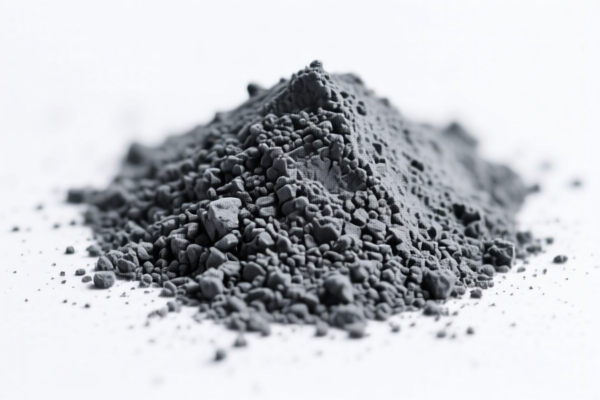
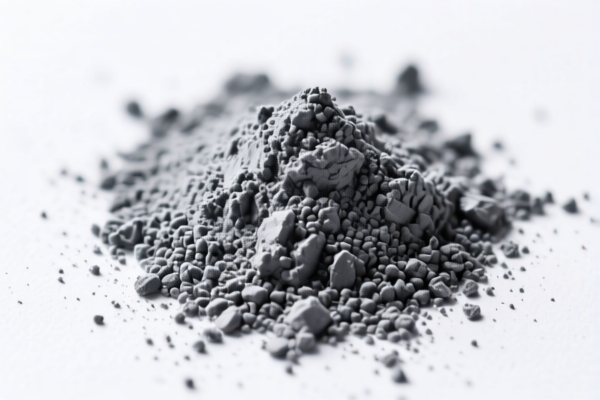
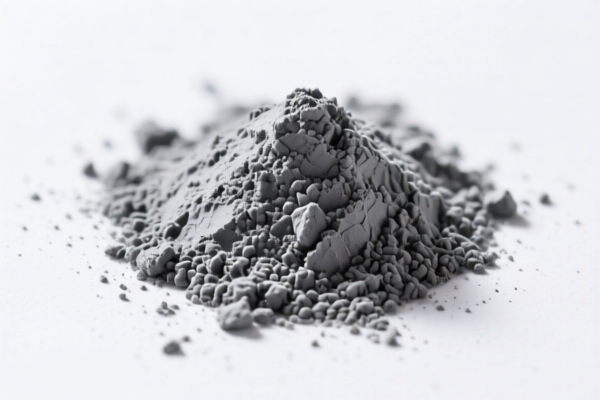
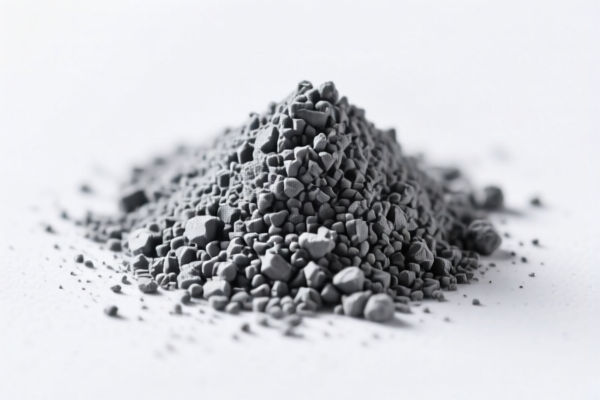
AI Analysis
⚫️ Ultra-Fine Graphite Powder (超细石墨粉)
🌐 HS Code Reference & Customs Clearance Guide | 2026 Latest Tariff Analysis | Strategic Classification Strategy
📌 I. Product Definition & Classification: Do You Really Understand "Graphite"?
Ultra-fine graphite powder is a critical raw material in battery manufacturing, lubricants, refractories, and advanced composites. In international trade, it is often misclassified due to confusion between Natural Graphite (mined) and Artificial Graphite (synthesized from petroleum coke/coke breeze), or mistakenly grouped under chemical compounds.
In the provided data, five potential HS Codes are identified. The correct classification depends strictly on the Origin (Natural vs. Artificial) and the Chemical Nature (Elemental vs. Compound).
⚠️ Key Distinction Point:
- If the graphite is synthesized/man-made (e.g., from carbonization of hydrocarbons) → It falls under Heading 3801 (Artificial Graphite).
- If the graphite is mined → It falls under Heading 2504 (Natural Graphite).
- ⚠️ Warning: Classification under Heading 2830 (Sulfides/Polysulfides) is likely incorrect for pure elemental graphite, as graphite is carbon (C), not a sulfur compound. However, these codes appear in the dataset, possibly due to impurities or specific chemical processing claims. We must address them as per the data provided, but flag them as high-risk.
📦 II. HS Code Classification Details (Based on Provided Data)
| HS Code | Product Description | Source/Type | Total Tax Rate | Tax Breakdown |
|---|---|---|---|---|
3801.10.50.90 |
Artificial Graphite, Powder form, Primary shape | Artificial/Synthetic | 35.0% | Base: 0%, Add'l: 25%, Sec 122: 10% |
2504.10.50.00 |
Natural Graphite, Powder form, Primary shape | Natural/Mined | 35.0% | Base: 0%, Add'l: 25%, Sec 122: 10% |
2830.90.15.00 |
Other Chemical Substances (Sulfides/Polysulfides), Powder | Likely Misclassified* | 37.8% | Base: 2.8%, Add'l: 25%, Sec 122: 10% |
2830.90.90.00 |
Other Sulfides/Polysulfides, Primary Product, Graphite Material | Likely Misclassified* | 38.0% | Base: 3.0%, Add'l: 25%, Sec 122: 10% |
3801.10.10.00 |
Artificial Graphite, Powder form, Primary shape | Artificial/Synthetic | 38.7% | Base: 3.7%, Add'l: 25%, Sec 122: 10% |
🔍 Critical Note on
2830Codes:
Graphite is Carbon (C). It is NOT a sulfide (Sulfur compound). Classifying graphite under2830(Sulfides/Polysulfides) is technically incorrect under HS Nomenclature rules. If customs accepts this, it may be due to the presence of significant sulfur impurities or a specific chemical treatment claim. Risk of Re-classification and Penalty is High.
💰 III. 2026 Latest Tariff Rate详解 (Detailed Tax Analysis)
✅ Applicable Country: United States (US)
✅ Country of Origin: China (CN)
✅ Effective Time: Post-November 2025 (Inclusive)
🎯 1. 3801.10.50.90 & 2504.10.50.00 —— The Most Likely Correct Classifications
These two codes represent the two main types of graphite: Artificial and Natural. Both share the same tariff structure in this dataset.
| Item | Content |
|---|---|
| Base Tariff | 0% (ad valorem) |
| USITC Additional Tariff | +25% (Section 301 Measures) |
| Section 122 Tariff | +10% (Targeting China/Specific Goods) |
| Total Tax Rate | 35.0% |
| Tax Calculation | CIF Value × 35% |
| De Minimis Eligibility | ❌ No (Denied for Chinese-origin graphite under these headings) |
| Legal Basis | Section 301 + Section 122 Amendments |
📌 Explanation:
- Base 0%: The Harmonized Tariff Schedule (HTSUS) base rate for graphite powder (whether natural or artificial) is often 0%.
- 25% Add-on: This is the standard Section 301 tariff for many Chinese industrial goods.
- 10% Add-on: This reflects recent trade policy adjustments (Section 122 or similar bilateral measures).
- Total 35%: This is a significant cost driver. Profit margin analysis must account for this.
🎯 2. 3801.10.10.00 —— Artificial Graphite (Alternative Sub-heading)
| Item | Content |
|---|---|
| Base Tariff | 3.7% |
| USITC Additional Tariff | +25% |
| Section 122 Tariff | +10% |
| Total Tax Rate | 38.7% |
| Tax Calculation | CIF Value × 38.7% |
| De Minimis Eligibility | ❌ No |
📌 Note:
- This code has a higher base rate (3.7%) compared to3801.10.50.90(0%).
- The difference lies in the specific sub-heading description (e.g., specific purity levels or particle sizes not detailed in the summary but implied by the code structure).
- Recommendation: Verify if the product fits the criteria for3801.10.50.90(0% base) to save 3.7%.
⚠️ 3. 2830.90.15.00 & 2830.90.90.00 —— High-Risk Misclassification
| Item | Content |
|---|---|
| Base Tariff | 2.8% - 3.0% |
| USITC Additional Tariff | +25% |
| Section 122 Tariff | +10% |
| Total Tax Rate | 37.8% - 38.0% |
| Risk Level | 🚨 CRITICAL |
📌 Warning:
- Graphite is not a Sulfide. Classifying pure graphite under HS 2830 is a classification error.
- While the total tax rate (37.8%/38.0%) is similar to the correct codes, the risk of customs audit, seizure, or penalty for misdeclaration is extremely high.
- Do NOT use these codes unless the product is a specific carbon-sulfur compound or has undergone chemical conversion to a sulfide.
🛠️ IV. Customs Clearance Practical Advice (Real-World Pitfall Avoidance)
✅ 1. Required Documentation Checklist (Must-Have)
| Document | Required? | Purpose |
|---|---|---|
| ✅ Product Specification Sheet | ✔️ | Must specify: Origin (Natural/Artificial), Particle Size (e.g., <10 micron), Purity (% C), Moisture content. |
| ✅ Certificate of Origin (CO) | ✔️ | Essential for determining Section 122 applicability. |
| ✅ Commercial Invoice | ✔️ | Must clearly state "Ultra-Fine Graphite Powder" and correct HS Code. |
| ✅ Material Safety Data Sheet (MSDS) | ✔️ | To confirm chemical composition (emphasize no sulfur compounds if claiming graphite). |
| ✅ Third-Party Lab Report | ✔️ | Recommended to prove purity and natural/artificial origin if challenged. |
✅ 2. Declaration Tips (Key Strategies)
🔥 "Correct Origin, Correct Heading, Avoid Sulfide Trap!"
| Scenario | Correct Declaration | Incorrect Declaration | Consequence |
|---|---|---|---|
| Natural Graphite Powder | 2504.10.50.00 |
3801.10.50.90 (Artificial) |
Potential penalty for misclassification |
| Artificial Graphite Powder | 3801.10.50.90 (Base 0%) |
3801.10.10.00 (Base 3.7%) |
Overpaying 3.7% unnecessarily |
| Pure Graphite | 2504 or 3801 |
2830.90.15.00 (Sulfide) |
High Risk of Audit/Seizure |
| Graphite with Sulfur Additives | 2830 (if chemically bonded) |
2504 |
Must prove chemical change, not just mixture |
✅ 3. Special Handling for "Ultra-Fine"
- Particle Size Matters: "Ultra-fine" usually means <10 microns or <20 microns. Ensure the spec sheet explicitly states this, as it affects the "Primary Shape" definition.
- Packaging: Must be sealed, dust-proof, and clearly labeled with hazardous/non-hazardous status (graphite is generally non-hazardous but can be combustible dust).
🌍 V. Global Market Comparison (2026)
| Country/Region | Recommended HS Code | Estimated Duty (China Origin) | Notes |
|---|---|---|---|
| 🇺🇸 USA | 2504.10.50.00 or 3801.10.50.90 |
35.0% | Includes 25% + 10% tariffs. High compliance risk. |
| 🇨🇳 China | 2504.10.50.00 or 3801.10.50.90 |
0% - 5% | Import duty may be low, but VAT applies. |
| 🇪🇺 EU | 2504.10.00 or 3801.10.00 |
0% | Generally 0% MFN duty for graphite. No 301-style tariffs. |
| 🇮🇳 India | 2504.10.00 |
7.5% - 10% | Base duty + SWS. No Section 301 equivalent. |
📌 Conclusion:
- The USA is the most expensive market for Chinese graphite powder due to the 35% effective duty.
- EU/India offer significant tariff advantages, but require strict non-origin verification to avoid anti-dumping duties.
📌 VI. Common Errors & Pitfall Guide (Lessons Learned)
❌ Mistake 1: Classifying Natural Graphite as Artificial (or vice versa)
👉 Consequence: Customs may demand re-classification, leading to delays and potential penalties.
👉 Fix: Provide clear proof of origin (mining certificate vs. synthetic production process).
❌ Mistake 2: Using HS 2830 (Sulfides) for Pure Graphite
👉 Consequence: High risk of seizure or massive fines for fraud/misdeclaration. Graphite is Carbon, not Sulfur.
👉 Fix: Never use 2830 for pure graphite. Only use if the product is a carbon-sulfur chemical compound.
❌ Mistake 3: Ignoring the 10% Section 122 Tariff
👉 Consequence: Underpaying duties at customs, leading to post-entry audits and back taxes + interest.
👉 Fix: Factor in the full 35% (0% + 25% + 10%) or 38.7% (3.7% + 25% + 10%) in pricing.
❌ Mistake 4: Vague Description on Invoice
👉 Consequence: Customs may apply the highest possible duty rate or hold the shipment for inspection.
👉 Fix: Use precise descriptions: "Ultra-Fine Natural Graphite Powder, >99% Purity, Particle Size <10um, for Battery Anodes."
🎯 VII. Conclusion: Precise Classification Saves Money & Time
🎯 Key Takeaway:
🔹 Natural Graphite →
2504.10.50.00→ 35% Total Duty
🔹 Artificial Graphite →3801.10.50.90→ 35% Total Duty (Preferred due to 0% base)
🔹 Avoid2830→ High risk of misclassification penalty.
📌 Pro Tip:
- If you are exporting to the USA, ensure your COO (Country of Origin) is accurately documented.
- Consider Advanced Ruling (ACE) from US Customs (CBP) to get a binding classification decision before shipment.
- For Artificial Graphite, verify if 3801.10.50.90 (0% base) fits your product specs better than 3801.10.10.00 (3.7% base) to save 3.7%.
📣 Immediate Action:
📞 Contact your freight forwarder with the Product Spec Sheet and Origin Proof.
📝 Apply for CBP Advance Ruling if shipping large volumes to the US.
🚀 Optimize your supply chain to absorb the 35% US duty or explore alternative markets (EU/Asia).
✨ Customs Compliance: Start with the Right HS Code!
💼 Every percentage point matters in global trade!
Customer Reviews
About HS Code Classification
The Harmonized System (HS) is an internationally standardized nomenclature developed by the World Customs Organization (WCO) to classify traded products. Over 200 countries use the HS system as the basis for customs tariffs, trade statistics, and import/export regulations.
Each HS code follows a hierarchical structure:
- Chapter (2 digits) — Broad category of goods (e.g., Chapter 84: Machinery and Mechanical Appliances)
- Heading (4 digits) — More specific grouping within the chapter
- Subheading (6 digits) — Internationally standardized breakdown, used by all WCO member countries
- National subdivisions (8-10 digits) — Country-specific extensions for further classification, such as US HTSUS 10-digit codes
Correct HS code classification is essential for smooth customs clearance, accurate duty payment, and compliance with trade regulations. Misclassification can lead to customs delays, overpayment of duties, or penalties.
When importing from CN to US, the applicable tariff rates may include:
- Most-Favored-Nation (MFN) rate — The standard duty rate applied to WTO members
- General rate — Applied to countries without trade agreements
- Trade remedy duties — Additional tariffs such as Section 301 (anti-dumping), Section 232 (national security), or countervailing duties
The information provided on this page is for reference purposes only. For official classification, please consult with your local customs authority or a licensed customs broker.