Ultra wide High resolution Thin Film
CN → US| HS Code | Tariff Rate | Origin | Destination | Doc |
|---|---|---|---|---|
| 9001908000 | 35.0% | CN | US | Official Doc |
| 3920992000 | 39.2% | CN | US | Official Doc |
| 9001200000 | 35.0% | CN | US | Official Doc |
| 3919905060 | 40.8% | CN | US | Official Doc |
| 3920620090 | 39.2% | CN | US | Official Doc |
Product Images

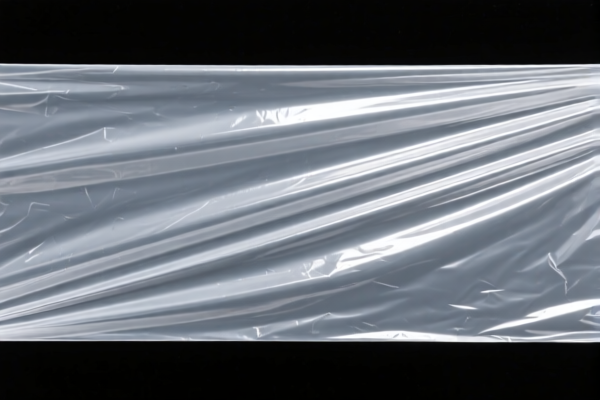
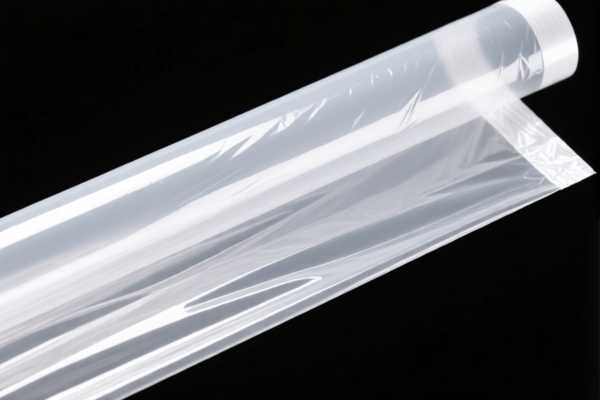
AI Analysis
🎞️ Ultra Wide High Resolution Thin Film (Optical Functional Film)
🌐 HS Code Reference & Customs Clearance Guide | 2026 Latest Tariff Analysis | Professional Clearance Strategy
📌 Part I: Product Definition & Classification: What Exactly Is It?
"Ultra Wide High Resolution Thin Film" is a specialized optical functional material. In international trade, its classification depends heavily on whether it is classified primarily as an optical instrument component or a plastic/chemical product.
Key Distinction Points:
- If the film is specifically designed for high-contrast display functions (e.g., polarizers, high-brightness films) and is considered an essential part of an optical device → It leans towards Chapter 90 (Optical Instruments).
- If the film is viewed primarily as a flexible plastic sheet/film with enhanced physical properties (width, resolution) but lacks specific optical integration claims → It leans towards Chapter 39 (Plastics).
⚠️ Critical Note:
- "Ultra Wide" and "High Resolution" are physical characteristics. Customs may interpret these as descriptions of plastic films (Chapter 39) unless explicitly certified as optical components (Chapter 90).
- Misclassification between Chapter 90 and Chapter 39 can lead to significant duty differences due to the "Section 301" and "122 Clause" tariffs.
📦 Part II: HS Code Classification Details (2026 Latest Tariff Authority Mapping)
Based on the provided data, here are the five most likely HS Codes for this product, ranging from optical-specific to general plastic films:
| HS Code | Product Description | Summary / Justification | Total Tax Rate |
|---|---|---|---|
9001.90.80.00 |
Optical Functional Materials (Thin Films) | ✅ Match: Form is 'film', use is high-contrast display. Classified as optical functional material. | 35.0% |
3920.99.20.00 |
Other Plastic Films (Flexible Sheets) | ✅ Match: Form is flexible film/strip/sheet. 'Ultra-wide/high-resolution' is a physical property description, fitting other plastic flexible films. | 39.2% |
9001.20.00.00 |
Polarizing Materials | ✅ Match: Form is 'film', material attribute is polarizing/optical functional film, consistent with polarizing materials. | 35.0% |
3919.90.50.60 |
Self-Adhesive Plastic Films (Other) | ⚠️ Inferred: Form fits (film/film); material inferred as plastic/polymer, no conflict with plastic material classification. | 40.8% |
3920.62.00.90 |
Other Plates, Sheets, Film of Polyesters | ⚠️ Inferred: Matches form (film) and material (inferred plastic/PET-like characteristics), no conflict. | 39.2% |
🔍 Key Observation:
- Chapter 90 Codes (9001...) generally carry a 35.0% total tax rate.
- Chapter 39 Codes (3920...,3919...) generally carry 39.2% - 40.8% total tax rate.
- Strategic Choice: If the film is strictly for optical display applications,9001codes are often more accurate and slightly cheaper than generic plastic film codes.
💰 Part III: 2026 Latest Tariff Rate Breakdown (Including Surcharges)
✅ Applicable Country: United States (US)
✅ Country of Origin: China (CN)
✅ Effective Date: From November 10, 2025 onwards
🎯 1. 9001.90.80.00 & 9001.20.00.00 —— Optical Functional / Polarizing Films
| Item | Content |
|---|---|
| Basic Tariff | 0.0% (Ad Valorem) |
| Section 301 Surcharge | +25.0% (From USITC Footnote) |
| Clause 122 Tariff | +10.0% (Specific to certain Chinese imports) |
| Total Tax Rate | 35.0% |
| Tax Calculation | CIF Value × 35.0% |
| De Minimis Exemption | ❌ Not Eligible (Deny De Minimis) |
| Legal Basis Path | USITC:9001.90.80.00 / USITC:9001.20.00.00 → Section 301: 25% + Clause 122: 10% |
📌 Explanation:
- These codes benefit from a 0% basic tariff for optical goods, but the 35% total rate is driven entirely by punitive tariffs (Section 301 + Clause 122).
- This is the preferred classification if the product is definitively an optical component for displays.
🎯 2. 3920.99.20.00 & 3920.62.00.90 —— Plastic Flexible Films
| Item | Content |
|---|---|
| Basic Tariff | 4.2% (Ad Valorem) |
| Section 301 Surcharge | +25.0% |
| Clause 122 Tariff | +10.0% |
| Total Tax Rate | 39.2% |
| Tax Calculation | CIF Value × 39.2% |
| De Minimis Exemption | ❌ Not Eligible |
| Legal Basis Path | USITC:3920.99.20.00 / USITC:3920.62.00.90 → Section 301: 25% + Clause 122: 10% |
📌 Note:
- Even though the basic tariff is higher (4.2%), the total rate is still higher than the optical film category.
- Use this only if the film cannot be proven as an "optical component" or if it's a generic plastic film used in non-optical applications.
🎯 3. 3919.90.50.60 —— Self-Adhesive Plastic Films
| Item | Content |
|---|---|
| Basic Tariff | 5.8% (Ad Valorem) |
| Section 301 Surcharge | +25.0% |
| Clause 122 Tariff | +10.0% |
| Total Tax Rate | 40.8% |
| Tax Calculation | CIF Value × 40.8% |
| De Minimis Exemption | ❌ Not Eligible |
| Legal Basis Path | USITC:3919.90.50.60 → Section 301: 25% + Clause 122: 10% |
📌 Warning:
- This is the most expensive classification in the dataset.
- Only use if the film is self-adhesive and cannot be classified under Chapter 90 or other Chapter 39 subheadings.
🛠️ Part IV: Customs Clearance Practical Advice (Real-World Pitfall Avoidance)
✅ 1. Required Documentation Checklist (Non-Negotiable)
| Document | Must Provide | Explanation |
|---|---|---|
| ✅ Product Specification Sheet | ✔️ | Must explicitly state: "Optical Functional Film," "High Contrast," "For Display Use." |
| ✅ Technical Data Sheet (TDS) | ✔️ | Shows refractive index, polarization ratio, thickness, etc., to prove optical function. |
| ✅ Product Photos (Clear) | ✔️ | Show the film roll, labels, and any packaging indicating "Optical" or "Display Component." |
| ✅ Commercial Invoice | ✔️ | Describe item as "Ultra Wide High Resolution Optical Film for Display Panels," NOT just "Plastic Film." |
| ✅ Certificate of Origin | ✔️ | Critical for proving CN origin and applying the correct 35%/39%/40.8% rates. |
✅ 2. Declaration Strategy (Key Mantra)
🔥 "Optical Function First, Plastic Description Second!"
| Scenario | Correct Declaration | Incorrect Declaration |
|---|---|---|
| Film for LCD/OLED Display Modules | 9001.90.80.00 (Optical Material) |
3920.99.20.00 (Plastic Film) → Higher Tax! |
| Polarizing Film | 9001.20.00.00 (Polarizing Material) |
3920.62.00.90 (PET Film) → Higher Tax! |
| Generic Plastic Sheet (No Optical Use) | 3920.99.20.00 |
9001.90.80.00 → Misclassification Risk! |
📌 Advice:
- If the film is used in high-contrast displays, emphasize its optical function in the description. This allows you to use the 35.0% tax rate (9001codes) instead of the 39-40% rates.
- Avoid vague terms like "Plastic Film." Use "Optical Functional Film" or "Polarizing Film."
✅ 3. Special Cases
| Situation | Handling Advice |
|---|---|
| OEM Custom Film | Provide customer specs showing it's made for a specific display model. Link it to 9001 codes. |
| Film with Adhesive Backing | Be cautious. If adhesive is primary, it may fall under 3919.90.50.60 (40.8%). Try to argue it's an optical component (9001) if the adhesive is secondary. |
| Sample vs. Commercial | Both are subject to the same tariffs. No de minimis exemption for shipments from China. |
🌍 Part V: Global Market Comparison (2026 Latest)
| Country/Region | Recommended HS Code | Total Tariff (CN Origin) | Key Certification | Notes |
|---|---|---|---|---|
| 🇺🇸 USA | 9001.90.80.00 |
35.0% | FCC (if integrated), RoHS | Section 301 + Clause 122 apply. |
| 🇨🇳 China | 9001.90.80.00 |
~3% - 9% | RoHS, CCC (if final product) | No punitive tariffs. |
| 🇪🇺 EU | 9001.90.80.00 |
0% - 2% | CE, REACH | No Section 301. |
| 🇬🇧 UK | 9001.90.80.00 |
0% - 2% | UKCA, RoHS | Post-Brexit rules apply. |
📌 Conclusion:
- The USA is the most challenging market due to the 35-40% punitive tariffs.
- Optical Classification (9001) is cheaper than generic plastic film classification (39xx) for this product.
- Always ensure the product description highlights optical functionality to justify the9001code.
📌 Part VI: Common Mistakes & Pitfalls (Lessons Learned)
❌ Mistake 1: Declaring "Optical Film" as "Plastic Sheet"
👉 Result: Tax rate jumps from 35.0% to 39.2% → Higher Cost!
❌ Mistake 2: Using "Ultra Wide" as the primary description
👉 Result: Customs may classify it as generic plastic (3920) → Higher Tax + Delay.
❌ Mistake 3: Not providing Technical Data Sheets
👉 Result: Customs cannot verify "Optical Function" → Audit Risk / Delay.
❌ Mistake 4: Assuming De Minimis Exemption Applies
👉 Result: Shipments under $800 are still taxed for Chinese-origin optical/plastic films. No Exemption.
✅ Correct Approach:
"High Contrast Optical Thin Film, Polarizing Type, For Display Panels, Model XYZ, CN Origin"
🎯 Part VII: Conclusion: Precise Classification Saves Money!
🎯 Remember the Mantra:
🔹 "Optical Function = 35% | Plastic Film = 39-40% | Declare Accurately!"
🔹 "HS Code Determines Tax Rate. A 4% Difference on High-Value Goods is Significant."
📌 Pro Tip:
If your film is produced in Vietnam, Malaysia, or Thailand, you may be eligible for Tariff Exemptions or lower rates under FTAs.
Recommend Advance Ruling (Pre-classification) with US Customs to confirm 9001.90.80.00 eligibility.
📣 Take Action Now:
📞 Consult with a Customs Broker + Provide Technical Specs + Apply for Pre-Classification
🚀 Ensure Smooth Clearance, Lower Taxes, and Faster Delivery!
✨ Professional Clearance Starts with Accurate Classification!
💼 Every Percent of Tax Saved Adds to Your Bottom Line!
Customer Reviews
About HS Code Classification
The Harmonized System (HS) is an internationally standardized nomenclature developed by the World Customs Organization (WCO) to classify traded products. Over 200 countries use the HS system as the basis for customs tariffs, trade statistics, and import/export regulations.
Each HS code follows a hierarchical structure:
- Chapter (2 digits) — Broad category of goods (e.g., Chapter 84: Machinery and Mechanical Appliances)
- Heading (4 digits) — More specific grouping within the chapter
- Subheading (6 digits) — Internationally standardized breakdown, used by all WCO member countries
- National subdivisions (8-10 digits) — Country-specific extensions for further classification, such as US HTSUS 10-digit codes
Correct HS code classification is essential for smooth customs clearance, accurate duty payment, and compliance with trade regulations. Misclassification can lead to customs delays, overpayment of duties, or penalties.
When importing from CN to US, the applicable tariff rates may include:
- Most-Favored-Nation (MFN) rate — The standard duty rate applied to WTO members
- General rate — Applied to countries without trade agreements
- Trade remedy duties — Additional tariffs such as Section 301 (anti-dumping), Section 232 (national security), or countervailing duties
The information provided on this page is for reference purposes only. For official classification, please consult with your local customs authority or a licensed customs broker.