Ultrasonic Cleaner
CN → US| HS Code | Tariff Rate | Origin | Destination | Doc |
|---|---|---|---|---|
| 8424301000 | 35.0% | CN | US | Official Doc |
| 8509801000 | 10.0% | CN | US | Official Doc |
| 8509805095 | 14.2% | CN | US | Official Doc |
| 8479899585 | 37.5% | CN | US | Official Doc |
| 8424309000 | 35.0% | CN | US | Official Doc |
Product Images
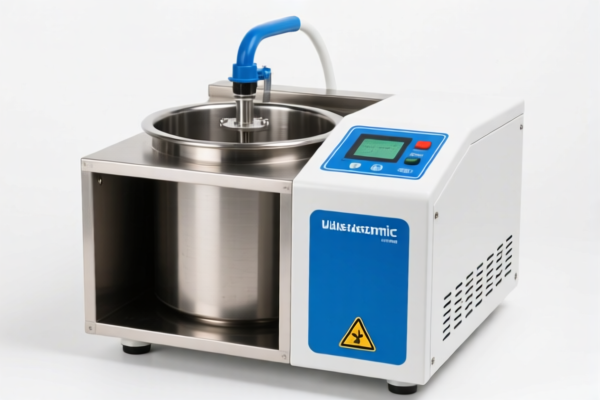
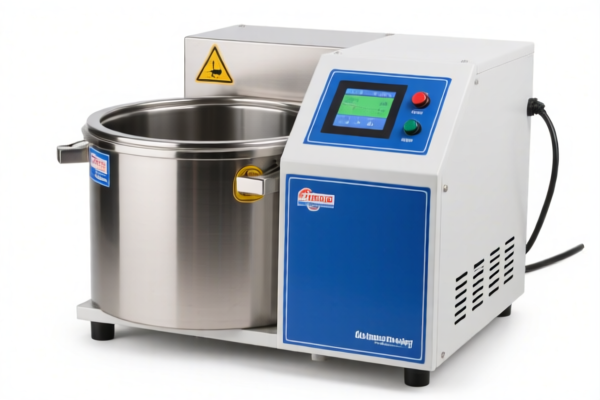
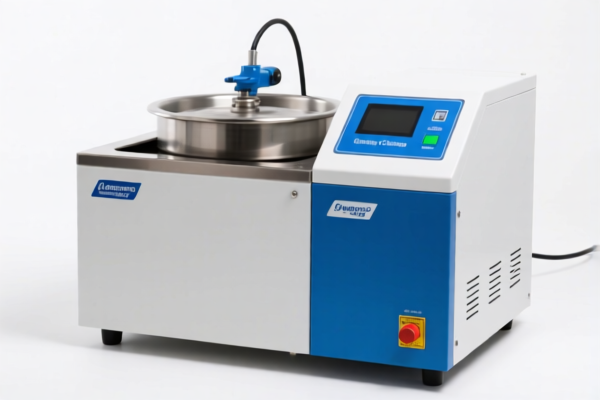
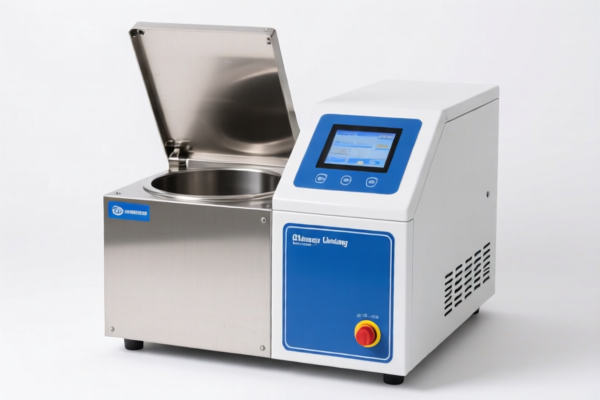
AI Analysis
🧼 Ultrasonic Cleaners: The Ultimate HS Code & Customs Clearance Guide (2026 Edition)
🌐 HS Code Reference & Customs Clearance Guide | 2026 Latest Tariff Analysis | Professional-Grade Entry Strategy
📌 I. Product Definition & Classification: Do You Really Understand “Ultrasonic Cleaners”?
An Ultrasonic Cleaner is a specialized cleaning device that uses high-frequency sound waves (ultrasound) to agitate fluid in a bath, creating cavitation bubbles that scrub dirt, grease, and contaminants from surfaces. In international trade, these devices are often misclassified due to their diverse applications (industrial, medical, consumer).
Key Distinction Points: * Industrial/Commercial Grade: Heavy-duty, often standalone units without "home appliance" aesthetics → Typically fall under Chapter 84 (Machinery). * Consumer/Home Appliance Grade: Compact, aesthetic, branded for household use (jewelry, dentures) → Often fall under Chapter 85 (Electrical Machinery). * Function-Based: If it sprays/sprinkles liquid → 8424. If it has a built-in motor and is for household use → 8509. If it’s a generic mechanical cleaner → 8479.
⚠️ Critical Warning:
- Misclassification can lead to tariff differences ranging from 10% to 37.5% due to Section 301 and IEEPA surcharges. - The presence of a self-contained electric motor and household intent is the primary determinant for Chapter 85 vs. Chapter 84.
📦 II. HS Code Classification Matrix (2026 Latest Tariff Authority)
Based on the provided data, here are the five possible classifications for "Ultrasonic Cleaners" with corresponding tax implications.
| HS Code | Product Description & Logic | Total Tax Rate | Tax Breakdown (CN Origin to US) |
|---|---|---|---|
| 8424.30.10.00 | Spraying/Mechanical Cleaners: Classified as machinery for spraying or dispersing liquids/powders. High risk for industrial ultrasonic units. | 35.0% | Base: 0% Sec 301: 25% IEEPA: 10% |
| 8509.80.10.00 | Electrical Appliances (General): Classified as other electrical machines/appliances. Low-risk fallback for general electric cleaners. | 10.0% | Base: 0% Sec 301: 0% IEEPA: 10% |
| 8509.80.50.95 | Household Appliances with Motor: Specifically for home-use appliances with self-contained electric motors. Most common for consumer ultrasonic cleaners. | 14.2% | Base: 4.2% Sec 301: 0% IEEPA: 10% |
| 8479.89.95.85 | Other Machinery: General "other" machinery category, often used if specific descriptions don't fit. Highest Risk. | 37.5% | Base: 2.5% Sec 301: 25% IEEPA: 10% |
| 8424.30.90.00 | Spraying Equipment: General spraying/dispersing machinery. Similar to 8424.30.10 but broader. | 35.0% | Base: 0% Sec 301: 25% IEEPA: 10% |
🔍 Key Insight:
- 8509.80.50.95 is often the optimal choice for consumer-grade cleaners (4.2% base + 10% IEEPA = 14.2%), avoiding the 25% Section 301 tariff if properly classified as a household appliance.
- 8424 and 8479 codes trigger the 25% Section 301 tariff, resulting in total rates of 35%-37.5%.
- 8509.80.10.00 is a safe general electrical code but may attract scrutiny if the product is clearly "home appliance" specific.
💰 III. 2026 Latest Tariff Rate Details (Including Surcharges)
✅ Applicable Country: United States (US)
✅ Origin: China (CN)
✅ Effective Date: From November 10, 2025 (including subsequent imports)
🎯 1. 8509.80.50.95 – Household Appliances with Electric Motor (Recommended for Consumer Goods)
| Item | Content |
|---|---|
| Base Tariff | 4.2% (ad valorem) |
| USITC Sec 301 Surcharge | 0% (Not applicable to this subheading under current trade actions) |
| IEEPA Surcharge | +10% (Applied to Chinese/HK products) |
| Total Tariff Rate | 14.2% |
| Tax Calculation | CIF Value × 14.2% |
| De Minimis Exemption? | ❌ No (Deny De Minimis for Section 301/IEEPA affected goods) |
| Legal Basis | IEEPA:9903.01.25 → USITC:8509.80.50.95 |
📌 Explanation:
- This code is best for consumer ultrasonic cleaners (e.g., for jewelry, glasses, dentures) sold in retail packaging.
- The 0% Sec 301 status is critical here, saving 25% compared to industrial classifications.
- Must prove "Household Use" via marketing materials, packaging, and product design.
🎯 2. 8509.80.10.00 – Other Electrical Machines (General Fallback)
| Item | Content |
|---|---|
| Base Tariff | 0% |
| USITC Sec 301 Surcharge | 0% |
| IEEPA Surcharge | +10% |
| Total Tariff Rate | 10.0% |
| Tax Calculation | CIF Value × 10.0% |
| De Minimis Exemption? | ❌ No |
| Legal Basis | IEEPA:9901.25 → USITC:8509.80.10.00 |
📌 Note:
- This is a "catch-all" for electrical machinery not specified elsewhere.
- Lowest total tax (10%), but higher risk of customs audit if the product doesn't clearly fit "other electrical machines."
- Suitable for semi-industrial or commercial cleaners not explicitly "household."
🎯 3. 8424.30.10.00 / 8424.30.90.00 – Spraying/Dispersing Machinery (Industrial Classification)
| Item | Content |
|---|---|
| Base Tariff | 0% |
| USITC Sec 301 Surcharge | +25% |
| IEEPA Surcharge | +10% |
| Total Tariff Rate | 35.0% |
| Tax Calculation | CIF Value × 35.0% |
| De Minimis Exemption? | ❌ No |
| Legal Basis | IEEPA:9903.01.25 → USITC:8424.30.xx |
📌 Risk Alert:
- These codes apply if customs views the cleaner as industrial spraying equipment.
- Ultrasonic cleaning is not strictly "spraying," but customs may misclassify if documentation is vague.
- High cost impact: 35% vs. 14.2% is a significant margin difference.
🎯 4. 8479.89.95.85 – Other Machinery (Highest Risk/Least Preferred)
| Item | Content |
|---|---|
| Base Tariff | 2.5% |
| USITC Sec 301 Surcharge | +25% |
| IEEPA Surcharge | +10% |
| Total Tariff Rate | 37.5% |
| Tax Calculation | CIF Value × 37.5% |
| De Minimis Exemption? | ❌ No |
| Legal Basis | IEEPA:9903.01.25 → USITC:8479.89.95.85 |
📌 Warning:
- This is the "Other Machinery" bucket. It usually applies when no specific description fits.
- Highest total tax (37.5%).
- Avoid this code unless no other classification is technically correct.
🛠️ IV. Customs Clearance Practical Advice (Pitfall Avoidance Guide)
✅ 1. Required Documentation Checklist
| Document | Must Provide | Purpose |
|---|---|---|
| ✅ Product Specification Sheet | ✔️ | Must detail frequency (e.g., 40kHz), power (W), tank volume, and intended use (e.g., "for home jewelry cleaning"). |
| ✅ Circuit Diagram / Block Diagram | ✔️ | To prove presence of self-contained electric motor (supports 8509 classification). |
| ✅ Product Photos | ✔️ | Show retail packaging, brand name, and household-style design (if claiming 8509.50.95). |
| ✅ Commercial Invoice | ✔️ | Clear description: "Ultrasonic Cleaner for Household Use, Model XYZ." |
| ✅ Origin Certificate (CO) | ✔️ | Required for IEEPA surcharge determination. |
✅ 2. Declaration Strategy (Key Mantras)
🔥 “Clarify Use, Prove Motor, Avoid ‘Spray’ Terms!”
| Scenario | Correct Declaration | Incorrect Declaration |
|---|---|---|
| Consumer Jewelry Cleaner | 8509.80.50.95 (Household Appliance) |
"Spraying Machine" → 8424 → 35% Tax |
| Industrial Parts Cleaner | 8424.30.10.00 or 8479.89.95.85 |
"Household Appliance" → Audit Risk |
| General Electric Cleaner | 8509.80.10.00 (Safe Fallback) |
Vague "Cleaning Machine" → Misclassification Risk |
📌 Tip:
- Do NOT describe ultrasonic cleaners as "Spraying Machines" or "Sandblasting Equipment" unless they actually function that way. Ultrasonic cleaning uses sound waves, not liquid jets. This distinction is crucial to avoid Chapter 84 misclassification.
- If marketing materials show the product being used on eyeglasses, jewelry, or dentures, this supports Household Appliance (8509) classification.
✅ 3. Special Case Handling
| Situation | Recommendation |
|---|---|
| OEM for Retail Brands | Ensure packaging clearly states "For Home Use" to support 8509.80.50.95. |
| Industrial Grade Units | If heavy-duty, use 8424 or 8479. Accept higher tax (35-37.5%) as it reflects industrial nature. |
| Hybrid Devices | If the cleaner also has a drying/heating function, it may still qualify as 8509 if the primary function is cleaning. |
| Component Imports | If importing just the transducer or tank, consider parts classification (lower tax), but ensure they are not "complete articles." |
🌍 V. Global Market Comparison (2026)
| Country/Region | Recommended HS Code | Tariff (China Origin) | Certifications | Notes |
|---|---|---|---|---|
| 🇺🇸 USA | 8509.80.50.95 |
14.2% (Best) | FCC, UL, Energy Star (if applicable) | High risk of 35-37.5% if misclassified as industrial. |
| 🇨🇳 China | 8509.80.50.95 |
5% | CCC | No surcharges. Domestic sales use this. |
| 🇪🇺 EU | 8509.80.90 |
0% - 4% | CE, RoHS, WEEE | Ultrasonic cleaners are generally low-tariff in EU. |
| 🇦🇺 Australia | 8509.80.90 |
5% | RCM | No surcharges. |
| 🇯🇵 Japan | 8509.80.90 |
0% - 3% | PSE | No surcharges. |
📌 Conclusion:
- The US market is the most complex due to Section 301 and IEEPA tariffs.
- Accurate classification is cost-saving: 14.2% vs. 37.5% is a 23.3% difference in total landed cost.
- For exporters, ensuring the product is marketed and documented as a household appliance is the key to minimizing US duties.
📌 VI. Common Errors & Pitfalls (Lessons Learned)
❌ Error 1: Calling an ultrasonic cleaner a "Spraying Machine" in the invoice.
👉 Consequence: Customs applies Chapter 84 (8424) → 35% Tax.
👉 Fix: Use "Ultrasonic Cleaning Equipment" or "Household Ultrasonic Cleaner."
❌ Error 2: Ignoring the "Self-Contained Motor" aspect.
👉 Consequence: If it’s just a tank without a motor, it may fall under 8424 or 8479.
👉 Fix: Ensure the motor is integrated and documented.
❌ Error 3: Using "Other Machinery" (8479) for a clearly household product.
👉 Consequence: 37.5% Tax (Highest).
👉 Fix: Apply for Advance Ruling to confirm 8509.80.50.95 eligibility.
❌ Error 4: Failing to separate Industrial vs. Consumer lines.
👉 Consequence: Mixed shipments may trigger full audit of the entire batch.
👉 Fix: Ship industrial and consumer units separately with different HS codes.
✅ Correct Practice:
“Ultrasonic Cleaner, 40kHz, 1.5L, for Home Jewelry Cleaning, with Built-in Motor, Model ABC, FCC Certified”
🎯 VII. Conclusion: Professional Classification Saves Money!
🎯 Remember the Mantra:
🔹 “Household? Go 8509.14.2%. Industrial? Accept 35%+.”
🔹 “No Spraying? Don’t claim 8424. Use ‘Ultrasonic’ to avoid Sec 301.”
📌 Pro Tip:
If your ultrasonic cleaner is originally from Vietnam, Mexico, or Thailand, you may qualify for IEEPA Exemptions, reducing the tariff to 0%-5%.
For US imports, Apply for an Advance Ruling with CBP to lock in the 14.2% rate for 8509.80.50.95.
📣 Immediate Action:
📞 Consult a licensed customs broker.
📄 Provide product photos, specs, and marketing materials.
🚀 Secure your 14.2% tax rate and avoid the 37.5% trap!
✨ Professional Customs Clearance Starts with Precise Classification!
💼 Every Percentage Point Saved is Pure Profit!
Customer Reviews
About HS Code Classification
The Harmonized System (HS) is an internationally standardized nomenclature developed by the World Customs Organization (WCO) to classify traded products. Over 200 countries use the HS system as the basis for customs tariffs, trade statistics, and import/export regulations.
Each HS code follows a hierarchical structure:
- Chapter (2 digits) — Broad category of goods (e.g., Chapter 84: Machinery and Mechanical Appliances)
- Heading (4 digits) — More specific grouping within the chapter
- Subheading (6 digits) — Internationally standardized breakdown, used by all WCO member countries
- National subdivisions (8-10 digits) — Country-specific extensions for further classification, such as US HTSUS 10-digit codes
Correct HS code classification is essential for smooth customs clearance, accurate duty payment, and compliance with trade regulations. Misclassification can lead to customs delays, overpayment of duties, or penalties.
When importing from CN to US, the applicable tariff rates may include:
- Most-Favored-Nation (MFN) rate — The standard duty rate applied to WTO members
- General rate — Applied to countries without trade agreements
- Trade remedy duties — Additional tariffs such as Section 301 (anti-dumping), Section 232 (national security), or countervailing duties
The information provided on this page is for reference purposes only. For official classification, please consult with your local customs authority or a licensed customs broker.