Ultraviolet Lamp
CN → US| HS Code | Tariff Rate | Origin | Destination | Doc |
|---|---|---|---|---|
| 8543707100 | 37.0% | CN | US | Official Doc |
| 8539490080 | 37.4% | CN | US | Official Doc |
| 9022298000 | 35.0% | CN | US | Official Doc |
| 9022909500 | 36.4% | CN | US | Official Doc |
| 8543709860 | 37.6% | CN | US | Official Doc |
Product Images
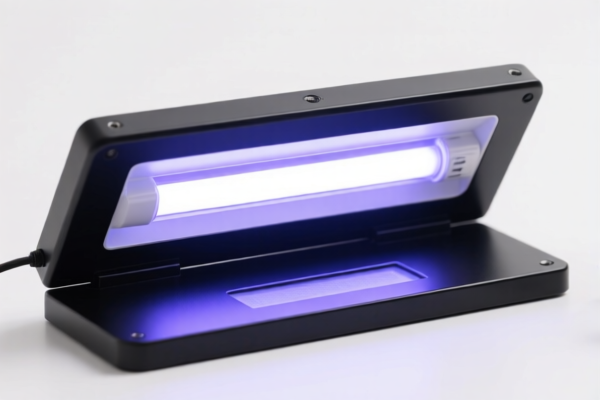
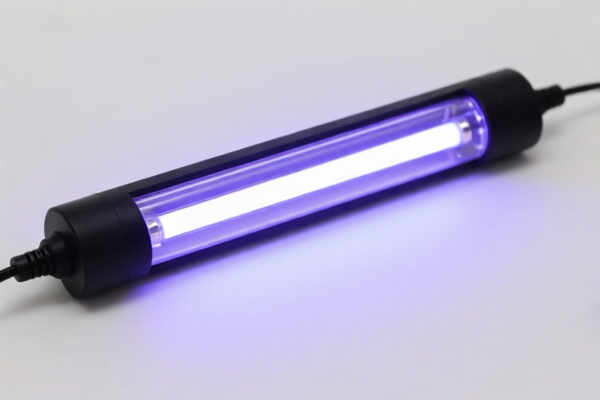
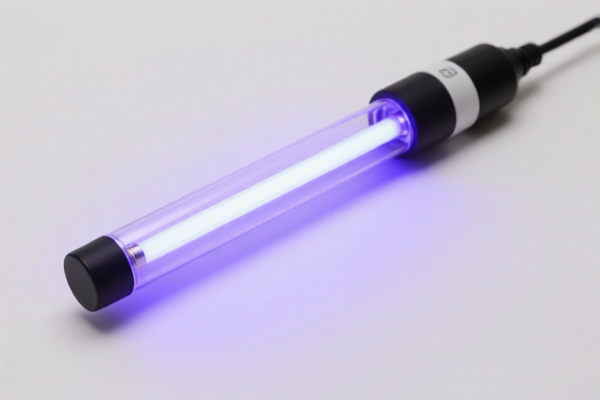
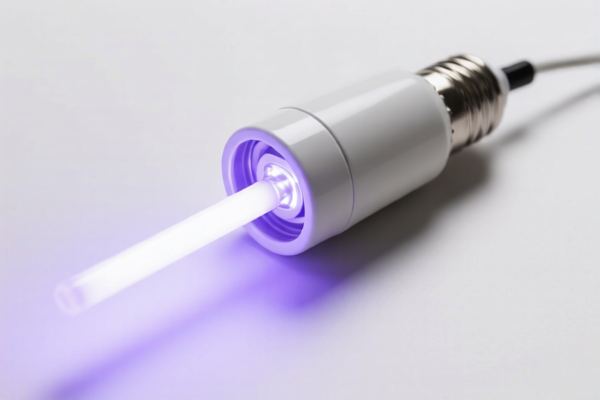
AI Analysis
🌟 Ultraviolet Lamps (UV Lamps) – HS Code Classification & US Customs Clearance Guide
🌐 HS Code Reference & Clearance Guide | 2026 Latest Tariff Analysis | Professional Strategy
📌 I. Product Definition & Classification: Do You Really Understand "UV Lamps"?
Ultraviolet Lamps (UV Lamps) are electric light sources that emit ultraviolet radiation. They are critical in various industries, including water purification, medical sterilization, curing applications, and scientific analysis.
In international trade (specifically US Customs), these lamps are often misclassified because they straddle the lines between lighting equipment, electrical machines, and radiation-emitting instruments. The correct HS Code depends heavily on their primary function and technical specifications.
⚠️ Key Distinction Points: - If the lamp is primarily for general lighting or specific illumination (even if UV): It may fall under Chapter 85 (Electrical Machinery). - If the lamp is part of a diagnostic, medical, or industrial irradiation device: It may fall under Chapter 90 (Optical, Photographic, Medical Instruments). - "Other" categories are often risky and attract scrutiny. Always justify the "general purpose" vs. "specific function" argument.
📦 II. HS Code Classification Details (2026 Latest Tariff Authority Comparison)
| HS Code | Product Description | Application Scenario | Tax Rate (China Origin) |
|---|---|---|---|
8543.70.71.00 |
Electric luminescent lamps; other machines and apparatus; parts thereof – Other | UV lamps used in electrical apparatus not specifically described elsewhere; general industrial use where specific medical/scientific function isn't the primary driver | 37.0% |
8539.49.00.80 |
Electric filament or discharge lamps, other than lamp tubes of heading 85.39 – Ultraviolet or infrared lamps | Direct match: Specifically lists "Ultraviolet or infrared lamps". Best for standard UV bulbs/tubes used in curing, drying, or general UV emission | 37.4% |
9022.29.80.00 |
X-ray or alpha or beta or gamma ray apparatus, medical, surgical, dental or veterinary – Other apparatus | UV lamps used in irradiation devices (non-ionizing but classified under radiation equipment logic in some interpretations); used for sterilization/purification systems | 35.0% |
9022.90.95.00 |
Parts and accessories of X-ray or gamma-ray apparatus | Consumable components: UV lamps treated as "parts/accessories" to a larger irradiation device. Fits if the lamp is sold as a replacement part for a specific machine | 36.4% |
8543.70.98.60 |
Electric machines and apparatus – Other | Catch-all/Residual: If the lamp doesn't fit neatly into other specific subheadings but is still an electrical apparatus with a specific function | 37.6% |
🔍 Important Note: -
8539.49.00.80is often the most accurate for standalone UV lamps because it explicitly mentions "Ultraviolet... lamps". -9022.29.80.00carries a lower base tariff (0%) but requires strong justification that the lamp is part of a "radiation apparatus" (even if non-ionizing). This is a strategic choice for cost saving but carries higher audit risk. -8543.70.71.00and8543.70.98.60are for lamps that don't fit neatly into 8539 (e.g., integrated into other machines).
💰 III. 2026 Latest Tariff Rate Breakdown (Including Additional Duties & Policy Surcharges)
✅ Applicable Country: United States (US)
✅ Origin: China (CN)
✅ Effective Date: November 10, 2025 onwards (for subsequent imports)
🎯 1. 8543.70.71.00 —— Other Electric Luminescent Lamps
| Item | Details |
|---|---|
| Base Tariff | 2.0% (ad valorem) |
| Section 301 Surcharge | +25.0% |
| IEEPA Surcharge (Section 122) | +10.0% |
| Total Rate | 37.0% |
| Tax Calculation | CIF Value × 37.0% |
| De Minimis Exemption | ❌ Not Eligible |
| Legal Basis | USITC:8543.70.71.00 → Section 301 Footnote 9903.88.01 → IEEPA:9903.01.25 |
📌 Explanation: - This code is part of Chapter 85. The 25% Section 301 duty applies. - The additional 10% IEEPA duty applies to Chinese-origin goods. - Total 37% is high but predictable.
🎯 2. 8539.49.00.80 —— Ultraviolet or Infrared Lamps
| Item | Details |
|---|---|
| Base Tariff | 2.4% (ad valorem) |
| Section 301 Surcharge | +25.0% |
| IEEPA Surcharge (Section 122) | +10.0% |
| Total Rate | 37.4% |
| Tax Calculation | CIF Value × 37.4% |
| De Minimis Exemption | ❌ Not Eligible |
| Legal Basis | USITC:8539.49.00.80 → Section 301 Footnote 9903.88.01 → IEEPA:9903.01.25 |
📌 Explanation: - This is the most specific code for UV lamps. - Slightly higher base rate (2.4% vs 2.0%), but often easier to defend in customs examinations due to explicit description.
🎯 3. 9022.29.80.00 —— Other Radiation Apparatus (Strategic Low-Tax Option)
| Item | Details |
|---|---|
| Base Tariff | 0.0% (ad valorem) |
| Section 301 Surcharge | +25.0% |
| IEEPA Surcharge (Section 122) | +10.0% |
| Total Rate | 35.0% |
| Tax Calculation | CIF Value × 35.0% |
| De Minimis Exemption | ❌ Not Eligible |
| Legal Basis | USITC:9022.29.80.00 → Section 301 Footnote 9903.88.01 → IEEPA:9903.01.25 |
📌 Strategic Note: - Savings: 2.0% - 2.4% compared to Chapter 85 codes. - Risk: High. Requires proving the lamp is used in "apparatus" for irradiation. Customs may argue UV is non-ionizing and thus not "X-ray/Gamma/Beta" equipment. Justification must be robust.
🎯 4. 9022.90.95.00 —— Parts of Radiation Apparatus
| Item | Details |
|---|---|
| Base Tariff | 1.4% (ad valorem) |
| Section 301 Surcharge | +25.0% |
| > IEEPA Surcharge (Section 122) | +10.0% |
| > Total Rate | 36.4% |
| > Tax Calculation | CIF Value × 36.4% |
| > De Minimis Exemption | ❌ Not Eligible |
| > Legal Basis | USITC:9022.90.95.00 → Section 301 Footnote 9903.88.01 → IEEPA:9903.01.25 |
📌 Explanation: - Applicable if the lamp is sold as a replacement part for a specific UV irradiation machine. - Not suitable for standalone lamps sold separately.
🎯 5. 8543.70.98.60 —— Other Machines and Apparatus (Catch-All)
| Item | Details |
|---|---|
| Base Tariff | 2.6% (ad valorem) |
| > Section 301 Surcharge | +25.0% |
| > IEEPA Surcharge (Section 122) | +10.0% |
| > Total Rate | 37.6% |
| > Tax Calculation | CIF Value × 37.6% |
| > De Minimis Exemption | ❌ Not Eligible |
| > Legal Basis | USITC:8543.70.98.60 → Section 301 Footnote 9903.88.01 → IEEPA:9903.01.25 |
📌 Explanation: - Use only if the lamp doesn't fit other 8543 subheadings. - Highest total rate among Chapter 85 options. Avoid if possible.
🛠️ IV. Customs Clearance Practical Advice (Real-World Pitfall Avoidance Guide)
✅ 1. Required Documentation List (No Exceptions)
| Document | Mandatory? | Description |
|---|---|---|
| ✅ Product Specification Sheet | ✔️ | Must detail wavelength (nm), power (W), voltage, and primary function (e.g., sterilization, curing, analysis). |
| ✅ Technical Diagrams | ✔️ | Show internal structure, glass type (quartz vs. standard), and electrode details. |
| ✅ Product Photos (Labeled) | ✔️ | Clear images of the lamp, including labels with model numbers and technical specs. |
| ✅ Third-Party Test Report | ✔️ | FDA Registration (if medical), UL/ETL Safety Certification, EMC Compliance. |
| ✅ Commercial Invoice | ✔️ | Must clearly state "Ultraviolet Lamp" or "UV Tube" – avoid vague terms like "Light Source" without qualification. |
| ✅ Country of Origin Certificate | ✔️ | Critical for applying IEEPA/301 duties correctly. |
| ✅ Packing List | ✔️ | Detail packaging to prevent damage during transit; note if lamps are fragile. |
✅ 2. Declaration Tips (Key Mnemonics)
🔥 “Function First, Function First, Function First! Don’t Just Say ‘Lamp’!”
| Scenario | Correct Declaration | Incorrect Practice |
|---|---|---|
| Standalone UV Bulb | 8539.49.00.80 – "Ultraviolet Lamp, 10W, 254nm, for General Use" |
"Electric Lamp" → Risk of misclassification |
| UV Lamp in Water Purifier | If sold as a set, declare as Apparatus (9022.29.80.00 or 8543.70.71.00) depending on primary function. Do not split. |
Declaring lamp and purifier separately if they are a single system |
| Replacement UV Bulb | 9022.90.95.00 – "Replacement Part for UV Sterilizer Model XYZ" |
Declaring as "General Lighting" → Higher tax |
| High-Intensity UV for Curing | 8539.49.00.80 – "Industrial UV Curing Lamp" |
"LED Light" → If not LED, this is wrong |
✅ 3. Special Case Handling
| Situation | Handling Suggestion |
|---|---|
| Medical vs. Industrial Use | If for medical sterilization, provide FDA/CE medical device documentation. This supports 9022 classification. If for industrial curing, use 8539. |
| Integrated in a Device | If the UV lamp is integrated into a machine (e.g., a UV printer, water purifier), declare the entire machine under its appropriate code, not just the lamp. |
| OEM Custom Lamps | Provide customer design specs to prove specific function. Avoid generic descriptions. |
| Non-Standard Shapes | If the lamp shape is unique, provide 3D models or detailed drawings to justify classification. |
🌍 V. Global Market Comparison (2026 Latest)
| Country/Region | Recommended HS Code | Tariff (China Origin) | Certification Required | Notes |
|---|---|---|---|---|
| 🇺🇸 USA | 8539.49.00.80 |
37.4% (or 35.0% if 9022) |
FCC, UL, DOE Efficiency | High tariff risk. 9022 offers savings but higher audit risk. |
| 🇨🇳 China | 8539.49.00.80 |
5.0% | CCC (if applicable) | Low tariff, no additional surcharges. |
| 🇪🇺 EU | 8539.49.00.80 |
0% (if CE compliant) | CE, RoHS, WEEE | No additional duties. Very favorable for UV lamps. |
| 🇦🇺 Australia | 8539.49.00.80 |
5.0% | RCM (Regulatory Compliance Mark) | Moderate tariff. |
| 🇯🇵 Japan | 8539.49.00.80 |
0% | PSE (Electrical Appliance Safety) | Low tariff. PSE certification required. |
📌 Conclusion: - USA is the most expensive market for UV lamps due to Section 301 + IEEPA duties. - EU and Japan are most favorable, with 0% tariffs for compliant goods. - Strategy: If exporting to the US, consider value-engineering to fit the
9022.29.80.00code (if legally justifiable) to save ~2-2.4%. Otherwise, budget for 37%+ duty.
📌 VI. Common Errors & Pitfall Avoidance Guide (Lessons Learned)
❌ Error 1: Declaring UV Lamps as "LED Lights"
👉 Consequence: Misclassification. If the lamp is not LED-based (e.g., Mercury Vapor, UV-C LED), this is fraud. Penalties + Back Taxes.
❌ Error 2: Using "Other Electrical Apparatus" (8543.70.98.60) when a more specific code (8539.49.00.80) exists
👉 Consequence: Higher duty (37.6% vs 37.4%) and increased customs scrutiny for vague descriptions.
❌ Error 3: Ignoring Wavelength Specifications
👉 Consequence: Customs may reclassify based on actual use. If declared as "general lighting" but used for sterilization, you may face retroactive duty adjustments.
❌ Error 4: Splitting integrated systems (Lamp + Housing + Power Supply)
👉 Consequence: If the lamp is an integral part of a machine, splitting the invoice leads to higher total duty and potential rejection.
✅ Correct Practice:
"UV-C Germicidal Lamp, 15W, 254nm, Quartz Glass, For Water Purification System, Model XYZ, FCC Certified"
🎯 VII. Conclusion: Professional Declaration Saves Money!
🎯 Remember Mnemonic:
🔹 "Be Specific: UV, Wavelength, Function."
🔹 "USA Duty: 37% is Standard, 35% is Strategic, 38% is Avoidable."
🔹 "Docs are Key: FDA/UL/CE Prove Your Claim."
📌 Pro Tip:
If your UV lamps are originally from Vietnam, Mexico, or Thailand, you may qualify for IEEPA Exemption or FTZ Benefits, reducing tariffs to 0%~5%. Consider Applying for an Advance Ruling (CUS-5133) with US Customs to lock in your HS Code and duty rate before shipment.
📣 Immediate Action:
📞 Consult a licensed customs broker.
📄 Provide full technical specs and application details.
🚀 Clear Customs Smoothly, Reduce Costs, Boost Profits!
✨ Professional Clearance Starts with Accurate Classification!
💼 Every Cent of Duty Should Be Calculated Precisely!
Customer Reviews
About HS Code Classification
The Harmonized System (HS) is an internationally standardized nomenclature developed by the World Customs Organization (WCO) to classify traded products. Over 200 countries use the HS system as the basis for customs tariffs, trade statistics, and import/export regulations.
Each HS code follows a hierarchical structure:
- Chapter (2 digits) — Broad category of goods (e.g., Chapter 84: Machinery and Mechanical Appliances)
- Heading (4 digits) — More specific grouping within the chapter
- Subheading (6 digits) — Internationally standardized breakdown, used by all WCO member countries
- National subdivisions (8-10 digits) — Country-specific extensions for further classification, such as US HTSUS 10-digit codes
Correct HS code classification is essential for smooth customs clearance, accurate duty payment, and compliance with trade regulations. Misclassification can lead to customs delays, overpayment of duties, or penalties.
When importing from CN to US, the applicable tariff rates may include:
- Most-Favored-Nation (MFN) rate — The standard duty rate applied to WTO members
- General rate — Applied to countries without trade agreements
- Trade remedy duties — Additional tariffs such as Section 301 (anti-dumping), Section 232 (national security), or countervailing duties
The information provided on this page is for reference purposes only. For official classification, please consult with your local customs authority or a licensed customs broker.