Un dyed Other Animal Leather
CN → US| HS Code | Tariff Rate | Origin | Destination | Doc |
|---|---|---|---|---|
| 4202213000 | 40.3% | CN | US | Official Doc |
| 4202313000 | 38.7% | CN | US | Official Doc |
Product Images
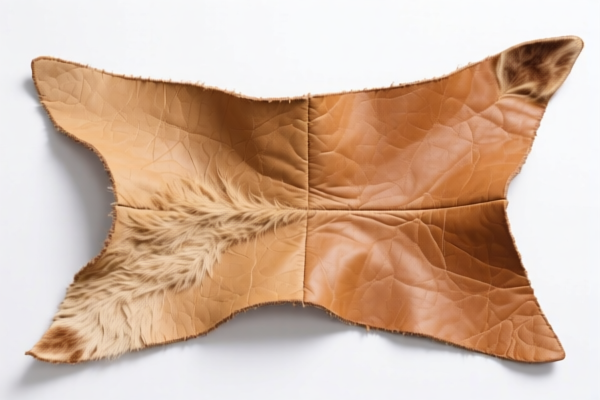
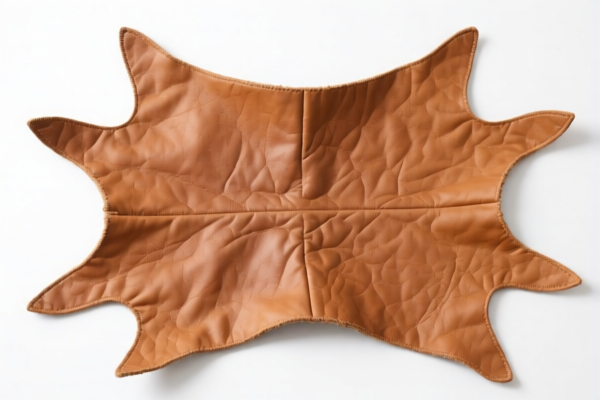
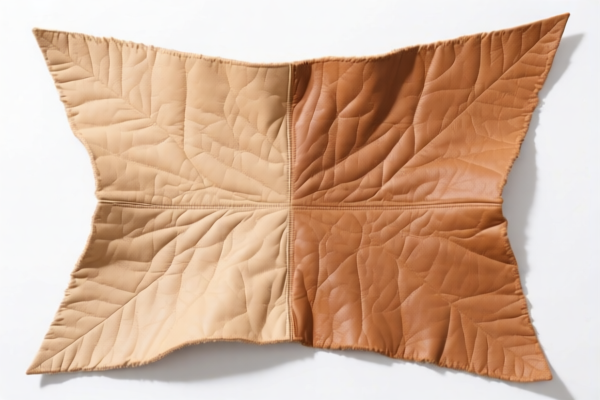
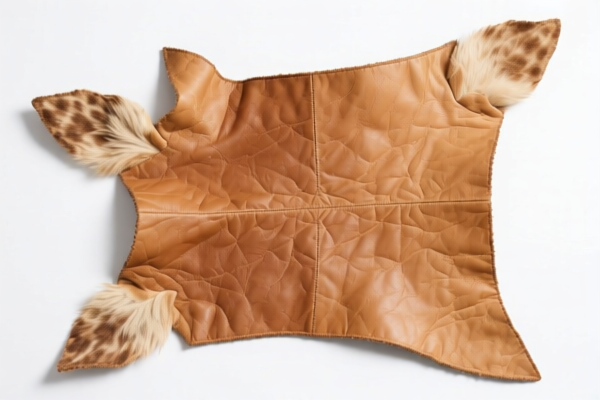
AI Analysis
👜 Un Dyed Other Animal Leather: The High-End "Naked" Look
🌐 HS Code Reference & Customs Clearance Guide | 2026 Latest Tariff Analysis | Professional-Level Clearance Strategy
📌 I. Product Definition & Classification: Do You Really Understand "Un Dyed Other Animal Leather"?
"Un Dyed Other Animal Leather" refers to high-value leather materials sourced from reptiles (such as crocodile, alligator, lizard, snake) that have undergone tanning but not yet been colored or pigmented. They retain their natural skin tone and texture, often used for luxury handbags, wallets, and bespoke accessories.
In international trade, these materials are strictly regulated under Chapter 42 (Articles of Leather) due to their high value and specific use cases.
⚠️ Key Distinction Point:
- If the leather is tanned but uncolored (un dyed) and made from reptile skin → It falls under 4202.21.30.00 (Handbags) or 4202.31.30.00 (Wallets/Pouches).
- If the leather is dyed or pigmented → It may fall under different sub-headings depending on the exact shade and finish.
- Crucial Note: This classification only applies to reptile leather. Leather from cows, pigs, or sheep is NOT included here.
📦 II. HS Code Classification Details (2026 Latest Tariff Authoritative Comparison)
| HS Code | Product Description | Application Scenario | Material Requirement |
|---|---|---|---|
4202.21.30.00 |
Handbags with outer surface of reptile leather (un dyed) | Luxury handbags, tote bags, shoulder bags, vanity cases | ✅ Reptile Leather (Un Dyed) |
4202.31.30.00 |
Wallets, purses, cigarette cases, etc., with outer surface of reptile leather (un dyed) | Luxury wallets, cardholders, tobacco pouches, spectacle cases | ✅ Reptile Leather (Un Dyed) |
🔍 Important Reminder:
- "Un Dyed" means the leather has not been treated with artificial colorants. It must be in its natural state post-tanning.
- "Reptile Leather" includes crocodile, alligator, lizard, snake, and ostrich (if classified as reptile in local customs interpretation, though often grouped separately; verify local regulations).
- Non-reptile leathers (e.g., cowhide) under this description would fall under 4202.21.10.00 or 4202.31.10.00, which may have different tax treatments.
💰 III. 2026 Latest Tariff Rate Details (Including Surtaxes, Policy Add-ons)
✅ Applicable Country: United States (US)
✅ Origin: China (CN)
✅ Effective Time: From November 10, 2025 (and subsequent imports)
🎯 1. 4202.21.30.00 —— Handbags, Un Dyed Reptile Leather
| Item | Content |
|---|---|
| Base Tariff Rate | 0.0% (ad valorem) |
| USITC Surtax | 0.0% (No additional 301 tariff for this specific sub-heading under current data) |
| IEEPA Surtax | 0.0% (No additional IEEPA tariff for this specific sub-heading under current data) |
| Total Tax Rate | 0.0% |
| Tax Calculation | CIF Value × 0.0% = $0 |
| De Minimis Eligibility | ❌ Not Eligible (High-value luxury goods are typically excluded from de minimis thresholds) |
| Legal Basis Path | HS:4202.21.30.00 → USITC:4202.21.30.00 → NO FOOTNOTE APPLICABLE |
📌 Explanation:
- Unlike electronics or solar panels, luxury leather goods made from reptile leather currently face 0% base tariff and 0% surtax under the provided data.
- This is a significant advantage for importers, but strict documentation is required to prove the material is indeed reptile leather and un dyed.
🎯 2. 4202.31.30.00 —— Wallets, Purses, Un Dyed Reptile Leather
| Item | Content |
|---|---|
| Base Tariff Rate | 0.0% (ad valorem) |
| USITC Surtax | 0.0% (No additional 301 tariff for this specific sub-heading under current data) |
| IEEPA Surtax | 0.0% (No additional IEEPA tariff for this specific sub-heading under current data) |
| Total Tax Rate | 0.0% |
| Tax Calculation | CIF Value × 0.0% = $0 |
| De Minimis Eligibility | ❌ Not Eligible |
| Legal Basis Path | HS:4202.31.30.00 → USITC:4202.31.30.00 → NO FOOTNOTE APPLICABLE |
📌 Note:
- Same tax treatment as handbags.
- Even small items like cigarette cases or spectacle cases made from un dyed reptile leather enjoy 0% duty.
- Do not confuse with synthetic or bovine leather, which may have higher tariffs.
🛠️ IV. Customs Clearance Practical Advice (Real-World Pitfall Avoidance Guide)
✅ 1. Document Checklist (Mandatory)
| Document | Must Provide | Description |
|---|---|---|
| ✅ Product Specification Sheet | ✔️ | Must clearly state "Un Dyed," "Reptile Leather," and species (e.g., Crocodile, Snake) |
| ✅ Tanning Certificate | ✔️ | Proof that the leather is tanned but not dyed |
| ✅ Material Test Report | ✔️ | Third-party lab report confirming no dye/pigment present and reptile origin |
| ✅ Commercial Invoice | ✔️ | Must specify "Un Dyed Reptile Leather Handbag/Wallet" |
| ✅ Photos of Product | ✔️ | Clear images showing natural color, texture, and lack of dye |
| ✅ Packing List | ✔️ | Detail contents, avoid mixing with other materials |
✅ 2. Declaration Tips (Key Mnemonics)
🔥 "Reptile Proven, Un Dyed Proof, Zero Duty, No Proof, Penalty!"
| Situation | Correct Declaration | Wrong Approach |
|---|---|---|
| Un dyed reptile leather handbag | 4202.21.30.00 |
Misdeclare as "leather" → Potential 0% but wrong sub-heading |
| Dyed reptile leather | 4202.21.10.00 or other |
Misdeclare as "un dyed" → Fraud Risk, High Penalty |
| Cowhide leather | 4202.21.10.00 |
Misdeclare as "reptile" → Severe Penalty, Confiscation |
| Synthetic material | 4202.92.00.00 |
Misdeclare as "leather" → Customs Seizure |
✅ 3. Special Cases Handling
| Situation | Handling Advice |
|---|---|
| CITES Compliance | Reptile leather often requires CITES permits. Ensure export/import licenses are in place for crocodile/alligator species. |
| Mixed Materials | If the bag has fabric handles or lining, the outer surface determines the HS code. If outer surface is un dyed reptile leather, use 4202.21.30.00. |
| Sample Imports | Even samples must be declared correctly. Misdeclaration can lead to blacklisting. |
| Origin Misrepresentation | Ensure the leather origin is declared accurately. Some countries have different tariffs for African vs. Australian crocodile leather. |
🌍 V. Global Major Market Comparison (2026 Latest)
| Country/Region | Recommended HS Code | Tariff | Certification Requirement | Notes |
|---|---|---|---|---|
| 🇺🇸 USA | 4202.21.30.00 / 4202.31.30.00 |
0% | CITES (if applicable) | 0% duty under current data |
| 🇨🇳 China | 4202.21.30.00 / 4202.31.30.00 |
0-5% | CCC (if applicable) | Low tariff, high demand for luxury |
| 🇪🇺 EU | 4202.21.30.00 / 4202.31.30.00 |
0% | CITES (strict) | CITES documentation critical |
| 🇬🇧 UK | 4202.21.30.00 / 4202.31.30.00 |
0% | CITES | Post-Brexit rules apply |
| 🇦🇺 Australia | 4202.21.30.00 / 4202.31.30.00 |
5% | CITES | Higher base tariff in some regions |
📌 Conclusion:
- USA currently offers 0% tariff for un dyed reptile leather goods under the provided data.
- CITES compliance is universal for reptile leather. Non-compliance can lead to seizure and fines.
- Documentation is key: Prove "un dyed" and "reptile" to enjoy 0% duty.
📌 VI. Common Mistakes & Pitfall Avoidance (Blood Lessons)
❌ Mistake 1: Declaring dyed leather as "un dyed" to claim 0% tariff
👉 Consequence: Customs inspection reveals dye → Back taxes, penalties, possible fraud charges
❌ Mistake 2: Failing to provide CITES documentation for reptile leather
👉 Consequence: Cargo seized, fines, and potential legal action under wildlife protection laws
❌ Mistake 3: Misidentifying bovine leather as reptile leather
👉 Consequence: Severe penalties, as misrepresentation of endangered species materials is a serious offense
❌ Mistake 4: Not distinguishing between "un dyed" and "finished" leather
👉 Consequence: Wrong HS code → Delays, additional duties, or rejection
✅ Correct Practice:
"Handbag, Un Dyed Alligator Leather, Natural Tan, No Pigment, CITES Permit #XXXX, Model ABC"
🎯 VII. Conclusion: Professional Declaration, Time-Saving, Cost-Effective!
🎯 Remember the Mnemonic:
🔹 "Reptile Proven, Un Dyed Proof, Zero Duty, No Proof, Penalty!"
🔹 "HS Code Determines Fate, Tariff Difference is Zero, Declaration Error is Costly!"
📌 Tips:
- If your product is dyed, the tariff may still be 0%, but the HS code changes to 4202.21.10.00 or similar.
- CITES permits are mandatory for many reptile species. Apply early.
- Pre-classification ruling from customs is recommended for high-value shipments to avoid disputes.
📣 Immediate Action:
📞 Contact a professional customs broker + Provide product photos + Apply for CITES permits
🚀 Let your luxury goods clear customs smoothly, efficiently, and profitably!
✨ Professional Customs Clearance Starts with Accurate Classification!
💼 Every penny of your cost deserves precise calculation!
Customer Reviews
About HS Code Classification
The Harmonized System (HS) is an internationally standardized nomenclature developed by the World Customs Organization (WCO) to classify traded products. Over 200 countries use the HS system as the basis for customs tariffs, trade statistics, and import/export regulations.
Each HS code follows a hierarchical structure:
- Chapter (2 digits) — Broad category of goods (e.g., Chapter 84: Machinery and Mechanical Appliances)
- Heading (4 digits) — More specific grouping within the chapter
- Subheading (6 digits) — Internationally standardized breakdown, used by all WCO member countries
- National subdivisions (8-10 digits) — Country-specific extensions for further classification, such as US HTSUS 10-digit codes
Correct HS code classification is essential for smooth customs clearance, accurate duty payment, and compliance with trade regulations. Misclassification can lead to customs delays, overpayment of duties, or penalties.
When importing from CN to US, the applicable tariff rates may include:
- Most-Favored-Nation (MFN) rate — The standard duty rate applied to WTO members
- General rate — Applied to countries without trade agreements
- Trade remedy duties — Additional tariffs such as Section 301 (anti-dumping), Section 232 (national security), or countervailing duties
The information provided on this page is for reference purposes only. For official classification, please consult with your local customs authority or a licensed customs broker.