Un dyed Tanned Fur or Claws
CN → US| HS Code | Tariff Rate | Origin | Destination | Doc |
|---|---|---|---|---|
| 4303900000 | 35.0% | CN | US | Official Doc |
| 4303100060 | 39.0% | CN | US | Official Doc |
| 4301900000 | 10.0% | CN | US | Official Doc |
| 4302206000 | 38.5% | CN | US | Official Doc |
| 4302203000 | 37.1% | CN | US | Official Doc |
Product Images
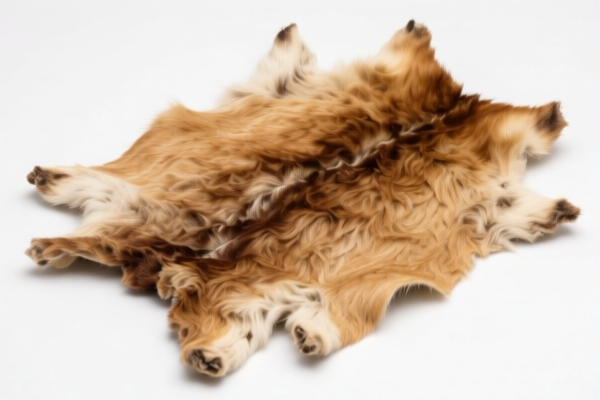
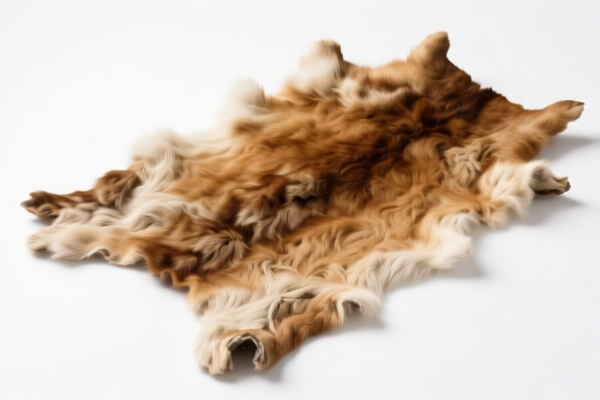
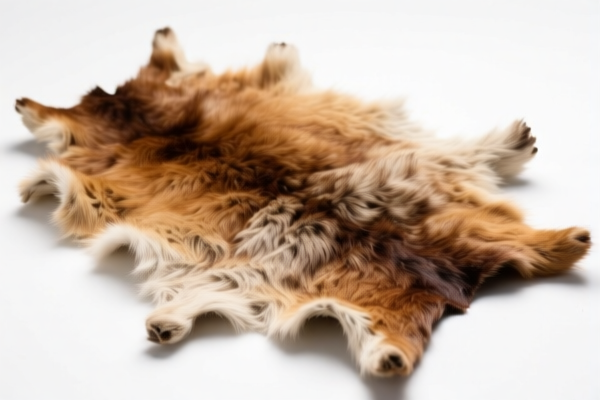
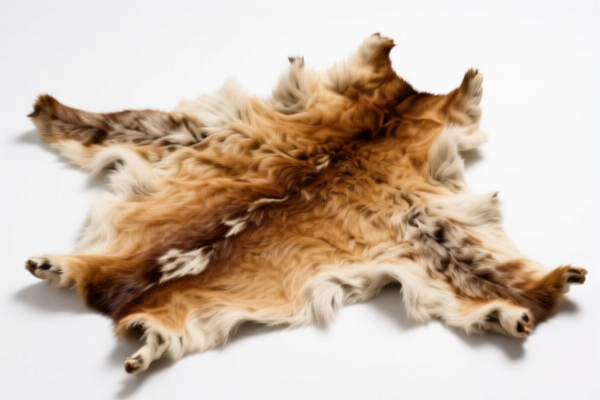
AI Analysis
🧥 Un-dyed Tanned Fur or Claws (Raw Skins & Fragments)
🌐 HS Code Reference & Customs Clearance Guide | 2026 Latest Tariff Analysis | Professional Strategy for High-Risk Categories
📌 I. Product Definition & Classification: Are You Confusing "Skis" with "Claws"?
"Un-dyed Tanned Fur or Claws" is a broad trade term that covers everything from high-value luxury pelts to low-value scrap fragments. In international trade, precise classification is critical because the shape (whole skin vs. fragment) and tanning method drastically change the HS Code and, consequently, the tariff burden.
⚠️ Key Distinction Point:
- Whole Skins or Large Pieces (Intact morphology): Typically fall under 4301 or 4302.
- Small Pieces, Scraps, or Fragments (Unidentified/Other): Typically fall under 4303.
- Claws/Teeth: Often grouped under "Other" or specific animal part categories, but in this dataset, they are treated under the broader "Tanned Fur" umbrella for classification logic.
📦 II. HS Code Classification Details (2026 Latest Tariff Authority Comparison)
| HS Code | Product Description | Application Scenario | Morphology/Status |
|---|---|---|---|
4303.90.00.00 |
Other articles of tanned fur, un-dyed, "Other" category | Unspecified tanned fur items, not falling into specific sub-categories (e.g., mixed scraps, small pieces) | ✅ Small Pieces / Fragments |
4303.10.00.60 |
Un-dyed tanned fur, small pieces, "Other" | Tanned fur cut into small pieces, fitting the "Other" definition under Heading 4303 | ✅ Small Pieces |
4301.90.00.00 |
Un-dyed tanned fur, other, fragments or slices | Whole skins processed into fragments or slices, primarily tanned but not fully constructed | ✅ Fragments / Slices |
4302.20.60.00 |
Un-dyed tanned fur, small pieces, "Other" | Matches the classification explanation exactly for small pieces | ✅ Small Pieces |
4302.20.30.00 |
Un-dyed tanned fur, small pieces, "Other" (Residual/Bottom-tier) | Fits the residual attribute for tanned fur small pieces not specifically listed elsewhere | ✅ Small Pieces |
🔍 Critical Reminder:
- Heading 4301 generally covers raw or dressed furskins (including those with heads, tails, paws).
- Heading 4302 covers tanned or dyed furskins, whether or not with head, tail, or paws.
- Heading 4303 covers articles of fur (e.g., scraps, small pieces, or manufactured items not as full skins).
- If your product is tanned but sold as small pieces/scrap, it likely falls under 4302 or 4303. The data provided suggests a focus on "Un-dyed" and "Small Pieces/Fragments", pointing strongly to 4303.90 or 4302.20 variants.
💰 III. 2026 Latest Tariff Rate Breakdown (Including Surtaxes, Policy Surcharges)
✅ Applicable Country: United States (US)
✅ Origin: China (CN)
✅ Effective Date: Post-November 2025 (Includes Section 301 & IEEPA surcharges)
🎯 1. 4303.90.00.00 — Other Tanned Fur Articles (Small Pieces/Scrap)
| Item | Content |
|---|---|
| Base Tariff | 0% (ad valorem) |
| USITC Surtax (Section 301) | +25% |
| IEEPA Surtax (China-specific) | +10% |
| Total Effective Rate | 35.0% |
| Tax Calculation | CIF Value × 35% |
| De Minimis Exemption | ❌ Not Eligible (High risk of scrutiny for textiles/furs) |
| Legal Basis Path | USITC:4303.90.00.00 → 301:4303 → IEEPA:9903.01.24 |
📌 Explanation:
- "Other articles" implies this is not a standard whole skin.
- The 25% Section 301 tariff applies broadly to many textile/fur products from China.
- The 10% IEEPA tariff is the additional layer for Chinese-origin goods under recent executive orders.
- Total 35% is significant for low-value scrap, eroding margins.
🎯 2. 4303.10.00.60 — Un-dyed Tanned Fur, Small Pieces (Other)
| Item | Content |
|---|---|
| Base Tariff | 4.0% |
| USITC Surtax (Section 301) | +25% |
| IEEPA Surtax (China-specific) | +10% |
| Total Effective Rate | 39.0% |
| Tax Calculation | CIF Value × 39% |
| De Minimis Exemption | ❌ Not Eligible |
| Legal Basis Path | USITC:4303.10.00.60 → 301:4303 → IEEPA:9903.01.24 |
📌 Note:
- The base rate of 4% makes this more expensive than4303.90in this specific dataset.
- Classification under4303.10(specifically .60) suggests a more specific sub-category than "other," possibly linked to certain animal origins or tanning methods, attracting a higher base duty.
🎯 3. 4301.90.00.00 — Un-dyed Tanned Fur, Other (Fragments/Slices)
| Item | Content |
|---|---|
| Base Tariff | 0% |
| USITC Surtax (Section 301) | 0% |
| IEEPA Surtax (China-specific) | +10% |
| Total Effective Rate | 10.0% |
| Tax Calculation | CIF Value × 10% |
| De Minimis Exemption | ❌ Not Eligible |
| Legal Basis Path | USITC:4301.90.00.00 → IEEPA:9901.25 (No 301 surtax listed in data) |
📌 Critical Insight:
- This is the LOWEST tariff option (10%) in the dataset.
- Why? Heading 4301 covers raw/dressed furskins. If the product is considered "fragments or slices" of a dressed skin rather than "articles of fur," it may escape the 25% Section 301 surtax that applies to most processed fur articles under 4303/4302.
- Risk: CBP (Customs and Border Protection) may challenge this if the pieces are too small to be considered "skins." You must prove they are slices of skins, not scraps of manufactured fur.
🎯 4. 4302.20.60.00 — Un-dyed Tanned Fur, Small Pieces (Other)
| Item | Content |
|---|---|
| Base Tariff | 3.5% |
| USITC Surtax (Section 301) | +25% |
| IEEPA Surtax (China-specific) | +10% |
| Total Effective Rate | 38.5% |
| Tax Calculation | CIF Value × 38.5% |
| De Minimis Exemption | ❌ Not Eligible |
| Legal Basis Path | USITC:4302.20.60.00 → 301:4302 → IEEPA:9903.01.24 |
📌 Note:
- Heading 4302 is for tanned furskins.
- The 25% surtax applies, making it high-cost.
- The base rate (3.5%) is slightly lower than4303.10(4.0%), but the total is still high.
🎯 5. 4302.20.30.00 — Un-dyed Tanned Fur, Small Pieces (Bottom-tier/Other)
| Item | Content |
|---|---|
| Base Tariff | 2.1% |
| USITC Surtax (Section 301) | +25% |
| IEEPA Surtax (China-specific) | +10% |
| Total Effective Rate | 37.1% |
| Tax Calculation | CIF Value × 37.1% |
| De Minimis Exemption | ❌ Not Eligible |
| Legal Basis Path | USITC:4302.20.30.00 → 301:4302 → IEEPA:9903.01.24 |
📌 Note:
- This is the lowest rate among the 4302 sub-categories in the dataset.
- However, it is still much higher than the4301.90option (10%).
🛠️ IV. Customs Clearance Practical Advice (Battle-Tested Pitfall Avoidance)
✅ 1. Preparation Checklist (Non-negotiable)
| Document | Required | Description |
|---|---|---|
| ✅ Product Specification | ✔️ | Must specify: Animal origin, tanning method (vegetable/chrome), shape (whole/fragment/slice), and dimensions. |
| ✅ Photos | ✔️ | Clear images showing the morphology. Is it a slice of a skin or a scrap from a garment? |
| ✅ Commercial Invoice | ✔️ | Description must match HS code logic (e.g., "Tanned Fur Slices, Not for Garment Assembly"). |
| ✅ Origin Certificate | ✔️ | Proof of Chinese origin to apply surcharges correctly. |
| ✅ Tanning Certificate | ✔️ | To prove "Tanned" status (Heading 4302) vs. "Dressed" (Heading 4301). |
✅ 2. Declaration Strategy (Key Mantras)
🔥 "Skin Slice vs. Scrap: Declare Shape, Not Just Material!"
| Scenario | Correct Declaration | Risk if Misclassified |
|---|---|---|
| Fur Pieces > 100cm², recognizable skin shape | 4301.90.00.00 (10% Total) |
Low Risk. Best rate. |
| Fur Pieces < 100cm², irregular shapes | 4303.90.00.00 (35% Total) or 4302.20.30.00 (37.1%) |
High Risk. High Duty. |
| Small Pieces, specific tanning | 4302.20.60.00 (38.5%) |
Medium Risk. |
| Garment Scraps/Off-cuts | 4303.10.00.60 (39% Total) |
Highest Duty in Dataset. |
📌 Strategic Insight:
- Aim for4301.90.00.00if the pieces are large slices or fragments that can still be identified as portions of a skinskin. The 10% rate is significantly cheaper than the 35-39% rates for smaller pieces/scraps under 4303/4302.
- Avoid4303.10.00.60unless the product is strictly defined as "small pieces" under that specific subheading, as it has the highest base rate (4%).
✅ 3. Special Case Handling
| Situation | Handling Advice |
|---|---|
| "Claws" included | If claws are attached to the skin, declare as "Tanned Fur with Claws" under 4301 or 4302. If separated, they may fall under 0507 (Ivory, walrus tusk, etc.) or 4303. Check if claws are considered "parts of animals" under Chapter 5. |
| Mixed Origins | If fur is from multiple sources, the duty rate may be applied to the highest rate portion. |
| CITES Compliance | If the fur is from CITES-listed species (e.g., fox, sable, mink), CITES permits are required regardless of HS code. Non-compliance leads to seizure and fines. |
| USDA Inspection | For fur products, USDA APHIS may require inspection for pests/diseases. |
🌍 V. Global Market Comparison (2026)
| Country/Region | Recommended HS Code | Est. Duty (China Origin) | Certification | Notes |
|---|---|---|---|---|
| 🇺🇸 USA | 4301.90.00.00 |
10% (Best Rate) | USDA, CITES | Avoid 4303 if possible (35%+). |
| 🇨🇳 China | 4301.90.00.00 |
Low (Import Duty) | None | Domestic trade rules differ. |
| 🇪🇺 EU | 4301.90.00.00 |
~6.5% + VAT | CITES, EU Fur Ban? | Warning: EU has strict regulations on fur sales. |
| 🇬🇧 UK | 4301.90.00.00 |
~6.5% + VAT | CITES, UK Fur Ban? | Warning: UK banned fur sales in 2022. |
| 🇨🇦 Canada | 4301.90.00.00 |
~0-5% | CITES | Check provincial laws. |
📌 Conclusion:
- USA is the only market in this dataset with specific Section 301/IEEPA surcharges making classification critical.
- EU/UK: Focus on CITES and Ban Compliance rather than just duty. Fur importation is heavily restricted or banned in many Western markets.
📌 VI. Common Errors & Pitfalls (Blood & Tears Lessons)
❌ Error 1: Declaring "Fur Scraps" as "Tanned Fur Skins" to avoid surtax
👉 Consequence: CBP audit reveals small pieces → Back taxes + Penalties + 25% surtax retroactively.
❌ Error 2: Ignoring CITES for exotic fur (e.g., Sable, Chinchilla)
👉 Consequence: Seizure of entire shipment + Criminal charges for wildlife trafficking.
❌ Error 3: Mixing "Claws" with "Fur" without separate declaration
👉 Consequence: Confusion at customs → Delay + Inspection + Possible rejection.
❌ Error 4: Using "Other" as a catch-all for specific tanned fur
👉 Consequence: Misclassification → 35-39% duty instead of 10%.
✅ Correct Approach:
"Un-dyed Tanned Fur Slices (Fox), 50cm x 30cm, Vegetable Tanned, For Manufacturing, CITES Permit #12345, Origin: China"
🎯 VII. Conclusion: Precision Saves Money
🎯 Remember the Mantra:
🔹 "Slices = 4301 (10%) | Scraps = 4303 (35%) | Tanned Pieces = 4302 (37%+)"
🔹 "Shape Determines Tax: Big Slices Win, Small Scraps Lose!"
🔹 "CITES First, Then Duty! No Permit, No Entry!"
📌 Pro Tip:
If your fur products are originating from Vietnam, Mexico, or Canada, you may qualify for preferential tariffs under USMCA or other FTAs, potentially reducing or eliminating the 25% Section 301 surtax.
Recommendation: Apply for Pre-Ruling (CBP Form 5106) before shipment to lock in the 10% rate for 4301.90.00.00 if applicable.
📣 Immediate Action:
📞 Contact a Licensed Customs Broker + Provide Product Photos + Verify CITES Status
🚀 Ensure Smooth Clearance, Minimize Costs, and Stay Compliant!
✨ Professional Classification, Start with Accuracy!
💼 Every Percentage Point Matters in Fur Trade!
Customer Reviews
About HS Code Classification
The Harmonized System (HS) is an internationally standardized nomenclature developed by the World Customs Organization (WCO) to classify traded products. Over 200 countries use the HS system as the basis for customs tariffs, trade statistics, and import/export regulations.
Each HS code follows a hierarchical structure:
- Chapter (2 digits) — Broad category of goods (e.g., Chapter 84: Machinery and Mechanical Appliances)
- Heading (4 digits) — More specific grouping within the chapter
- Subheading (6 digits) — Internationally standardized breakdown, used by all WCO member countries
- National subdivisions (8-10 digits) — Country-specific extensions for further classification, such as US HTSUS 10-digit codes
Correct HS code classification is essential for smooth customs clearance, accurate duty payment, and compliance with trade regulations. Misclassification can lead to customs delays, overpayment of duties, or penalties.
When importing from CN to US, the applicable tariff rates may include:
- Most-Favored-Nation (MFN) rate — The standard duty rate applied to WTO members
- General rate — Applied to countries without trade agreements
- Trade remedy duties — Additional tariffs such as Section 301 (anti-dumping), Section 232 (national security), or countervailing duties
The information provided on this page is for reference purposes only. For official classification, please consult with your local customs authority or a licensed customs broker.