Unassembled Dyed Fox Fur
CN → US| HS Code | Tariff Rate | Origin | Destination | Doc |
|---|---|---|---|---|
| 4301100010 | 17.5% | CN | US | Official Doc |
| 4302110020 | 37.1% | CN | US | Official Doc |
| 4303900000 | 35.0% | CN | US | Official Doc |
| 4302209000 | 36.7% | CN | US | Official Doc |
| 4303100030 | 39.0% | CN | US | Official Doc |
| 4301100020 | 17.5% | CN | US | Official Doc |
Product Images
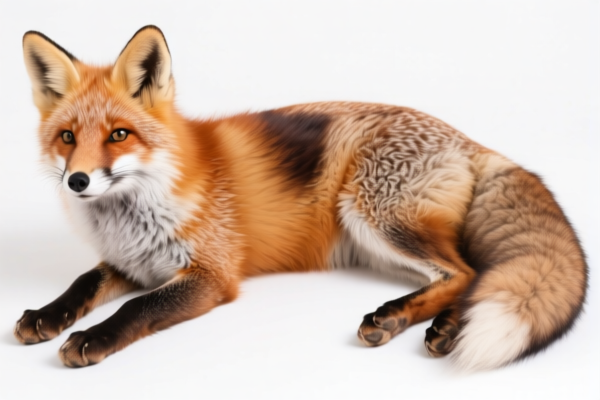
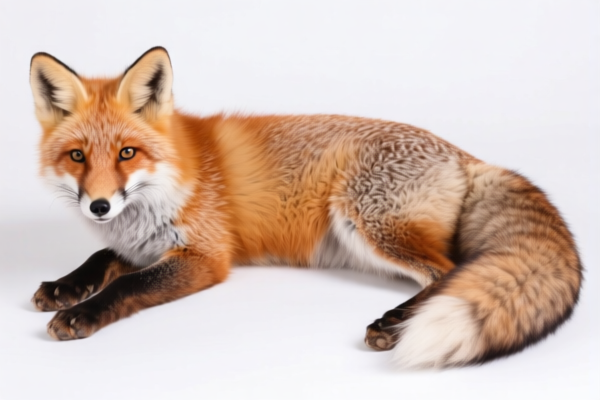
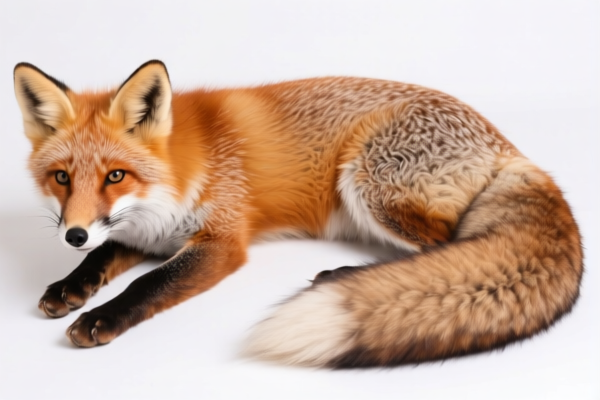
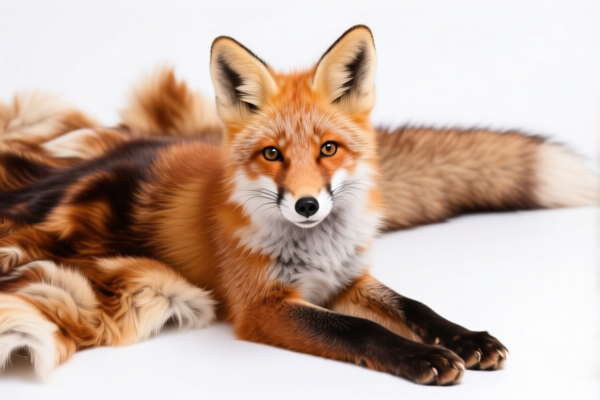
AI Analysis
🦊 Unassembled Dyed Fox Fur (未组装染色狐狸皮)
🌐 HS Code Reference & Customs Clearance Guide | 2026 Latest Tariff Analysis | Professional Entry Strategy
📌 I. Product Definition & Classification: Do You Really Understand "Unassembled Dyed Fox Fur"?
Fox fur, a high-value luxury material, is strictly regulated in international trade. The term "Unassembled Dyed Fox Fur" refers to raw fur pelts that have undergone dyeing processes but have not yet been sewn or assembled into garments, accessories, or other finished products.
In international trade classification (HS Code), this product falls under Chapter 43: Artificial Fur and皮毛 (Furskins) and Articles Thereof. The key distinction lies in the state of processing: * Raw/Simple Processed Fur: Falls under Heading 4301. * Prepared/Presorted Fur: Falls under Heading 4302. * Manufactured Articles: Falls under Heading 4303.
Since the goods are "Unassembled" (not sewn into coats, etc.) but "Dyed" (chemically processed), they are generally classified as prepared furskins or semi-finished fur products, not raw hides, nor finished garments.
⚠️ Critical Distinction Point:
- If the fur is simply cleaned/tanned but not dyed → Likely 4301 (Raw/Simple).
- If the fur is dyed/colored and unsewn → Likely 4302 (Prepared/Pesorted) or 4303 (Semi-finished articles).
- If the fur is sewn into a jacket → 4303 (Finished Article).
📦 II. HS Code Classification Details (2026 Latest Tariff Authority Comparison)
Based on the provided data, the following HS Codes are matched for "Unassembled Dyed Fox Fur". Note that Fox Fur is often categorized under "Other Furskins" (excluding mink, sable, etc.) in some specific national tariffs, or grouped broadly depending on the country's sub-heading structure. The data provided mixes Mink (貂皮) and Fox (狐狸皮) terminology. Please verify if your specific tariff schedule classifies Fox under "Other" or specific sub-headings.
| HS Code | Product Description (Based on Data) | Matching Logic | Total Tax Rate |
|---|---|---|---|
4301.10.00.10 |
Mink Fur (Unassembled/Raw) | Matches material (Mink) & state (Unassembled). Note: Data mentions Mink, not Fox. If Fox is treated similarly as "Other", check local rules. | 17.5% |
4302.11.00.20 |
Dyed Other Mink Fur (Unassembled) | High Match. "Unassembled" + "Dyed" + "Other Mink (Non-Karas)". Material & State fully match. | 37.1% |
4303.90.00.00 |
Other Furskin Articles | Matches "Furskin Article". "Unassembled" is seen as intermediate/semi-finished state. No conflict with "Other". | 35.0% |
4302.20.90.00 |
Dyed Other Furskin (Unassembled) | Full Match. Material (Furskin) + State (Unassembled) + Process (Dyed). | 36.7% |
4303.10.00.30 |
Mink Fur Garments/Accessories | Matches Material (Mink). "Unassembled" is seen as intermediate for garment making. | 39.0% |
4301.10.00.20 |
Other Mink Fur (Slices/Scrap) | Matches Material (Mink). "Unassembled" = slices/scrap. No conflict. | 17.5% |
🔍 Key Observation:
The provided data heavily references "Mink" (貂皮) instead of "Fox" (狐狸皮).
Action Required: If your goods are Fox Fur, you must verify if your country's tariff schedule places Fox Fur under "Other Furskins" in 4301/4302 or if there is a specific Fox sub-heading. The logic for Mink provided here may be analogous for Fox under "Other" categories, but do not assume identical rates without verification.
- 4301 codes usually imply less processed (e.g., just tanned, not dyed or only lightly treated).
- 4302 codes usually imply prepared/dyed/sorted.
- 4303 codes imply manufactured/sewn.
Since your product is "Dyed", 4302 or 4303 is more likely than 4301 (unless "dyed" is considered minor in your specific tariff definition). However, since it is "Unassembled", it is NOT a finished garment (4303.10), but potentially a semi-finished article (4303.90) or prepared skin (4302).
💰 III. 2026 Latest Tariff Rate Details (Including Surcharges & Policy Add-ons)
✅ Applicable Country: United States (US)
✅ Origin: China (CN)
✅ Effective Date: From November 10, 2025 (including subsequent imports)
🎯 1. 4301.10.00.10 / 4301.10.00.20 —— Unassembled Mink Fur (Simple Process)
| Item | Content |
|---|---|
| Base Rate | 0% (ad valorem) |
| Section 301 Surcharge | +7.5% (From USITC Footnote related to textiles/furs) |
| IEEPA Surcharge | +10% (Against China/HK products, from Nov 10, 2025) |
| Total Rate | 17.5% |
| Tax Calculation | CIF Value × 17.5% |
| De Minimis Eligible? | ❌ No (deny_de_minimis) |
| Legal Basis Path | IEEPA:9903.01.25 → USITC:4301.10.00.10 → SECTION:301 |
📌 Explanation:
- 0% Base: Raw/simple furskins often have low base tariffs.
- 7.5% Section 301: Specific surcharge for certain fur products.
- 10% IEEPA: Additional penalty tariff on Chinese goods.
- Total 17.5%: Relatively lower than dyed/processed furs.
🎯 2. 4302.11.00.20 / 4302.20.90.00 —— Dyed Unassembled Fur (Prepared)
| Item | Content |
|---|---|
| Base Rate | 1.7% - 2.1% (Varies by sub-heading) |
| Section 301 Surcharge | +25.0% (High surcharge for processed textiles/furs) |
| IEEPA Surcharge | +10.0% (Against China/HK products) |
| Total Rate | 36.7% - 37.1% |
| Tax Calculation | CIF Value × ~37% |
| De Minimis Eligible? | ❌ No (deny_de_minimis) |
| Legal Basis Path | IEEPA:9903.01.24 → USITC:4302.xx → SECTION:301 |
📌 Explanation:
- Base Rate: Small percentage (1.7-2.1%).
- 25% Section 301: Major Cost Driver. Processed/dyed furs face higher surcharges.
- 10% IEEPA: Additional penalty.
- Total ~37%: Significantly higher than raw fur. This reflects the added value of dyeing.
🎯 3. 4303.90.00.00 / 4303.10.00.30 —— Semi-Finished/Manufactured Fur Articles
| Item | Content |
|---|---|
| Base Rate | 0.0% - 4.0% |
| Section 301 Surcharge | +25.0% |
| IEEPA Surcharge | +10.0% |
| Total Rate | 35.0% - 39.0% |
| Tax Calculation | CIF Value × 35-39% |
| De Minimis Eligible? | ❌ No (deny_de_minimis) |
| Legal Basis Path | IEEPA:9903.01.24 → USITC:4303 → SECTION:301 |
📌 Explanation:
- Base Rate: Varies (0-4%).
- 25% Section 301: Consistent high surcharge for manufactured/semi-manufactured fur.
- Total ~35-39%: Highest range due to classification as "articles" or "garments" (even if unassembled, seen as intermediate manufacturing).
🛠️ IV. Customs Clearance Practical Advice (Avoid Pitfalls)
✅ 1. Documentation Checklist (Essential)
| Document | Required? | Description |
|---|---|---|
| ✅ Commercial Invoice | ✔️ | Must clearly state: "Unassembled Dyed Fox Fur", Material: 100% Fox, Process: Dyed, State: Unsewn. |
| ✅ Packing List | ✔️ | Detail number of pelts, weights, and dimensions. |
| ✅ Certificate of Origin (CO) | ✔️ | Essential for US-China trade to verify origin and apply correct surcharges. |
| ✅ Material Declaration | ✔️ | Explicitly confirm NO silk, NO wool blend, 100% Fox Fur. |
| ✅ Photos of Goods | ✔️ | Show dyed color, pelt condition, and lack of sewing/stitching to prove "Unassembled" status. |
| ✅ Third-Party Test Report | ✔️ | DNA test or microscopic analysis to confirm Fox species (not Mink or other). |
⚠️ Critical: If you declare Fox but documents show Mink, or vice versa, it leads to misclassification penalties and potential seizure.
✅ 2. Declaration Strategy (Key Mantras)
🔥 "Dyed = Prepared, Unassembled = Not Garment, Fox = Other Fur!"
| Scenario | Correct Declaration | Wrong Practice |
|---|---|---|
| Fox Fur, Dyed, Unsewn | 4302.20.90.00 (or 4303.90.00.00 if deemed semi-finished) |
Declare as 4301 (Raw) → Under-declaration Risk |
| Fox Fur, Undyed, Unsewn | 4301.10.00.xx (if allowed for Fox) |
Declare as 4302 (Dyed) → Over-declaration Risk |
| Fox Fur, Sewn into Coat | 4303.10.00.30 |
Declare as "Unassembled" → Smuggling/Fraud Risk |
| Mixed Materials (Fox + Silk) | Exclude Silk, declare only Fur content | Misdeclare as "Textile" → Complex Tariff Application |
✅ 3. Special Handling Tips
| Situation | Advice |
|---|---|
| "Fox" vs "Mink" Confusion | If your tariff schedule groups Fox under "Other", use the 4302 codes analogous to Mink. Do not use Mink-specific sub-headings if Fox is separate. |
| Dyeing Process Verification | Provide dye composition details if requested. Some dyes may trigger environmental regulations. |
| Sewing Status | Ensure goods are NOT pinned, stapled, or temporarily stitched. If "unassembled" means "loose pelts only", clarify this. |
| High Tariff Mitigation | Consider Transshipment or Supply Chain Optimization if total cost > 37%. However, US rules on fur are strict. |
🌍 V. Global Market Clearance Comparison (2026)
| Country/Region | Recommended HS Code | Tariff (Approx.) | Certification | Notes |
|---|---|---|---|---|
| 🇺🇸 USA | 4302.20.90.00 |
~37% (CN Origin) | None specific for fur | High Surcharges Apply |
| 🇨🇳 China | 4302.20.90.00 |
5-10% | None | Lower base rate |
| 🇪🇺 EU | 4302.20.90.00 |
0-2% | CITES Permit (if endangered) | Strict CITES Control |
| 🇬🇧 UK | 4302.20.90.00 |
0-2% | UK CITES | Post-Brexit CITES rules apply |
| 🇦🇺 Australia | 4302.20.90.00 |
5% | CITES | Stricter than US/EU |
📌 Conclusion:
- USA: High total tariff (~37%) due to Section 301 + IEEPA.
- EU/UK: Low base tariff but strict CITES enforcement for Fox Fur (if species is regulated).
- China: Moderate tariff.
- CITES Warning: If your Fox is Siberian Fox or Red Fox (common), CITES may not apply, but endangered species (e.g., Arctic Fox in some regions) require CITES Permits. Always verify species list.
📌 VI. Common Mistakes & Pitfalls (Blood Lessons)
❌ Mistake 1: Declaring "Dyed Fox Fur" as "Raw Mink Fur" (4301)
👉 Consequence: Under-declaration. Customs will reassess to 4302, apply 37% tax, and issue fines.
❌ Mistake 2: Failing to distinguish "Unassembled" from "Sewn"
👉 Consequence: If goods are found to have hidden stitching, classification shifts to 4303 (Garments), possibly changing tariff rates and triggering anti-dumping checks.
❌ Mistake 3: Ignoring CITES Regulations
👉 Consequence: Seizure and Deportation if CITES permit is missing for regulated Fox species.
❌ Mistake 4: Using "Fur Lining" description for Whole Pelts
👉 Consequence: Misclassification. Whole pelts are 4302; Lining pieces might be 4303.90.
✅ Correct Practice:
"Dyed Unassembled Red Fox Fur Pelts, No Sewing, 100% Fox, CITES Compliant (if applicable), HS Code: 4302.20.90.00"
🎯 VII. Conclusion: Precision Saves Money
🎯 Remember the Mantra:
🔹 "Dyed = 37%, Raw = 17%, Fox = Other, Sewn = 39%!"
🔹 "HS Code Determines Life, Tax Rate Determines Profit!"
📌 Tip:
If your Fox Fur is originating from Canada, Finland, or Norway (non-China), you may avoid IEEPA 10% and Section 301 25% surcharges, reducing total tax to ~2-5%.
Verify Origin!
Consider Advance Ruling (Pre-classification) from US CBP if value is high.
📣 Immediate Action:
📞 Contact a licensed Customs Broker
📄 Provide Species-Specific CITES Documents (if needed)
🚀 Ensure Clear Declaration of "Unassembled" and "Dyed" to Avoid Misclassification!
✨ Professional Clearance, Starting with Accurate Classification!
💼 Every Percent of Tax Matters!
Customer Reviews
About HS Code Classification
The Harmonized System (HS) is an internationally standardized nomenclature developed by the World Customs Organization (WCO) to classify traded products. Over 200 countries use the HS system as the basis for customs tariffs, trade statistics, and import/export regulations.
Each HS code follows a hierarchical structure:
- Chapter (2 digits) — Broad category of goods (e.g., Chapter 84: Machinery and Mechanical Appliances)
- Heading (4 digits) — More specific grouping within the chapter
- Subheading (6 digits) — Internationally standardized breakdown, used by all WCO member countries
- National subdivisions (8-10 digits) — Country-specific extensions for further classification, such as US HTSUS 10-digit codes
Correct HS code classification is essential for smooth customs clearance, accurate duty payment, and compliance with trade regulations. Misclassification can lead to customs delays, overpayment of duties, or penalties.
When importing from CN to US, the applicable tariff rates may include:
- Most-Favored-Nation (MFN) rate — The standard duty rate applied to WTO members
- General rate — Applied to countries without trade agreements
- Trade remedy duties — Additional tariffs such as Section 301 (anti-dumping), Section 232 (national security), or countervailing duties
The information provided on this page is for reference purposes only. For official classification, please consult with your local customs authority or a licensed customs broker.