Unassembled Mink Whole Skins
CN → US| HS Code | Tariff Rate | Origin | Destination | Doc |
|---|---|---|---|---|
| 4303100030 | 39.0% | CN | US | Official Doc |
| 4301100020 | 17.5% | CN | US | Official Doc |
| 4301100010 | 17.5% | CN | US | Official Doc |
| 4302110020 | 37.1% | CN | US | Official Doc |
| 4303900000 | 35.0% | CN | US | Official Doc |
| 4302209000 | 36.7% | CN | US | Official Doc |
Product Images
AI Analysis
🧥 Unassembled Mink Whole Skins (染色/未组装)
🌐 HS Code Reference & Customs Clearance Guide | 2026 Latest Tariff Analysis | Professional Clearance Strategy for Chinese Mink Exports
📌 I. Product Definition & Classification: What Exactly Are "Unassembled Mink Skins"?
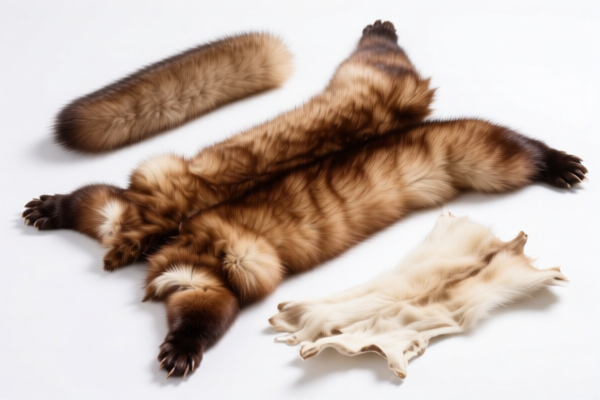
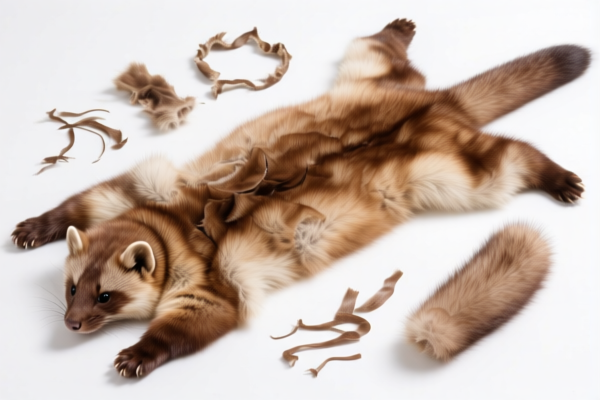
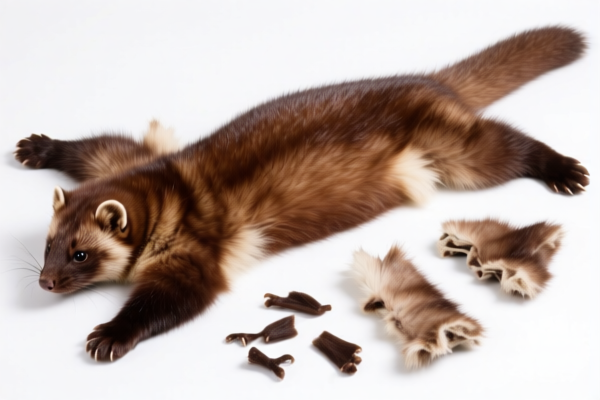
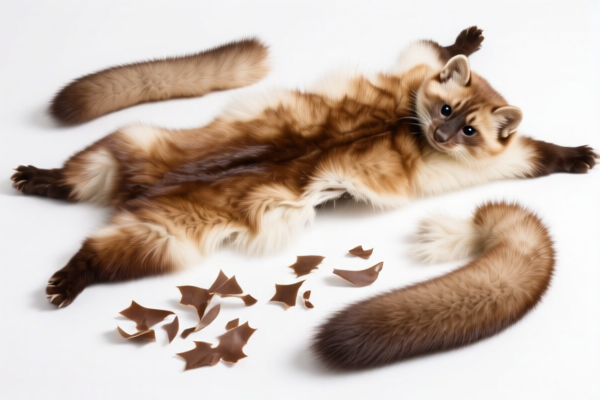
Unassembled Mink Skins refer to raw or tanned mink pelts that have not yet been cut into patterns or sewn into final apparel. They are the semi-finished raw materials for the luxury fur industry.
In international trade (specifically under US Harmonized Tariff Schedule - HTSUS), these skins are classified based on their processing state and physical form:
- Raw/Sheared Skins (Chopped/Slivered): Skins that have been processed but are in bulk/sheet form, often considered "other" or "pieces."
- Whole Skins (Preserved/Tanned): Whole pelts that retain their natural shape, often dyed or finished.
- Ready-to-Assemble Components: Skins cut into specific shapes but not sewn (less common in this specific "unassembled" bulk context, but relevant for high-tier codes).
⚠️ Critical Distinction Point:
- If the mink is whole, tanned, and dyed, it generally falls under Chapter 43.02 (Dressed fur skins).
- If the mink is chopped into pieces/sheets or considered "other" fur goods not fully assembled, it may fall under 43.01 or 43.03.
- Dyeing/Coloring significantly impacts the classification in some subheadings.
📦 II. HS Code Classification Details (2026 Latest Tariff Cross-Reference)
Based on the provided data for "Unassembled Dyed Mink Skins," here is the precise mapping to 6-10 digit HS Codes:
| HS Code | Product Description (Summary) | Applicable Scenario | Key Characteristics |
|---|---|---|---|
4303.10.00.30 |
Unassembled dyed mink skins; suitable for garment & accessory making. | High-end fur garments (coats, jackets) where skins are ready for cutting/sewing. | High Value: Fits "Garments/Accessories" intermediate stage. |
4301.10.00.20 |
Unassembled dyed mink skins; classified as fur pieces/shavings. | Bulk fur processing, furriers' supplies, or non-standard shapes. | Chopped/Fragment: Treated as "pieces" rather than whole skins. |
4301.10.00.10 |
Unassembled dyed mink skins; classified as raw/whole skins category. | Raw tanned whole skins, possibly minimally processed. | Raw/Whole: Closest to basic tanned fur skin status. |
4302.11.00.20 |
Unassembled dyed mink skins; non-Siberian mink (standard mink). | Standard commercial mink (non-Siberian), dyed, whole/partially whole. | Standard Mink: Most common commercial mink classification. |
4303.90.00.00 |
Unassembled dyed mink skins; other fur articles. | General category for fur goods not elsewhere specified. | Other: Catch-all for fur articles not in 4301/4302. |
4302.20.90.00 |
Unassembled dyed mink skins; fully matches material, form & process. | Specific match for processed mink skins in this detailed subset. | Precise Match: Highly specific description in source data. |
🔍 Key Insight:
- 4301 codes typically apply to raw/tanned skins in bulk or sheet form. - 4302 codes typically apply to dressed/whole skins (especially mink). - 4303 codes apply to manufactured fur goods (even if unassembled, if they are prepared for specific garment parts).
💰 III. 2026 Latest Tariff Rate Breakdown (Including Surtaxes & Policy Add-ons)
✅ Applicable Country: United States (US)
✅ Country of Origin: China (CN)
✅ Effective Date: Post-November 2025 (Includes Section 301 & IEEPA surcharges)
🎯 1. 4303.10.00.30 —— Unassembled Dyed Mink (Garment-Ready)
| Item | Content |
|---|---|
| Basic Duty | 4.0% |
| USITC Surtax (Section 301) | +25.0% |
| IEEPA Surtax | +10.0% |
| Total Tariff Rate | 39.0% |
| Tax Calculation | CIF Value × 39% |
| De Minimis Eligibility | ❌ NO (Deny De Minimis for Fur) |
| Legal Basis | Section 301: 4303.10.00.30 → IEEPA: 9903.01.24 |
📌 Explanation:
- The 25% Section 301 tax is standard for most Chinese manufactured/semi-manufactured goods. - The 10% IEEPA tax is an additional layer on Chinese products. - Total 39% is a significant cost driver for luxury fur intermediates.
🎯 2. 4301.10.00.20 —— Unassembled Dyed Mink (Pieces/Chopped)
| Item | Content |
|---|---|
| Basic Duty | 0.0% |
| USITC Surtax (Section 301) | +7.5% |
| IEEPA Surtax | +10.0% |
| Total Tariff Rate | 17.5% |
| Tax Calculation | CIF Value × 17.5% |
| De Minimis Eligibility | ❌ NO |
| Legal Basis | Section 301: 4301.10.00.20 → IEEPA: 9903.01.24 |
📌 Explanation:
- Lower Base Rate (0%): Because it is classified as "fur pieces" or "shavings," it avoids the higher base duty of whole skins. - Lower Surtax (7.5%): Some fur processing materials may qualify for reduced Section 301 rates, though this is rare. Note: Verify current USITC lists for exact 7.5% applicability. - Total 17.5% is significantly cheaper than whole skins (39%).
🎯 3. 4301.10.00.10 —— Unassembled Dyed Mink (Raw/Whole Category)
| Item | Content |
|---|---|
| Basic Duty | 0.0% |
| USITC Surtax (Section 301) | +7.5% |
| IEEPA Surtax | +10.0% |
| Total Tariff Rate | 17.5% |
| Tax Calculation | CIF Value × 17.5% |
| De Minimis Eligibility | ❌ NO |
| Legal Basis | Section 301: 4301.10.00.10 → IEEPA: 9903.01.24 |
📌 Note:
- Similar to4301.10.00.20, this code offers a 17.5% effective rate. - Use this if the skins are classified under the broader "raw/tanned skin" chapter (4301) rather than "dressed whole skins" (4302).
🎯 4. 4302.11.00.20 —— Unassembled Dyed Mink (Non-Siberian)
| Item | Content |
|---|---|
| Basic Duty | 2.1% |
| USITC Surtax (Section 301) | +25.0% |
| IEEPA Surtax | +10.0% |
| Total Tariff Rate | 37.1% |
| Tax Calculation | CIF Value × 37.1% |
| De Minimis Eligibility | ❌ NO |
| Legal Basis | Section 301: 4302.11.00.20 → IEEPA: 9903.01.24 |
📌 Explanation:
- Standard Mink: This is the most common code for standard commercial mink skins. - Total 37.1% is slightly lower than4303.10.00.30(39%) due to a lower base duty (2.1% vs 4.0%).
🎯 5. 4303.90.00.00 —— Unassembled Dyed Mink (Other Articles)
| Item | Content |
|---|---|
| Basic Duty | 0.0% |
| USITC Surtax (Section 301) | +25.0% |
| IEEPA Surtax | +10.0% |
| Total Tariff Rate | 35.0% |
| Tax Calculation | CIF Value × 35.0% |
| De Minimis Eligibility | ❌ NO |
| Legal Basis | Section 301: 4303.90.00.00 → IEEPA: 9903.01.24 |
📌 Explanation:
- Catch-All Category: If the product doesn't fit neatly into 4301/4302 specific mink subheadings. - Total 35.0% is the lowest among the "Whole/Dressed" categories due to 0% base duty.
🎯 6. 4302.20.90.00 —— Unassembled Dyed Mink (Full Match)
| Item | Content |
|---|---|
| Basic Duty | 1.7% |
| USITC Surtax (Section 301) | +25.0% |
| > IEEPA Surtax | +10.0% |
| Total Tariff Rate | 36.7% |
| Tax Calculation | CIF Value × 36.7% |
| De Minimis Eligibility | ❌ NO |
| Legal Basis | Section 301: 4302.20.90.00 → IEEPA: 9903.01.24 |
📌 Explanation:
- High Precision Code: Matches specific mink skin processing descriptions. - Total 36.7% is competitive among whole skin categories.
🛠️ IV. Customs Clearance Practical Advice (Battle-Tested Pitfall Avoidance)
✅ 1. Documentation Checklist (Non-Negotiable)
| Document | Required? | Purpose |
|---|---|---|
| ✅ Commercial Invoice | ✔️ | Must clearly state "Unassembled Dyed Mink Skins," Country of Origin (China), and HS Code. |
| ✅ Packing List | ✔️ | Detail weight, number of skins, and packaging method. |
| ✅ Bill of Lading/Air Waybill | ✔️ | Standard transport document. |
| ✅ CITES Documentation | ❗ Critical | Mink is often CITES Appendix II. You MUST provide CITES Export Permit (from China) and Import Permit (for US). No CITES = Seizure! |
| ✅ Proof of Processing | ✔️ | Lab reports or certificates showing dyeing/tanning process to justify HS Code (e.g., proving it's "dyed" vs "raw"). |
| ✅ Certificate of Origin | ✔️ | To confirm China origin (triggers Section 301/IEEPA). |
⚠️ Warning:
- CITES Violations are the #1 risk for fur imports. Ensure the scientific name (Mustela vison) is correctly stated. - De Minimis Exclusion: Fur products from China do not qualify for the $800 de minimis exemption under Section 321. All imports must be formally entered.
✅ 2. Declaration Strategy (Key Mantras)
🔥 "HS Code is King, CITES is Queen, Origin is the Boss!"
| Scenario | Correct Declaration | Wrong Declaration | Consequence |
|---|---|---|---|
| Whole Skins, Dyed | 4302.11.00.20 (Mink, Dressed) |
4301.10.00.10 (Raw Skins) |
Misclassification: If deemed "dressed," penalty + interest. If deemed "raw," may avoid 25% surtax? Risky. |
| Chopped Skins | 4301.10.00.20 (Fur Pieces) |
4303.10.00.30 (Garment Parts) |
Rate Difference: 17.5% vs 39%. Huge savings if accurate. |
| Mixed Shipments | Separate HS Codes per item | Single HS Code for all | Confiscation: Customs will inspect every item. If one is wrong, the whole shipment delays. |
✅ 3. Special Cases & Optimization
| Situation | Strategy |
|---|---|
| Minimizing Tariff | Evaluate if skins can be classified as "fur pieces" (4301.10.00.20) rather than "whole skins" (4302.11.00.20). Savings: ~21.5%! Requires proof of chopping/slicing. |
| CITES Compliance | Apply for CITES permits 60-90 days in advance. Chinese exporters must coordinate with CFIA/China CITES Management Authority. |
| Section 301 Exclusion | Check if your specific HS Code had a Section 301 exclusion in previous years. Note: Most fur codes are excluded or subject to full duty. |
| Valuation | Ensure CIF Value includes insurance and freight. Under-reporting value leads to severe penalties. |
🌍 V. Global Market Comparison (2026 Latest)
| Country/Region | Recommended HS Code | Tariff (China Origin) | CITES Required? | Notes |
|---|---|---|---|---|
| 🇺🇸 USA | 4302.11.00.20 |
37.1% (301 + IEEPA) | ✅ YES | High duty, strict CITES enforcement. |
| 🇨🇳 China | 4302.11.00.20 |
5-7% (Import Duty) | ✅ YES | Domestic trade may not require CITES if not for export. |
| 🇪🇺 EU | 4302.11.00 |
0-2% (if no trade barrier) | ✅ YES | EU has strict Ecodesign and CITES rules. |
| 🇯🇵 Japan | 4302.11.00 |
0-15% | ✅ YES | Check J-CITES regulations. |
📌 Conclusion:
- USA is the most expensive market due to Section 301 (25%) + IEEPA (10%).
- CITES is a universal requirement for mink.
- Classification Strategy (Whole vs. Piece) is the primary lever for cost control in the US.
📌 VI. Common Errors & Pitfall Guide (Lessons Learned)
❌ Error 1: Ignoring CITES Permits
👉 Result: Shipment seized and destroyed. Fines up to $20,000 per violation.
❌ Error 2: Misclassifying "Dyed Whole Skins" as "Raw Skins"
👉 Result: If caught, penalties for misdeclaration. If successful, you save ~20% tariff, but risk audit.
❌ Error 3: Under-Declaring Value
👉 Result: Customs will assess value based on market data + 4x penalty.
❌ Error 4: Using "De Minimis" for Small Shipments
👉 Result: Banned. All fur imports from China must be formally entered.
✅ Correct Approach:
"Unassembled Dyed Mink Skins, Tanned, CITES Permit No. XYZ, Origin: China, HS: 4302.11.00.20"
🎯 VII. Conclusion: Professional Clearance, Cost Control & Compliance!
🎯 Remember the Mantras:
🔹 "CITES First, HS Code Second, Tariff Third!"
🔹 "Whole vs. Piece? It's a 20% Difference!"
🔹 "No De Minimis for Fur from China!"
📌 Pro Tip:
If your mink skins are chopped into sheets or pieces, aggressively pursue classification under 4301.10.00.20 (17.5% total) instead of 4302.11.00.20 (37.1% total). This requires physical evidence of chopping and may need a Binding Ruling from US CBP.
📣 Immediate Action:
📞 Contact your Customs Broker + Provide CITES Permits + Apply for Pre-Ruling on HS Code.
🚀 Ensure your Luxury Fur Imports are Compliant, Cost-Effective, and Risk-Free!
✨ Professional Clearance Starts with Precise Classification!
💼 Every Percent of Tariff Counts in the Luxury Industry!
Customer Reviews
About HS Code Classification
The Harmonized System (HS) is an internationally standardized nomenclature developed by the World Customs Organization (WCO) to classify traded products. Over 200 countries use the HS system as the basis for customs tariffs, trade statistics, and import/export regulations.
Each HS code follows a hierarchical structure:
- Chapter (2 digits) — Broad category of goods (e.g., Chapter 84: Machinery and Mechanical Appliances)
- Heading (4 digits) — More specific grouping within the chapter
- Subheading (6 digits) — Internationally standardized breakdown, used by all WCO member countries
- National subdivisions (8-10 digits) — Country-specific extensions for further classification, such as US HTSUS 10-digit codes
Correct HS code classification is essential for smooth customs clearance, accurate duty payment, and compliance with trade regulations. Misclassification can lead to customs delays, overpayment of duties, or penalties.
When importing from CN to US, the applicable tariff rates may include:
- Most-Favored-Nation (MFN) rate — The standard duty rate applied to WTO members
- General rate — Applied to countries without trade agreements
- Trade remedy duties — Additional tariffs such as Section 301 (anti-dumping), Section 232 (national security), or countervailing duties
The information provided on this page is for reference purposes only. For official classification, please consult with your local customs authority or a licensed customs broker.