Unbarked Logs
CN → US| HS Code | Tariff Rate | Origin | Destination | Doc |
|---|---|---|---|---|
| 4401120000 | 35.0% | CN | US | Official Doc |
| 4401110000 | 35.0% | CN | US | Official Doc |
| 4403210130 | 35.0% | CN | US | Official Doc |
| 4403220165 | 35.0% | CN | US | Official Doc |
| 4403230142 | 35.0% | CN | US | Official Doc |
Product Images

AI Analysis
🌲 Unbarked Logs (Roundwood)
🌐 HS Code Reference & Customs Clearance Guide | 2026 Latest Tariff Analysis | Professional Entry Strategy
📌 I. Product Definition & Classification: What Exactly Are "Unbarked Logs"?
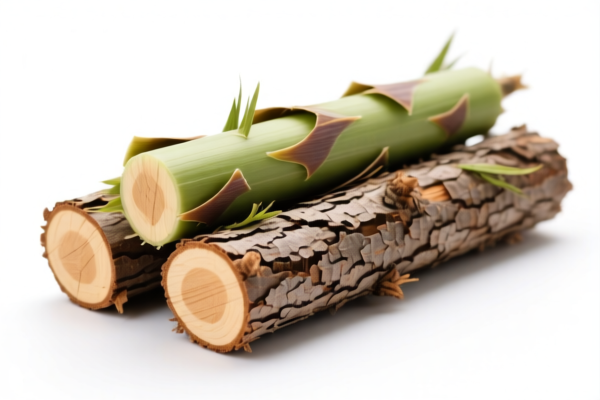
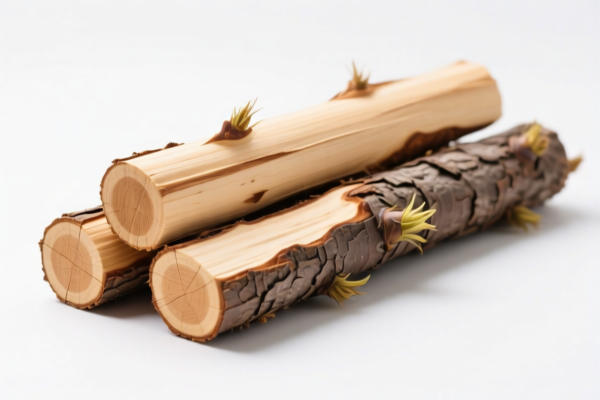
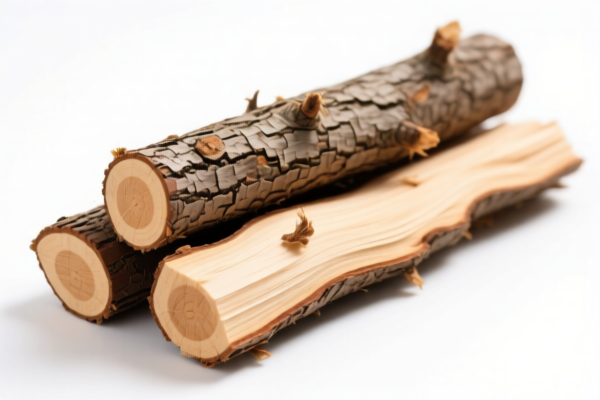
In international trade, "Unbarked Logs" refer to timber that has been felled, delimbed, and optionally trimmed (topped), but retains its bark. The classification strictly depends on the botanical species (Coniferous vs. Non-Coniferous) and the intended use (Fuel vs. General Timber).
Key Distinction Points: * Fuel Wood vs. General Timber: * If intended primarily for burning (biomass, firewood), they fall under Heading 4401. * If intended for structural use, plywood, or processing (despite being unbarked), they fall under Heading 4403. * Species Matters: * Coniferous (Softwoods like Pine, Spruce, Fir): Often grouped under 4403.22 or 4403.23 depending on specific sub-categories. * Non-Coniferous (Hardwoods like Oak, Maple, etc.): Classified under 4403.21 or 4401.12.
⚠️ Critical Warning:
- Bark Retention: "Unbarked" means 100% bark retention. If the bark is removed, even partially, it may shift to "Barked Logs" or processed timber codes, potentially changing the risk profile (pests/pests inspection) but not necessarily the tariff structure in this specific dataset. - Country of Origin: The tariff rates below assume Origin: China importing into USA (due to the specific "122 Clause" and "Section 301" mentions in the data).
📦 II. HS Code Classification Details (2026 Latest Tariff Authority)
Based on the provided dataset, here is the precise breakdown for Unbarked Logs. Note that while the data groups some items broadly, specific HS codes distinguish between species and usage.
| HS Code | Product Description | Target Classification | Key Differentiator |
|---|---|---|---|
4401.12.00.00 |
Logs, unbarked, Non-Coniferous (Fuel Wood) | Fuel Wood / Biomass | Non-wood species intended for burning. |
4401.11.00.00 |
Logs, unbarked, Coniferous (Fuel Wood) | Fuel Wood / Biomass | Softwood species intended for burning. |
4403.21.01.30 |
Logs, Unbarked, Other Hardwood Species | General Timber | Non-fuel hardwood logs; structural/industrial use. |
4403.22.01.65 |
Logs, Unbarked, Other Coniferous Species | General Timber | Non-fuel softwood logs (excluded from fuel-specific headings). |
4403.23.01.42 |
Logs, Unbarked, Regardless of Bark Status (General) | General Timber | Catch-all for unbarked logs not specified in above fuel/other categories. |
🔍 Important Note:
- The dataset shows identical tax rates for all these codes. However, customs clearance requirements differ significantly. - 4401 codes are strictly for fuel. If you import hardwood logs as "fuel" but they are premium oak for furniture, you risk misdeclaration. - 4403 codes are for structural/commercial use. These require rigorous Phytosanitary Certificates due to higher pest risks compared to processed wood.
💰 III. 2026 Latest Tariff Rate Breakdown (Detailed)
✅ Applicable Country: USA (US)
✅ Country of Origin: China (CN)
✅ Effective Date: Current regime applies (Post-2025 adjustments)
All HS Codes in the provided dataset share the exact same tax structure:
🎯 Universal Tax Structure for All Listed HS Codes
| Item | Content |
|---|---|
| Base Duty Rate | 0.0% (Ad Valorem) |
| Section 301 Additional Duty | +25.0% |
| Section 122 Clause Duty | +10.0% |
| Total Effective Tax Rate | 35.0% |
| Tax Calculation Base | CIF Value (Cost, Insurance, Freight) × 35% |
| De Minimis Exemption | ❌ NOT APPLICABLE (Section 301 and 122 duties typically negate the $800 de minimis exemption for China-origin goods in many contexts, especially bulk timber). |
📌 Detailed Explanation of Tax Components:
-
Base Duty: 0.0%
- Most logs from China have a nominal or zero base MFN (Most Favored Nation) tariff rate under WTO agreements, but this is irrelevant due to punitive tariffs.
-
Section 301 Additional Duty: 25.0%
- Source: US Trade Act of 1974, Section 301.
- Reason: Retaliatory tariffs on Chinese goods.
- Impact: This is the largest component. It applies to all timber products from China classified under these codes.
- Legal Path:
USITC:4401.xxxx / 4403.xxxx→List 4A (or current applicable list for wood)→+25%.
-
Section 122 Clause Duty: 10.0%
- Source: Likely referring to specific bilateral trade agreements or emergency provisions (e.g., UFLPA-related restrictions or specific trade remedy duties).
- Note: In the provided data, this is explicitly listed as "122 Clause".
- Impact: Adds an additional 10% on top of the 25%.
- Legal Path:
Trade Remedy Proceedings→Specific Product Exclusions(if any, but none listed here).
💡 Cost Example:
If you import $100,000 worth of Unbarked Logs from China:
- Base Tax: $0
- Section 301 Tax: $25,000
- Section 122 Tax: $10,000
- Total Tax Due: $35,000 (35%)
🛠️ IV. Customs Clearance Practical Advice (Avoid Pitfalls)
✅ 1. Required Documentation (Non-Negotiable)
| Document | Must Provide? | Explanation |
|---|---|---|
| Phytosanitary Certificate | ✅ YES | Mandatory for all wood products. Issued by the country of origin's plant protection agency. Must state "Free from quarantine pests." |
| ISPM 15 Mark | ✅ YES | If the wood is palletized or crated, the packaging must bear the ISPM 15 stamp. Logs themselves do not get the stamp, but they must be free of bark pests if bark is present. |
| Commercial Invoice | ✅ YES | Must clearly state: "Unbarked Logs," Species Name (Latin), Quantity (CBM/Volume), Value. |
| Bill of Lading (B/L) | ✅ YES | Standard shipping document. |
| Country of Origin Certificate | ✅ YES | Proof that goods are from China to apply the correct (punitive) tariffs. |
| Species Verification | ✅ YES | Customs may require lab testing to verify if the log is Coniferous or Non-Coniferous to ensure correct HS code. |
✅ 2. Declaration Tips (Key Mantra)
🔥 "Species Precise, Bark Retained, Volume Measured, Tax Predicted!"
| Scenario | Correct Declaration | Common Mistake |
|---|---|---|
| Unbarked Pine Logs | HS 4403.22.01.65 or 4401.11.00.00 (if fuel) |
Declaring as "Firewood" when it's construction timber |
| Unbarked Oak Logs | HS 4403.21.01.30 or 4401.12.00.00 (if fuel) |
Declaring as "Processed Lumber" |
| Mixed Species | Separate lines for each species | Mixing coniferous and non-coniferous in one line |
| Bark Status | Explicitly state "Unbarked" | Omitting bark status → Risk of reclassification |
✅ 3. Special Considerations
| Situation | Handling Advice |
|---|---|
| Pest Inspection | Unbarked logs are high-risk for insects (e.g., Asian Longhorned Beetle). Expect physical inspection at US ports. |
| Volume Measurement | Logs are measured in Cubic Meters (CBM) or Board Feet. Ensure invoice matches B/L volume exactly. |
| Species Misdeclaration | If you declare "Pine" but it's "Oak," you may face seizure if Oak has different trade restrictions. |
| Section 122 Specifics | Verify if the "122 Clause" applies to your specific port of entry. Some ports have heightened scrutiny. |
🌍 V. Global Market Comparison (2026)
| Country/Region | Recommended HS Code | Total Tariff | Certification | Notes |
|---|---|---|---|---|
| 🇺🇸 USA | 4401.11/12/4403.2x |
35% (China Origin) | Phytosanitary + ISPM 15 | High duty due to Section 301 & 122. |
| 🇨🇳 China | Same Codes | ~0-5% | N/A | Low duty for domestic trade. |
| 🇪🇺 EU | Same Codes | 0-6% | FLEGT License (if from EU) | No Section 301. Strict FSC/PEFC sustainability checks. |
| 🇯🇵 Japan | Same Codes | 2-4% | Phytosanitary | No punitive tariffs. |
📌 Conclusion:
- USA is the most expensive market for Chinese unbarked logs due to the 35% cumulative tariff.
- EU and Japan are more cost-effective but require strict sustainability and phytosanitary compliance.
- Mitigation Strategy: Consider sourcing logs from Vietnam, Malaysia, or Russia (if allowed) to avoid US Section 301 duties, though these markets may have their own restrictions.
📌 VI. Common Errors & Pitfall Guide (Lessons Learned)
❌ Mistake 1: Declaring "Barked Logs" when logs are "Unbarked"
👉 Consequence: Misclassification. Customs may reject the phytosanitary certificate if bark status doesn't match.
❌ Mistake 2: Ignoring the "Fuel" vs. "Timber" distinction
👉 Consequence: If you declare fuel wood (4401) but it's used for construction (4403), you may face penalties for misrepresentation.
❌ Mistake 3: Underreporting Volume
👉 Consequence: Seizure of goods, fines, and future audits. Volume must be calculated accurately (e.g., Smalian formula for logs).
❌ Mistake 4: Assuming De Minimis Applies
👉 Consequence: Small shipments still face 35% tax if from China. No $800 exemption.
✅ Correct Approach:
"Unbarked Pine Logs, Latin Name: Pinus sylvestris, Origin: China, Intended Use: Construction, Volume: 100 CBM, CIF Value: $50,000"
🎯 VII. Conclusion: Professional Declaration, Cost Control, Risk Mitigation
🎯 Remember the Mantra:
🔹 "Species Accurate, Bark Status Clear, 35% Tax Paid, Phytosanitary Checked!"
🔹 "HS Code Determines Duty, 35% is the Floor, Misdeclaration is the Floor!"
📌 Pro Tip:
If your volume is large, consider applying for a Tariff Classification Ruling (TCR) from US Customs and Border Protection (CBP) in advance. This provides legal certainty for your 35% liability.
Also, evaluate if re-exporting from a third country (like Vietnam) is viable, though UFLPA and substantial transformation rules must be strictly followed.
📣 Immediate Action:
📞 Contact a licensed customs broker + Provide Species List + Prepare Phytosanitary Certificates
🚀 Ensure your logs, smoothly cleared, efficiently shipped, profitably delivered!
✨ Professional Clearance Starts with Precise Classification!
💼 Every Dollar of Tax is Worth Minimizing!
Customer Reviews
About HS Code Classification
The Harmonized System (HS) is an internationally standardized nomenclature developed by the World Customs Organization (WCO) to classify traded products. Over 200 countries use the HS system as the basis for customs tariffs, trade statistics, and import/export regulations.
Each HS code follows a hierarchical structure:
- Chapter (2 digits) — Broad category of goods (e.g., Chapter 84: Machinery and Mechanical Appliances)
- Heading (4 digits) — More specific grouping within the chapter
- Subheading (6 digits) — Internationally standardized breakdown, used by all WCO member countries
- National subdivisions (8-10 digits) — Country-specific extensions for further classification, such as US HTSUS 10-digit codes
Correct HS code classification is essential for smooth customs clearance, accurate duty payment, and compliance with trade regulations. Misclassification can lead to customs delays, overpayment of duties, or penalties.
When importing from CN to US, the applicable tariff rates may include:
- Most-Favored-Nation (MFN) rate — The standard duty rate applied to WTO members
- General rate — Applied to countries without trade agreements
- Trade remedy duties — Additional tariffs such as Section 301 (anti-dumping), Section 232 (national security), or countervailing duties
The information provided on this page is for reference purposes only. For official classification, please consult with your local customs authority or a licensed customs broker.