Unbarked Spruce Logs
CN → US| HS Code | Tariff Rate | Origin | Destination | Doc |
|---|---|---|---|---|
| 4401110000 | 35.0% | CN | US | Official Doc |
| 4407120019 | 35.0% | CN | US | Official Doc |
| 4407120017 | 35.0% | CN | US | Official Doc |
| 4403240135 | 35.0% | CN | US | Official Doc |
| 4403230135 | 35.0% | CN | US | Official Doc |
Product Images
AI Analysis
🌲 Unbarked Spruce Logs (Debaarked Spruce Timber)
🌐 HS Code Reference & Customs Clearance Guide | 2026 Latest Tariff Analysis | Professional Entry Strategy
📌 Part I: Product Definition & Classification: What Exactly Are "Unbarked Spruce Logs"?
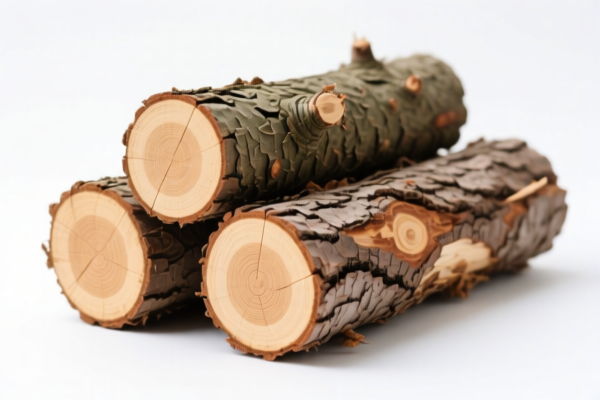
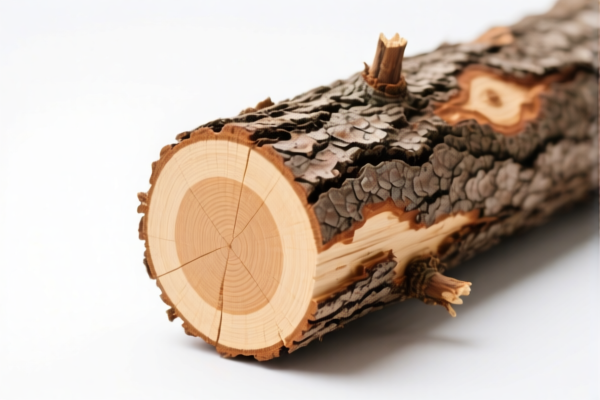
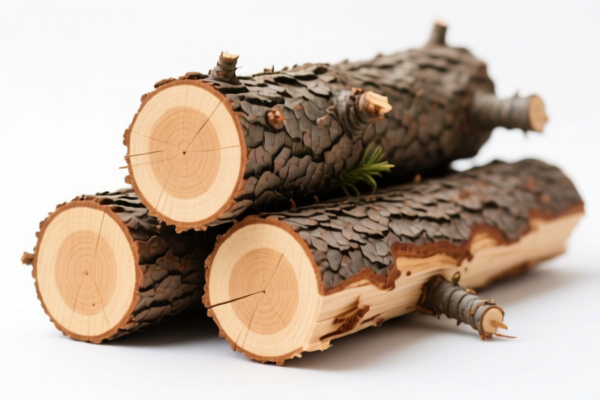
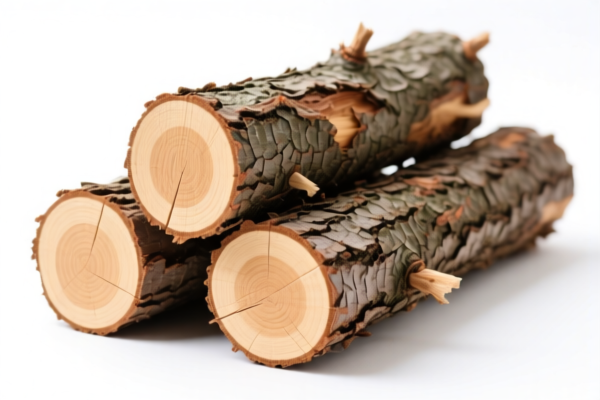
Unbarked spruce logs refer to spruce timber that has had its bark removed but retains its original log shape. In international trade, these are classified based on their primary use, processing level, and physical form.
⚠️ Key Distinction Points:
- If intended for fuel/pellet production: They are considered "primary form wood fuel" → 4401.11.00.00
- If intended for sawmilling or veneer: They are "softwood wood, unbarked" → 4403.24.01.35 / 4403.23.01.35 / 4407.12.00.19 / 4407.12.00.17
- Bark Removal is Critical: Logs with bark fall under different subheadings. Bark removal changes the classification to "unbarked."
📦 Part II: HS Code Classification Details (2026 Latest Tariff Authoritative对照)
| HS Code | Product Description | Application Scenario | Processing Level |
|---|---|---|---|
4403.24.01.35 |
Unbarked spruce logs, matching material spruce and form logs | High-grade construction timber, furniture framing | ✅ Unbarked, raw log form |
4403.23.01.35 |
Unbarked spruce logs, material spruce, form debarked logs | General softwood timber trade, standard export | ✅ Unbarked, raw log form |
4401.11.00.00 |
Unbarked spruce logs, primary form as needlewood fuel | Biomass energy, pellet production, boiler fuel | ✅ Unbarked, fuel-grade |
4407.12.00.19 |
Unbarked spruce logs, untreated primary wood, matches vertical sawing/peeling attributes | Veneer sheets, plywood core, high-value processing | ✅ Unbarked, semi-processed potential |
4407.12.00.17 |
Unbarked spruce logs, unprocessed raw log form, matches rough material characteristics | Basic timber supply, low-grade construction | ✅ Unbarked, rough log form |
🔍 Critical Reminder:
- All unbarked spruce logs are subject to the same 35% total tariff (US origin from China).
- The distinction between 4403 (wood prepared for timber preservation or roughly squared) and 4407 (wood sawn or chipped lengthwise) depends on whether the log is intended for structural use (4403) or processing into sheets/boards (4407).
- Fuel grade is strictly defined under 4401.
💰 Part III: 2026 Latest Tariff Rate Details (Including Additional Taxes & Policy Surcharges)
✅ Applicable Country: United States (US)
✅ Country of Origin: China (CN)
✅ Effective Date: From November 10, 2025 (including subsequent imports)
🎯 1. 4403.24.01.35 & 4403.23.01.35 — Unbarked Spruce Logs (Structural Timber)
| Item | Content |
|---|---|
| Base Tariff | 0.0% (ad valorem) |
| Section 301 Surcharge | +25.0% |
| Section 122 Tariff | +10.0% |
| Total Tariff | 35.0% |
| Tax Calculation | CIF Value × 35% |
| De Minimis Exemption | ❌ Not Eligible (deny_de_minimis) |
| Legal Authority Path | Section 301: 9903.88.01 → Section 122: 9903.01.25 → USITC: 4403.24.01.35 / 4403.23.01.35 |
📌 Explanation:
- The 25% Section 301 tariff is applied due to the "China-origin softwood lumber and logs" list.
- The 10% Section 122 tariff applies under the International Emergency Economic Powers Act (IEEPA) for specific wood products.
- Total 35% is a high-cost barrier for Chinese spruce logs.
🎯 2. 4401.11.00.00 — Unbarked Spruce Logs (Fuel Grade)
| Item | Content |
|---|---|
| Base Tariff | 0.0% |
| Section 301 Surcharge | +25.0% |
| Section 122 Tariff | +10.0% |
| Total Tariff | 35.0% |
| Tax Calculation | CIF Value × 35% |
| De Minimis Exemption | ❌ Not Eligible |
| Legal Authority Path | IEEPA:9903.01.25 → Section 301: 9903.88.01 → USITC: 4401.11.00.00 → FOOTNOTE: 9903.88.01 |
📌 Note:
- Even if intended for biomass fuel, the 35% total tariff still applies.
- Fuel-grade logs are often lower in value, making the 35% tariff prohibitive.
🎯 3. 4407.12.00.19 & 4407.12.00.17 — Unbarked Spruce Logs (Processing Grade)
| Item | Content |
|---|---|
| Base Tariff | 0.0% |
| Section 301 Surcharge | +25.0% |
| Section 122 Tariff | +10.0% |
| Total Tariff | 35.0% |
| Tax Calculation | CIF Value × 35% |
| De Minimis Exemption | ❌ Not Eligible |
| Legal Authority Path | IEEPA:9901.25 → Section 301: 9903.88.01 → USITC: 4407.12.00.19 / 4407.12.00.17 → FOOTNOTE: 9903.88.01 |
📌 Note:
- These codes apply to logs intended for sawing, veneer, or peeling.
- Despite being "primary form," they are subject to the same 35% tariff as structural logs.
- No preferential treatment applies to Chinese-origin spruce logs in this category.
🛠️ Part IV: Customs Clearance Practical Advice (Battle-Tested Pitfall Avoidance Guide)
✅ 1. Required Documentation Checklist (All Mandatory)
| Document | Mandatory? | Description |
|---|---|---|
| ✅ Species Certificate | ✔️ | Must explicitly state "Picea spp." (Spruce). Misidentification leads to rejection. |
| ✅ Bark Removal Confirmation | ✔️ | Photos or lab reports proving 100% bark removal. Partial bark removal may misclassify. |
| ✅ Commercial Invoice | ✔️ | Clearly state "Unbarked Spruce Logs," HS Code, CIF value, and country of origin. |
| ✅ Packing List | ✔️ | Detail dimensions, weight, and number of logs. |
| ✅ Phytosanitary Certificate | ✔️ | Issued by Chinese Customs/GACC, confirming no pests/diseases. |
| ✅ Fumigation Certificate | ✔️ | If required by US CBP, confirm ISPM 15 compliance. |
| ✅ Bill of Lading | ✔️ | Ensure "Unbarked Spruce Logs" is declared on the B/L. |
✅ 2. Declaration Tips (Key Mnemonics)
🔥 "Unbarked? Check Species! Fuel or Timber? Know the Code!"
| Scenario | Correct Declaration | Wrong Practice |
|---|---|---|
| Logs with any bark | Misclassified → Risk of 35% + penalties | Declare as "Unbarked" when bark is present |
| Logs intended for fuel | 4401.11.00.00 |
Declare as 4403 → Same tariff, but audit risk |
| Logs for sawmilling | 4407.12.00.19 or 4407.12.00.17 |
Declare as 4403 → Potential misclassification |
| Partial bark removal | Must declare exact % and reason | Hide bark → Seizure and fines |
✅ 3. Special Cases Handling
| Scenario | Handling Advice |
|---|---|
| Mixed Timber Shipments | Separate spruce logs from other species. Mixed shipments may trigger 35% on all. |
| Re-export from Third Country | If transshipped, ensure Certificate of Origin is not Chinese. If CN origin, 35% still applies. |
| Small Quantities (< $800) | ❌ No De Minimis Exemption for Chinese spruce logs. |
| Industrial Use (e.g., Pulp) | Still falls under 4401 or 4403. No exemption. |
🌍 Part V: Global Market Comparison (2026 Latest)
| Country/Region | Recommended HS Code | Tariff (China Origin) | Certification Required | Notes |
|---|---|---|---|---|
| 🇺🇸 United States | 4403.24.01.35 / 4401.11.00.00 / 4407.12.00.19 |
35% (Base 0% + 25% Sec 301 + 10% Sec 122) | Phytosanitary + Fumigation | Highest barrier globally. |
| 🇨🇳 China | 4403.24.01.35 |
0-5% | N/A | No additional surcharges. |
| 🇪🇺 European Union | 4403.24.01.35 |
0% (If FLEGT compliant) | EUTR + FLEGT | No surcharges. |
| 🇯🇵 Japan | 4403.24.01.35 |
0-3% | IPPC Mark | No surcharges. |
| 🇬🇧 United Kingdom | 4403.24.01.35 |
0-5% | UKCA + FSC | No surcharges. |
📌 Conclusion:
- The US market is the most difficult due to the 35% combined tariff.
- China, EU, Japan, and UK have significantly lower or zero tariffs for Chinese spruce logs.
- Strategy: Consider diversifying export markets away from the US if tariffs are prohibitive.
📌 Part VI: Common Errors & Pitfall Avoidance (Blood-Tested Lessons)
❌ Mistake 1: Declaring "Spruce Logs" without specifying "Unbarked"
👉 Consequence: Misclassification → Potential 35% tariff + penalties if bark is found.
❌ Mistake 2: Using "Firewood" for logs intended for construction
👉 Consequence: Customs may reclassify to 4403 or 4407, triggering audits.
❌ Mistake 3: Ignoring Phytosanitary Requirements
👉 Consequence: Shipment rejected or destroyed at US port.
❌ Mistake 4: Attempting De Minimis Exemption for Shipments < $800
👉 Consequence: Seizure and fines. Chinese spruce logs are excluded from Section 321 de minimis.
✅ Correct Declaration Example:
"Unbarked Spruce Logs (Picea spp.), HS Code 4403.24.01.35, CIF Value $X, Country of Origin: China, Phytosanitary Certificate Attached, 100% Bark Removed."
🎯 Part VII: Conclusion: Professional Declaration, Save Time and Money!
🎯 Remember the Mantra:
🔹 "Unbarked? Check Species! Fuel or Timber? Know the Code!"
🔹 "HS Code Determines Fate, 35% Tariff is Fixed, Misdeclaration Costs Thousands!"
📌 Pro Tip:
If your spruce logs are re-exported from Vietnam, Malaysia, or Thailand, ensure Certificate of Origin reflects the transshipment country. However, if the substantial transformation test is not met, US CBP may still apply Chinese-origin rules.
📣 Immediate Action:
📞 Contact a licensed customs broker + Provide species certification + Apply for Advance Ruling if uncertain.
🚀 Let your spruce logs clear customs smoothly, maximize profits, and avoid pitfalls!
✨ Professional Clearance Starts with Accurate Classification!
💼 Every Cent of Your Cost Deserves Precise Calculation!
Customer Reviews
About HS Code Classification
The Harmonized System (HS) is an internationally standardized nomenclature developed by the World Customs Organization (WCO) to classify traded products. Over 200 countries use the HS system as the basis for customs tariffs, trade statistics, and import/export regulations.
Each HS code follows a hierarchical structure:
- Chapter (2 digits) — Broad category of goods (e.g., Chapter 84: Machinery and Mechanical Appliances)
- Heading (4 digits) — More specific grouping within the chapter
- Subheading (6 digits) — Internationally standardized breakdown, used by all WCO member countries
- National subdivisions (8-10 digits) — Country-specific extensions for further classification, such as US HTSUS 10-digit codes
Correct HS code classification is essential for smooth customs clearance, accurate duty payment, and compliance with trade regulations. Misclassification can lead to customs delays, overpayment of duties, or penalties.
When importing from CN to US, the applicable tariff rates may include:
- Most-Favored-Nation (MFN) rate — The standard duty rate applied to WTO members
- General rate — Applied to countries without trade agreements
- Trade remedy duties — Additional tariffs such as Section 301 (anti-dumping), Section 232 (national security), or countervailing duties
The information provided on this page is for reference purposes only. For official classification, please consult with your local customs authority or a licensed customs broker.