Unbarked White Poplar Logs
CN → US| HS Code | Tariff Rate | Origin | Destination | Doc |
|---|---|---|---|---|
| 4403970022 | 35.0% | CN | US | Official Doc |
| 4403970067 | 35.0% | CN | US | Official Doc |
| 4403970022 | 35.0% | CN | US | Official Doc |
| 4403970067 | 35.0% | CN | US | Official Doc |
| 4403970022 | 35.0% | CN | US | Official Doc |
Product Images
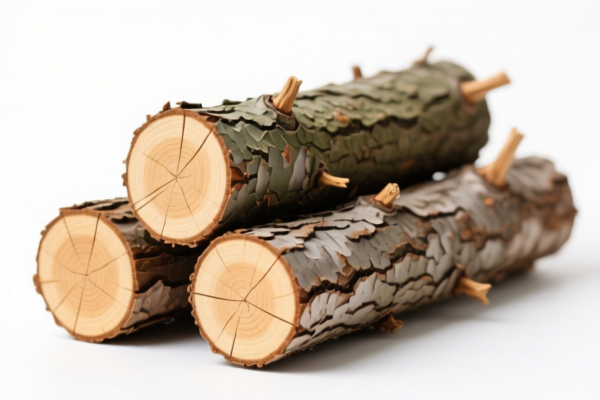
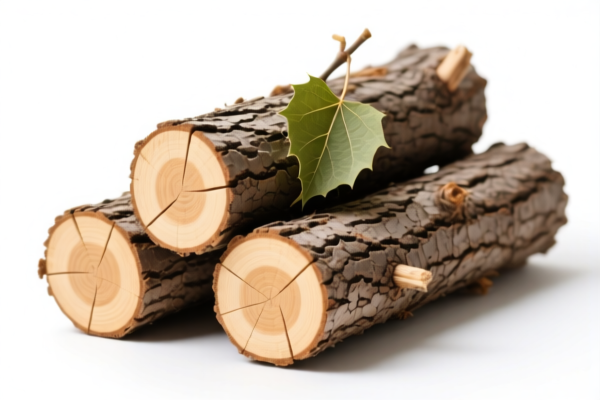
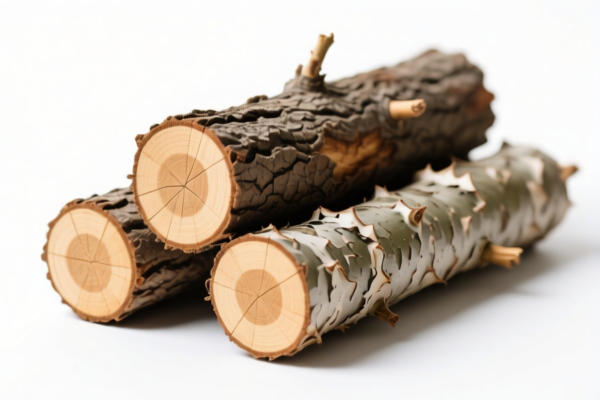

AI Analysis
🌲 Unbarked White Poplar Logs (Poplar Logs for Pulping)
🌐 HS Code Reference & Customs Clearance Guide | 2026 Latest Tariff Analysis | Professional Clearance Strategy
📌 I. Product Definition & Classification: What Exactly Are "Unbarked White Poplar Logs"?
White Poplar logs, specifically in their unbarked (or debarked) state, are raw timber materials primarily destined for the pulp and paper industry or further processing into engineered wood. In international trade, their classification hinges on two critical factors:
1. Material: White Poplar (Populus alba or related species).
2. State: Unprocessed logs with bark removed (or inherently bark-free in classification context).
⚠️ Key Distinction:
- If the wood is Unbarked/Debarked, it falls under specific sub-headings for "Other Wood, Unbarked or Bark-Removed."
- If the wood is Unprocessed/Unworked Logs, it falls under general "Logs" categories.
- Both scenarios for White Poplar currently trigger significant additional tariffs due to US-China trade policies.
📦 II. HS Code Classification Details (2026 Latest Tariff Alignment)
Based on the provided data, Unbarked White Poplar Logs are classified under two primary HS Codes, depending on the precise description provided in customs declarations. Both carry the same tax burden.
| HS Code | Product Description | Applicable Scenario | Bark Status |
|---|---|---|---|
4403.97.00.22 |
Unbarked White Poplar Logs | Material is White Poplar; Form is Log; Meets pulping wood requirements. | ✅ Removed/Unbarked |
4403.97.00.67 |
Unbarked White Poplar Logs | Material is White Poplar; Form is Log; Bark removal does not change its fundamental log classification. | ✅ Removed/Unbarked |
🔍 Important Note:
- The difference between.22and.67lies in the specific textual description required by customs systems regarding "Pulping Wood" requirements.
-.22explicitly states it meets requirements for "Poplar & Pulping Wood."
-.67states that "Unbarked" status does not conflict with its classification as a log.
- Both are subject to the exact same tariff structure.
💰 III. 2026 Latest Tariff Rate Breakdown (Including Surtaxes & Policy Add-ons)
✅ Applicable Country: United States (US)
✅ Country of Origin: China (CN)
✅ Effective Date: Current applicable rates for Chinese imports
🎯 1. HS Codes 4403.97.00.22 & 4403.97.00.67
Product: Unbarked White Poplar Logs (White Poplar/Poplar Wood for Pulping)
| Item | Content |
|---|---|
| Base Tariff Rate | 0.0% (Ad valorem) |
| Section 301 Surcharge | +25.0% (Under USITC Footnote/Section 301) |
| Section 122 Clause Tariff | +10.0% (Specific clause for certain wood products/trade measures) |
| Total Tariff Rate | 35.0% |
| Tax Calculation | CIF Value × 35% |
| De Minimis Exemption | ❌ Not Applicable (High-value commodity, not eligible for de minimis) |
| Legal Basis Path | Section 301: 25% + Section 122: 10% → Total 35% |
📌 Explanation:
- Base Rate (0%): Under normal Most Favored Nation (MFN) treatment, unprocessed wood logs often have low or zero base duties.
- Section 301 (25%): This is the standard additional tariff imposed on a wide range of Chinese goods, including wood and wood products.
- Section 122 (10%): A specific additional duty applied to certain wood-related imports, further increasing the cost.
- Total 35%: This is a high effective tariff rate. Importers must account for this in their landed cost calculations.
🛠️ IV. Customs Clearance Practical Advice (Real-World Pitfall Avoidance)
✅ 1. Required Documentation Checklist (Mandatory)
| Document | Must Provide | Explanation |
|---|---|---|
| ✅ Commercial Invoice | ✔️ | Must clearly state "Unbarked White Poplar Logs" and HS Code. |
| ✅ Packing List | ✔️ | Detail dimensions, volume (CBM), and weight. |
| ✅ Phytosanitary Certificate | ✔️ | Critical. Proof that wood is free from pests/diseases (ISPM 15 standard). |
| ✅ Fumigation Certificate | ✔️ | Often required alongside Phyto cert for wood products. |
| ✅ Bill of Lading | ✔️ | Standard shipping document. |
| ✅ Origin Certificate | ✔️ | To prove origin is China (applying the 35% rate). |
⚠️ Warning:
- Bark Removal Verification: If declaring as "Unbarked," ensure the wood truly meets the unbarked criteria. Misdeclaration can lead to re-inspection or penalties.
- Pulping Classification: If using HS4403.97.00.22, be prepared to prove the wood is suitable for pulping if questioned.
✅ 2. Declaration Tips (Key Mnemonics)
🔥 "Unbarked Logs, 35% Tax, Phyto Cert is King!"
| Scenario | Correct Declaration | Incorrect Practice |
|---|---|---|
| White Poplar Logs, Bark Removed | 4403.97.00.22 or 4403.97.00.67 |
Declaring as "Planks" or "Timber" → Misclassification |
| Bark-ON Logs | Different HS Code (e.g., 4403.94...) |
Declaring as "Unbarked" when bark is present → Fraud/Penalty |
| Sawn Wood (not logs) | HS Code in Chapter 44 (Sawn) | Declaring as "Logs" → Severe penalty |
| Pulp (processed) | HS Code 4701/4703 | Declaring as "Logs" → Wrong stage of processing |
✅ 3. Special Handling
| Situation | Advice |
|---|---|
| High Volume Imports | Consider applying for Advance Rulings to confirm HS Code stability. |
| Wood Species Verification | Keep botanical documentation ready. Customs may request expert identification to confirm "White Poplar." |
| Tariff Engineering | 35% is high. Evaluate if further processing in a third country (avoiding China origin rules) could reduce costs, but be aware of "Substantial Transformation" rules. |
🌍 V. Global Market Comparison (2026 Latest)
| Country/Region | Recommended HS Code | Tariff Rate | Certification Required | Notes |
|---|---|---|---|---|
| 🇺🇸 USA | 4403.97.00.22 / .67 |
35% | Phytosanitary + Fumigation | High tariff due to Section 301 & 122 |
| 🇨🇳 China | 4403.97.00 |
Varies (often low) | N/A (Domestic) | Lower barrier for domestic trade |
| 🇪🇺 EU | 4403.97 |
0-2% (MFN) | FSC/PEFC (Sustainability) | Strict on illegal logging, but lower tariffs |
| 🇯🇵 Japan | 4403.97 |
0-3% | ISPM 15 | Strong demand for pulp wood |
📌 Conclusion:
- The US market is the most challenging due to the 35% total tariff.
- For other markets, the primary barrier is phytosanitary compliance, not tariff cost.
📌 VI. Common Errors & Pitfall Guide (Lessons Learned)
❌ Error 1: Declaring "Bark-On" logs as "Unbarked" to fit a cheaper sub-category
👉 Consequence: Customs inspection reveals bark → Fine, back-tariffs, and shipment delay.
❌ Error 2: Ignoring the Phytosanitary Certificate
👉 Consequence: Shipment rejected or destroyed at port. Wood pests are a major red flag.
❌ Error 3: Assuming "White Poplar" is a generic term
👉 Consequence: Misidentification leads to wrong HS Code. Must specify species if requested.
❌ Error 4: Not accounting for the Section 122 10% tariff
👉 Consequence: Underquoting costs by 10% → Unexpected cash flow issue.
✅ Correct Practice:
"Unbarked White Poplar Logs, for Pulping, Origin: China, Fumigated, ISPM 15 Compliant"
🎯 VII. Conclusion: Professional Declaration, Cost Control, Efficiency!
🎯 Remember the Rules:
🔹 "Unbarked Logs = 35% Tax in the US"
🔹 "Phyto Cert is Non-Negotiable"
🔹 "HS Code Precision Saves Money & Time"
📌 Tip:
If you are importing large volumes, consider negotiating with suppliers to share the tariff burden, or explore supply chain diversification if possible. Always apply for an Advance Ruling from US CBP if your shipment volume is significant.
📣 Act Now:
📞 Hire a licensed customs broker.
📄 Ensure all wood certification documents are perfect.
🚀 Clear customs smoothly, avoid delays, and protect your margins.
✨ Professional clearance starts with accurate classification!
💼 Every percentage point of tariff matters!
Customer Reviews
About HS Code Classification
The Harmonized System (HS) is an internationally standardized nomenclature developed by the World Customs Organization (WCO) to classify traded products. Over 200 countries use the HS system as the basis for customs tariffs, trade statistics, and import/export regulations.
Each HS code follows a hierarchical structure:
- Chapter (2 digits) — Broad category of goods (e.g., Chapter 84: Machinery and Mechanical Appliances)
- Heading (4 digits) — More specific grouping within the chapter
- Subheading (6 digits) — Internationally standardized breakdown, used by all WCO member countries
- National subdivisions (8-10 digits) — Country-specific extensions for further classification, such as US HTSUS 10-digit codes
Correct HS code classification is essential for smooth customs clearance, accurate duty payment, and compliance with trade regulations. Misclassification can lead to customs delays, overpayment of duties, or penalties.
When importing from CN to US, the applicable tariff rates may include:
- Most-Favored-Nation (MFN) rate — The standard duty rate applied to WTO members
- General rate — Applied to countries without trade agreements
- Trade remedy duties — Additional tariffs such as Section 301 (anti-dumping), Section 232 (national security), or countervailing duties
The information provided on this page is for reference purposes only. For official classification, please consult with your local customs authority or a licensed customs broker.