Unbleached Cotton Twill Fabric 317
CN → US| HS Code | Tariff Rate | Origin | Destination | Doc |
|---|---|---|---|---|
| 5211120040 | 42.7% | CN | US | Official Doc |
| 5209120020 | 41.5% | CN | US | Official Doc |
| 5209120040 | 41.5% | CN | US | Official Doc |
| 5211120020 | 42.7% | CN | US | Official Doc |
| 5208130000 | 42.9% | CN | US | Official Doc |
| 5208192090 | 42.9% | CN | US | Official Doc |
Product Images
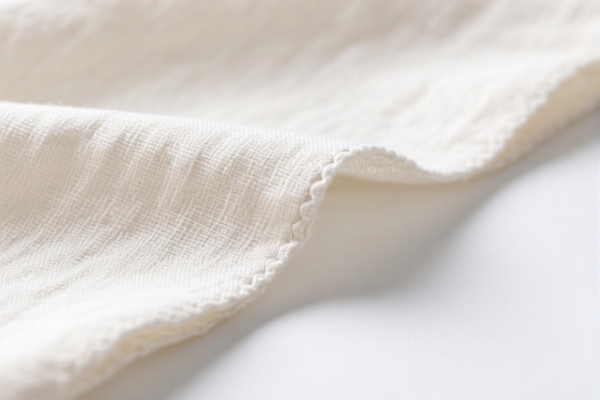
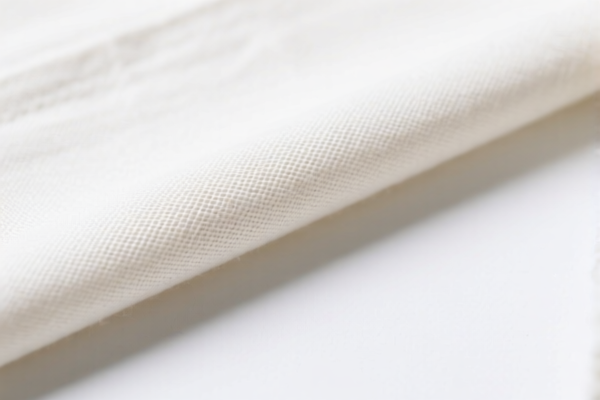
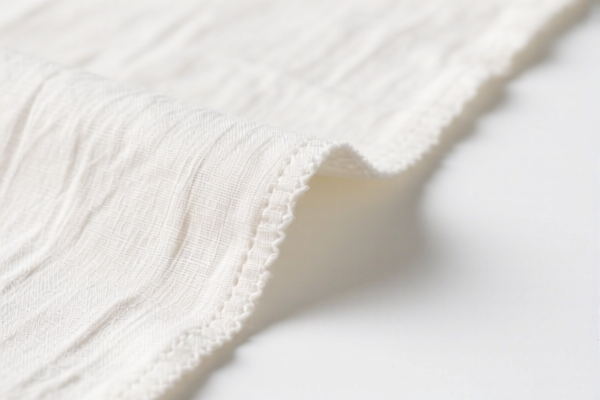
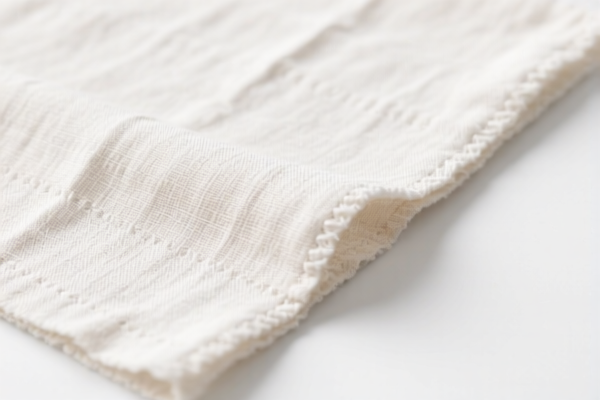
AI Analysis
🧵 Unbleached Cotton Twill Fabric (Code 317)
🌐 HS Code Reference & Customs Clearance Guide | 2026 Latest Tariff Analysis | Professional Entry Strategy 📌 I. Product Definition & Classification: Do You Really Understand "Unbleached Cotton Twill"?
Unbleached Cotton Twill Fabric is a fundamental textile raw material used in denim, workwear, upholstery, and heavy-duty canvases. In international trade, the classification is not just about "cotton fabric"; it depends strictly on: 1. Weight (GSM): Is it lightweight, medium-weight, or heavy-weight? 2. Weave Structure: Is it strictly Twill (diagonal rib pattern) or Plain Weave? 3. Processing State: Is it Unbleached (grey/raw state) or Bleached? 4. Composition: Is it 100% Cotton?
⚠️ Key Distinction Points: - If it is Unbleached + Twill Weave + Specific Weight → It falls under HS Codes 5208, 5209, or 5211 (depending on GSM). - If it is Bleached, the HS codes change completely (usually 5209.42 or 5211.42). Ensure your product is truly "Unbleached/Grey" before using the codes below. - If it is Plain Weave (not twill), it does NOT fit these specific codes.
📦 II. HS Code Classification Details (2026 Latest Tariff Authority Alignment)
The following 6 HS Codes from <DATA> are potential classifications for Unbleached Cotton Twill. The correct one depends entirely on the Weight (Grams per Square Meter - GSM) and specific sub-heading rules.
| HS Code | Product Description (Summary from Data) | Weight/Type Indication* | Tax Detail Breakdown |
|---|---|---|---|
5209.12.00.20 |
Unbleached cotton twill cloth, fully matching material and form characteristics | Heavyweight Twill (>200g/m² usually, Check Chapter 52 Notes) | Base: 6.5%, 301 Tariff: 25%, 122 Tariff: 10% |
5209.12.00.40 |
Unbleached cotton twill fabric, meeting material and form requirements | Heavyweight Twill (Specific sub-category) | Base: 6.5%, 301 Tariff: 25%, 122 Tariff: 10% |
5211.12.00.40 |
Unbleached cotton twill fabric, compliant with unbleached & twill description | Medium/Heavy Twill (Section 5211 covers heavier/specific weaves) | Base: 7.7%, 301 Tariff: 25%, 122 Tariff: 10% |
5211.12.00.20 |
Unbleached cotton woven twill fabric, matching classification features | Medium/Heavy Twill (Woven/Twill specific) | Base: 7.7%, 301 Tariff: 25%, 122 Tariff: 10% |
5208.13.00.00 |
Unbleached cotton twill woven fabric, process and state fully matched | Lightweight Twill (<200g/m² usually, Section 5208) | Base: 7.9%, 301 Tariff: 25%, 122 Tariff: 10% |
5208.19.20.90 |
Unbleached cotton twill fabric, meeting material and process requirements | Other Unbleached Twill (Residual/Other specific weights) | Base: 7.9%, 301 Tariff: 25%, 122 Tariff: 10% |
🔍 Critical Note on Codes: - HS 5208: Generally covers woven fabrics of cotton weighing ≤ 200 g/m². - HS 5209: Generally covers woven fabrics of cotton weighing > 200 g/m². - HS 5211: Covers other woven cotton fabrics (often heavier or specific blends, but here listed for unbleached twill variants). - Why 6 codes? US HTS splits these based on specific weight brackets (e.g., 100-200g, >200g, etc.) and specific twill construction details. You must check your fabric's GSM to pick the exact line.
💰 III. 2026 Latest Tariff Rate Details (Including Surcharges & Policy Add-ons)
✅ Applicable Country: USA (US)
✅ Origin: China (CN)
✅ Applicable To: All 6 HS Codes Listed Above
🎯 Unified Tax Structure for Unbleached Cotton Twill
For all the listed HS Codes (5208.13, 5208.19, 5209.12, 5211.12), the tax structure is consistent in composition but varies in Base Rate.
| Item | Content |
|---|---|
| 1. Base MFN Rate | 6.5% – 7.9% (Varies by specific HS subheading/Weight) |
| 2. Section 301 Tariff (USITC) | +25% (Applied to Chinese textiles under Trade Act Section 301) |
| 3. Section 122 Tariff (IEEPA/Specific) | +10% (Specific administrative tariff applied to this category) |
| Total Tax Rate | 41.5% – 42.9% |
| Tax Calculation | (CIF Value) × Total Tax Rate |
| De Minimis Exemption | ❌ NOT APPLICABLE (Deny De Minimis) |
| Legal Basis Path | HTSUS:52XX.XX.XX.XX → USITC:301Footnote → IEEPA:122Footnote |
📌 Detailed Explanation of Rates: - Base Rate (6.5% or 7.7% or 7.9%): This is the standard Most Favored Nation (MFN) duty for cotton textiles. It varies slightly depending on whether the fabric is in Section 5208 (lighter) or 5209/5211 (heavier/specific). - 301 Tariff (+25%): This is the significant "Trade War" tariff. It applies to almost all Chinese textile imports. It is non-negotiable for standard commercial imports. - 122 Tariff (+10%): This refers to specific administrative provisions (often linked to Section 122 of the Trade Act or specific IEEPA orders targeting certain strategic or surplus goods). In this dataset, it is explicitly added. - Total Impact: The effective tax rate is over 40%. This significantly impacts landed cost.
🛠️ IV. Customs Clearance Practical Advice (Avoid Pitfalls)
✅ 1. Preparation Checklist (Non-Negotiable)
| Document | Required? | Description |
|---|---|---|
| ✅ Detailed Commercial Invoice | ✔️ | Must clearly state: "Unbleached Cotton Twill Fabric", GSM, Width, Roll Length. |
| ✅ Fabric Specification Sheet | ✔️ | Must confirm: 100% Cotton, Twill Weave, Unbleached/Grey State. |
| ✅ Third-Party Test Report | ✔️ | Confirming fiber content (Cotton) and weave structure. |
| ✅ Country of Origin Certificate | ✔️ | Required to prove Chinese origin and apply the correct 301/122 tariffs. |
| ✅ Packing List | ✔️ | Include roll dimensions and net/gross weight. |
✅ 2. Declaration Tips (Key Mantras)
🔥 "Unbleached is Key, Twill is King, GSM is the Judge!"
| Scenario | Correct Declaration | Wrong Action |
|---|---|---|
| Fabric is actually Bleached/White | Do NOT use these codes. Use 5209.42/5211.42. | Misdeclaring as "Unbleached" → Fraud Risk + Seizure |
| Fabric is Plain Weave (Not Twill) | Use Plain Weave codes (e.g., 5208.12). | Using Twill codes → Classification Error + Penalties |
| Mixed Fibers (e.g., Cotton/Poly) | Use HS codes for blends (e.g., 5211.xxxx). | Claiming 100% Cotton → Value Adjustment + Fines |
| Heavyweight (>200g/m²) | Must use 5209 or 5211 series. | Using 5208 (Lightweight) codes → Underpayment + Interest |
✅ 3. Special Circumstances Handling
| Situation | Handling Advice |
|---|---|
| Grey Fabric vs. Unbleached | Ensure customs understands "Unbleached" means raw, natural color. Do not submit "Dyed" or "Printed" invoices. |
| Rolls vs. Bulk | Declare as "Rolls" or "Bales" accurately. Mismatched packing descriptions cause delays. |
| Sample Shipments | No De Minimis Exemption. Even small samples face the full ~42% tax rate if shipped via standard commercial channels from China. |
| Pre-Entry Filing | Consider filing Entry Type 01 (Immediate Delivery) to ensure proper HTSUS determination and avoid holds. |
🌍 V. Global Market Clearance Comparison (2026 Latest)
| Country/Region | Recommended HS Code Range | Estimated Total Tax (China Origin) | Certification/Remarks |
|---|---|---|---|
| 🇺🇸 USA | 5208-5211 Series |
41.5% - 42.9% | High tariffs due to 301 + 122. Strict GSM verification. |
| 🇨🇳 China (Export) | N/A | 0% (VAT Refund) | Export rebate applies. Ensure accurate HS for refund. |
| 🇪🇺 EU | 5208-5212 Series |
4% - 12% | Standard MFN duty. No Section 301 equivalent, but verify local VAT. |
| 🇬🇧 UK | 5208-5212 Series |
4% - 12% | Post-Brexit rules. Standard UK Global Tariff applies. |
| 🇨🇦 Canada | 5208-5212 Series |
4% - 10% | Check CUSMA eligibility if produced in NA, otherwise MFN. |
📌 Conclusion: - USA is the most expensive market for this product due to the dual layer of 301 (25%) and 122 (10%) surcharges on top of base duties. - EU/UK/Canada are significantly more cost-effective, with standard textile duties. - Risk Alert: The US Customs and Border Protection (CBP) is aggressive on textile classification. Ensure your GSM and Weave Type are documented precisely to avoid misclassification audits.
📌 VI. Common Errors & Pitfall Guide (Lessons Learned)
❌ Error 1: Declaring "Cotton Fabric" without specifying "Twill Weave" 👉 Consequence: Customs may classify it as Plain Weave or "Other," leading to a different HS code and potential underpayment or overpayment.
❌ Error 2: Confusing "Unbleached" with "Grey" or "Raw" 👉 Consequence: If the fabric has been chemically treated beyond bleaching, it might fall under a different subheading. Unbleached means only cleaned/scoured, no optical brighteners or dyes.
❌ Error 3: Ignoring GSM (Weight) 👉 Consequence: Misplacing a 210g/m² fabric into a 5208 code (≤200g) is a frequent audit trigger. Always include GSM in the invoice.
❌ Error 4: Assuming De Minimis ($800) applies 👉 Consequence: It does not. All these HS codes are excluded. Even small shipments face the full ~42% tax.
✅ Correct Approach:
"100% Cotton, Unbleached, Twill Weave, Grey, [Insert GSM] g/m², Width [Insert Width], For Denim/Workwear Use."
🎯 VII. Conclusion: Professional Classification Saves Money!
🎯 Remember the Mantra:
🔹 "Unbleached is the Key, Twill is the Structure, GSM is the Decider!"
🔹 "42% Tax in US, Don't Guess the Code, Or You'll Pay the Price!"
🔹 "Base + 25% + 10% = High Cost, Document Everything!"
📌 Pro Tip:
If your fabric is destined for the US, calculate the Landed Cost including the 41.5%-42.9% tariff.
Consider Section 321 De Minimis alternatives only if you are shipping non-excluded items, but for cotton textiles, this is blocked.
For high-value bulk shipments, consider Advance Rulings to lock in the correct HS Code and avoid post-entry audits.
📣 Immediate Action:
📞 Verify GSM & Weave with your supplier.
📄 Check Invoice Accuracy against the 6 HS Codes above.
🚀 Plan for Tariff Costs in your pricing strategy for the US market.
✨ Professional Clearance Starts with Precise Classification!
💼 Your Profit Margin Depends on Accurate HTSUS Codes!
Customer Reviews
About HS Code Classification
The Harmonized System (HS) is an internationally standardized nomenclature developed by the World Customs Organization (WCO) to classify traded products. Over 200 countries use the HS system as the basis for customs tariffs, trade statistics, and import/export regulations.
Each HS code follows a hierarchical structure:
- Chapter (2 digits) — Broad category of goods (e.g., Chapter 84: Machinery and Mechanical Appliances)
- Heading (4 digits) — More specific grouping within the chapter
- Subheading (6 digits) — Internationally standardized breakdown, used by all WCO member countries
- National subdivisions (8-10 digits) — Country-specific extensions for further classification, such as US HTSUS 10-digit codes
Correct HS code classification is essential for smooth customs clearance, accurate duty payment, and compliance with trade regulations. Misclassification can lead to customs delays, overpayment of duties, or penalties.
When importing from CN to US, the applicable tariff rates may include:
- Most-Favored-Nation (MFN) rate — The standard duty rate applied to WTO members
- General rate — Applied to countries without trade agreements
- Trade remedy duties — Additional tariffs such as Section 301 (anti-dumping), Section 232 (national security), or countervailing duties
The information provided on this page is for reference purposes only. For official classification, please consult with your local customs authority or a licensed customs broker.