Unbleached Kraft Paper for Hand Packaging
CN → US| HS Code | Tariff Rate | Origin | Destination | Doc |
|---|---|---|---|---|
| 4804314020 | 35.0% | CN | US | Official Doc |
| 4804314040 | 35.0% | CN | US | Official Doc |
Product Images
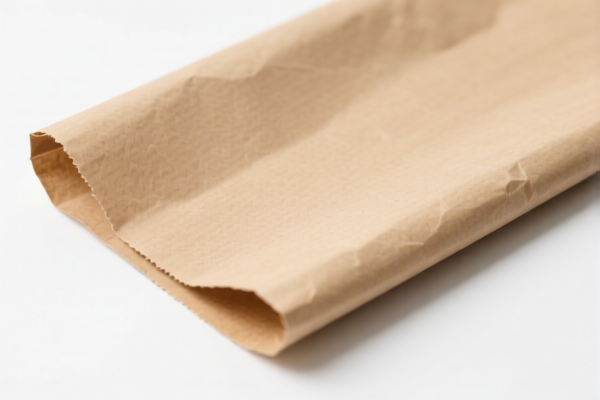

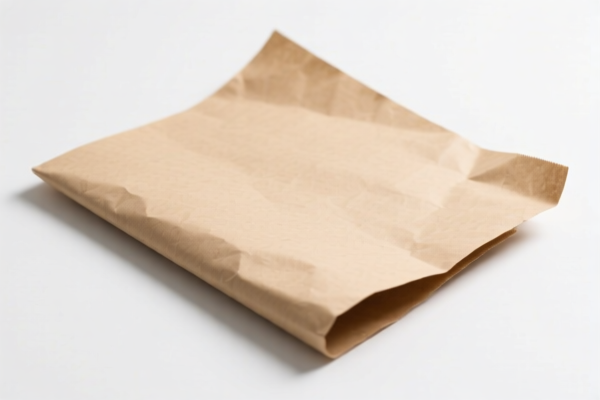
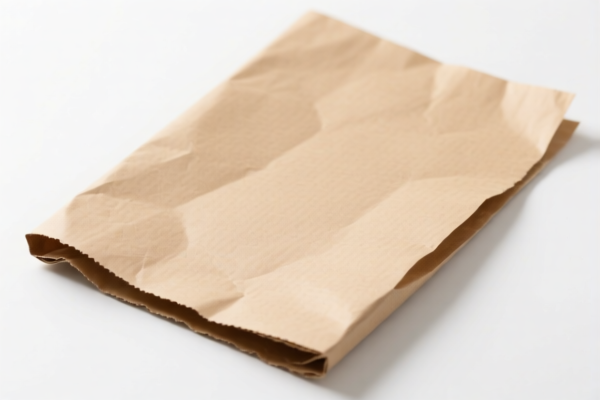
AI Analysis
📄 Unbleached Kraft Paper for Hand Packaging
🌐 HS Code Reference & Customs Clearance Guide | 2024/2025 Latest Tariff Analysis | Professional Clearance Strategy
📌 I. Product Definition & Classification: Do You Really Know "Unbleached Kraft Paper"?
Unbleached Kraft Paper is a high-strength, uncoated paper made from wood pulp using the Kraft process, without bleaching. It is widely used for hand packaging, shopping bags, sack liners, and wrapping. In international trade, precise classification is critical because weight per square meter (g/m²) and coating status determine the HS Code and the associated tariffs.
⚠️ Key Distinction:
- Weight ≤ 150 g/m²: Falls under 4804.31 (Other kraft paper ≤150 g/m²).
- Weight > 150 g/m²: Falls under 4804.39 (Other kraft paper >150 g/m²).
- Coated vs. Uncoated: This guide covers Uncoated paper only. Coated papers have different codes (e.g., 4804.31.60).
📦 II. HS Code Classification Details (Based on Provided Data)
The following HS Codes are derived strictly from the provided <DATA> JSON, which specifies Unbleached, Uncoated Kraft Paper ≤ 150 g/m².
| HS Code | Product Description | Applicable Scenario | Weight Limit | Bleaching Status |
|---|---|---|---|---|
4804.31.40.20 |
Unbleached Kraft Paper (≤150 g/m²) | Wrapping paper, Bag or sack paper | ≤ 150 g/m² | Unbleached |
4804.31.40.40 |
Unbleached Kraft Paper (≤150 g/m²) | Other (Not wrapping, bag, or sack paper) | ≤ 150 g/m² | Unbleached |
🔍 Critical Note:
- These codes apply ONLY if the paper weighs 150 g/m² or less.
- If your paper weighs more than 150 g/m², these codes are incorrect. You must look into heading 4804.39.
- "Hand Packaging" often implies bag or sack paper (4804.31.40.20), but if it’s used for other wrapping purposes not explicitly as bags/sacks, it may fall under4804.31.40.40.
💰 III. 2024/2025 Latest Tariff Rate Breakdown (Including Additional Duties)
✅ Applicable Country: United States (US)
✅ Origin: China (CN)
✅ Data Source: Provided<DATA>JSON
🎯 1. 4804.31.40.20 — Wrapping Paper / Bag or Sack Paper
| Item | Content |
|---|---|
| Base Tariff | 0.0% (ad valorem) |
| Additional Tariff | +25.0% |
| Total Tax Rate | 25.0% |
| Tax Calculation | CIF Value × 25% |
| De Minimis Exemption | ❌ Not Applicable (Standard trade rules apply; Section 301/IEEPA duties usually apply regardless of value for these categories) |
📌 Explanation:
- The 0% base tariff indicates a favorable MFN (Most Favored Nation) rate for kraft paper.
- The +25% additional tariff is likely due to US Section 301 tariffs or IEEPA (International Emergency Economic Powers Act) measures on Chinese goods.
- Total Cost Impact: A $10,000 shipment will incur $2,500 in duties. This is a significant cost that must be factored into pricing.
🎯 2. 4804.31.40.40 — Other Unbleached Kraft Paper (≤150 g/m²)
| Item | Content |
|---|---|
| Base Tariff | 0.0% |
| Additional Tariff | +25.0% |
| Total Tax Rate | 25.0% |
| Tax Calculation | CIF Value × 25% |
| De Minimis Exemption | ❌ Not Applicable |
📌 Note:
- The tax rate is identical to4804.31.40.20.
- The distinction is purely descriptive for customs documentation. Misdeclaring "bag paper" as "other" may lead to customs scrutiny if the product is clearly used for bags.
🛠️ IV. Customs Clearance Practical Advice (Best Practices)
✅ 1. Required Documentation Checklist
| Document | Mandatory? | Explanation |
|---|---|---|
| ✅ Commercial Invoice | ✔️ | Must clearly state: "Unbleached Kraft Paper, Uncoated, Weight: XX g/m², Use: Hand Packaging/Bags" |
| ✅ Packing List | ✔️ | Detail roll/sheet dimensions, weight, and quantity |
| ✅ Product Specification Sheet | ✔️ | Confirm weight (g/m²) is ≤ 150 g/m². If >150 g/m², HS Code changes |
| ✅ Bill of Lading/Air Waybill | ✔️ | Standard shipping documents |
| ✅ Certificate of Origin | ✔️ | To prove origin (China) and confirm tariff applicability |
✅ 2. Declaration Tips (Key Mnemonic)
🔥 "Weight Limits, Bleach Check, Bag or Other, Tariff is Fixed!"
| Scenario | Correct HS Code | Error to Avoid |
|---|---|---|
| Weight = 120 g/m², used for shopping bags | 4804.31.40.20 |
Declaring as 4804.31.40.40 may cause mismatch with product use |
| Weight = 180 g/m² | NOT 4804.31 | Must use 4804.39.xxxx (Different tax bracket) |
| Bleached Paper | NOT 4804.31 | Bleached paper falls under 4802.58/59 or similar |
| Coated Paper | NOT 4804.31 | Coated paper falls under 4804.31.60 (Different tax) |
✅ 3. Special Case Handling
| Case | Handling Advice |
|---|---|
| Mixed Weights | If a shipment contains rolls of varying weights (e.g., 100g and 140g), ensure all are ≤ 150 g/m² to qualify for 4804.31. If any roll is > 150 g/m², the entire shipment may need re-evaluation or split declaration. |
| Hand Packaging vs. Industrial Sacks | "Hand packaging" typically refers to retail bags. If used for industrial heavy-duty sacks, confirm if customs considers it "sack paper." 4804.31.40.20 covers both, but be prepared to provide end-use proof. |
| Origin Diversification | If the paper is manufactured in Vietnam, Thailand, or other non-China countries, the 25% additional tariff may not apply. Verify country of origin carefully. |
🌍 V. Global Market Comparison (2024/2025)
| Country/Region | Recommended HS Code | Base Tariff | Additional Tariff (China) | Total Effective Rate | Notes |
|---|---|---|---|---|---|
| 🇺🇸 USA | 4804.31.40.20 / .40 |
0% | +25% | 25% | High due to trade tensions |
| 🇪🇺 EU | 4804.31 | 0% | None (Generally) | 0% | Favorable trade terms |
| 🇨🇳 China (Import) | 4804.31 | 0% | None | 0% | Low duty for raw materials |
| 🇯🇵 Japan | 4804.31 | 5% | None | 5% | Moderate duty |
📌 Conclusion:
- USA is the most expensive market for this product due to the 25% additional tariff.
- If possible, consider sourcing from non-China origins to avoid the additional duty, if supply chain allows.
📌 VI. Common Mistakes & Pitfalls (Lessons Learned)
❌ Mistake 1: Ignoring the 150 g/m² weight limit
👉 Consequence: If your paper is 160 g/m² and you declare 4804.31.40.20, customs may reclassify it under 4804.39, potentially altering the duty rate or triggering audits.
❌ Mistake 2: Confusing Bleached vs. Unbleached
👉 Consequence: Unbleached (brown) paper is 4804.31. Bleached (white) paper is 4802.58/59. Misdeclaration leads to penalties.
❌ Mistake 3: Not specifying Coating Status
👉 Consequence: Uncoated is 4804.31.40. Coated is 4804.31.60. While the provided data shows the same tax rate, misdeclaration can cause clearance delays.
❌ Mistake 4: Assuming De Minimis Exemption applies
👉 Consequence: Under US trade policy, Section 301/IEEPA duties often apply regardless of shipment value. Do not assume small shipments are tax-free.
✅ Correct Practice:
"Unbleached Kraft Paper, Uncoated, 150 g/m², for Hand Packaging Bags, Origin: China"
🎯 VII. Conclusion: Precision in Classification Saves Costs!
🎯 Remember the Mnemonic:
🔹 "Unbleached, Uncoated, ≤150g → 4804.31.40.20/40.25% Duty."
🔹 "Weight Matters! >150g is a Different Code."
🔹 "China Origin = 25% Extra. Consider Non-China Sources for Savings."
📌 Pro Tip:
If your product is used for industrial sacks rather than retail "hand packaging," ensure your commercial invoice reflects this use to avoid disputes. Additionally, always verify the exact weight (g/m²) in your specification sheets, as this is the primary driver for HS Code classification.
📣 Immediate Action:
📞 Consult with a licensed customs broker to confirm the exact g/m² of your product.
🚀 Plan for 25% duty in US clearance costs. Explore alternative origins if volume is high.
✨ Professional Customs Clearance Starts with Accurate Classification!
💼 Your bottom line depends on the decimal point in HS Codes!
Customer Reviews
About HS Code Classification
The Harmonized System (HS) is an internationally standardized nomenclature developed by the World Customs Organization (WCO) to classify traded products. Over 200 countries use the HS system as the basis for customs tariffs, trade statistics, and import/export regulations.
Each HS code follows a hierarchical structure:
- Chapter (2 digits) — Broad category of goods (e.g., Chapter 84: Machinery and Mechanical Appliances)
- Heading (4 digits) — More specific grouping within the chapter
- Subheading (6 digits) — Internationally standardized breakdown, used by all WCO member countries
- National subdivisions (8-10 digits) — Country-specific extensions for further classification, such as US HTSUS 10-digit codes
Correct HS code classification is essential for smooth customs clearance, accurate duty payment, and compliance with trade regulations. Misclassification can lead to customs delays, overpayment of duties, or penalties.
When importing from CN to US, the applicable tariff rates may include:
- Most-Favored-Nation (MFN) rate — The standard duty rate applied to WTO members
- General rate — Applied to countries without trade agreements
- Trade remedy duties — Additional tariffs such as Section 301 (anti-dumping), Section 232 (national security), or countervailing duties
The information provided on this page is for reference purposes only. For official classification, please consult with your local customs authority or a licensed customs broker.