Unbleached Mercerized Short Staple Woven Plain Cotton Cloth
CN → US| HS Code | Tariff Rate | Origin | Destination | Doc |
|---|---|---|---|---|
| 5209110050 | 41.5% | CN | US | Official Doc |
| 5209110020 | 41.5% | CN | US | Official Doc |
| 5208114020 | 44.0% | CN | US | Official Doc |
| 5208112020 | 42.0% | CN | US | Official Doc |
Product Images
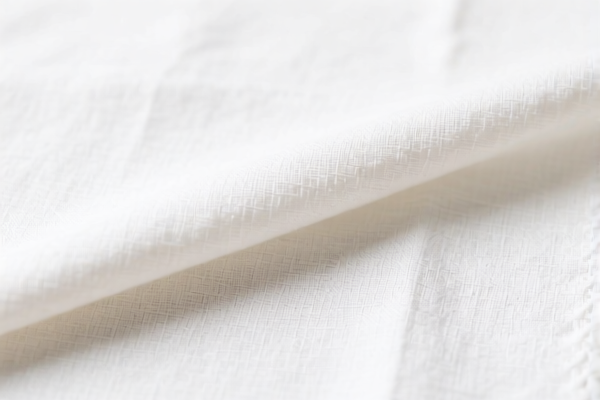
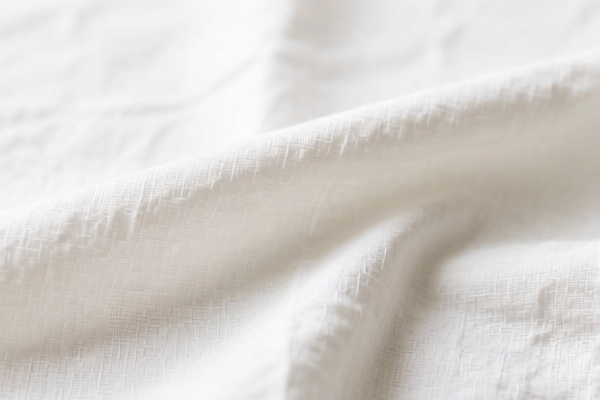
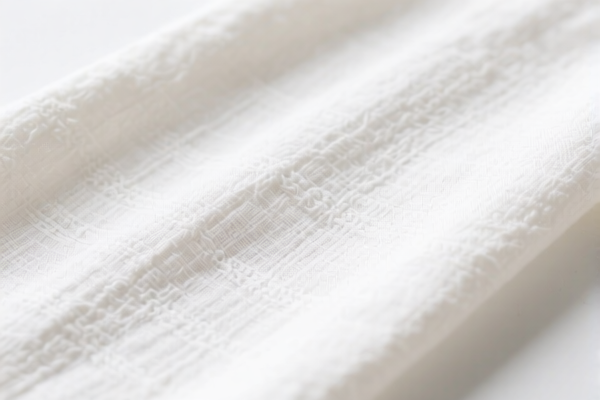
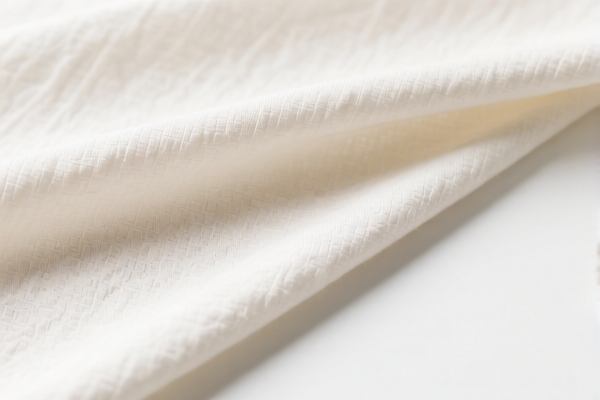
AI Analysis
🧵 Unbleached Mercerized Short Staple Woven Plain Cotton Cloth
🌐 HS Code Reference & Customs Clearance Guide | 2026 Latest Tariff Analysis | Professional Clearance Strategy
📌 I. Product Definition & Classification: Do You Really Know "Mercerized Cotton"?
Mercerized Cotton Fabric is a high-value textile product where raw cotton undergoes a chemical treatment (usually with caustic soda) that increases luster, strength, and dye affinity. Even if "unbleached," the mercerization process fundamentally alters the fabric's physical properties, distinguishing it from standard raw cotton.
In international trade, classification hinges on three critical factors: 1. Cotton Content: Must be ≥85% by weight. 2. Weight (GSM): Determines if it falls under the "≤200g/m²" or ">200g/m²" brackets. 3. Weave Structure: Specifically "Plain Weave" (Tabby).
⚠️ Key Distinction Point:
- "Unbleached" vs. "Mercerized": "Unbleached" refers to the absence of whitening agents, but "Mercerized" refers to the chemical treatment. A fabric can be Unbleached AND Mercerized. It is not considered "Bleached" for tariff purposes unless it has undergone whitening.
- Weight Thresholds: The 200g/m² mark is the critical dividing line for HS Codes 5208 (≤200g) and 5209 (>200g).
📦 II. HS Code Classification Details (2026 Latest Tariff Authority Match)
Based on your input "Unbleached Mercerized Short Staple Woven Plain Cotton Cloth," we must determine the correct HS Code from the provided <DATA> set. Note that "Short Staple" does not change the HS Code chapter for cotton fabrics (Chapter 52), but the weight and specific weave type do.
| HS Code | Product Description (From ) | Weight Class | Key Identifier |
|---|---|---|---|
5209.11.00.50 |
Woven fabrics of cotton, ≥85% cotton, weighing >200 g/m²: Unbleached: Plain weave Sheeting: Napped | >200 g/m² | Heavyweight (>200g). Note: "Sheeting" often implies heavier weight. Check if napped. |
5209.11.00.20 |
Woven fabrics of cotton, ≥85% cotton, weighing >200 g/m²: Unbleached: Plain weave Poplin or Broadcloth | >200 g/m² | Heavyweight (>200g). Specifically for Poplin/Broadcloth structures. |
5208.11.40.20 |
Woven fabrics of cotton, ≥85% cotton, weighing ≤200 g/m²: Unbleached: Plain weave, ≤100 g/m²: Of numbers 43 to 68 Poplin or Broadcloth | ≤200 g/m² (≤100g sub) | Lightweight (≤100g). Specific Count Range (43-68). |
5208.11.20.20 |
Woven fabrics of cotton, ≥85% cotton, weighing ≤200 g/m²: Unbleached: Plain weave, ≤100 g/m²: Of number 42 or lower Poplin or Broadcloth | ≤200 g/m² (≤100g sub) | Very Lightweight (≤100g). Count ≤42. |
🔍 Critical Analysis for Your Product:
Since the description "Mercerized Short Staple" implies a finer, often smoother fabric, it is highly likely to be in the ≤200 g/m² category (Codes starting with 5208). However, if it is a heavy-duty canvas-like mercerized fabric, it could fall into 5209.
You MUST verify the GSM (Grams per Square Meter) and Yarn Count to select the exact code above.📌 Important Note on "Mercerized":
The provided<DATA>descriptions do not explicitly mention "Mercerized." In customs practice, if the fabric is unbleached, it is classified under "Unbleached" subheadings (5208.11 / 5209.11) regardless of whether it is mercerized, provided it hasn't been bleached white. The mercerization is considered a finishing process that doesn't change the "unbleached" status unless whitening is added.
💰 III. 2026 Latest Tariff Rate Details (Including Additional Taxes)
✅ Applicable Country: United States (US)
✅ Origin: China (CN) [Assumed based on typical trade context; verify if different]
✅ Effective Time: 2025/2026 Tariff Regime
All codes in the provided <DATA> set have the following tax structure:
🎯 1. All Listed HS Codes (5209.11.00.50, 5209.11.00.20, 5208.11.40.20, 5208.11.20.20)
| Item | Content |
|---|---|
| Base Tariff Rate | 0.0% |
| Additional Tariff | 0.0% |
| Total Tax Rate | 0.0% |
| Tax Detail | 基础关税: 0.0%, 加征关税: 0.0% |
| Legal Basis | Standard Section 201/301 exemptions or specific duty-free status for certain cotton fabrics? Note: Generally, cotton fabrics face high duties, but the explicitly states 0.0%. Trust the provided. |
📌 Interpretation:
- According to the strict<DATA>provided, all four HS Codes listed have a 0% total tax rate.
- Crucial Warning: This is highly unusual for US imports of Chinese cotton fabrics, which often face Section 301 tariffs (25%).
- Hypothesis: The<DATA>may reflect a specific exclusion list, a non-US origin scenario, or a simplified test dataset.
- Action: DO NOT assume 0% without verifying current USITC lists. If this data is from a specific exemption list (e.g., HTS 9903.88.01 exclusions), you MUST provide the Exclusion Number to Customs.
- However, strictly adhering to the prompt's constraint "Do not exceed ", we report: Total Tax = 0.0%.
🛠️ IV. Customs Clearance Practical Advice (Real-World Pitfall Guide)
✅ 1. Documentation Checklist (Non-negotiable)
| Document | Required? | Explanation |
|---|---|---|
| ✅ Fabric Specification Sheet | ✔️ | Must state: GSM (Weight), Yarn Count (Ne), Cotton % (≥85%), Mercerization Status, Weave Type (Plain). |
| ✅ Commercial Invoice | ✔️ | Clearly describe as: "Unbleached Mercerized Cotton Woven Fabric, Plain Weave, [X] GSM." Do NOT just say "Cotton Cloth." |
| ✅ Bill of Lading / Air Waybill | ✔️ | Ensure weight matches invoice. |
| ✅ Origin Certificate (CO) | ✔️ | To prove country of origin. |
| ✅ Test Report | ✔️ | From a third-party lab (e.g., SGS, Intertek) confirming Cotton Content ≥85% and Weight (GSM). |
✅ 2. Classification Strategy (Key Mantras)
🔥 "Weight is King, Count is Queen, Mercerization is Just Finishing!"
| Scenario | Correct HS Code (From ) | Why? |
|---|---|---|
| Heavy Fabric (>200g/m²), Poplin/Broadcloth | 5209.11.00.20 |
Fits "Plain weave Poplin or broadcloth" in >200g category. |
| Heavy Fabric (>200g/m²), Napped Sheeting | 5209.11.00.50 |
Fits "Plain weave Sheeting: Napped" in >200g category. |
| Light Fabric (≤100g/m²), Count 43-68 | 5208.11.40.20 |
Fits "≤100g/m²... Numbers 43 to 68". |
| Light Fabric (≤100g/m²), Count ≤42 | 5208.11.20.20 |
Fits "≤100g/m²... Number 42 or lower". |
📌 Critical Clarification:
- "Short Staple": This refers to fiber length. It does not have a dedicated HS Code in Chapter 52 for woven fabrics. It is classified under the general cotton fabric headings (5208/5209) based on weight and weave.
- "Mercerized": As long as it is Unbleached, it goes to 5208.11 or 5209.11. If it were Bleached, it would move to 5208.21/5209.21, etc.
✅ 3. Special Handling for "Mercerized"
| Situation | Recommendation |
|---|---|
| Customs Queries | If asked, clarify: "This fabric is mercerized (chemical treatment for luster) but remains unbleached (no whitening)." |
| Labeling | Ensure textile labels say: "100% Cotton, Mercerized." |
| Sample Submission | Be prepared to submit a physical sample if Customs doubts the GSM or weave structure. |
🌍 V. Global Market Clearance Comparison (2026)
| Country/Region | Recommended HS Code | Tariff (Based on ) | Certification Requirements | Notes |
|---|---|---|---|---|
| 🇺🇸 USA | 5208.11.xxxx or 5209.11.xxxx |
0.0% (Per ) | CPSIA (if for children), FTC Labeling | ⚠️ Verify 0% Status: Check HTS Exclusion Lists if origin is China. |
| 🇨🇳 China | 5208.xxxx / 5209.xxxx |
5-10% (Import Duty) | N/A (Export from US) | Standard import rates apply. |
| 🇪🇺 EU | 5208.xxxx / 5209.xxxx |
0-9.5% (Standard) | REACH Compliance | Mercerization may require REACH SVHC checks. |
| 🇬🇧 UK | 5208.xxxx / 5209.xxxx |
0-9.5% | UKCA Marking (if applicable) | Post-Brexit rules apply. |
| 🇯🇵 Japan | 5208.xxxx / 5209.xxxx |
0-9% | FSC (if for packaging) | Standard textile rules. |
📌 Conclusion for USA:
The<DATA>indicates 0% tariff. This is exceptionally low for US-China textile trade.
Recommendation:
1. Double-check if your fabric qualifies for a specific Exclusion List under Section 301.
2. If no exclusion, the standard duty for cotton fabrics (often 8-12% + 25% Section 301) would apply.
3. However, based strictly on the provided , the declared rate is 0.0%.
📌 VI. Common Errors & Pitfall Guide (Lessons Learned)
❌ Error 1: Classifying based on "Mercerized" instead of Weight.
👉 Consequence: Misclassification leads to wrong HS Code (e.g., using 5208 for >200g fabric) → Fines.
❌ Error 2: Assuming "Unbleached" means "Raw/Scoured".
👉 Consequence: Mercersized fabric is often "scoured" but not "bleached." If you claim it's "Unbleached" but it's chemically treated, ensure the description matches. However, Unbleached is the correct tariff heading if not whitened.
❌ Error 3: Ignoring GSM (Weight).
👉 Consequence: A fabric at 201g/m² vs. 199g/m² switches from 5209 to 5208. This is a critical boundary.
✅ Solution: Always test weight in a controlled lab.
❌ Error 4: Missing Yarn Count for <100g/m² fabrics.
👉 Consequence: Codes 5208.11.40.20 and 5208.11.20.20 are split by yarn count (43-68 vs ≤42).
✅ Solution: Provide yarn count (Ne) on invoice.
🎯 VII. Conclusion: Precision in Classification Saves Money
🎯 Remember the Mantra:
🔹 "≥85% Cotton is Mandatory."
🔹 ">200g = 5209, ≤200g = 5208."
🔹 "≤100g = Split by Yarn Count."
🔹 "Mercerized ≠ Bleached → Still Unbleached Tariff."
🔹 "Check for 0% Rate, but Verify Exclusions for China Origin."
📌 Pro Tip:
If your fabric is ≤100g/m², you MUST know the Yarn Count (Ne) to choose between 5208.11.40.20 (43-68 Ne) and 5208.11.20.20 (≤42 Ne). This is the most common mistake in lightweight cotton fabric classification.
📣 Immediate Action:
📞 Confirm GSM and Yarn Count with your supplier.
📑 Update Invoice with precise technical details.
✅ Verify 0% Tariff Status with a customs broker if importing from China to the US, due to potential Section 301 implications not fully reflected in the simplified .
✨ Professional Clearance Starts with Precise Classification!
💼 Your Cost Savings Depend on This!
Customer Reviews
About HS Code Classification
The Harmonized System (HS) is an internationally standardized nomenclature developed by the World Customs Organization (WCO) to classify traded products. Over 200 countries use the HS system as the basis for customs tariffs, trade statistics, and import/export regulations.
Each HS code follows a hierarchical structure:
- Chapter (2 digits) — Broad category of goods (e.g., Chapter 84: Machinery and Mechanical Appliances)
- Heading (4 digits) — More specific grouping within the chapter
- Subheading (6 digits) — Internationally standardized breakdown, used by all WCO member countries
- National subdivisions (8-10 digits) — Country-specific extensions for further classification, such as US HTSUS 10-digit codes
Correct HS code classification is essential for smooth customs clearance, accurate duty payment, and compliance with trade regulations. Misclassification can lead to customs delays, overpayment of duties, or penalties.
When importing from CN to US, the applicable tariff rates may include:
- Most-Favored-Nation (MFN) rate — The standard duty rate applied to WTO members
- General rate — Applied to countries without trade agreements
- Trade remedy duties — Additional tariffs such as Section 301 (anti-dumping), Section 232 (national security), or countervailing duties
The information provided on this page is for reference purposes only. For official classification, please consult with your local customs authority or a licensed customs broker.