Unbleached Short fiber Coniferous Wood Sulfate Pulp
CN → US| HS Code | Tariff Rate | Origin | Destination | Doc |
|---|---|---|---|---|
| 4703210040 | 35.0% | CN | US | Official Doc |
| 4703210020 | 35.0% | CN | US | Official Doc |
| 4703190000 | 35.0% | CN | US | Official Doc |
| 4703110000 | 35.0% | CN | US | Official Doc |
| 4706920100 | 35.0% | CN | US | Official Doc |
Product Images
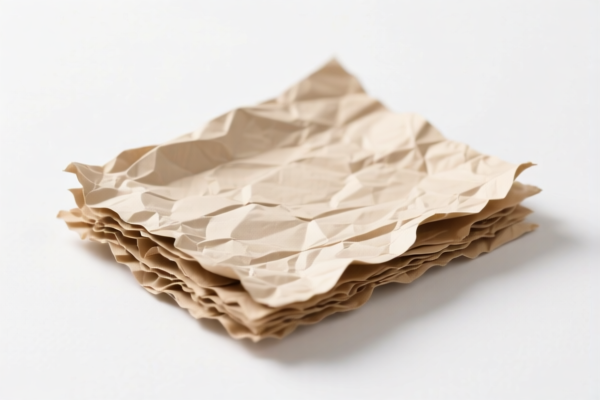


AI Analysis
🌲 Wood Pulp (Unbleached Short-fiber Coniferous Wood Sulfate Pulp)
🌐 HS Code Reference & Customs Clearance Guide | 2024/2026 Latest Tariff Analysis | Professional Clearance Strategy
📌 I. Product Definition & Classification: Do You Know Your "Pulp"?
Unbleached Short-fiber Coniferous Wood Sulfate Pulp is a critical raw material in the paper and packaging industry. In international trade, it is strictly categorized based on three key characteristics: 1. Chemical Process: Sulfate (Kraft) process. 2. Wood Source: Coniferous (Softwood/Needle-leaf trees). 3. Treatment: Unbleached (Brown pulp).
⚠️ Critical Distinction:
- If the pulp is Bleached → It falls under 4703.21 (Bleached Kraft Softwood Pulp).
- If the pulp is Deciduous (Hardwood) → It falls under 4703.11/4703.19 (Bleached/Unbleached Hardwood Pulp).
- If it is Semi-chemical or Chemical Mechanical Pulp → It falls under 4706.For Unbleached Short-fiber Coniferous Wood Sulfate Pulp, the correct HS Code is typically 4703.11.00.00.
📦 II. HS Code Classification Details (Authoritative Reference)
Based on the provided <DATA>, here are the relevant HS Codes and why they apply (or do not apply) to your specific product.
| HS Code | Product Description | Relevance to "Unbleached Short-fiber Coniferous Wood Sulfate Pulp" | Match Status |
|---|---|---|---|
4703.11.00.00 |
Unbleached sulfate pulp of coniferous wood | ✅ Perfect Match Matches: Unbleached + Coniferous (Softwood) + Sulfate (Kraft) + Short-fiber. |
Primary Classification |
4703.19.00.00 |
Unbleached sulfate pulp of other wood | ❌ Incorrect Applies to Non-coniferous (e.g., hardwoods like eucalyptus, birch) unbleached sulfate pulp. |
No Match |
4703.21.00.40 |
Bleached sulfate pulp of coniferous wood | ❌ Incorrect Applies to Bleached pulp. Your product is Unbleached. |
No Match |
4703.21.00.20 |
Bleached sulfate pulp of coniferous wood | ❌ Incorrect Applies to Bleached pulp. Your product is Unbleached. |
No Match |
4706.92.01.00 |
Sulfate wood pulp for packaging (non-coniferous) | ❌ Incorrect Applies to Non-coniferous wood (hardwood) or semi-chemical processes. |
No Match |
🔍 Key Insight:
- "Short-fiber" usually refers to specific softwood species (like spruce or fir) or refined pulp, but the primary HS Code 4703.11 covers all unbleached sulfate softwood pulp regardless of fiber length, unless specified otherwise by local sub-codes.
- "Coniferous" = Softwood. "Deciduous" = Hardwood. This is the most common classification error.
- "Sulfate" = Kraft process. This is distinct from Sulfite (4704) or Mechanical (4703/4705).
💰 III. 2024/2026 Latest Tariff Rate Breakdown (Including Surcharges & Policy Add-ons)
✅ Applicable Country: United States (US)
✅ Country of Origin: China (CN)
✅ Effective Date: November 10, 2025 (and subsequent imports)
🎯 1. 4703.11.00.00 —— Unbleached Sulfate Pulp of Coniferous Wood
| Item | Details |
|---|---|
| Base Tariff Rate | 0.0% (Most Favored Nation/General) |
| Section 301 Surcharge | +25.0% (List 3, HTSUS 4703.11.00) |
| Section 122 Tariff | +10.0% (Specific add-on for certain Chinese goods under current executive orders/trade actions) |
| Total Effective Rate | 35.0% |
| Tax Calculation | CIF Value × 35% |
| De Minimis Eligibility | ❌ No (deny_de_minimis) High-value industrial goods are not eligible for de minimis exemption. |
| Legal Basis Path | USITC:4703.11.00.00 → Section301:9903.88.01 → Section122:9903.xx.xx |
📌 Explanation:
- "Base Rate 0%": Unbleached pulp generally has a low base duty under USMCA/WTO.
- "Section 301 (25%)": This is the standard punitive tariff on many Chinese industrial inputs, including wood pulp.
- "Section 122 (10%)": This additional layer applies to specific goods identified in recent trade enforcement actions.
- Total 35%: This is a high cost factor. It significantly impacts the landed cost of packaging materials and paper products.
📝 Note on Other HS Codes in <DATA>:
- Codes
4703.21.xxxx(Bleached) also attract 35% total tax for the same reasons (0% Base + 25% Sec 301 + 10% Sec 122). - Code
4706.92.01.00(Non-coniferous Sulfate Pulp) also attracts 35% total tax. - Conclusion: Regardless of whether the pulp is bleached/unbleached or coniferous/non-coniferous, if it is Chinese-origin sulfate pulp, the total tariff burden is 35%.
🛠️ IV. Customs Clearance Practical Advice (Real-World Pitfall Avoidance)
✅ 1. Required Documentation Checklist (Non-Negotiable)
| Document | Mandatory? | Notes |
|---|---|---|
| ✅ Commercial Invoice | ✔️ | Must clearly state: "Unbleached Sulfate Pulp of Coniferous Wood", HS Code 4703.11.00.00. |
| ✅ Packing List | ✔️ | Specify bale weight, net/gross weight, and pallet dimensions. |
| ✅ Certificate of Origin (CO) | ✔️ | Crucial for proving Chinese origin (which triggers the 35% tax). |
| ✅ Product Specification Sheet | ✔️ | Confirm: 1. Fiber type (Coniferous/Softwood), 2. Process (Sulfate/Kraft), 3. Bleach status (Unbleached). |
| ✅ Bill of Lading (B/L) | ✔️ | Consignee and shipper details must match invoice. |
| ✅ Import License/Permit | ✔️ | Some jurisdictions require phytosanitary certificates for wood products. |
✅ 2. Declaration Tips (Golden Rules)
🔥 "Coniferous is Softwood, Deciduous is Hardwood. Sulfate is Kraft. Unbleached is Brown."
| Scenario | Correct Declaration | Incorrect Declaration | Consequence |
|---|---|---|---|
| Unbleached Softwood Kraft Pulp | 4703.11.00.00 |
4703.19.00.00 (Hardwood) |
Misclassification penalty + Potential audit. |
| Bleached Softwood Kraft Pulp | 4703.21.00.00 |
4703.11.00.00 |
Tariff rate same (35%), but legal risk if description doesn't match. |
| Hardwood Sulfate Pulp (Unbleached) | 4703.19.00.00 |
4703.11.00.00 |
Misclassification. |
| Mechanical Pulp | 4705.00.00.00 |
4703.11.00.00 |
Wrong HS Code. Different tax rules may apply. |
📌 Critical Advice:
- Do NOT simply label it as "Wood Pulp" or "Paper Raw Material".
- Use the full technical description: "Unbleached Sulfate Pulp of Coniferous Wood (Softwood), Short Fiber, Chemical Process."
- If the pulp is semi-chemical or chemi-mechanical, it may fall under 4706, which also attracts 35% tax but is a different HS Code. Accuracy is key to avoid delays.
✅ 3. Special Case Handling
| Scenario | Handling Advice |
|---|---|
| Mixed Bales (Coniferous + Deciduous) | If mixed, the entire shipment may be classified under the Hardwood code (4703.19) or require separation. Mixed-origin pulp can trigger complex origin rules. |
| Transshipment via Vietnam/Malaysia | High Risk! US Customs closely scrutinizes Chinese pulp transshipped via Southeast Asia. Ensure Substantial Transformation occurred. If not, 35% tax still applies, plus potential anti-circumvention penalties. |
| Sample vs. Commercial | Samples still incur duties. Do not under-declare value. |
| Recycled Pulp | If the pulp contains significant recycled fiber, it may fall under 4707. Different tariff rules apply. |
🌍 V. Global Market Comparison (2024/2026)
| Country/Region | Recommended HS Code | Tariff Rate (China Origin) | Certifications Required | Notes |
|---|---|---|---|---|
| 🇺🇸 USA | 4703.11.00.00 |
35% (0% Base + 25% Sec 301 + 10% Sec 122) | Phytosanitary Certificate | High tariff barrier. Consider non-China origin if possible. |
| 🇨🇳 China | 4703.11.00.00 |
0% (Import Duty) | None | No additional surcharges. |
| 🇪🇺 EU | 4703.11.00 |
0% (Most Countries) | FSC/PEFC (Sustainability) | No Section 301/122 equivalent. Focus on environmental compliance. |
| 🇯🇵 Japan | 4703.11.00 |
0%~5% | FSC/PEFC | Competitive market. Low tariffs. |
| 🇬🇧 UK | 4703.11.00 |
0% | None | Post-Brexit, similar to EU. |
📌 Conclusion:
- The USA is the most expensive market for Chinese-origin wood pulp due to Section 301 and 122 tariffs.
- For other markets, the cost is significantly lower (0-5%).
- Strategy: If targeting the US, consider sourcing from Russia, Canada, or South America to avoid punitive tariffs.
📌 VI. Common Errors & Pitfalls (Lessons Learned)
❌ Error 1: Misidentifying "Coniferous" as "Deciduous"
👉 Consequence: Wrong HS Code. While tax rate might be similar (35%), it triggers customs audits for misdeclaration.
❌ Error 2: Not declaring "Sulfate/Kraft" specifically
👉 Consequence: If described as "Chemical Pulp", it might be misclassified under 4704 (Sulfite). Sulfite pulp has different tax rates and regulatory requirements.
❌ Error 3: Ignoring Section 122
👉 Consequence: Underpaying 10% tax. Customs will assess back-taxes + interest + penalties.
❌ Error 4: Assuming "Short-fiber" changes HS Code
👉 Consequence: "Short-fiber" is a quality specification, not a classification criterion. HS Code 4703.11 covers all unbleached softwood sulfate pulp. Do not look for a separate "short-fiber" code.
✅ Correct Declaration Example:
"Chemical Pulp, Unbleached, Sulfate Process, Derived from Coniferous Wood (Spruce/Pine/Fir), Short Fiber Length, in Bales. HS: 4703.11.00.00. Country of Origin: China."
🎯 VII. Conclusion: Professional Declaration, Cost Savings, Risk Mitigation
🎯 Key Takeaways:
🔹 "Coniferous = Softwood = 4703.11. Deciduous = Hardwood = 4703.19."
🔹 "Sulfate = Kraft. Bleached = 4703.21. Unbleached = 4703.1x."
🔹 "China to USA = 35% Total Tax (0% Base + 25% Sec 301 + 10% Sec 122)."
📌 Pro Tip:
If you are importing large volumes into the US, consider:
1. Supplier Diversification: Source from Russia, Canada, Brazil, or Chile to avoid US punitive tariffs.
2. Pre-Ruling: File for an Advance Ruling with US CBP to confirm the HS Code and tax liability.
3. Supply Chain Optimization: Calculate if the 35% tax erodes your margin. If so, adjust pricing or switch suppliers.
📣 Immediate Action:
📞 Contact your customs broker with the full product specification.
📝 Verify that your supplier's Certificate of Origin matches the declared HS Code.
🚀 Plan for the 35% tariff in your landed cost calculation for US imports.
✨ Precision in Classification is Profit in Logistics!
💼 Every Percentage Point Counts. Get It Right the First Time.
Customer Reviews
About HS Code Classification
The Harmonized System (HS) is an internationally standardized nomenclature developed by the World Customs Organization (WCO) to classify traded products. Over 200 countries use the HS system as the basis for customs tariffs, trade statistics, and import/export regulations.
Each HS code follows a hierarchical structure:
- Chapter (2 digits) — Broad category of goods (e.g., Chapter 84: Machinery and Mechanical Appliances)
- Heading (4 digits) — More specific grouping within the chapter
- Subheading (6 digits) — Internationally standardized breakdown, used by all WCO member countries
- National subdivisions (8-10 digits) — Country-specific extensions for further classification, such as US HTSUS 10-digit codes
Correct HS code classification is essential for smooth customs clearance, accurate duty payment, and compliance with trade regulations. Misclassification can lead to customs delays, overpayment of duties, or penalties.
When importing from CN to US, the applicable tariff rates may include:
- Most-Favored-Nation (MFN) rate — The standard duty rate applied to WTO members
- General rate — Applied to countries without trade agreements
- Trade remedy duties — Additional tariffs such as Section 301 (anti-dumping), Section 232 (national security), or countervailing duties
The information provided on this page is for reference purposes only. For official classification, please consult with your local customs authority or a licensed customs broker.